

When I left the improv world after 10 years, I was never going back. I had just gotten a job at my first NYC museum (NY Transit Museum!) and was back in school for art history, ready to put acting far behind me. Time went on and the more I learned about museum education pedagogy, the more my brain connected it to improv. Fast forward a few years, museums, internships, freelance jobs, and tours later – I found myself convinced that good museum teaching went hand in hand with everything I learned as an improviser.
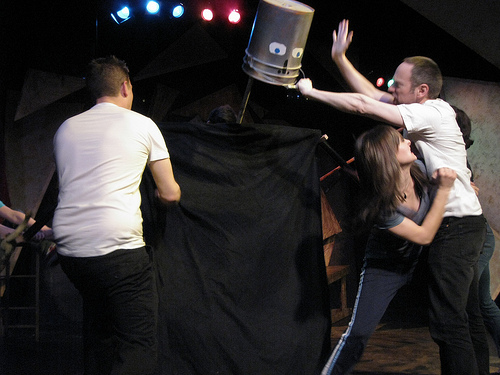
NPR recently aired a story about MBA students taking courses in improvisation. But why improv? For the very same reason every museum educator should be trained in improv: communication. That is not saying we should all be “onstage” when we teach, cracking jokes and making our students laugh. On the contrary, many improv principles are qualities we strive for in our teaching – things that are not taught when we learn a collection or study museum education.
The idea of an educational toolbox is something we hear at every professional development conference and class. What are we really filling it up with? The multi-modal teaching strategies and classroom management skills are essential. But have we been paying enough attention to how we say what we are saying and how to sharpen and enhance our listening skills? Or flex our collaboration muscles? Improv courses do exactly that. It’s like going to the gym for your brain – those revered careful listening, honest responding, fearless and flexible teaching skills are all enhanced by improv ideas.
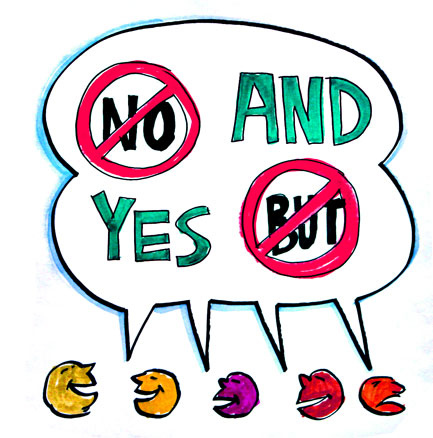
Yes, And…
One of the first things educators learn about inquiry is the idea of asking open-ended questions that allow for many responses, then scaffolding information on top to deepen the conversation. This idea is echoed in improv. The first ‘rule’ of improv is the phrase ‘yes, and’. A scene partner offers information. You take it, affirm it, and add something to it, and your scene partner repeats. This back and forth is the foundation of improv. Negation ends the scene – and in inquiry, defeats the students. It’s about saying, “Yes, I accept your idea and I’m going to make it better” instead of “no, I have a better idea.”
 The ideas of ‘yes, and’ and inquiry only work when people are listening to one another. If you are not paying close attention to what your scene partner is saying, you may miss the information needed to propel the story. The fact is true with inquiry as well – if you repeat what the student is saying incorrectly or miss their point, you will change the meaning of their observation or interpretation.
During beginning improv classes, instructors lead students in several affirming exercises. It’s all about taking a gift, agreeing, and adding. It is also raising the stakes. By scaffolding more details on to a suggestion, a scene immediately becomes rich and interesting. Sharpening those careful listening skills is essential to any improviser. Responding skills are also put to the test and enhanced through speed games that not only quicken response time, but also better public speaking skills.
Collaboration
Improvisation is a group sport. Teams will practice weekly in order to get to know each other and build trust. Interaction is key to improv – which is why so many companies will hire improvisers to teach team-building. The activities teach individuals how to interact effectively, operate under pressure and, most importantly, trust one another. Also important in improv: the notion that you always want to make your scene partner look better – you will in turn look better as well. We want to affirm our students ideas and teach them to practice critical thinking. Working together builds on the idea of a team: you and your group are living the art in that moment, experiencing it together. These values: trust, interaction, and poise– even when 15 more students than you expected show up for a field trip in a tiny museum – are imperative in good gallery teaching.
Failure is Ok
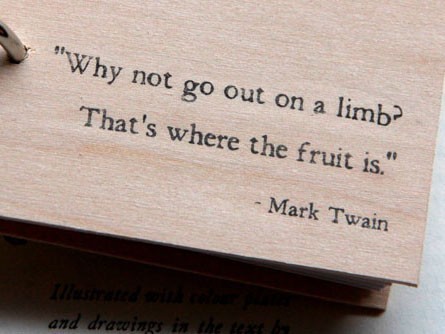
75% of improv is bad. Real bad. You may see a show after reading this and think “Wow. I do not want to look like that.” But how they look is not the point – improv is all about removing the sense of failure. In order to grow, you have to fail. In some improv classes, when students get that feeling of “I screwed up” they take a ‘failure bow’ – a bow, paired with the declaration “I failed!” The rest of the class will clap and cheer, affirming the chance that was taken. When people are less afraid at failing at improv, it connects to their lives, and we learn to handle setbacks with grace and ease.
As educators, we aim to create celebratory spaces that embrace student work. But how can we create these spaces if we ourselves fear failure?
We improvise every day of our lives. We have no idea what the next word is that might come out of our mouth when talking to a friend or co-worker. These skills taught in improv classes will only make for better educators – ultimately better communicators – all while having fun. If only our theses made us laugh this much. The same week I finished school, I was welcomed back by my old improv troupe – and rarely miss a single rehearsal or show. The difference this time? It’s my professional development for teaching.
Have you ever taken an improv class or used it in your teaching? Or do your peers or colleagues have any experiences with improv as professional development? Share your perspective.

 Art Museum Teaching