
Art Museum Teaching

Art Museum Teaching

Search
Skip to content
  • About
  • trauma-informed practice
  • Writing in a Time of Crisis
  • leadership

Monthly Archives: February 2014

Are you ready for a THROW DOWN?
Drinking about Museums, Experimenting in Museums

Are you ready for a THROW DOWN?

February 12, 2014 Mike Murawski 19 Comments

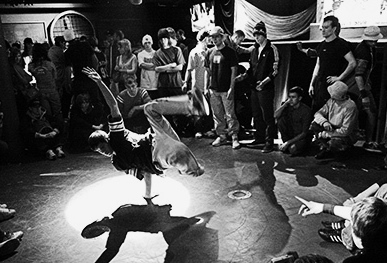
www.zabara.orgAccording to Wiktionary, the term “throw down” was popularized in 1990s street culture, derived from the idiom throw down the gauntlet or “to issue a challenge,” also used in the sense of “to make a stand” or “to stand up and contribute something.”  The term has been further popularized by the drama-filled televised cook-off competitions of chef Bobby Flay in his Food Network show called Throwdown, which always ends with his open challenge to all viewers: “Are you ready for a Throwdown?”

There have been throw downs in poetry, music, football, breakdancing, cooking, glee clubs, boxing, politics, and street fighting, but there has never been a throw down in museum teaching … until now!  This month, ArtMuseumTeaching.com brings together 4 challengers and 1 museum for the first-ever “Museum Teaching THROW DOWN,” aimed at bringing out the best in experience, creativity, risk-taking, and experimentation.

  • What:  Museum Teaching THROW DOWN (Google+ Event Page)
  • Where:  American Folk Art Museum, New York City, 2 Lincoln Square (Columbus Ave + West 66th Street)
  • When:  Wed., February 26th, starting at 6:00pm

Four fierce educator/competitors will gather at the American Folk Art Museum on February 26th, prepared to “make a stand” and lead a gallery teaching experience of about 15-20 minutes each. Each educator will use the museum’s current special exhibition Folk Couture: Fashion and Folk Art to activate the audience in new and engaging ways.  After each educator has completed their gallery experience, the audience then gets to decide who leaves as the winner of the first-ever Museum Teaching THROW DOWN.

Let’s meet the challengers…

As we start to get psyched-up about the upcoming THROW DOWN, I asked all the competitors to tell me why they are interested in this type of museum teaching challenge.  So here is a little bit more about us, and why we’re doing this.
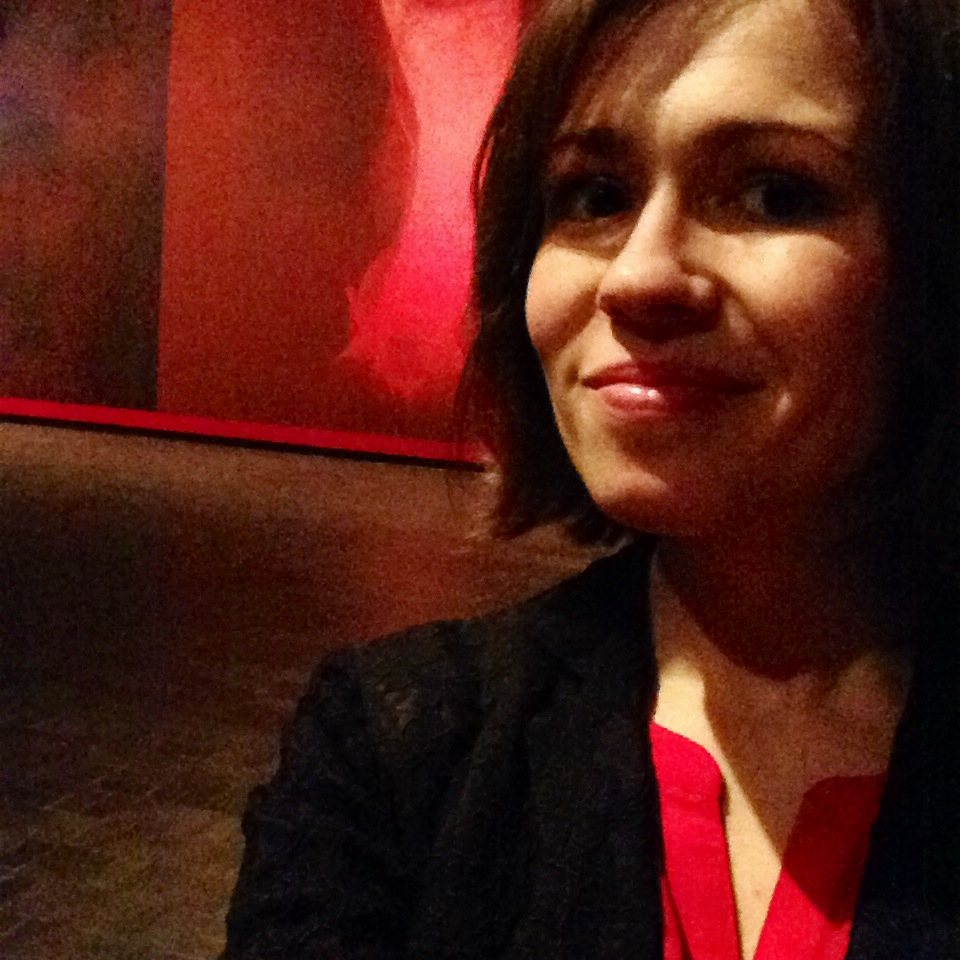
OleniczakJEN OLENICZAK: Museum Hack-er and The Engaging Educator extraordinaire, working to rid the world of boring museum experiences for good. @TheEngagingEd

“So often we get caught up in what works — the gallery stops and activities that are tried and true in a given audience. Failure is a scary thing, and experimental implies a chance of failure. Through my work with the Engaging Educator and Museum Hack, I’m all about taking risks that have the capacity to either be massive failures or tremendous successes. If you are constantly trying not to fail, you’ll never succeed. The THROW DOWN for experimental museum teaching offers a platform to take a big risk with colleagues I respect — and to blow it up at the American Folk Art Museum.”

RopeikRACHEL ROPEIK:  Real is a thing that happens to you when you mess with this titan of a museum educator who now hails from the Brooklyn Museum. @TheArtRopeik

“I’ve been a dancer for most of my life, but a lifetime of ballet and jazz classes do not a B-girl make.  No, my forays (and yes, there have been several) into breakdancing haven’t scored me my own dance movie, but they’ve always been a blast.  Why?  Because they’ve always been about people getting together to throw down some moves and cheer each other on and have a good old-fashioned great time.  So let’s do that in a museum.  Let’s see some crazy cool art creations and some bad@$$ gallery teaching in action and make the museum the place for that collective sharing and cheering.”  

“Breaking isn’t about meticulously planned choreography.  It’s about feeling the music and trying things out and hearing the crowd roar when they love what you do.  And OK, so maybe the crowd roar in the museum is going to have to be a little quieter, but I’m still ready to throw down some museum ed moves and shake it up and flow with some great colleagues and an eager audience.  Bring it on!”
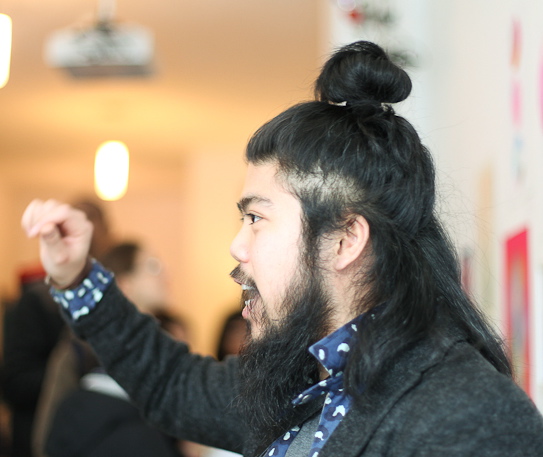
PolicarpioPJ POLICARPIO: Teaching his way across the Big Apple, this master-of-all-trades museum educator and community engager means business. @pjpolicarpio

“I do love a good challenge. I’m really interested in where this “throw down” is headed and would love to participate!  An experimental museum teaching throw down is exciting because museum educators by nature are always on our toes. We are constantly challenged by a variety of factors and almost always rely on our myriad teaching tools/strategies combined with experience. This is a perfect challenge! Looking forward to collaborating on this project!”
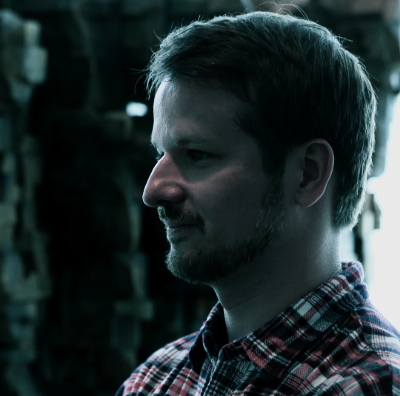
murawski-flanelMIKE MURAWSKI: Last but not least, the blogger who needs to put his money where his mouth is; the “Bobby Flay” of this Throw Down (FYI – Bobby Flay did lose many of his cooking throw downs; those were alway the best episodes, too).  @murawski27

“I have been hankering for a first-ever Museum Teaching Throw Down, and am excited to launch this in the city that never sleeps.  We all do teaching and touring in our ‘jobs,’ but we don’t get much time to truly play with our craft and experiment in fun and bold ways in a supportive environment outside our own institutions.  I look forward to getting together with this terrifyingly fantastic group of New York City museum educators, and pushing ourselves in ways that are a bit outside the box.  Let’s do this!”

Drinking About Museums

It doesn’t end there.  After the THROW DOWN concludes around 7:30pm (if there is anyone still standing), we plan to head to nearby P.J. Clarke’s (44 West 63rd Street) for a Drinking About Museums hangout, meet-up, and discussion.  There, we can celebrate the winner of the first-ever THROW DOWN, and decide whether we ever want to do this again.  Even if you can’t make it to the American Folk Art Museum, we’d love to see you for a few drinks and some great conversation.

We hope to see you there at the American Folk Art Museum on February 26th and for the Drinking About Museums that follows!  To stay up to date on any further details or event changes, connect with the Google+ Event page (let us know if you’re coming) and the join the ArtMuseumTeaching Google Community.

And, to all you museum educators out there, keep doing what you do. But ask yourself this … Are you ready for a Throw Down?
Share this:

  • Email a link to a friend (Opens in new window) Email
  • Print (Opens in new window) Print
  • Share on Facebook (Opens in new window) Facebook
  • Share on X (Opens in new window) X
  • Share on LinkedIn (Opens in new window) LinkedIn
  • Share on Pinterest (Opens in new window) Pinterest
  • Share on Reddit (Opens in new window) Reddit
  • Share on Tumblr (Opens in new window) Tumblr
Like Loading...
American Folk Art Museumexperimental projectsexperimentationExperimenting in Museumsgallery teachingparticipationpublic engagementteachingthrow down
Open Engagement: 100 Questions 100 Days
Experimenting in Museums

Open Engagement: 100 Questions 100 Days

February 10, 2014 Mike Murawski Leave a comment

Open Engagement is an annual international conference and gathering that focuses on social practice and socially-engaged art.  For several years, the conference was hosted here in Portland, Oregon, and I was fortunate enough to attend the 2013 conference which linked up with the Portland Art Museum’s Shine a Light event and the partnership our museum has with Portland State University’s Art & Social Practice program.

The conference was founded by artist and educator Jen Delos Reyes, who leads the planning and programming for each year’s Open Engagement.  In 2014, the conference moved from Portland to Queens (sniffle, sniffle), and was co-presented by the Queens Museum and A Blade of Grass, and took place at the Queens Museum, New York Hall of Science, the Queens Theater, Immigrant Movement International, and various locations around New York in May.

The 2013 conference brought artists, thinkers, activists, and museum professionals from across the continent, and there were some tremendous conversations about the role of museums in social practice art, and the role of social practice art and artists in museums.  We left with more questions than we had answers (which is actually a good thing — it means we’re not fooling ourselves that we have this all figured out).

To ramp up to the 2013 conference, Delos Reyes and conference organizers invited 100 contributors from the field to reflect on 100 questions collectively generated at the closing session of Open Engagement 2013.  Each contributor wrote a short blog post, published online in rapid succession prior to the start of the conference.  I was invited to write a short response to question #97: “Who stands to benefit from this work?”  Below is my response — and I encourage you to read all 100 contributors respond to all 100 questions.  And I invite your thoughts below — who do you think benefits from social practice and socially-engaged art, whether related to museums (as in my response) or out in the community?

Photo: Project by Molly Sherman, Museum Visitor (Sam), as part of Shine a Light 2011 at the Portland Art Museum. Photo credit: Jacob Iller.

“Who stands to benefit from this work?”

Originally published online at Open Engagement blog, February 9, 2014

I know that museums are not new players in the game of social practice and socially-engaged art, yet we are constantly coming back to the core questions about the value of this work. Who benefits? Who needs to benefit, especially if we are to sustain support for these types of artist-driven projects and programs? Does this work offer any long-term benefits to a museum’s communities, rather than just involving communities at the benefit of the museum? Are there any benefits at all? Do there need to be? The answers to these questions are so varied, localized, and subjective, but let me take a very quick stab at this from my perspective in museums—only a slice of the myriad responses that exist to this larger question.

While I recognize that museums only play one part in the larger developments of social practice art in recent years, these institutions do serve as major sites of public engagement with artists and their work. Far more than that, museums and social practice artists are working together to transform engagement and tap into the potential that museums have for experiences other than passive spectating. People today increasingly refuse to be passive recipients of what museums offer, and more and more institutions are working with artists in ways that expand far beyond simply placing their works on the walls. Instead, museums are inviting artists to bring their socially-engaged practice to bear on creating experiences that actively engage our public(s) and challenge them to rethink museums.

While these projects frequently meet resistance from within the museum institution for seeming frivolous or without intellectual content, this work largely succeeds in transforming museums into open spaces of curiosity, experience, collaboration, risk-taking, and creativity for our communities. Why?

Because of the involvement of artists.

Because of the process (complex and messy) of co-creation and collaborative thinking that can happen among museum staff, artists, and the public in these contexts.

Because of the potential for socially-engaged artists to pull people out of their everyday experience, break them from the familiar, and give them something to think about.

In describing his early discovery of the value of punk rock, Fugazi frontman and DIY punk guru Ian MacKaye uses this analogy:

“if you’re raised eating steak and potatoes every night and that’s dinner, when you go to a Vietnamese restaurant, you don’t know what’s in front of you. You just can’t recognize it. The thing is that not only is it good, it’s probably better for you.” 

I think museums have a great deal to gain if they more frequently think of themselves like this Vietnamese restaurant, making a break with the business-as-usual ‘steak and potatoes’ experience. As Nina Simon once remarked, art museums are the least likely to empower their own staff to experiment in these ways, but the most likely to bring in artists to do this social/participatory work. So museums (as institutions, but more importantly as people) and their communities stand to benefit from working with social practice and socially-engaged artists as we work toward creatively expanding the menu of what’s possible.

*     *     *

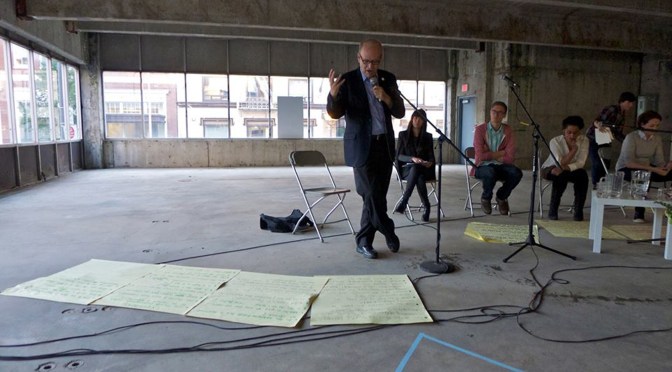
Header Image: Tom Finkelpearl sharing some of the questions generated at the final event of Open Engagement 2013. Photo: John Muse, openengagement.info


Share this:

  • Email a link to a friend (Opens in new window) Email
  • Print (Opens in new window) Print
  • Share on Facebook (Opens in new window) Facebook
  • Share on X (Opens in new window) X
  • Share on LinkedIn (Opens in new window) LinkedIn
  • Share on Pinterest (Opens in new window) Pinterest
  • Share on Reddit (Opens in new window) Reddit
  • Share on Tumblr (Opens in new window) Tumblr
Like Loading...
artistsexperimental projectsexperimentationIan MacKayeJen Delos ReyesOpen Engagementparticipatory arts practicePortland Art MuseumPortland State Universitypublic engagementpunkpunk rocksocial practice

Recent Posts

  • The Journey of Change Continues: Making the Permanent Move to “Agents of Change” September 12, 2022
  • “It’s Been Two Years Since…” – Reflecting on being laid off & where I am now after two years March 31, 2022
  • Refocusing Museums on People: my dreams for museums in a post-COVID world April 26, 2021
  • Call for Proposals: [COLLECTIVE LIBERATION] DISRUPT, DISMANTLE, MANIFEST April 9, 2021
  • COVID-19 Has Taken a Toll on Museum Education January 14, 2021

Enter your email address to follow this blog and receive notifications of new posts by email.

Archives

A Forum for Reflecting on Practice

Top Posts & Pages

Tableaux Vivant: History and Practice
MUSEUMS ARE NOT NEUTRAL
Towards a More Community-Centered Museum, Part 3: Defining & Valuing Community
Asking Beautiful, Scary Questions: Reflections on "Leading the Future of Museum Education"
The Big ASK: Experiencing the Brooklyn Museum's ASK App
Interrupting White Dominant Culture in Museums
Gravity and Grace: Cross-Departmental Collaboration at the Brooklyn Museum
Engaging Multilingual Students: An Educator's Guide

Top Posts & Pages

  • Tableaux Vivant: History and Practice
  • MUSEUMS ARE NOT NEUTRAL
  • Gravity and Grace: Cross-Departmental Collaboration at the Brooklyn Museum
  • Engaging Multilingual Students: An Educator's Guide
  • No longer in extremis: A letter of resignation & courage
Creative Commons License
This work by http://artmuseumteaching.com is licensed under a Creative Commons Attribution-NonCommercial-NoDerivatives 4.0 International License.

Meta

  • Create account
  • Log in
  • Entries feed
  • Comments feed
  • WordPress.com
Blog at WordPress.com.
Privacy & Cookies: This site uses cookies. By continuing to use this website, you agree to their use.
To find out more, including how to control cookies, see here: Cookie Policy
  • Subscribe Subscribed
    • Art Museum Teaching
    • Join 3,216 other subscribers
    • Already have a WordPress.com account? Log in now.
    • Art Museum Teaching
    • Subscribe Subscribed
    • Sign up
    • Log in
    • Report this content
    • View site in Reader
    • Manage subscriptions
    • Collapse this bar

Loading Comments...

    %d