Tag Archives: personal meaning

Public Value and Being Human: Gallery Teaching is Core to Our Mission

The other evening I had the honor of seeing Nobel Peace Prize recipient Archbishop Desmond Tutu at the Los Angeles County Museum of Art (LACMA) in conversation with Robert V. Taylor, his student and spiritual leader and author,  and the museum director, Michael Govan. The conversation centered on spiritual paths to being more human and connecting with the world and others in meaningful ways that bring about profound world change, like ending apartheid. Archbishop Tutu and Mr. Taylor stressed the importance of listening and making decisions to connect with and include others in human interactions each and everyday. It is the collective power of inclusion and care that can bring about great change in our world. Archbishop Tutu’s profound statement “I need you to make me human, and you need me to make you human,” struck me as he spoke, and has stayed with me. It is in the essence of personal interactions that we become human. As the conversation continued, I wove these two worlds—the art museum and the spiritual—together in my mind.
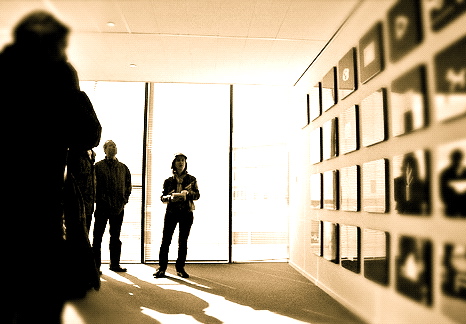
Photo by Harald Walker

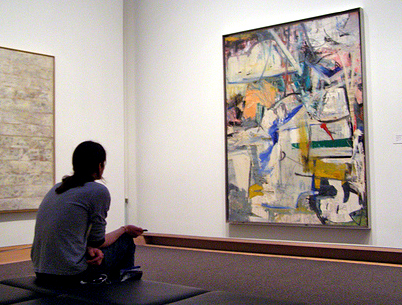
The museum collects and displays exemplary works of art that tell myriad stories of human activity. But they themselves are not human and they do not speak. These objects are endowed with profound significance and import by the humans that discuss, interpret and make meaning around them. The personal interactions we have in the art museum explore and unlock the humanity in works of art; it is via these interactions that museum objects can help us develop empathy and imagination. That is, in our encounter with them and with each other we can become more human.

Recent events, including the J. Paul Getty Trust’s choice to make deep and shocking cuts to their museum education program and specifically to their exemplary teaching program, concerns me greatly. The choices of the Getty Trust are not alone in the increasing devaluing of teaching in our museums and society as a whole.

In his 2004 book of collected essays, Whose Muse?, Jim Cuno, currently Getty Trust CEO, writes:

“I think that by providing and preserving examples of beauty, museums foster a greater sense of caring in the world and urge their visitors to undergo a radical decentering before the work of art…. To experience beauty is … to experience an ‘unselfing,’ and all the energy we formerly put into the service of protecting, guarding, and advancing the self is then free to be in the service of something else.”

I wish to ask Mr. Cuno, exactly how do you think this process happens and how did it happen for you?

I have witnessed these moments when eyes and minds open in art museums. I am a museum educator. I teach. I believe deeply in the power and potential of works art to have profound impact on individuals and the world. But I also believe that this quality is not innate and the process is not always transparent. We learn about art and how to engage with it and the humanity of it. Many of us had families or teachers that took us to museums and talked to us about art and encouraged our curiosity. We can sometimes forget that we were not born interpreting paintings and ancient Greek vessels.

It was delightful to witness Archbishop Tutu and Mr. Taylor on stage as models for a teacher and student relationship. Their exchange demonstrated compassionate listening, deep mutual respect and personal growth. It also revealed the often subtle yet profound way teachers guide and support their students.

I am a former Getty gallery teacher. The professionalism of this position afforded me the ability to think deeply about how visitors to the museum were connecting with and appreciating works of art in the Getty collections and how to guide and support them in this process. It also afforded me a sustained daily practice and commitment to teaching. As a gallery teacher I gained more experience teaching in two or three weeks than most docents would receive in a year. I was also supported in reflecting upon and developing my teaching practice by a devoted cohort of fellow gallery teachers and other professional education staff.

I have devoted my career to facilitating moments of ‘radical decentering’ and being human with works of art because I think these experiences are important. I also believe that this doesn’t happen by accident or coincidence. I believe that the institution and the gallery teacher must value this as a goal and plan this outcome as they would any other aspect of their strategic plan.

I see many museums offering less and less training and support for teaching, caring less and less about the quality of the teaching and interactions people have in museums. When this happens, the breadth and depth of educational programs and access to these programs are compromised. In the Getty’s pre-packaged response that appeared on this blog and others, Jim Cuno claims that “this approach will not reduce our educational programs or the quality of teaching available at the Museum.” He goes on to state:

“An expanded docent teaching corps, carefully selected and expertly trained by our experienced gallery instructors, along with the development of multimedia tours, will enable us to meet our goal of 100% guided tours within the constraints of our budget.”

But what will the quality of that experience be? How will a multimedia tour unlock the humanity of works of art for diverse visitors with a variety of learning styles and prior knowledge? When the Getty staff and volunteers are given only a few months to prepare for this ‘approach,’ it is clear that teaching, visitor experience, and the relevance of the Getty collections to all audiences are not central the Getty Trust’s strategic goals.

Maybe we have become victims of our own success. Truly great teaching looks like nothing. It looks effortless and sometimes even magical. But these are teachers who have devoted their lives to being great teachers and are dedicated to their students. Teaching is hard, very hard. And great teachers are amongst our strongest assets. When art museums support their collections through personal human interactions, these moments of humanness and ‘unselfing’ occur. This is when our collections shine and are the most profound. This is when we have real public value.

Don’t our students, visitors, and collections deserve great teachers?

This post is the author’s own and does not necessarily represent the Los Angeles County Museum of Art’s positions, strategies, or opinions.

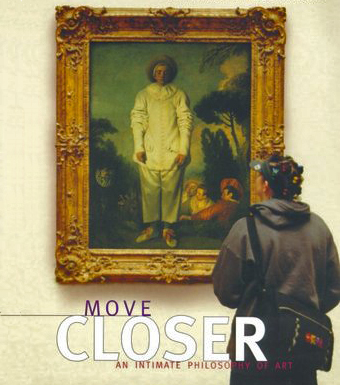
Beyond Just Staring: Personal Discovery as Core to Museum Learning

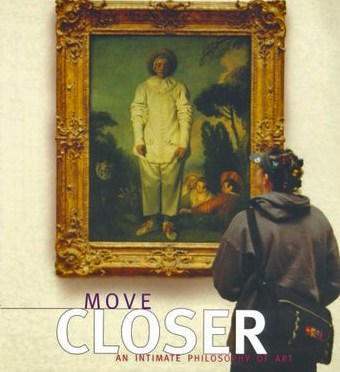
“When contemplating a work of art one of the key questions ought to be: `What is this to me?’ This is asked not in the sceptical tone it sometimes takes, implying `And I think it’s pretty irrelevant to me really,’ but rather in the tone of genuine inquiry, implying that one might come to discover how the object does matter in a personal sense.” (Armstrong, 5)

A couple years ago, I led a series of public gallery talks that began with the quote above, pulled from John Armstrong’s book Move Closer: An Intimate Philosophy of Art. I had become so invested in bringing the personal dimension of learning into the gallery experience that I decided to experiment with these public talks, inviting [perhaps somewhat unwilling] participants to explore an exhibition of contemporary photography through the lens of their own perceptions and lived experiences.  Since this is unfortunately something that museum visitors are rarely asked to do during a gallery talk or public program, it began with some awkwardness as I explained our task.  Two core questions, also coming straight from Armstong’s 2000 book, faced each of us as we examined the series of photographs by artist Bruce Yonemoto:

  • What do I have to do—beyond just staring—to get the most out of looking at these artworks?
  • What is the importance of any particular work to me?

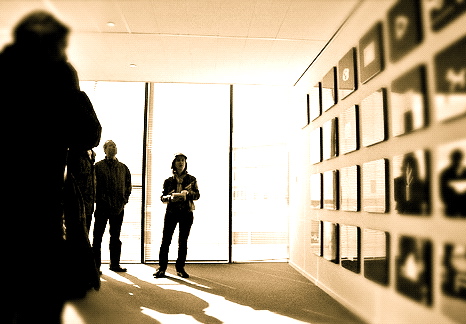
Rather surprised by this line of inquiry, the group took my lead and embarked on this process of personal discovery.  To begin, we examined a large photograph that was re-staging a well-known Caravaggio painting, and spent some time sharing our observations and creating what meaning we could by just looking. This loosened them up for the next step, which was going out on their own, finding a photograph they felt connected to, and spending some time with the work exploring personal connections — keeping in mind John Armstrong’s charge ( what is this to me? what does this remind you of? what do you wonder about this image?).

“Being preoccupied with when something was made or who the designer or artist was can be a way of avoiding a more personal relationship with the object. External considerations can be so absorbing that they draw our attention away from the very thing which they are supposed to serve—we end up knowing about the picture, but not knowing it.” (Armstrong, 14)

Bruce Yonemoto, Untitled (NSEW 8), 2007

After about 20 minutes of self-exploration and ‘seeing for ourselves,’ we gathered back as a group to share the discoveries that everyone was able to make.  I am always amazed at how quickly people are willing to begin sharing personal connections, and the conversation began to build. It has been almost 2 years, but I distinctly recall one woman who had lived in Indonesia much of her life, and she told us several intimate stories about experiencing the strife and conflict in her home country and how that related to one of the photographs she chose (an American Civil War portrait that Yonemoto had re-staged with Southeast Asian men instead playing the roles of the soldiers).  Others made connections to their own experiences during the Vietnam War, a period which Yonemoto’s images specifically recall for Americans who lived through that era.

If we go to a painting demanding that something special happen, we end up in the condition of the insomniac who can’t sleep precisely because he keeps retelling himself, with mounting panic, that he must fall asleep.” (Armstrong, 63)

No doubt, the conversation was significantly more meaningful than if we had simply discussed the “facts” surrounding these works and the artist himself.  Like a mantra I often borrow from Rika Burnham, we ‘opened ourselves to the work’ and allowed for a slow, fluid process of perception.  We did come to some complex meanings that aligned with the curator’s perspective, but we also made these images our own — allowed them to “matter in a personal sense,” as Armstrong would say.  “What good we get from art depends upon the quality of our visual engagement with particular works. We need to ‘learn to look,'” Armstrong writes (60).  While I have not led a gallery talk quite like this since then (mostly because the Museum would quickly ask me to stop giving gallery talks, I imagine), I have continued to build a strong element of ‘creating personal meaning’ in the learning experiences I facilitate in the galleries — and the programs I manage for students, teachers, and docents.

Photo by Clint Gardner

While there are many examples of museum educators writing about the power of ‘seeing for ourselves’ and the value of personal discovery (including some great stuff in Rika Burnham & Elliott Kai-Kee’s recent book and the article by Ray Williams published in a 2010 issue of the Journal of Museum Education), I always return to the words of John Armstrong from Move Closer.   Perhaps because my role in working with docents requires me to constantly be tackling issues related to the appeal of information & knowledge versus experience & the multiple dimensions of meaning-making. For many years now, Armstrong’s book has armed me with a clear sense to counter the over-emphasis of information in my work as a museum educator — but also to enhance my own response to art, and get beyond just staring.

Move Closer: An Intimate Philosophy of Art

“When contemplating a work of art one of the key questions ought to be: `What is this to me?’ This is asked not in the sceptical tone it sometimes takes, implying `And I think it’s pretty irrelevant to me really,’ but rather in the tone of genuine inquiry, implying that one might come to discover how the object does matter in a personal sense.” (Armstrong, 5)

A couple years ago, I led a series of public gallery talks that began with the quote above, pulled from John Armstrong’s book Move Closer: An Intimate Philosophy of Art. I had become so invested in bringing the personal dimension of learning into the gallery experience that I decided to experiment with these public talks, inviting [perhaps somewhat unwilling] participants to explore an exhibition of contemporary photography through the lens of their own perceptions and lived experiences.  Since this is unfortunately something that museum visitors are rarely asked to do during a gallery talk or public program, it began with some awkwardness as I explained our task.  Two core questions, also coming straight from Armstong’s 2000 book, faced each of us as we examined the series of photographs by artist Bruce Yonemoto:

  • What do I have to do—beyond just staring—to get the most out of looking at these artworks?
  • What is the importance of any particular work to me?

Rather surprised by this line of inquiry, the group took my lead and embarked on this process of personal discovery.  To begin, we examined a large photograph that was re-staging a well-known Caravaggio painting, and spent some time sharing our observations and creating what meaning we could by just looking. This loosened them up for the next step, which was going out on their own, finding a photograph they felt connected to, and spending some time with the work exploring personal connections — keeping in mind John Armstrong’s charge ( what is this to me? what does this remind you of? what do you wonder about this image?).

“Being preoccupied with when something was made or who the designer or artist was can be a way of avoiding a more personal relationship with the object. External considerations can be so absorbing that they draw our attention away from the very thing which they are supposed to serve—we end up knowing about the picture, but not knowing it.” (Armstrong, 14)

After about 20 minutes of self-exploration and ‘seeing for ourselves,’ we gathered back as a group to share the discoveries that everyone was able to make.  I am always amazed at how quickly people are willing to begin sharing personal connections, and the conversation began to build. It has been almost 2 years, but I distinctly recall one woman who had lived in Indonesia much of her life, and she told us several intimate stories about experiencing the strife and conflict in her home country and how that related to one of the photographs she chose (an American Civil War portrait that Yonemoto had re-staged with Southeast Asian men instead playing the roles of the soldiers).  Others made connections to their own experiences during the Vietnam War, a period which Yonemoto’s images specifically recall for Americans who lived through that era.

If we go to a painting demanding that something special happen, we end up in the condition of the insomniac who can’t sleep precisely because he keeps retelling himself, with mounting panic, that he must fall asleep.” (Armstrong, 63)

No doubt, the conversation was significantly more meaningful than if we had simply discussed the “facts” surrounding these works and the artist himself.  Like a mantra I often borrow from Rika Burnham, we ‘opened ourselves to the work’ and allowed for a slow, fluid process of perception.  We did come to some complex meanings that aligned with the curator’s perspective, but we also made these images our own — allowed them to “matter in a personal sense,” as Armstrong would say.  “What good we get from art depends upon the quality of our visual engagement with particular works. We need to ‘learn to look,'” Armstrong writes (60).  While I have not led a gallery talk quite like this since then (mostly because the Museum would quickly ask me to stop giving gallery talks, I imagine), I have continued to build a strong element of ‘creating personal meaning’ in the learning experiences I facilitate in the galleries — and the programs I manage for students, teachers, and docents.

While there are many examples of museum educators writing about the power of ‘seeing for ourselves’ and the value of personal discovery (including some great stuff in Rika Burnham & Elliott Kai-Kee’s recent book and the article by Ray Williams published in a 2010 issue of the Journal of Museum Education), I always return to the words of John Armstrong from Move Closer.   Perhaps because my role in working with docents requires me to constantly be tackling issues related to the appeal of information & knowledge versus experience & the multiple dimensions of meaning-making. For many years now, Armstrong’s book has armed me with a clear sense to counter the over-emphasis of information in my work as a museum educator — but also to enhance my own response to art, and get beyond just staring.