A Museum Experience Is Not One-Size-Fits-All

“Dialogue isn’t for everyone.”

These words were said to me recently regarding change in an educational mission. I couldn’t agree more – it’s why we as educators carry a toolbox; activities for any occasion, any learner, and keep them at the ready for our audience.

Fresh from this experience, I read another article by Judith Dobrzynski, this time drawing attention to Bruce Bratton, a Santa Cruz columnist who outwardly attacks Nina Simon and the changes taking place at the MAH. While Bratton is cited by Dobrzynski as an “institution” in Santa Cruz, I hesitated to give him attention, realizing everyone has an opinion. However, since art journalist Dobrzynski addressed the article, it’s only fair to have an opposing piece.

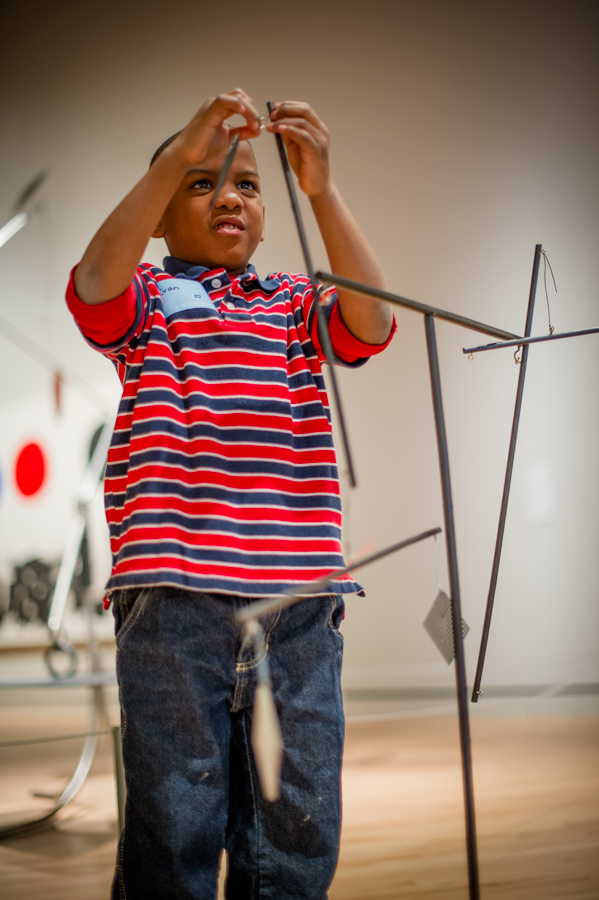
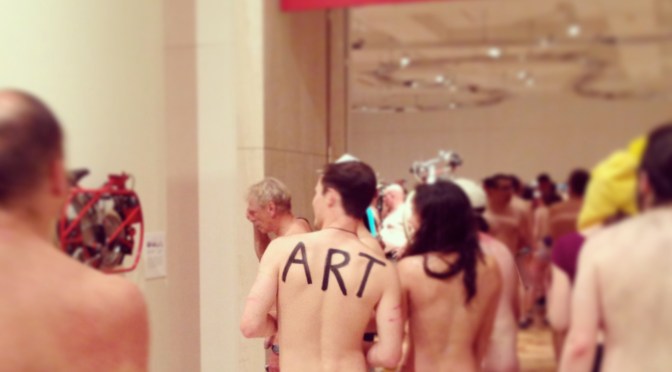
A museum experience is not one-size-fits-all.

Pop Up Museum turn Living Room as part of Santa Cruz Open Streets. Photo by Karen Kefauver. http://www.santacruzmah.org

After my initial inflammatory reaction to the Times Op-Ed, I now commend Dobrzynski for drawing attention to the other side. As museum educators, we are consistently looking for ways to make art interactive and for experiences to happen in the gallery. There are people that just want to sit, look at a works and have a quiet moment. This is still available – on my recent trip to MFA Houston, I was welcomed into quiet galleries and had a beautiful moment with a Turrell Ganzfeld, alone. Even in a busy NYC museum, you can find yourself alone in a space, enjoying the art.

But it’s not for everyone.

Some people literally do not know what to do with a work in front of them. They think it’s important, only because it’s hanging on a museum wall. They look at the label and don’t have a clue what that odd decimal-ed number is. Exhaustion sets in after seeing the whole place, and they leave, barely remembering anything. Hopefully they come back, but chances are, some of them don’t. Nothing inspired curiosity, so why come back?

The truth is, we aren’t all art nerds. Formalism isn’t sexy to anyone but art people. Museums, unless they want to be seen as elitist institutions, have to appeal to more than just the art appreciators. Museum programming opens up the world beyond the quiet sitters and lecture attendees.

The problem with both Bratton and Dobrzynski is neither quotes any specific interactive programming as a problem. Sure, in her Times piece, Dobrzynski critiques interactive art, but really, people hated the Impressionists too. But where is the study of the actual programs? Dobrzynski is a New Yorker – I promise you there is no shortage of programs she could attend and critique. Bratton states in his column:

Remember … when you could sit or stand and just think about the art pieces you were able to see in person? Think how many thousands/millions of students and artists were influenced by seeing circulating masterpieces or from the local collections…not now. Consider the impact on the next generation of art and history-lovers; the kids. Where can we take our kids now to learn how to experience a real museum; a place that challenges the attention span a little? There are experiential activities everywhere, as I mentioned but the former MAH was our only real museum environment that offered art in a museum context; a respectful place that created the sense that what you’re seeing is important, and worthy of your consideration.

Why can’t you sit in the gallery any longer and look at a work of art? I popped onto the MAH event listing, and found a film festival, some walks that take place outside of the museum and a free Friday event that features music after 6:30pm. Which of these events are disruptive to the people who don’t want participatory experiences? Furthermore, which events change the ‘real’ museum environment?

And which events bring new visitors? new people to see museums as important cultural institutions?

Bratton posted some support to his article, and a few mentioned my next point – this idea of a ‘real’ museum. What is a real museum? In the past, it was an activity for society. Dress up, visit the salon, look at the work deemed appropriate to be hung on the walls. But as times changed, the ideas behind museums have changed. Said nicely in an article that addresses this change, “in the last few decades, as the museum field has grown more serious about independent learning, deep audience engagement, and participation, museums have been able to bring that inspirational experience to more of their visitors.”
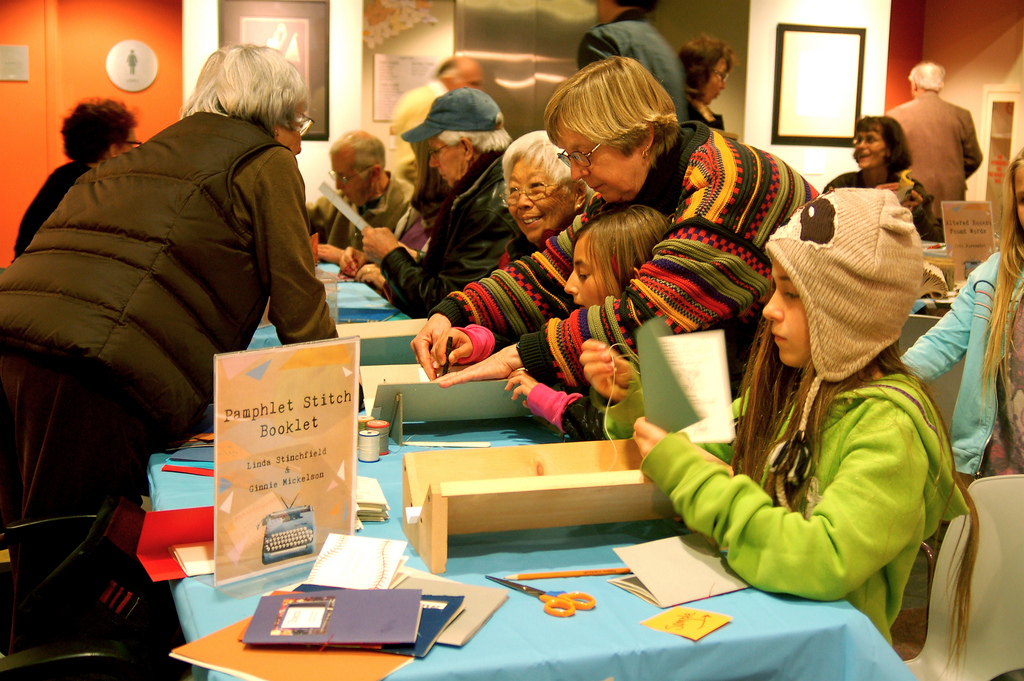
Visitors bond and bridge through participatory experiences at MAH. http://museumtwo.blogspot.com

Isn’t this a good thing? Don’t we as a society want museums to be seen as incredible places where people can think anything and connect with our past as humans? All people are not the same, and not everyone is a quiet sitter or a lecture attendee – and not all of the sitters or lecture attendees understand why the art is ‘important’ or why it’s there. I’ve given member tours, and gently pushed passed the initial “I already know everything, I’ve been to lectures” to the “wow – I’ve never seen that in this work before.”

Museums are links to our history. Art is not created in a bubble – each work has stories, amazing stories, attached to the artist, the process, time period, acquisition. But for some people, they see a canvas on the wall with some paint. They think it’s important because it’s hanging in a museum, but they don’t understand WHY.

And for many people, they don’t even go to the museum because of hours, past experiences as kids brought to expand their attention span, stigma. So if they go to attend a dance party, and take part in an amazing conversation on a work in the African collection they never knew existed, great. Even better if the experience inspires them to come back. Museums are for everyone.

So kudos to Nina Simon for revising the MAH mission statement and taking chances to make the museum a participatory space for the WHOLE community. Congrats to Museum Hack, for challenging the notion of what a museum tour is. Three cheers to Brooklyn Museum for every First Saturday. And the biggest thank you to every single education department working to make the institution accessible, available and awesome to everyone.

And to Bratton and Dobrzynski, an open invitation to come as my guest to any participatory program that I am leading or attending. Before you write another criticism, I encourage you to be an active participant. Try asking other participants what they think. Open your mind and attempt to see that a museum experience is not one-size-fits-all.

*     *     *     *     *

Editor’s Note: Given that Judith Dobrzynski’s opinion pieces have once again flared controversy and passionate responses from many in the museum and education community, I wanted to take this opportunity not only to feature Jen Oleniczak’s personal response, but also to utilize the community of practice that exists at ArtMuseumTeaching.com to share additional responses from contributors.  Below are some of this community’s response to this issue and to this challenging of participatory practice in art museums.  I also invite others to post their response and thoughts below in the Comments section, and add to the rich exchange already happening.

Rachel Ropeik

As a museum educator with an art historian’s training, I sometimes feel split on the “museums as experiential space” vs “museums as reflective space” debate. Personally, I love having quiet time to sit and bask in the presence of an inspiring work of art.  But professionally (which is, of course, personal, too) I’m aware that not everyone enjoys that sort of museum engagement, and, more importantly, some people feel active barriers blocking their way to it.  For those people (and of John Falk’s five types of museum goers–explorers, facilitators, experience-seekers, professional/hobbyists, and rechargers–it’s a minority who only want reflective museum time all the time), there need to be alternatives provided.

Museums have a well-established international history of being large, stuffy, intimidating institutions full of stringent rules to be followed.  That doesn’t sound fun, even to me, who loves museums passionately.  Instead of furthering that stereotype, we need to do what we can to, if not destroy it, poke some serious holes.  We need to meet visitors where they are, not where we think they should be.  Our visitors (and yes, that includes more and more who view our collections online and never set foot inside our galleries) should welcomed using a whole range of techniques that will stimulate and intrigue and invite and amuse and confound.

Museums have always been contemporary spaces serving contemporary audiences’ needs, and what those contemporary audiences need changes right along with history.  While we who work in museums may be dedicated to preserving the legacy of the past, we are also dedicated to sharing that legacy with the public.  Like it or not, time marches on, and continuing to look backward to the past for some sort of ürmuseum is never going to cut it in a society that’s moving ever-faster forward into the future.

Felice Cleveland

My father visited me as I was studying abroad in Paris. He had to get his passport in order to make the trip and we went to the Louvre where I was taking a class at the time. My father is not what you would call an art aficionado and hasn’t visited museums extensively. We were in a gallery with just one piece of artwork, a lot of people were taking pictures, and all of the lights in the room were trained on this one piece. All of the visual cues were in place and my father whispered to me, “Is this something important?” It was the Venus de Milo.

I think of my father often as I work to create programming and educational materials. Museums often don’t have to work hard to already convince the art-lover to visit. It is working to be inclusive and open doors to people who might not see the museum as a resource. The museum I currently work at is in a residential neighborhood and our collection is contemporary installation art. Some of the work is very complex and deals with challenging issues. It is important to me that the museum is more than a place to just view artwork every once in awhile. As a museum educator, I want to create a safe place to explore new and challenging ideas. I want to create programming that welcomes all audiences. I want to create a place that is a laboratory to experiment with new ideas and materials. I want to create a go-to place for the community. If museums don’t work to include the community – then what is the purpose? How do we make ourselves relevant if we don’t invite visitors to share and explore? Do we just house art? Do we just put artists on pedestals? What is a real museum? How can we respect the creativity that our community brings to viewing artwork? I have seen museums come in many shapes and sizes, which is one of the reasons I love them so much and keep exploring museums in new cities the world over. I want to be surprised and see things in a new way. There are all types of museums for all types of people. And on different days people want different experiences at different museums. As a museum educator, I work to create experiences for as many visitors as possible to engage on the level that they feel comfortable with. And every day I work to open our doors just a little wider.
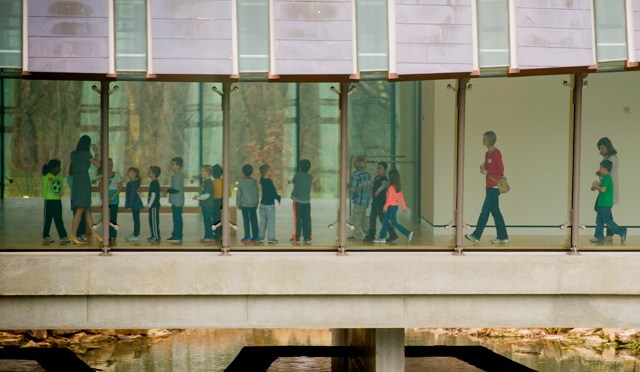
What’s the Value of an Art Museum Field Trip?

Photo by Stephen Ironside

By Anne Kraybill, School and Community Programs Manager, Crystal Bridges Museum of American Art.

Early in my career, I worked at an art museum that experienced what many art museums have experienced, a steady decline in school tours. Our tours did not cost anything to the schools, we had a grant for some transportation and the school district had funding as well. As an institution, we were puzzled. If the tours were barrier-free in terms of cost, what could be causing this? This was just around the time of the initial implementation of No Child Left Behind (NCLB), and we had anecdotal evidence that preparing for the NCLB test was deterring administrators from approving field trips during the months preceding the exam.  But even in the non-test prep months, attendance was down.

As I progressed throughout my career, I continued to face the challenge of convincing administrators that a trip to the art museum is a worthy endeavor. Even with funding for transportation, it has been a difficult case to make with little rigorous research available to back up our arguments. Through my teaching practice in the gallery, I can see the connections students are making: the critical thinking and inference, and the expansion of their interpretive framework that opens up their world. But could it be proven? We needed hard numbers:  How does a one-time field trip to an art museum actually impact a student, and is that impact enough to convince an administrator?

Fortunately, Crystal Bridges Museum of American Art inherently believes in the power of the field trip and the multiple effects it has upon student learning. Thanks to the generosity of the Willard and Pat Walker Charitable foundation, the Museum established a $10 million endowment that provides every school with transportation, substitute teachers, and a lunch for students during their museum visit. This makes a field trip barrier free and as one might imagine, the demand was high. Everyone wanted to visit the Museum when we first opened. But as I had experienced previously, financial barriers are not the only challenge to ensuring school visitation. How could we ensure that five or ten years from now we still had the same interest and support from school administrators?

Photo by Stephen Ironside

Located in the Ozarks, Crystal Bridges is the first large art museum in the region. Prior to the opening of our Museum, schools would have to drive to Tulsa or Little Rock to visit an art museum. The combination of never having an art museum in the area, plus a demand for field trips that exceeded our Museum’s initial capacity, lent itself to a natural experiment. We contacted the University of Arkansas, Department of Education Reform to measure the impact a one-time field trip has upon students.

Researchers Jay Greene, Brian Kisida, and Daniel Bowen designed a random assignment study. Schools applied to visit the Museum in grade levels or pods. Groups were matched and then randomly assigned whether they would get the field trip right away, or if they would get the field trip later. Once the study began, the treatment group visited the Museum and the control group was surveyed. Following the field trip, the treatment group was surveyed (an average of three weeks after). The research was conducted from March through December 2012. There were almost 11,000 students and 489 teachers at 123 different schools throughout the region in this study.

Tour Methodology

Crystal Bridges school tours are similar to those at many art museums. We use interactive dialog that allows the tour to be student driven. Students make observations or statements and Museum Educators respond through paraphrasing, questions, or layering additional contextual information for the student to a level of understanding that they might not get to on their own. For many students and their teachers this is their first time on an art museum field trip. We want to be sure they know this is not about the passive reception of information. We emphasize to the students that this tour is about their ideas, and we produced a video to help deliver this message:

Tours are led by Museum Educators that are on staff rather than a volunteer corp. As they are leading tours daily, the educators are continually refining and reflecting. In addition, peer review and mentoring is part of the training process.

The Findings

Photo by Stephen Ironside

The researchers were interested in revealing several areas of possible impact. These included cognitive and non-cognitive skills from knowledge acquisition, critical thinking, tolerance, historical empathy, and desire to visit museums in the future.

  • Overall, students remember what they learn from works of art! Shocking I know, but students were able to answer very specific questions about contextual information, demonstrating that they retained that information not because they had to for a test, but because it was interesting information to keep.
  • In critical thinking, students also displayed more observations and inferences if they had been on a field trip.
  • Students indicated that they would be more open to diverse opinions, even if they were in opposition to their own thinking.
  • Students were better able to imagine a situation unlike their own in the form of historical empathy.
  • There was also a built-in behavioral measure indicated if the treatment or control group would be more likely to come back to the museum. The treatment group did independently return with their families at a higher rate than the control. In all of the areas there is an impact, but the most significant impact is found within student populations that are considered to attend low-socio economic and/or rural schools.

With recent research in non-cognitive abilities as a predictor of student success, these findings help to make a rigorous case to administrators, policy makers, philanthropists, and educators that there is significant value in a field trip.

To learn more about the findings and research methodology, read the article in Education Next.

To hear the research team discuss the findings, view the September 16th Media Conference.

*     *     *     *     *

About Author

AnneKraybillANNE KRAYBILL: School and Community Programs Manager at Crystal Bridges Museum of American Art. With a team of educators, she developed and implemented all programming related to K-12 students, teachers, and pre-service teachers as well as community groups. She has held positions at the Walters Art Museum in Baltimore, MD, the Pennsylvania Academy of Fine Arts, Norton Museum of Art in West Palm Beach, the Center for Creative Education, and the Vero Beach Museum of Art. Prior to joining Crystal Bridges, she worked as the Art School Director at the Durham Art Council, managing visual and performing arts classes for over 3,000 youth and adult students annually. She is currently developing a distance learning initiative for Crystal Bridges and pursuing her Ph.D. in Education Policy at the University of Arkansas. Anne’s postings on this site are her own and don’t necessarily represent the Crystal Bridges Museum of American Art’s positions, strategies, or opinions.

It’s Time to Recognize Excellence

trophies-in-a-rowAs art museum educators, we get so wrapped up in our own practice and day-to-day work that there are many things we sometimes do not have time for. From writing that article we’ve always wanted to write to simply spending more time in the galleries looking at art, we can get so busy that these things speed past us. Too frequently, recognizing the work we do as educators also falls by the wayside. So I am calling on you to press the pause button for one moment and recognize the excellent work your peers are doing in the field. It’s time to recognize excellence in art museum education!

Nominate a colleague for the National Art Education Association Museum Division Awards! This is such a simple process, and you can nominate any current NAEA member for Regional Awards as well as the National Award. Here is what you need to do:

  1. Take 5 minutes and think of someone who is making a difference in your work as a museum educator — whether they are a super supportive mentor, a transformative colleague, or an emerging educator whose hard work is deserving of recognition.
  2. Contact them — shoot them an email saying that you think they simply ROCK, and that you would like to nominate them for an NAEA Museum Division Award (regional or national).
  3. Write a short letter saying how great they are! What has been exemplary about their practice or their role in the field of museum education? What impact are they making at their institution; in their community; in the National Art Education Association? How have they pushed you to become a better educator? Please make them blush when they read it.
  4. Ask your rock star nominee to fill out the short CV form (download here) and to select 2 people to write short, glowing letters of support. Again, this is usually very easy, since as a field we are all here to support each other and recognize excellence. Ask the nominee to have their support letters sent directly to you.
  5. Submit this entire packet (nomination letter, CV form, and 2 letters of support) to Ben Garcia (ben.garcia@berkeley.edu) or myself, Mike Murawski (murawski27@gmail.com), no later than October 1st. Please don’t miss this deadline! We really want to consider your nomination and recognize excellence in your colleagues.

NAEA_Awards_2014_cvrYou can find all of this information and forms by visiting the NAEA Awards website here.

Over the past 30 years, the National Art Education Association has recognized excellence in nearly 150 museum educators that are members of NAEA, many of them are mentors and colleagues that we have had the pleasure of working with or continue to work with now. The list includes “movers and shakers” in our field, but also the quiet, modest, yet powerful educators who would not have been recognized without being nominated by someone like yourself.

So take the time to recognize the excellent and transformative work happening in our field, and nominate someone for an NAEA Award!

If you have any questions at all, or need help with this process, do not hesitate to email me at murawski27@gmail.com or Ben Garcia at ben.garcia@berkeley.edu. Remember that the deadline for submitting nominations is October 1st!

Museum Educators Do Still Read Books … Even the Classics

We recently discovered that museum educators certainly do have the time to read books! This past July, a group of us participated in the inaugural ArtMuseumTeaching Online Book Club to look at the new book Museums and Communities: Curators, Collections, and Collaboration (2013), edited by Viv Golding and Wayne Modest. With student-centred and community-centred practice at the core of what we do as museum educators, the book raised lots of ideas in relation to theory and practice and how different roles across the museum consider or enact participatory practice.

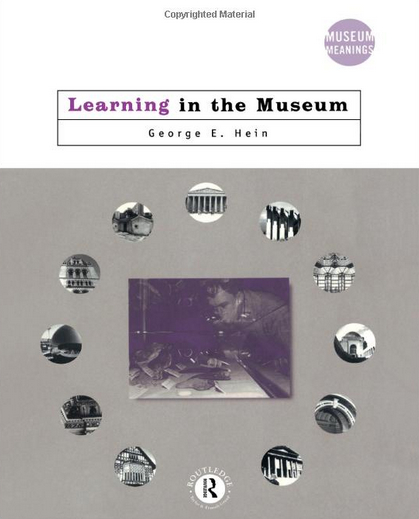
learninginthemuseumFor our second Online Book Club, we thought it might be a good idea to visit (or for many of us, re-visit) a classic text Learning in the Museum (1998) by George Hein, Professor Emeritus at Lesley University, Cambridge, MA. In this pivotal book, Hein presented an overview of the traditions and history of museum education, and developed a key framework for understanding educational theories as well as making connections with visitor studies research. Hein raised education and visitor experience as important considerations for museum professionals overall as museums are forced to “justify their existence”.

View the video archive below of the October 1st On Air Google Hangout with Michelle Grohe (Isabella Stuart Gardner Museum) and myself.

Some provocations for readers as we near the Online Book Club discussion:

    • Does Learning in the Museum influence the practice of museum educators today? How so? Are we still in a position of having to “justify [our] existence”?
    • Have new learning theories emerged from within art museum education research and practice since the book was written? Did Hein pave the way for this thinking?
    • Does ‘education’ and ‘constructivism’ have a specific meaning for museum educators? Does meaning change across the organisation?
    • Have art museums changed to become constructivist-learning spaces for visitors as Hein advocates? Can we share examples from our practice to demonstrate this?
    • You can also check out a great Q&A with George Hein posted on the Getty’s blog while he served as their Guest Scholar back in 2011.

We would love to know if or how your practice today connects to the ideas outlined in Hein’s book (now 15 years old). Then help us to decide if this book deserves ‘classic’ status!

To learn about this and future Google Hangouts and Online Book Club discussions hosted via ArtMuseumTeaching.com, join the Art Museum Teaching Google Community.

Read on!

Note: Thanks to everyone who participated in the October 1st Online Book Club Hangout. Here is a link to the video archive: