We Don’t Need New Models, We Need a New Mindset

Editor’s Note: I have been following EmcArts ever since they announced their first round of Innovation Labs for Museums back in 2011, and have had the pleasure of meeting with their staff as well as those working with the ArtsFwd initiative.  I was also fortunate enough to be invited to attend the Association of Art Museum Directors meeting this summer in Dallas, where Richard Evans gave a great presentation on innovation as part of that organization’s thinking around education.  The team at EmcArts and ArtsFwd is working to help make a break with our patterns of “business as usual” and develop new capacities and mindsets to tackle the major adaptive challenges facing museums in the 21st century. The post below by Karina Mangu-Ward does such a fantastic job of highlighting this shift in practice and ‘mindset’, to use her word.  I thought it was worth sharing with ArtMuseumTeaching community as a way for museum professionals at all levels of their organizations to reflect on the models and mindsets underlying our practice as well as the real challenges we face.  I invite readers to comment below about how you see these models operating at your institution, and how you might help support change towards a new mindset in museums.

Written by Karina Mangu-Ward, Director of Activating Innovation at EmcArts

Reposted from the blog at ArtsFwd, an online community of arts and culture leaders committed to doing things differently in their organizations in order to stay relevant and vital in a changing world.

I’m thrilled to announce that I’ve been selected as a guest at the Dinner-vention 2, organized by Barry Hessenius of Barry’s Blog and WESTAF. On October 9, I’ll join seven other dynamic, forward-thinking leaders in the arts to discuss some of the most pressing challenges across the field. I’m looking forward to meeting everyone and engaging in what should be a spicy conversation.

To prepare for the Dinner-vention, Barry asked all of us to capture our preliminary thinking in a briefing paper that responds to the topic: “Broken Models: Picking Up the Pieces and Moving Forward.”

I’ve shared my briefing paper below. I encourage you to read the papers of the other seven guests, which you can find here.

What’s a model, exactly?

I’m a very literal person, so the first thing I did when tasked with this briefing paper was look up the definition of “model.”

Model (n): 1) A standard, an example for imitation or comparison

OK, got it. A model is like a blueprint. Or a recipe. So, this Dinner-vention is a debate about standard or best practices in our field. We’re taking a long hard look at the routines we’ve replicated again and again because they work, or at least they’re supposed to, or they once did.

What models are we questioning?

My next step was to plainly state what I see as the old model in each of the areas Barry mentions (plus I added strategic planning, evaluation, and artistic development).

However, I assume every model evolved to meet a particular challenge. So I also tried to name the challenge I think we’re facing right now in that area. For me, there’s nothing worse that poor problem definition. We can reform our models until we’re blue in the face, but that’s useless unless we get clear about the future we want and the challenges we’ll face in getting there. Only then can we answer the question: why aren’t our models working?

I think this was a useful exercise, so I’ve shared the results below. It’s wide open for debate. My hope is that it serves as a starting place for a shared understanding of the standard practices we’re questioning and the real challenges we’re faced with as a field, so that we can begin to understand whether our approaches are the right ones.

In each case, I see a stark disconnect. The old models we’re using aren’t matching up with the deeply complex challenges we’re faced with right now.

Income/Revenue

  • Old model: Ticket sales + government + foundation + corporate + wealthy patrons + small donors + endowment income = Balanced budget
  • New challenge: To generate new sources of sustained revenue and capital

Audience development

  • Old model: Sell subscriptions and market shows
  • New challenge: To engage new and more diverse groups of people in meaningful arts experiences

Governance

  • Old model: Give/get boards focused on fiduciary oversight and maintaining stability
  • New challenge: To cultivate boards that are partners in change

Evaluation

  • Old model: More ticket sales, more revenue, bigger budget, nice building = Success!
  • New challenge: To evaluate the success of our organizations based on the value they create in people’s lives

Leadership development

  • Old model: Attend leadership conferences and seminars, build your network, wait for your boss to finally leave/retire/die. (Alternatively, change jobs every year.)
  • New challenge: To develop a generation of new leaders equipped with the tools they’ll need to tackle the wickedly complex challenges the future has in store

Artistic development

  • Old model: MFA programs, residencies, commissions, occasionally a grant, get a day job
  • New challenge: To support artists in making a living and a life

Strategic planning

  • Old model: Decide where you want to be in 5 years. Outline the steps to get there in a long document no one will read.
  • New challenge: To plan for the future in a way that allows us to stay close to our core values and make incremental improvement while also making room for experimentation, failure, and rapidly changing conditions.

Funding allocation

  • Old model: The money goes to whoever the funder says it to goes to. Usually bigger organizations run by white people in major cities.
  • Our challenge today: To distribute funds in a way that is equitable, geographically diverse, and creates the most value

Note: I decided I was too ignorant in the areas of creative placemaking, advocacy and arts education to weigh in. I’ll leave that to my colleagues.

Here’s my main argument

Over 60 years in the field, we’ve developed standard practices, or models, in all these different areas. They worked for a while. Now they don’t. This has given us a false notion that we need new models in each area. This is wrong.

Models, best practices, recipes, and blueprints work only when your challenge has a knowable, replicable solution. Sure, there are some challenges that fit this mold. I’d argue that having a great website, designing an effective ad, doing a successful crowd funding campaign, and producing a complicated show are all challenges where best practices, models, and experts are really valuable. You might not know the solution, but someone does, and you can find it out.

But what happens when there actually isn’t a knowable solution to your challenge? When there is no expert, no model to call upon? When the only way forward is through experimentation and failure?

I’d argue that every one of the big challenges I name above falls into the realm of complexity, where the search for replicable models is fruitless. There isn’t going to be a new model for generating revenue that the field can galvanize around that will work for every or even most arts organizations. Nor is there going to be a long lasting model for community engagement that can be replicated by organizations across the country. For the deeply complex challenges we face today, there simply isn’t a knowable solution or model that can reliably help us tackle them. These kinds of challenges require a new way of working.

We don’t need new models, we need a new theory of practice

Instead of new models, I’d argue that we need a new theory of practice, one that champions a different set of priorities in how we do our work.

Our old models imply a vision of success that’s rooted in growth, stability, and excellence. They drive us towards efficiency and competition by perpetuating an atmosphere of scarcity. They are not as creative as we are.

What if a new vision of success in our field could prioritize resilience, flexibility, and intimacy? What if we could be enablers, not producers? What if we could harness the abundance of creative potential around us?

This new vision of success doesn’t demand consensus around a new set of standards, best practices, or “examples for imitation,” it demands a new way of thinking and acting that empowers us to shift and change our routines all the time, as needed.

A proposed theory of practice for the future

Here is my call to the field: a proposed set of practices that align with the world as it is today, not as it was before:

  • Let’s get clear about the challenges we’re facing and if they’re complex, treat them as such
  • Let’s ask hard questions, listen, do research, and stay vulnerable to what we learn.
  • Let’s question our assumptions and let go of what’s no longer working.
  • Let’s embrace ambiguity and conflict as a crucial part of change
  • Let’s bring together people with different experiences and lean into difference
  • Let’s experiment our way forward and fail often
  • Let’s recognize the system in which we’re operating.
  • Let’s rigorously reflect and continuously learn

In conclusion

When I set out to write this post, I wanted to question the premise that a conversation about “broken models” could even be useful in a time when expertise, excellence and replicability are the values of the past. I wanted to propose that we move past the very notion of models – let’s jettison the word itself from our vocabulary.

In the end, I guess you could call what I’ve proposed a kind of “new model.” But I’d rather think of it as a new mindset.

Read more about Innovation Stories, the National Innovation Summit, and tools & activities you can use in your own organization by connecting to the ArtsFwd blog.

*     *     *

About the Author
karina-mangu-wardKARINA MANGU-WARD: Director of Activating Innovation for EmcArts, Inc. Karina leads the development of ArtsFwd, an interactive online platform that extends learning about innovation among arts leaders and organizations nationally and internationally. She took on the role of Director of Activating Innovation in August 2011. In addition to her work at EmcArts, Karina is a New York based producer and filmmaker, whose projects include an original web series, an interactive online documentary series, promos, how-to videos, and event videography. She received her MFA in Theater Management & Producing from Columbia University, where she wrote her thesis on the strategic use of online tools and technologies for arts organizations. She holds a BA from Harvard College.
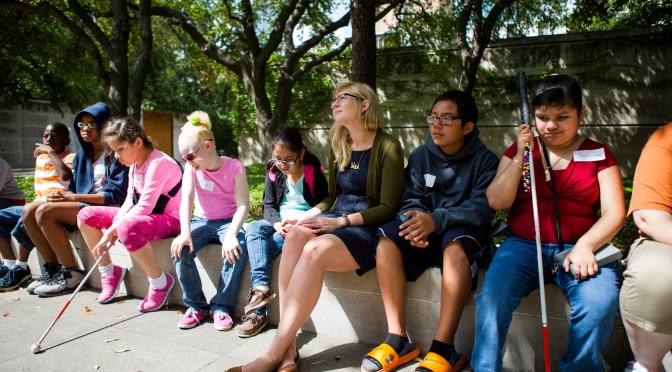
Touch Tours for Students with Vision Impairment

Written by Amanda Blake, Head of Family, Access, & School Experiences, and Danielle Schulz, Teaching Specialist, Dallas Museum of Art

Reposted from the Dallas Museum of Art’s education blog DMA Canvas, where the museum’s fantastic education team writes about creativity, community outreach, technology, and insights into the field of museum education. 

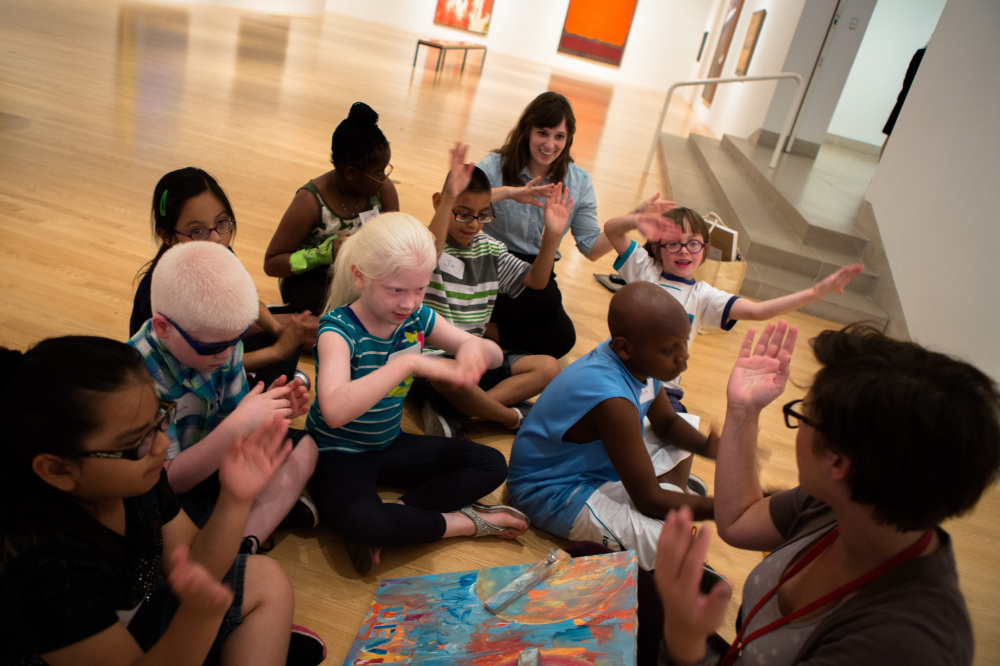
Many people may not think that of an art museum as the ideal field trip location for a group of children with visual impairment, but when the Dallas Independent School District (DISD) contacted the Dallas Museum of Art (DMA) earlier this summer with such a tour request, we were eager to provide the best experience possible. When discussing the visit with vision teachers at DISD, they felt it was important to expose their students to art and wanted an experience that would illustrate to the students that they too have the ability to create and appreciate art just as well as any other student.

The Planning Process

The Dallas Museum of Art has never before offered guided touch tours to visitors with visual impairment, but after speaking with our Director of Exhibition Design, we learned that she fully supports inclusive gallery teaching, and thus was open to supporting the Museum’s first ever touch tour. We talked with our colleagues in the exhibitions and conservation departments and found that they too were fully supportive of trying out a touch tour with the DISD students. The DMA Sculpture Garden was identified as the best place for our inaugural touch tour, since the objects in the garden are designed for an outdoor space and are thus subject to (and able to withstand) a variety of natural elements. We also felt that it was essential for the students to have the galleries to themselves during the tour, so as not to confuse other visitors about the acceptability of touching works of art, as well as for the overall comfort of the students with vision impairment. We therefore decided to schedule the touch tour for a Monday, when the Museum is closed to the public.

Our next step in the planning process was to walk through the space as a group, making note of areas that may be problematic for someone with vision impairment to navigate. The team was comprised of education, conservation, and exhibitions staff, and everyone on the team raised thoughtful questions and contributed wonderful ideas! We discussed which works of art may be the best for a tactile experience, and our conservators suggested that the kids have the chance to touch the works of art without gloves (which is usually unheard of in other touch tours!). Our exhibitions team offered to wash and hand-clean the works we selected so that they would be nice and clean for the experience. And one conservator suggested we select works of art that were large enough to be touched by more than one student at a time, so that the students could talk to one another about what they felt as they each touched the artwork.

After squaring things away with the exhibitions and conservation teams, the education team began planning the educational experiences of the tour. We prepared for twenty-five students, ranging in age from six to thirteen years, all with a range of visual impairment. The majority of students in the group had some residual vision, while two students were very photophobic, and two were blind from birth. Due to the range of abilities of our tour group, our education team knew it was important to include a variety of artworks in the tour (in addition to those on the touch tour), integrate many descriptive explanations of works of art and hands-on activities, and to have numerous tactile objects available.

In the Galleries

When designing the overall tour, we selected a variety of objects that spanned time periods, artistic techniques, and geographic locations. We visited two contemporary art sculptures in the Sculpture Garden for the touch portion, two Abstract Expressionist works in the contemporary gallery, and a mask in the African gallery. Our aim was to engage all of the senses throughout our tour, as we believe that presenting multiple representations of content would effectively cater to the different learning styles of the group. We created a multi-modal experience by collecting auditory clips for sound stimulation, tactile materials and replica objects for touch, Jelly Belly jelly beans for taste sensations, and essential oils and scented colored pencils for olfactory information.

Touch tour with Ellsworth Kelly sculpture. Photo courtesy of Dallas Museum of Art.

Each stop on the tour had a visual description of the gallery space and of the works of art we focused on, because it was important for us to situate ourselves, the children, and the art in space, as the sense of bodily awareness in space is something that many people without vision impairment may take for granted. Much of our time in the galleries was spent guiding students in tactile looking activities connected to specific works of art and facilitating conversations about texture and form. For instance, we created a reproduction of Jasper John’s Device so that the students could not only touch canvas and feel layers of paint, but they could also replicate moving the wooden stretchers back and forth across the canvas, while imagining the technique in which Johns spread the paint back and forth.

Recreating the movement in Jasper Johns “Device." Photo courtesy of Dallas Museum of Art.
Recreating the movement in Jasper Johns “Device.” Photo courtesy of Dallas Museum of Art.

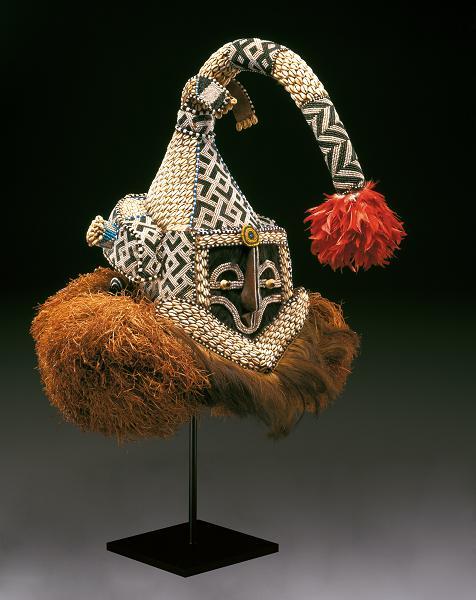
In the African galleries, we focused on a helmet mask made by the Kuba people of the Democratic Republic of the Congo, and passed around raffia, cowrie shells, feathers and other materials found in the mask. Additionally, we played sound clips of the various animals that related to the mask.

Democratic Republic of the Congo, Kuba peoples, Helmet mask (mukenga),  mid-20th century, Dallas Museum of Art, gift in honor of Peter Hanszen Lynch and Cristina Martha Frances Lynch.
Democratic Republic of the Congo, Kuba peoples, Helmet mask (mukenga), mid-20th century, Dallas Museum of Art, gift in honor of Peter Hanszen Lynch and Cristina Martha Frances Lynch.

Relating to Richard Diebenkorn’s Ocean Park No. 29, we discussed how an artist could depict a place using sounds, smells, and taste. The students each ate a jelly bean and imagined the color they believed the flavor might represent. Next, they used a scented colored pencil to illustrate a place based on that smell. We also played sound clips of ocean waves and boat horns to recreate the Santa Monica locale that inspired Diebenkorn’s Ocean Park series.

Our tour concluded with a sensory drawing activity that took place at the large fountain outside the Museum’s Flora Street entrance. The students listened to the sounds created by the water in the fountain, and considered how the water (and space around it) might appear, what color the water would be, even how the smell would be rendered. We gave each student a piece of thin Styrofoam and a pencil to create their drawing of the fountain; the students were able to feel the indented lines they drew onto the Styrofoam and took turns sharing their creations with one another.

Until Next Time

This was an exceptional experience for DISD students, teachers, and DMA staff alike. One teacher who helped to organize this visit said that this experience “might be the only time this whole summer [the students] get this opportunity to learn tactually, through their auditory channels and their residual vision, which sighted people take so much for granted.” It was a transformative experience as well for our Museum. We are honored to have been a part of this experience, and cannot celebrate enough the fantastic support and collaboration exhibited by DMA staff from many different departments. A huge thank you to DISD for bringing their students, and a thousand thank you’s to the DMA’s conservation, exhibitions, visitor services, and security teams. This was a team effort and we appreciate the unified support and assistance—let’s hope this is the first of many touch tours to come!

Read more about the Dallas Museum of Art’s education programs, community outreach, and explorations in creativity through their educator blog: DMA Canvas.

Time to Honor the Best Jugglers Among Us

Photo by Scott Ableman, flickr.com

As museum educators, we all have those moments when we feel like we’re juggling a thousand things all at once.  And we all know someone who is absolutely masterful at calmly balancing everything while they coordinate the opening of a new building expansion, launch a new app, reorganize a department, evaluate a school program, spearhead transformative community outreach, bring in a new docent class, facilitate a summer teacher institute, or organize a conference — often all at the same time : )

Over the next week, I challenge everyone to take a few minutes, think about those colleagues and peers of yours that are truly exemplary in our field, and follow a few simple steps to nominate them for an NAEA Museum Division Award.  Whether they can walk on hot coals, swallow swords, or juggle bowling balls (metaphorically speaking, of course), they deserve to be celebrated and recognized publicly.  Too frequently, recognizing the work we do as educators falls by the wayside, so I am calling on you to press the pause button for one moment and recognize the excellent work your peers are doing in the field.

Nominate a colleague for the National Art Education Association Museum Division Awards! This is such a simple process, and you can nominate any current NAEA member for Regional Awards as well as the National Award. Here is what you need to do:

  1. Take 5 minutes and think of someone who is making a difference in your work as a museum educator — whether they are a super supportive mentor, a transformative colleague, or an emerging educator whose hard work is deserving of recognition.
  2. Contact them — shoot them an email saying that you think they simply ROCK, and that you would like to nominate them for an NAEA Museum Division Award (regional or national).
  3. Write a short letter saying how great they are! What has been exemplary about their practice or their role in the field of museum education? What impact are they making at their institution; in their community; in the National Art Education Association? How have they pushed you to become a better educator? Please make them blush when they read it.
  4. Ask your rock star nominee to fill out the short CV form (download here) and to select 2 people to write short, glowing letters of support. Again, this is usually very easy, since as a field we are all here to support each other and recognize excellence. Ask the nominee to have their support letters sent directly to you.
  5. Submit this entire packet by October 1st (nomination letter, CV form, and 2 letters of support) to Ben Garcia (BGarcia@museumofman.org) or myself, Mike Murawski (mike.murawski@pam.org), no later than October 1st. Please don’t miss this deadline! We really want to consider your nomination and recognize excellence in your colleagues.

awards_2015You can find all of this information and forms by visiting the NAEA Awards website here.

Over the past 30 years, the National Art Education Association has recognized excellence in nearly 150 museum educators that are members of NAEA, many of them are mentors and colleagues that we have had the pleasure of working with or continue to work with now. The list includes “movers and shakers” in our field, but also the quiet, modest, yet powerful educators who would not have been recognized without being nominated by someone like yourself.

So take the time to recognize the excellent and transformative work happening in our field, and nominate someone for an NAEA Award!

If you have any questions at all, or need help with this process, do not hesitate to email me at mike.murawski@pam.org or Ben Garcia at BGarcia@museumofman.org. Remember that the deadline for submitting nominations is October 1st!

Telling to Live: Testimonio as Educational Praxis

Preface by Betsy Andersen, Founding Director of Museo Eduardo Carrillo

At the start of 2013, Museo Eduardo Carrillo began to explore the potential of curating original exhibitions online.  We determined that our focus would be on mid-career artists whose engagement in their art continued well past their college years.  We drew inspiration from The International Museum of Women and Museo de las Mujers de Costa Rico who have long been pairing art with thoughtful essays.

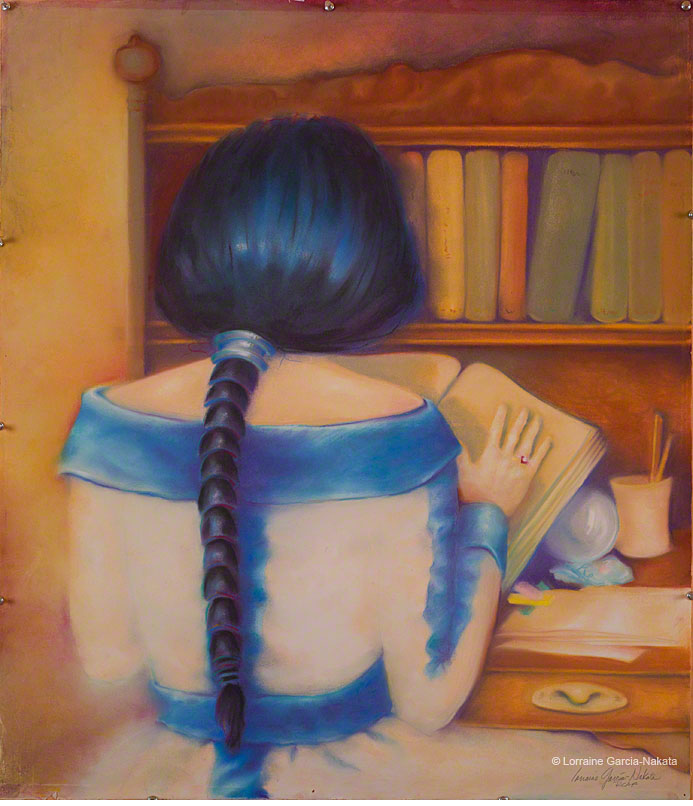
Lorraine García-Nakata, "The Alchemist," Pastel on Paper, 29”x 30,” 2005
Lorraine García-Nakata, “The Alchemist,” Pastel on Paper, 29”x 30,” 2005

One of our goals was to allow the artist to select a writer who they felt would expand the experience of their art through the written word.  It has been a thrilling collaborative process. As one of few online museums and as the only artist endowed foundation to represent a Mexican American artist, innovation is part of Museo Eduardo Carrillo’s DNA.

When I began a conversation with San Francisco-based artist Lorraine Garcia-Nakata and Cornell University Associate Professor Ella Diaz the exhibition took on a new dimension.  In this partnership, the Museo would not only host an online exhibition and essay, but also extend the experience to Professor Diaz’s undergraduate students.  Her students would examine the art through the “testimonio” framework which was the focus of the class.  It was an innovative and forward thinking idea. And we welcomed it wholeheartedly.

Because Eduardo Carrillo was an influential artist and Professor of Art at University of California Santa Cruz for 25 years until his death at age 60 in 1997,  Museo has felt that part of our mission is to encourage scholarship in the next generation by giving those students an opportunity to have their work published. Because the essays were so thoughtful and well written under Professor Diaz’s guidance, Museo did publish them online and they remain in Museo’s “On View” archives with the exhibition Navigating by Hand: The Art of Lorraine Garcia-Nakata.

Future exhibitions include the work of artist Jose Lozano with an essay by Professor Dianna Santillano and The Duron Family collection with Professor KarenMary Davalos. We are looking ahead to furthering this experiment that Professor Diaz instigated.

_______

Written by Ella Diaz, Cornell University

Lorraine García-Nakata: Navigating By Hand, an online exhibition of historically important Chicana artist Lorraine García-Nakata, was launched at the Museo Eduardo Carrillo in November 2013. This retrospective sampling of work, spanning several decades, was seeded by a separate exhibit I curated for the Mission Cultural Center for Latino Arts in San Francisco, that included her work. Over conversation, Lorraine and I found easy nexus regarding artistic practice as social change, public pedagogy, and Chicana aestheticism, evolving from 1960/1970s civil rights philosophies informing both professional and personal choices––values often absent in art institutions that default to viewing art minus the broader human context.

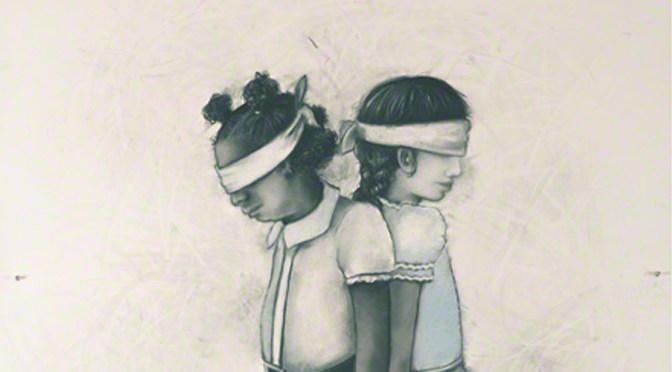
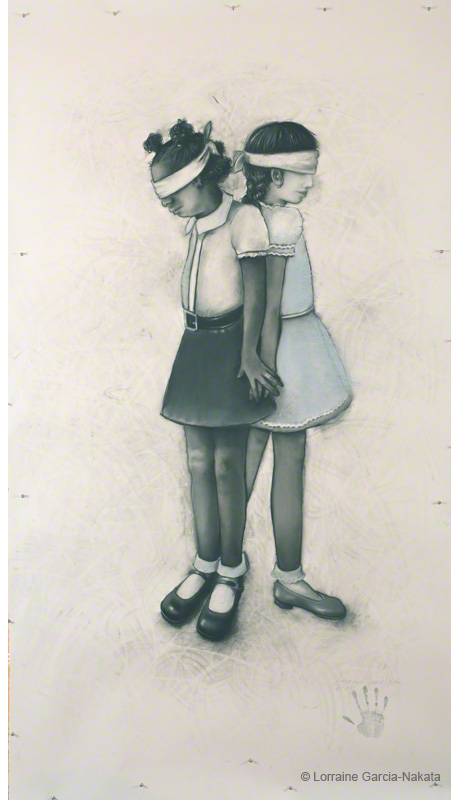
Lorraine García-Nakata, "Friends, No Matter What," Charcoal/Pastel On Paper, 7' x 4' 2” , 2008
Lorraine García-Nakata, “Friends, No Matter What,” Charcoal/Pastel On Paper, 7′ x 4′ 2” , 2008

When Lorraine asked me to write a curatorial statement for her solo exhibit, I agreed. The web-based format offered room for in-depth survey of her work that would identify and interpret its complexity and related cultural grounding. Being an artist, writer, and a museum professional, Lorraine shared that curatorial statements about artists of color often play it safe, hovering obvious descriptions of art, a historical idea, or repeating culturally flat references. Having read my published article, “Seeing is Believing: Visualizing Autobiography, Performing Testimonio: New Directions in Latina/o and Chicana/o Visual Aesthetic” (published 2011 in Chicana/Latina Studies: The Journal of Mujeres Activas en Letras y Cambio Social), Lorraine appreciated my view of Latina/o and Chicana/o visual and performance artists who push autobiographical literary boundaries and testimonio by telling their stories as collective experience, bearing witness to sociopolitical and historical events in non-written forms.

Testimonio literature is integral to Latin American and Chicana/o and U.S. Latina/a literary canon, offering an individual’s story reflecting a whole community, urgent human circumstance, and significance/meaning of daily life. Having scheduled a 2013 fall course at Cornell University on testimonio, along with my conversations with Lorraine, I designed curriculum engaging literary testimonio and alternative visual and performing art forms that would test boundaries of this literary genre.

From I, Rigoberta Menchú (1984), a canonical testimonio, to Latina Feminist Group’s formative anthology, Telling to Live: Latina Feminist Testimonios (2001), this course included testimonio as educational praxis, an important component of Chicano/a Studies pedagogy. Incorporating Lorraine’s body of work, the course linked to the Museo Eduardo Carrillo’s online exhibition launched in November 2013. After a semester of critical inquiry of the testimonio genre and visual analysis of 1960s and 1970s civil rights murals, students were adept in this literary form. With close review of Lorraine’s visual art and selected writings, students began writing (see Museo’s website archive) revealing how García-Nakata visualizes her story as a comprehensive experience, testifying to the power of everyday life. Students conveyed, in clear resonant voices, how Lorraine speaks to viewers through her life events, childhood innocence, hopes, vulnerability, desires in later years, and raising of children.

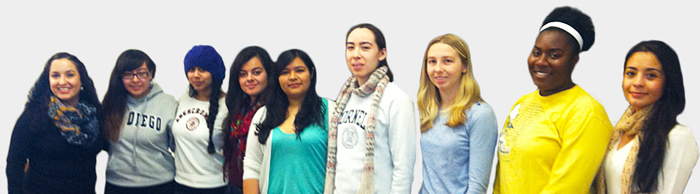
Student Photo: From left to right: Professor Ella Diaz, Sarah Proo, Ashley Elizondo, Carmen Martínez, Stephanie Martinez, Elizabeth Ferrie, Kerry Close, Eamari Bell, & Gabriela Leon. (Not pictured: Phoebe Houston)

Working with an artist and a museum, I designed a dynamic, interdisciplinary pedagogy for students regarding genres of Latina/Chicana prose. Students considered ways we tell our stories beyond printed autobiography. Through interpretation of works by Lorraine Garcia-Nakata as narrative, they made insightful commentary that she digested and the public witnessed.

_______

Written by Lorraine García-Nakata, Artist        

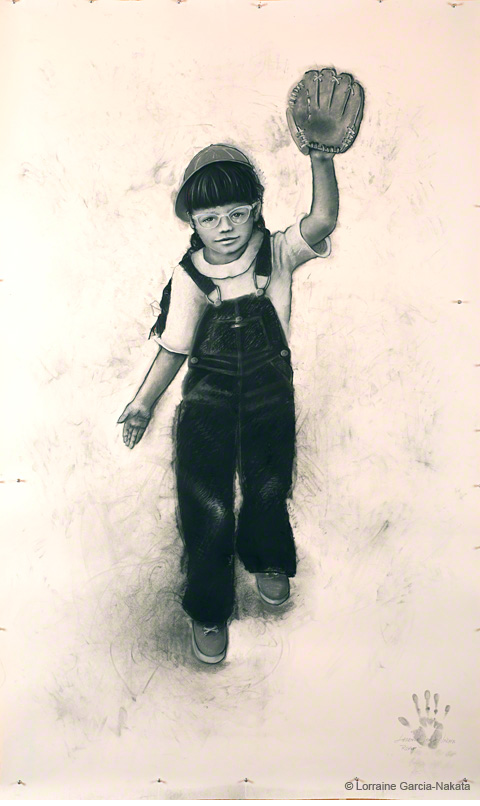
Lorraine García-Nakata, "1950’s Self Portrait," Charcoal on Paper, 7’x 4’ 2”, 2008
Lorraine García-Nakata, “1950’s Self Portrait,” Charcoal on Paper, 7’x 4’ 2”, 2008

When young, I took myself through a disciplined process resulting in a clear understanding that my life required the creative process. From that point, it was never a question, rather a quest informing my life as an artist, parent, art/cultural specialist, and as a museum professional who introduced to the field progressive best practices linked to redefinitions of community, further evolution of curatorial and public programs, development of partnerships of mutual benefit and related reciprocity, and use of accurate terminology.

As Latino contemporary artistic work has become part of the broader aesthetic, I’ve expected research, interpretation, and related writing (from within and outside our culture) to delve the complexity of Latino cultures: Chicano(a), Uruguayan, Indigenous, Caribbean, Afro Cuban, Afro North American, other cultures of Latin America, and the growing population of mixed race contemporary youth that embrace all parts of their identity. I’ve also expected exhibitions to expand beyond, and not regularly default to, group or cultural holiday exhibits. When Cornell Professor Ella Diaz approached me about an exhibit focused on figurative art by women of color, I agreed to lend my work. As a next generation, first voice (from within the culture) scholar/curator, Ella was not afraid to critique periods of our contemporary Latino history (that later evolved), such as the gender-biased framework of early phases of the Chicano movement or initial perceptions/invisibility of our LGBT Latino population. Ella also possessed a capacity to witness, interpret, and scribe the nuance of my artistic work, which is not overt or linked to the “expected” Latino iconography or color palette.

When approached by the Museo Eduardo Carrillo regarding a solo online exhibition, I agreed only if Professor Diaz could write the curatorial statement. It also seemed important for the Museum Director, Betsy Andersen, and Ella to meet. An interpretive component was developed by Ella, which included a Cornell graduate seminar focused on my work. I was delighted that students would research my work in depth and produce individual writings. I was excited to read them. For an artist, museum exhibitions are important as well as research of one’s work by a key academic institution. Cornell student writings were published on the Museo’s website, adding another important educational/interpretive element. We all worked hard to mount this exhibit, and it was clearly of mutual benefit to the Museo, myself as artist, Professor Diaz as curator, and participating Cornell students. The online exhibition provided a multi-level experience for the viewing public and offered a forum for publishing research by our next generation scholars.

While I am active in the local/national community, my artistic work is not obvious or overt in its protest or politic, but it does testify. It also challenges assumptions about how we live, how we intend our action. Being an artist, writer, and musician can be solitary and hard work. It’s a responsibility. Yet, I have long since committed my life to this practice and it will continue to be how I navigate my life.

*     *     *     *     *

Click the link below to read the essays written by nine undergraduate students at Cornell University who enrolled in Professor Ella Diaz’s fall 2013 course “Telling to Live: Critical Examinations of Testimonio.”

Read Essays from Cornell University Students

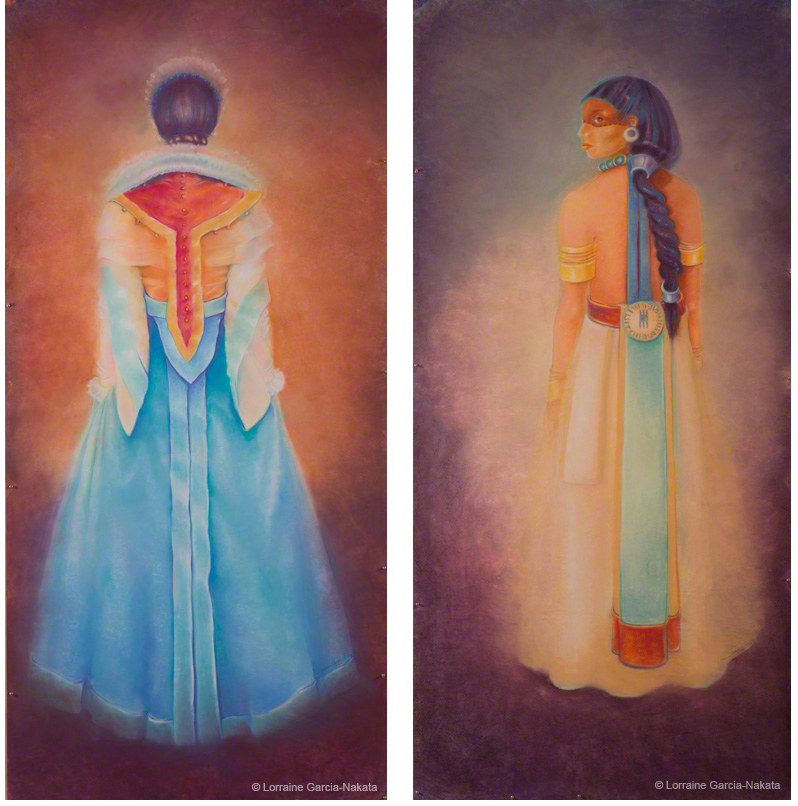
Lorraine García-Nakata, "Facio Nova Omnia II: Colonia" and "Facio Nova Omnia II: Indigena" (Diptych), Pastel on Paper, each 7’x 3’ 9” 2005
Lorraine García-Nakata, “Facio Nova Omnia II: Colonia” and “Facio Nova Omnia II: Indigena” (Diptych), Pastel on Paper, each 7’x 3’ 9” 2005

All Artwork ©2013 Lorraine García-Nakata protected under U.S. and International Law. Other than for exhibition related uses, no part of this material can be altered, reproduced, stored in or introduced into a retrieval system, or transmitted, in any form, or by any means (electronic, mechanical, photocopying, recording, or otherwise), without prior written permission of the copyright owner and artist, Lorraine García-Nakata/Lorraine García. This includes all rights now in existence or which may hereafter come into existence, including but not limited to authorship, documentation, lectures, or any other creation or presentation by Lorraine García-Nakata/ Lorraine García in any artistic medium, print, audio, electronic, video, CD ROM, photographic, digital, film, and any future medium.

ABOUT THE AUTHORS

andersenBETSY ANDERSEN: Founding Director of Museo Eduardo Carrillo, created to extend the artist’s work and compassionate legacy into the world.  Andersen received her Bachelor of Arts from University of California, Santa Cruz.  Since that time she has enjoyed being the host of a radio interview show devoted to the visual arts and has explored producing documentaries on regional artists.

emd233ELLA MARIA DIAZ: earned her Ph.D. in American Studies from the College of William and Mary, teaching several courses at William and Mary and developing the College’s first Chicana Literature course in spring 2005. Her research pertains to the interdependence of Chicano/a and U.S. Latino/a literary and visual cultures. Her dissertation, “Flying Under the Radar with The Royal Chicano Air Force: The Ongoing Politics of Space and Ethnic Identity” explores these intersections and, for this project, she received The College of William and Mary’s Distinguished Dissertation Award in 2010. She was a Lecturer in The School of Interdisciplinary Studies at the San Francisco Art Institute between 2006—2012. Her current book project explores the historical consciousness of a Chicano/a arts collective that produced major and canonical works of poetry, art, and literature. Diaz has published through Aztlán: A Journal of Chicano Studies, U.C. Santa Barbara’s ImaginArte, and in Chicana/Latina Studies: The Journal of Mujeres Activas en Letras y Cambio Social.

Lorraine-garciaLORRAINE GARCÍA-NAKATA: Since 1973, Lorraine García-Nakata has been a “pilot” with the world-renowned Sacramento Chicano artist collective, the Royal Chicano Air Force (RCAF). One of six original primary muralists, Lorraine was the only female artist asked to join her fellow pilots José Montoya, Esteban Villa, Juanishi Orosco, Stan Padilla, and Juan Cervantes in painting the renowned and historic South Side Mural located in Sacramento, California. Ms. García-Nakata is a recognized visual artist and has exhibited extensively since 1970 on a local, regional, national and international level. Adept in a range of visual arts medium, she is noted for her large-scale works in drawing and painting. Lorraine is also recognized for her command of mixed media, printmaking, installation work, ceramics, and sculpture.