Getting Outside the Bubble: Museum Social Action Project at MuseumNext

Reposted and revised from MuseumNext, a global conference on the future of museums which has acted as a platform for showcasing best practice today to shine a light on the museum of tomorrow.  Check out more details about the upcoming conference in New York by visiting their new website.

MuseumNext is very much a collaboration which brings together museum professionals to share what they feel is important and exciting, that is true of the presentations and workshops which our community propose through our call for papers and through the other activities which form our conference fringe.

Since 2009, we’ve had everything from brainstorming wild ideas with Nina Simon, to a symposium on heritage and retail to playing with the latest sensor technology, but for our conference in New York City we have a very exciting addition to the program.

Mike Murawski, Director of Education & Public Programs at Portland Art Museum, challenged us to build a Museum Social Action Project into the program and offered along with Monica Montgomery to make the project happen.

MuseumNext asked Mike to tell us more about this exciting project:

How did the Museum Social Action Project come about?

At a time when museum professionals are increasingly thinking about the social impact of museums as well as the role these institutions play within our local communities, it seemed urgent to get outside the ‘bubble’ of the conference and more directly engage with organizations responding to local realities.

I was invited to present at the MuseumNext conference in New York on the topic of enacting change in museums and converting talk into action, so it felt necessary to get outside the conference venue and ‘walk the walk.’  Not having a strong familiarity with the local communities across New York, I immediately reached out to Monica Montgomery (MuseumHue, Museum of Impact) to explore this idea of a Museum Social Action Project.

Monica and I brainstormed about some possible ideas, and she connected us with the team at The Laundromat Project, an amazing organization that works to bring socially engaged arts programming to laundromats and other everyday community spaces.  

Why should a museum conference try and facilitate something like this?

As museum professionals, it is vital that we enact a mindset of giving back and supporting grassroots organizations like The Laundromat Project that strengthen our communities. Each and every professional conference should be focusing more on how it can be connected and relevant to the place of its convening, and not just think about locations as conference hotels and convention centers.

Conference sessions, panels, and topics can certainly be more grounded in the realities and issues of the conference’s city and neighborhoods, but I think it’s important to get outside the walls of the conference, explore direct ways to see our ideas in action, and be a responsible part of building stronger communities (beyond the spotlight of the conference).

What is The Laundromat Project?

Launched in 2006, The Laundromat Project brings socially relevant and socially engaged arts programming to laundromats and other everyday community spaces in order to reach as many of our neighbors as possible. The LP’s artists and staff work to amplify the creativity that already exists within communities by using arts and culture to build community networks, solve problems, and enhance the sense of ownership in the places where we live, work, and grow. The LP is particularly committed to long-term and sustained investment in communities of color as well as those living on modest incomes.

Their Kelly Street Initiative was launched in 2016 in partnership with Workforce Housing Group, Kelly Street Garden, and Banana Kelly Community Improvement Association, transforming a 2 bedroom-apartment on Kelly Street in Longwood, South Bronx, into a thriving creative community hub, with artist studios, arts programming, and community partnerships that allow The LP to engage the larger Kelly Street community.  We are honored to be collaborating with Hatuey Ramos-Fermín, The LP’s Director of Programs & Community Engagement, to build this Museum Social Action Project together for MuseumNext.

What’s the project that you’re doing?

Participants attending this Museum Social Action Project will meet staff and artists at The Laundromat Project, learn about their various projects and programs, and tour the Kelly Street Initiative location as well as learn more about that neighborhood.  LP staff and artists will then lead a short workshop and discussion on how organizations can learn more about a neighborhood’s capacities, creativity, and skills through community asset mapping.

Participants will also discuss ways to build a sustained investment in community partnerships, rather than one-sided outreach efforts or one-time program offerings. As a vital part of this project, we also ask that participants find a way to give back to The Laundromat Project and help them create more joyful spaces of creativity and community. Participants can do this by bringing an art supply Gift Card from Dick Blick or by donating directly to the Laundromat Project online (which I strongly encourage people to do, even if you are not involved in this project or the MuseumNext conference).
23501550362_ce672bf47b_z
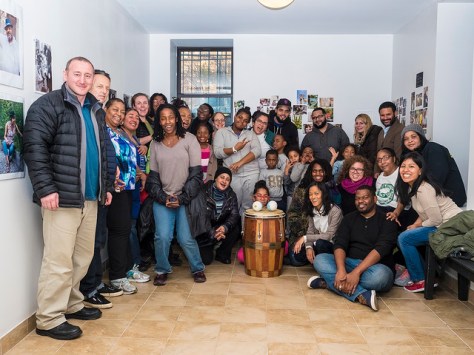
The Laundromat Project’s Kelly Street Housewarming Party. Photo by Osjua A. Newton, Copyright © 2015

 What do you think the delegates will get out of it?

The aim is for delegates attending the Museum Social Action Project to be able to gain a more concrete understanding of community-based practices, of how cultural organizations can serve as sites of social action and relevance, of how museums and arts non-profits can bring people together a work to build stronger, more resilient communities.   They will gain skills from The LP staff and from each other around community asset mapping, and really listening to local community voices.  

What impact can the project have?

For me, personally, there are a few big “what if’s” at the heart of this type of Museum Social Action Project.  I know that museums and cultural organizations across the world are striving to be an essential part of their communities; but what if our communities could become an essential part of our institutions?  What if we could effectively re-center this movement for change around our local communities and the power, knowledge, creativity, and capacities that they can bring to our institutions?  What if conferences and professional gatherings spent more time doing and less time talking?

I don’t think we’ll achieve this all at our half-day Museum Social Action Project this November in New York, but I hope others are inspired to do similar types of projects and experiences, getting outside the walls of our conferences and harnessing the power of museum professionals to learn from and give back to our communities.

 —

The Museum Social Action Project is one of the fringe activities for MuseumNext New York City. The conference takes place 14 – 16 November 2016 at the BMCC Tribeca Performing Arts Center. Find out more about the conference here.

Featured header image: The Laundromat Project Kelly Street Housewarming, Photo by Osjua A. Newton, copyright © 2015.

From the Radio to the Museum: Storytelling, Listening, and Radical Empathy

Written by Beth Maloney

What can museums learn from approaches, models, and practices in other fields? How are we continuing to frame and define empathy and relevance in museum programming? Are we doing the research, making the connections, and learning from what else is out there?

*     *     *

I love good storytelling on the radio – whether listening to NPR as a child in the back seat of my Dad’s car, pulling over to a parking lot to catch the end of StoryCorps, or indulging in a podcast while I fold laundry. I love a good story; it’s partly why I love history. Last month, I attended a live event about Out of the Blocks, a documentary series on my local NPR station. The pieces began to fall together for me and I started considering this radio program in relation to dialogue-based museum programming.

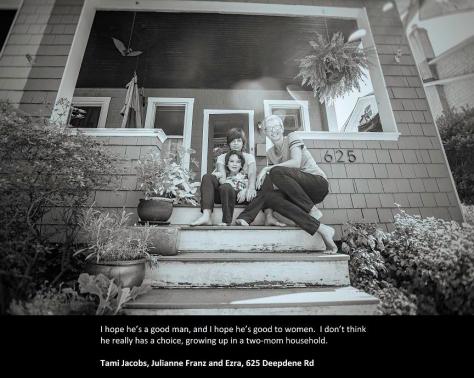
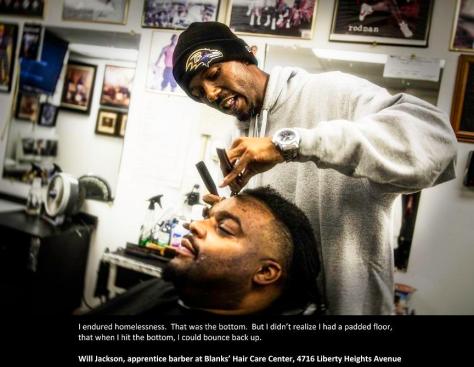
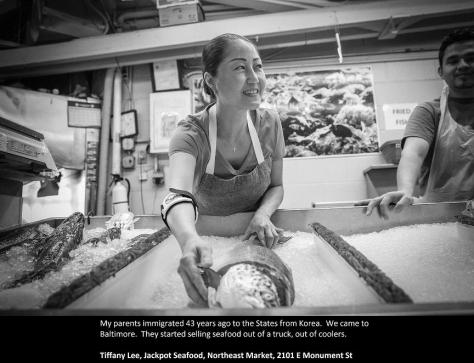
Out of the Blocks is a program from WYPR 88.1 FM in Baltimore, Maryland. Based on the simple concept of sharing the stories of people living on one block in Baltimore, radio producer Aaron Henkin and music producer Wendel Patrick create a series of episodes that present captivating narratives of real life. After interviewing everyone on one city block, they edit together interviews into one hour of radio that is lovely to listen to – opening perspective, building empathy and understanding. The show and podcast are well worth checking out; it’s truly amazing to hear interviewees share stories and see how editing, soundscape and production buoy those narratives.

img_7984-edit

However, it was the live event that really got me thinking. On stage, in real time, Baltimoreans whom Henkin and Patrick interviewed spoke about the project. Interviewees shared their first impressions of Henkin and Patrick, talked about being interviewed and, most movingly, what it was like to hear their own stories and voices in the final program on the radio. In front of a sold out auditorium of listeners and fans, many of them shared that it was both frightening and empowering to experience what eventually aired.

In his opening remarks, Henkin described the show as an experiment in radical empathy – the idea that everyone has a story that is worth telling and that the process of having people intently listen to that story feels good – it makes you feel like you matter. Producing this show is intensive and involves selecting a block to focus on, meeting and building relationships with everyone on that block, conducting hour long interviews with each person, editing all of those interviews into one episode and building the musical backdrop that amplifies and supports those stories. In the end, Henkin shared that he imagined each block as a mosaic of experiences and stories and, indeed, the city of Baltimore as a larger mosaic of those city blocks.

27_1

What’s the museum education connection?

Hearing from speakers at this live event, I was reminded immediately of some of the previous posts on artmuseumteaching.com about conversation and dialogue-based programming and institutional empathy in museums. Dialogue-based programming is not new to museums. Whether we are engaging in gallery and object-based discussion using techniques like VTS and facilitated dialogue or hosting thematically focused programming like Science Museum of Minnesota’s Talking Circles, Missouri History Museum’s Mother to Mother program  or Lower East Side Tenement Museum Kitchen Conversations, dialogue is central to our work. With this in mind, three points struck me immediately in Out of the Blocks:

  1. The deeply specific and site-based nature of the work
  2. The collaboration between documentarian and sound artist
  3. The relationships built through the process – between the producers, interviewees, neighbors and a broader community of listeners

In late September, I visited two major history museums in town with a friend– the Baltimore Museum of Industry and the Maryland Historical Society. In the galleries, there are glimpses of the “Baltimore mosaic” Henkin described, visible in the form of a personal object with a particularly evocative story behind it, a student curated show featuring photographs of the process of historical inquiry and research, or an exhibit designed as an immersive environment – transporting one through theatrical techniques to a different time and place. Yet, there weren’t nearly enough of those provocative and arresting personal stories that tether historical events to the experiences of real people.

When we teach in history museums and exhibitions, we sometimes get caught up in the intoxication of historical documents, artifacts, objects and buildings to the detriment of the emotional, personal, story-driven voice of those who experienced a place or event. Sometimes this may be because it’s hard to find voices, particularly of those not present in the historical record. And there is a sense of the need for “neutrality.” But even if we can’t necessarily “interview” people who are long gone, we as a field benefit from a continuous reminder about the power of visceral, real stories from real people – especially in the face of larger interpretive narratives that address the history of organizations, nations and institutions. There is power in specificity, and scaled, personal and connective stories.

23

Ideas I am walking away with

Here are some reminders and lessons I’m taking away from Out of the Blocks:

  • Relationship building. It takes a long time to create an episode of Out of the Blocks (about 8 weeks). The commitment to interview everyone on one block, each person for an hour, takes time. And there is also time spent hanging out and getting to know the people on that block. This may be part of why interviewees feel comfortable sharing their stories.
  • The power of storytelling and the importance of transparency. The power of storytelling isn’t new. But at the Out of the Blocks live event I was reminded of how powerful it is to know the “backstory.” Hearing directly from both producers and interviewees added depth, nuance and made clear that the project was meaningful to everyone: the producers and the interviewees.
  • The notion of sharing and listening as radical empathy. There is power to both sharing stories and having them heard. As staff at institutions and cultural organizations, we need to remember both pieces – dialogue is both talking and listening.

What if we applied the same intensive techniques Henkin and Patrick use to interpreting our historic buildings, sites and spaces? What if in the same ways they interviewed everyone living on one city block during one moment in time, we “interviewed” everyone who lived in one place through time –the people who occupied the space before a building was built, the people who built the building, the people who worked in the building, renovated, occupied and used a space in different ways through time, and the people who are there now, in the neighborhood.  In this way, we might get closer to addressing the mythology of the “period of interpretation” as Frank Vagnone writes in his blog and the Anarchist’s Guide of Historic House Museums, co-authored with Deborah Ryan.

At one point in during the live event, Henkin shared that he and Patrick have been asked about the agenda for this series. What did they want to get out of this? What were they hoping for? Their response has been that there is no agenda but that if there were one, it would be to just show up and listen. What would it look like if museums just showed up and listened? What kinds of exhibitions, programs, partnerships and relationships might materialize? What can we in museums learn about programming and story from this kind of work? What examples of similar approaches in museums, libraries, at historic sites have you seen? Let’s amplify them.

*     *     *     *     *

About the Author

BETH MALONEY works as an independent consultant, bringing educational expertise to museums and cultural organizations in the form of curriculum and program development, interpretation, visitor experience planning and professional training. In addition to partnering with a wide range of museums and historic sites, she teaches undergraduate courses that explore museum work and learning through the Program in Museums and Society at Johns Hopkins University. Former Board member and Past President of the Museum Education Roundtable, Beth serves as a peer reviewer for the Journal of Museum Education. For more information and to be in touch, please visit www.bethmaloney.com.

Header Image: Photo by Wendel Patrick. Aaron Henkin conducting an interview for “OUT OF THE BLOCKS,” 2012, photo courtesy the artists.

Photos included in this post are by Wendel Patrick, used courtesy of the artist.

Seeing without Sight: What I Learned About Photography at Sight Unseen

Written by Sarah WatkinsCanadian Museum for Human Rights

Reposted with permission from the Canadian Museum for Human Rights blog, the institution’s online presence for stories about the museum and its exhibitions, programs, education programs, and other news.  Check it out, and learn more about the exciting work happening at the CMHR. Original post by Sarah Watkins, September 3, 2016.

I have always believed that museums are powerful places. Visiting a well-done exhibit can help us to grow by opening our minds and hearts to ideas that we may never have even considered. For me, the travelling exhibition Sight Unseen: International Photography by Blind Artists is a perfect example of this.

On display at the Canadian Museum for Human Rights until September 18th, Sight Unseen showcased the photography of acclaimed international artists, all of whom have varying levels of vision loss. I was fortunate enough to work with some of these artists to create a lecture series called Shooting Blind, which explored the idea of taking photos without the use of sight. Now that I can reflect on this experience, I have come to realize that this exhibition and these artists have helped me to discover a new perspective on photography and ability.

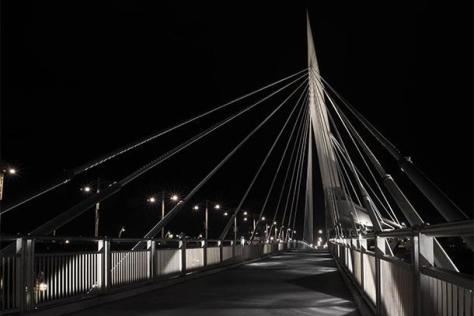
A quiet evening on Winnipeg's Esplanade Riel. Credit: Shadow Walk/Sarah Watkins
A quiet evening on Winnipeg’s Esplanade Riel. Credit: Shadow Walk/Sarah Watkins

What is really interesting about Sight Unseen is that the art seems familiar but foreign at the same time. In today’s world, everyone takes photos – at home with family, out with friends, on our cellphones and tablets and with our digital cameras. The act of taking photographs has become commonplace, and for this reason we can all connect with this exhibition. The artists in this show, however, aren’t just taking photos or documenting a moment in time; they are communicating a message. They think very deeply and consciously about what they are going to photograph.

I used to take thousands of photos with my digital camera in an attempt to capture the exact thing that I was seeing with my eyes. Now, because of this exhibition, I have a different perspective. I take fewer photos, but I think more deeply about each one. I look beyond what is in front of me and consider why I am taking the photo. Am I trying to capture an image of the bridge, or the way that the evening light creates patterns out of shadows that reflect the shape of their source? Is it the fog on the water that is most interesting, or the stillness that it communicates the minute before I jump in the lake for a morning swim?

A foggy lake before a morning swim. Credit: Morning Swim/Sarah Watkins

After visiting Sight Unseen, I see the photographs in a new way. When I look at the photo created by Evgen Bavčar that shows an outstretched hand touching the face of a stone statue, I no longer see just the objects. Rather, I see the careful exploration and discovery of something unknown. I can’t help but think of the artist, exploring the world in ways that I could never imagine, through the sense of touch. Similarly, I used to think of the amazing light paintings created by Pete Eckert as abstract art. His photographs created in a completely dark room with flashlights and other light sources seemed random. Now, the swirling colours and rays of light make me think of energy. Each model is represented differently, the colours and patterns as unique as the person they are highlighting. To me, this sense of energy was something previously imperceptible until Pete showed it to me through his work.

This change in perspective has me questioning what it means to be “able” to do something. If photography isn’t about sight, then maybe dancing isn’t always about what we do with our legs, and speaking isn’t always about sounds coming out of our mouths. This is the lesson that I have learned from Sight Unseen. There is more about us that is the same than different, so no matter what our differences are, we all deserve to have our humanity, dignity and rights respected in the same way.

*Sarah Watkins is a Interpretive Program Developer for the Canadian Museum for Human Rights.

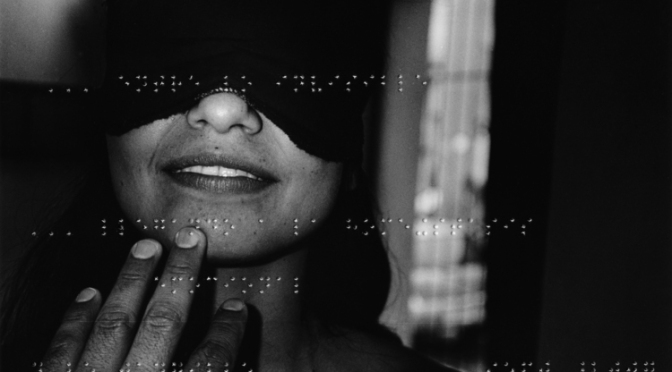
Header Image: Gerardo Nigenda, Entre lo invisible y lo tangible, llegando a la homeostasis emocional (Reaching Emotional Equilibrium Between the Invisible and the Tangible).