As the first year of the ArtMuseumTeaching site wraps up, I thought it would be good to post a brief “Year in Review.” Not that we need any more end-of-the-year lists or calls for resolutions, but I think it can be meaningful to take a minute and look back at some of the issues that have been on our minds this past year. From the Getty staff reduction to a cantankerous teenager writing about museums, there have been a lot of sticky topics that we’ve discussed here on this site.
Through its inaugural year, ArtMuseumTeaching has grown from a tiny blog seedling planted back in February to an online community that now has 16 authors, 52 posts, and more than 50,000 views from readers in 99 countries. I hope that the online community and conversation around this site will continue to grow, include more perspectives, and be a space of exchange where we can connect on issues of teaching, learning, and community engagement that matter most.
Year in Review: 5 Most Read Posts of 2012
1. “Why Museums Don’t Suck: The Current State of Teen Engagement” (October 2012): Howard Hwang’s indictment of museums in his teen article for LA Youth sparked the most widespread discussion of the year, bringing out some great perspectives on teen engagement as well as some key questions and challenges we should all be addressing.
2. “Responding to the Getty Cuts: A Significant Step Backward” (May 2012): While we all have become well-acquainted with the budget cuts and lay-offs of the recent recession, the move earlier this year by the Getty to cut its education staff caught many of us by surprise — and was certainly a crisis moment for our profession.
3. “Public Value and Being Human: Gallery Teaching is Core to Our Mission” (May 2012): One of the real crisis moments of the year for our field also brought out some exceptional reflections from within, and this thoughtful post from Briley Rasmussen helped us focus on the human element of our shared work in museums.
4. “Teaching with the iPad: Adding a New Dimension to the Museum Experience” (April 2012): As technology edges its way into every museum, the iPad has been drawing a lot of attention. While we don’t know what device or new technology will sweep across museums over the next few years, it was nice to look at some of the basic ways that a simple tablet device can transform even the most traditional museum experience.
5. “Gallery Diving: Interns Tackle Public Engagement” (August 2012): One of the big themes of 2012 was definitely ‘experimenting in museums,’ and I am still so proud of the risks that this group of interns took this past summer through our public engagement project. It inspires me to continue pushing toward a DIY mindset.
Enjoy these popular posts from 2012, and see you in 2013 — a year that promises to bring a whole new set of challenges, success stories, and new ways of thinking about both the theory and practice of art museum teaching. If you would like to share the projects you’re working on or the issues and challenges you are grappling with, please add your voice to this growing community (and just send me a tweet at @murawski27). Cheers!
“Stories matter. Many stories matter. Stories have been used to dispossess and to malign, but stories can also be used to empower and to humanize. Stories can break the dignity of a people, but stories can also repair that broken dignity.”
—Chimamanda Ngozi Adichie
Early in 2012, I came across a particularly inspiring TED talk by Nigerian novelist Chimamanda Ngozi Adichie. Her talk entitled “The Danger of a Single Story,” quoted above, warns that if we tell or hear only a single story about a people or culture, we risk a critical misunderstanding. Our lives and our cultures are composed of many overlapping stories, and all of those stories matter and deserve to have a voice. As I was listening to Adichie’s transformative words, I immediately thought about museums and the cultural power they have historically possessed to tell a single story—the single story. As museums continue to adapt to become more relevant in the 21st century, they have also been struggling with whose stories to tell, whose voices can participate in that telling, and how much power can or should be handed over to our communities to tell and share their own stories.
Since first listening to Chimamanda Adichie’s talk almost a year ago, I have experienced an exciting career and life transition as I moved from St. Louis to Portland, Oregon, to become the Director of Education & Public Programs at the Portland Art Museum. And these issues of power, voice, storytelling, and community engagement are central to one of the Museum’s most widely expanding educational projects, Object Stories. Launched almost 3 years ago, this project begins to address the need for museums to reject the single story, to create and share a multiplicity of stories around its collection, and to bring the meaning-making process of storytelling into the galleries. This post provides a much-needed spotlight on the Object Stories project, and I will definitely follow-up with future posts that reflect on the further challenges and successes of this exciting work.
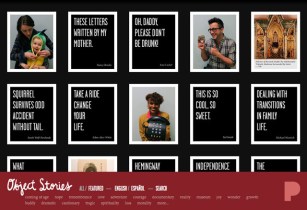
Explore more than 1,000 stories through the Object Stories website, objectstories.org
The Portland Art Museum’s Object Stories project was recently featured by EmcArts and ArtsFwd in their ‘Business Unusual’ Contest, and I’m very proud to say that we won the contest with a broad base of support from across our community (the Mayor of Portland even gave us a shout out, along with dozens of other cultural organizations across Oregon). Originally posted on ArtsFwd.org, the text below was created through a full team effort from the Education Department, including Stephanie Parrish, Amy Gray, Danae Hutson, Jess Park, Betsy Konop, and especially my amazing predecessor Tina Olsen, who passionately led this project from its inception to where it stands today. As a team, we are pushing this project to new areas and breaking down boundaries inside the museum as well as both locally and globally.
• • • • • •
In light of the challenges of the 21st century, institutions across the globe are reassessing their strategies to be more relevant in the lives of their communities. Framed by this larger discussion, the Portland Art Museum began to rethink how we relate to our audience. We questioned the role of the public as mere consumers of information and strove to diversify the populations that we serve. In doing so, we uncovered that both the Museum and the public needed a catalyst for active participation, personal reflection, and meaningful ways to rediscover works of art in the collection. It was out of this larger, ongoing thinking that the Object Stories initiative was born.
Launched in March 2010, Object Stories invites visitors to record their own narratives about personal objects—whether a piece of clothing, a cherished record album, or a family heirloom. By capturing, honoring, and sharing participants’ stories, this project aims to demystify the Museum, making it more accessible, welcoming, and meaningful to a greater diversity of communities – while continuing to highlight the inherent relationship between people and things. Nearly one thousand people from throughout Portland—most of who had never before set foot in the Museum—have participated as storytellers in this project.
How Object Stories works
A user-friendly touchscreen inside the Object Stories booth guides participants through the recording process.
Current visitors to the Object Stories gallery encounter a recording booth, where they can leave their own story, as well as a central table with two touchscreens that enable them to browse, search, and listen to hundreds of collected stories about personal objects and works from the collection. On the surrounding walls, guests find a rotating selection of museum objects that have been the subject of recent stories in concert with portraits of community members posing with their personal objects.
The Museum has also produced a series of Object Stories that brings out personal perspectives on selected objects in the permanent collection, with recordings of the voices of museum staff, local artists, and cultural partners. This stage of the project has added a personal dimension to visitors’ experiences and their interpretation around works of art in the collection.
Change in organizational approach, a new culture of dialogue
This overarching shift in the Museum’s relationship with our audience is the culmination of a series of other changes away from “business-as-usual.” The internal process of developing and implementing Object Stories has encouraged the dissolution of long-established departmental silos, the growth of new partnerships with community organizations, and the confidence to experiment with a formative approach to programming that incorporates audience feedback.
A user-friendly touchscreen inside the Object Stories booth guides participants through the recording process.
Before the launch of Object Stories, the education departments of the Museum and Northwest Film Center partnered with Milagro Theatre and Write Around Portland to develop community-generated prototypes that led to the existing recording process and prompts. This prototyping phase brought in staff from across the Museum—as well as local design firms—to challenge our assumptions of who could and should hold authority in these decisions about content and interpretation within the museum. While more work has to be done to build upon this internal culture of dialogue and collaboration, this project has successfully led to a shared understanding of the value of representing community voices and displaying public-generated content on gallery walls.
A new platform for community collaboration
Since 2010, the Object Stories concept has essentially evolved into a comprehensive educational platform for engaging audiences and forging community collaborations. The Museum has since extended Object Stories into a multi-year partnership with area middle schools that involves in-depth teacher professional development, artist residencies, and multiple visits to the Portland Art Museum that culminates in students’ own personal “object stories.” Further success has brought the Museum into a new international partnership with the Museo Nacional de San Carlos in Mexico City, and a more locally-focused proposed Object Stories project with the Native American Youth and Family Center in Portland. These outreach efforts will also bring the storytelling process outside of the Museum through a new mobile iPad application currently in development.
Big impact with room for growth
The biggest shift and impact caused by Object Stories is the changing viewpoint of diverse audiences, who now see the Portland Art Museum as a place that invites the voices and stories of its community and welcomes the public in this act of co-creating content. As the Museum continues to integrate the Object Stories initiative into its growing educational programming and interpretive planning, we will no doubt discover new challenges, as well as exciting opportunities.
We’re super excited about where this project has been and where it is going, but I wanted to end with some open questions to invite your thoughts:
In what ways does storytelling and personal meaning-making enter the fabric of your institution?
What are some challenges to having these types of projects enter the ‘mainstream’ of museum planning around visitor experience and interpretation?
How can museums do a better job to design and support opportunities like this for visitor and community voices to enter the galleries?
And, finally, a big question that is very much on our minds: what is the next step for projects like this?
Please post your thoughts and questions below, and add to the ongoing conversation. You can also learn more about the thinking behind Object Stories by reading Nina Simon’s interview with Tina Olsen at Museum 2.0.
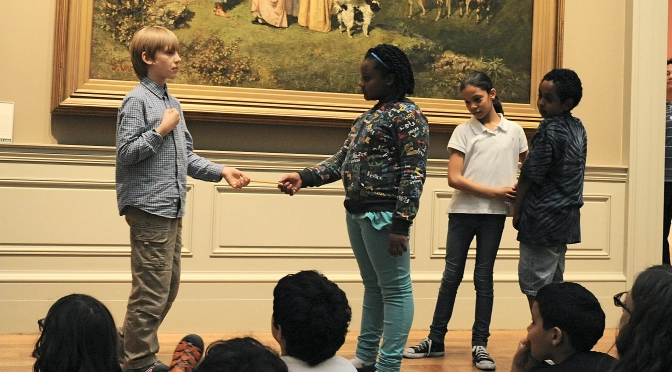
Students creating a tableau at the Met. Photo by Don Pollard.
With the growing popularity of kinesthetic teaching strategies, I frequently hear the term ‘tableaux vivant’ thrown around. How does the activity actually work, and where did it come from? A close look at the history of the practice illuminates this powerful tool for education and community building.
Tableaux vivant is often referred to as a playful pastime, but it has also provided a great amount of purpose in the cultural history of the United States. Translated from French, tableaux vivant means ‘living pictures.’ The genre peaked in popularity between 1830 and 1920. During a performance of tableaux vivant, a cast of characters represented scenes from literature, art, history, or everyday life on a stage. After the curtain went up, the models remained silent and frozen for roughly thirty seconds. Particular emphasis was placed on staging, pose, costume, make-up, lighting, and the facial expression of the models. Sometimes a poem or music accompanied the scene, and often a large wooden frame outlined the perimeter of the stage, so as to reference the frame of a painted canvas.
In Victorian England, people used tableaux vivant as a parlor game to amuse guests and engage them in a deeper appreciation of art. The initial interest in the genre in the United States teetered between the desire for aesthetic entertainment and the desire to catch a glimpse of the female nude. The historian Jack McCullogh researched the popularity of tableaux vivant on the stages of New York City. Botticelli’s The Birth of Venus, for example, was a famous tableau that fell somewhere between artistry and indecency, so much so that models were occasionally arrested if they revealed too much skin. Even with the controversy, many critics hailed the performances for their skill and value:
It is a pleasure to find that, although many nude pictures are realized, there is not a suspicion of indelicacy about the entire show… These pictures, besides affording pleasure to the public, are calculated to educate the public taste. (as cited in McCullogh, 134)
Actress Hedwig Reicher as “Columbia” with other suffrage pageant participants, 1913. Library of Congress.
During the later part of the 19th century, tableaux vivant spread throughout the United States via the publication of how-to manuals. The genre was primarily used by youthful Americans as a way to discover their group and individual identities. The historian David Glassberg wrote about how tableaux vivant was used in local pageantry. Small towns and cities would often host parades featuring floats carrying women in tableaux vivant, reenacting pilgrim scenes or allegorical scenes such as “Columbia,” or “the Thirteen Original States.” Monika Elbert focused on how the growing middle class of women used tableaux vivant to alter their personal identities. She explored how women used the genre privately to try on new costumes and characters, some of which were controversial, as a way to merge their public and private self. In both cases, the action of creating tableaux vivant allowed people to explore new phases of their identity.
During the early 20th century, tableaux vivant was used as a form of protest. It was an especially fitting genre for women to use during suffrage protests because it was a familiar form of expression for them. They took on many poses from art including Jules Bastien-Lepage’s Joan of Arcand Raphael’s Madonna to symbolically convey their desire for women’s right vote. Other minority groups used tableaux vivant as a form of protest. In 1913 textile workers from Patterson, New Jersey protested poor working conditions in a pageant at Madison Square Garden in New York City. Also in 1913, W.E.B. DuBois directed The Star of Ethiopia, a pageant to celebrate the 50th anniversary of the Emancipation Proclamation. A still and quiet performance might not seem like a choice activity for a protest, but it likely etched a lasting impression in the minds of audiences and performers, an impression that could inspire change. When cinema became popular, the heyday of tableaux vivant ended. In many ways, though, the genre has found its way into modern photography and performance art.
Teaching in the Galleries with Tableaux Vivant
Tableaux vivant is a terrific tool to engage students during a museum tour. I’ve found that the activity not only speaks to kinesthetic learners, but it activates the imaginations of everyone involved. During a recent tour at the Metropolitan Museum of Art, I brought a group of students to Gustav Courbet’s Young Ladies of the Village. I had volunteer students freeze in the scene, and the other students help them find their positions with greater detail. The activity brought exactly what I wanted: more details. We engaged in a lengthier discussion about the peasant girl and her relationship with the well-dressed women.
Here are some of the basics to keep in mind when developing tableaux vivant activities during your museum tour with students:
Identity: In front of a sculpture or painting, invite your students to slowly take on the pose and facial expression of the subject. Have them freeze for a few seconds and guide their awareness to various parts of their body to make adjustments based on what they see. Break from the pose and look back at the painting or sculpture. Discuss how the pose and facial expression reveal clues to the subject’s identity. Try another tableau vivant, but this time, have students change their pose and facial expression. What would they change or do differently?
Character: The addition of props and costumes can instantly help a student take on a character. Split your class up into actors and directors. Have the actors freeze in a scene from a painting or sculpture, while the directors instruct their poses and facial expressions using the work of art as reference. While the actors remain frozen, have the directors discuss new aspects of the work of art that were revealed to them in the process of creating the tableau vivant. Have the actors break their pose and share their new insights about the work of art now that they’ve become the character.
Narrative: Break students up into small groups. Invite each group to create a tableau vivant (perhaps using directors and actors depending on numbers). Then, ask each group to create a before and after tableau vivant scene. Have each group share their three tableau vivant scenes and then discuss which parts of the painting or sculpture influenced their narratives.
Politics: Briefly describe the genre of tableaux vivant to students and explain how a piece of literature was often read to an audience during the performance. Invite students to create a tableau vivant of a painting or sculpture. While students remain frozen, read a text that provides contextual information for the work of art, such as a historic speech or a quote from the artist. Look back at the painting or sculpture and discuss their new insights.
Abstraction: While not a conventional tableau vivant, providing students an opportunity to take on shapes of an abstract painting or sculpture can help them look closer at forms and composition. Twists and turns of the body, or spatial relationships between students can invite new insights into the work of art.
Are you using tableau vivant or related kinesthetic strategies at your museums? If so, let us know your tips and techniques. If not, try this out, and let us know how it works. Add to the conversation and share your thoughts below.
Works Cited:
Elbert, Monika, “Striking a Historical Pose: Antebellum Tableaux Vivants, ‘Godey’s’ illustrations, and Margaret Fuller’s heroines,” The New England Quarterly 75 (2002): 235-75.
Glassberg, David, American Historical Pageantry (Chapel Hill: The University of North Carolina Press, 1990), 106-56.
McCullough, Jack, Living Pictures on the New York Stage (Ann Arbor: UMI Research Press, 1981).


 As the first year of the ArtMuseumTeaching site wraps up, I thought it would be good to post a brief “Year in Review.” Not that we need any more end-of-the-year lists or calls for resolutions, but I think it can be meaningful to take a minute and look back at some of the issues that have been on our minds this past year. From the Getty staff reduction to a cantankerous teenager writing about museums, there have been a lot of sticky topics that we’ve discussed here on this site.
 1. “Why Museums Don’t Suck: The Current State of Teen Engagement” (October 2012): Howard Hwang’s indictment of museums in his teen article for LA Youth sparked the most widespread discussion of the year, bringing out some great perspectives on teen engagement as well as some key questions and challenges we should all be addressing.
 2. “Responding to the Getty Cuts: A Significant Step Backward” (May 2012): While we all have become well-acquainted with the budget cuts and lay-offs of the recent recession, the move earlier this year by the Getty to cut its education staff caught many of us by surprise — and was certainly a crisis moment for our profession.
 3. “Public Value and Being Human: Gallery Teaching is Core to Our Mission” (May 2012): One of the real crisis moments of the year for our field also brought out some exceptional reflections from within, and this thoughtful post from Briley Rasmussen helped us focus on the human element of our shared work in museums.
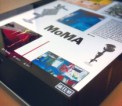 4. “Teaching with the iPad: Adding a New Dimension to the Museum Experience” (April 2012): As technology edges its way into every museum, the iPad has been drawing a lot of attention. While we don’t know what device or new technology will sweep across museums over the next few years, it was nice to look at some of the basic ways that a simple tablet device can transform even the most traditional museum experience.
 5. “Gallery Diving: Interns Tackle Public Engagement” (August 2012): One of the big themes of 2012 was definitely ‘experimenting in museums,’ and I am still so proud of the risks that this group of interns took this past summer through our public engagement project. It inspires me to continue pushing toward a DIY mindset.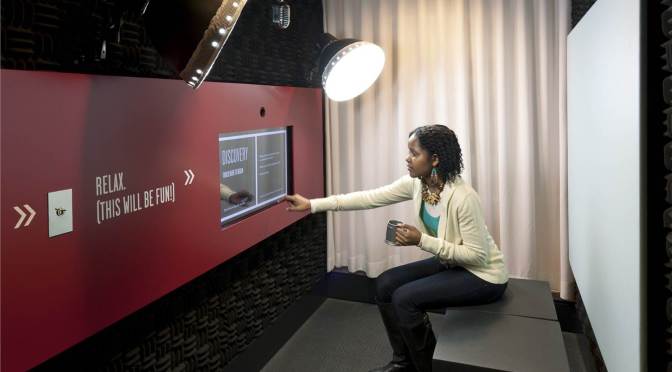




 Art Museum Teaching