By Mike Murawski, Portland Art Museum; Dana Carlisle Kletchka, Palmer Museum of Art, Pennsylvania State University; Elyse Eidman-Aadahl, National Writing Project, University of California Berkeley
“People’s relationships remain strong—but they are networked. Neighbors, and neighborhoods still exist, to be sure, but they occupy a smaller portion of people’s lives. It is hard to borrow a cup of sugar from a Facebook friend 1,000 miles away, but it has become easier to socialize, get advice, and exchange emotional support at whatever distance. Where commentators had been afraid that the internet would wither in-person ties, it is clear that they enhance and extend them.” (Lee Rainie & Barry Wellman, Networked: The New Social Operating System, 2012).
In their recent book Networked: The New Social Operating System, Lee Rainie (director of the Pew Charitable Trusts Internet & American Life Project) and Barry Wellman (Professor of Sociology at the University of Toronto and Director of NetLab) have argued that the large online social circles of familiar platforms such as Facebook, Twitter, Pinterest, etc. actually expand opportunities for learning, problem solving, decision making and personal interaction. Their work at the Pew Internet Project and the NetLab (especially research for the Connected Lives Project) suggests that digital technologies are not isolated — or isolating — systems, but rather networked systems built upon these social networking platforms as well as mobile device technologies.
As Rainey and Wellman remind us (although we need no reminder):
“Daily life is connected life, its rhythms driven by endless email pings and responses, the chimes and beeps of continually arriving text messages, tweets and retweets, Facebook updates, pictures and videos to post and discuss. Our perpetual connectedness gives us endless opportunities to be part of the give-and-take of networking.”
But how do we—as museum and arts education professionals—maneuver within a technology-mediated world in a way that allows us to cultivate productive, human-centered networks and communities? Museums and schools have been widely engaged in how digital media and technology can connect them with their students and audiences. But what about the potential of these same technologies to build entirely new “communities of practice” among professionals—whether art teachers, university faculty, or museum educators?
These questions are at the core of a series of conversations that we will be facilitating over the next several weeks, centered around a panel discussion that will be part of the National Art Education Association annual conference in Fort Worth at the beginning of March. Through these organic and open conversations, we hope to begin exploring models of human-centered professional exchange and peer networks suited to the increasing complexity, connectivity, and velocity of the 21st century. Drawing on innovative work from the National Writing Project (such as Digital Is), sites of exchange such as this one (ArtMuseumTeaching.com), and connected learning models developed with MacArthur Foundation’s Digital Media and Learning Initiative, we’ll be discussing how online networks and communities can harness the power of emerging technologies and social media to share, collaborate, curate, and participate with peers both today and in the future.
One way to more easily digest this sizeable topic is perhaps to take it one bite at a time. So we’re excited to be facilitating two public “on air” Google Hangouts along with the session at NAEA—one hangout prior to the conference to take that first bite, and one a couple weeks after the conference to extend our thinking and perhaps follow-up on questions raised in the panel. The online Google Hangout format also allows us to potentially engage a wider range of people than just those attending the NAEA conference, while at the same time practicing one of the most widely used technologies for face-to-face online engagement.
CONVERSATION #1 – Come Chat With Us via Google Hangout
“What Do We Want from Online Communities of Practice?”
Open Google Hangout w/ Mike Murawski, Dana Carlisle Kletchka, Elyse Eidman-Aadahl
Thursday, February 28th – 1:00pm Pacific / 4:00pm Eastern
For this preconference conversation on Google Hangout, we thought we might simply ask: “what do we want from online communities of practice and peer networks?” What online networks and communities are you involved with? When you consider jumping into a new online community, what do you hope it will achieve? What types of exchanges and experiences keep us engaged and prevent us from leaving (or ignoring) the online network? During this conversation, we were able to gather your thoughts, questions, and experiences which will inform our discussion at NAEA on March 7th.
Couldn’t join the Google Hangout? Watch the broadcast above, and please add your thoughts and perspectives to the “Comments” section below, and we’ll utilize this space to keep the conversation going.
CONVERSATION #2 – NAEA Conference Session
“Reimagining Professional Exchange & Peer Networks in a Digital Age”
NAEA Panel Session w/ Mike Murawski, Dana Carlisle Kletchka, Elyse Eidman-Aadahl
Thursday, March 7th, -12:00-12:50pm, Meeting Room 121C/Center/1st Floor
At this session, we gathered with a great group of peers to share some of our own experiences working as developers, researchers, and participants in online networks and communities of practice, but also spent time opening up the conversation about key issues (many pulled from the preconference Google Hangout). For example: how do we promote online ‘contributing’ instead of just online ‘visiting’ when it comes to these experiences? What are some ways to build co-learning interactions online?
Couldn’t attend the session? Please feel free to connect with either of the Google Hangouts, or chime in via the “Comments” section below.
CONVERSATION #3 – Reconnect via Google Hangout
“The Digital Follow-Up: How Do We Drag Everyone Back to Their Screens?”
Open Google Hangout w/ Mike Murawski, Dana Carlisle Kletchka, Elyse Eidman-Aadahl
Thursday, March 28th – 1:00pm Pacific / 4:00pm Eastern
One of the most difficult things to motivate busy museum and education professionals to do is to reconnect online after the conference or workshop. While we all know the values of extending these relationships and opportunities to reconnect, it can be so difficult to make these a reality. It only seems appropriate to make this one of the topics of our own ‘digital follow-up’ discussion. How do we manage and nurture online professional networks so that members stay active, build stronger ties, and feel supported? We also kept this follow-up conversation open to issues and questions that were addressed in the panel session at NAEA.
We look forward to continuing this exciting series of conversations! If you have any ideas for a future Hangout or online get-together, let me know and we can work to schedule here within the ArtMuseumTeaching.com community.
I recently was invited to participate in a panel session on museum blogging at the 2012 Museum Computer Network (MCN) conference, which was luckily hosted in nearby Seattle. The session was pulled together by power blogger Ed Rodley (aka Senior Exhibit Developer at the Museum of Science in Boston) and moderated by what I would now consider the new James Brown of museum technology, Koven Smith (aka Director of Technology at the Denver Art Museum). It was my first time attending MCN — which I had followed closely via Twitter during their last conference — and I was blown away at the energy and passion of this group of museum professionals that represented so many areas of museum work.
Since this conference has sparked a lot of thinking for me, I may end up writing a few MCN-related posts in the next week or so, but for now I wanted to focus on the reason I was there in Seattle this past week — the bringing together of a diverse group of active bloggers to dissect the how, why, and who of museum blogging. For me, this was the first time meeting these other bloggers “in the flesh” or face-to-face — what would happen? I could not help thinking about my favorite lines from the 1984 classic film Ghostbusters:
Egon: There’s something very important I forgot to tell you. Peter: What? Egon: Don’t cross the streams. Peter: Why? Egon: It would be bad. Peter: I’m fuzzy on the whole good/bad thing. What do you mean, “bad”? Egon: Try to imagine all life as you know it stopping instantaneously and every molecule in your body exploding at the speed of light.
Luckily, just as in the movie, that’s not what happened at all. It turns out, when bloggers collide, you get some productive conversations about professional and personal (or offline and online) identity, the complex networks that these blogs build online, and the ways in which these online entities may even push museum thinking forward. In this post, I would simply like to introduce those who came together for this MCN session, and then lay out three questions that I spent time thinking about before participating in the panel (and that we grappled with a bit during our conversations).
The Blog Roll
Here is a quick run down of the other bloggers/blogs represented at this exciting MCN session:
Ed Rodley, Eric Siegel, Me, & Suse Cairns
Suse Cairns blogs at Museum Geek, and is also currently a PhD candidate at the University of Newcastle, Australia. She holds a unique position as an emerging museum professional without a museum institutional affiliation, perhaps permitting her to strike up a bit more of a disruptive conversation (or maybe that’s her indie rockstar background). She contributed a guest post to ArtMuseumTeaching.com about “Getting Uncomfortable in Museums.”
Ed Rodley blogs at Thinking About Museums, and currently works as Senior Exhibit Developer for the Museum of Science, Boston. He also coordinates a series of conversations & explorations among the Boston museum community that he has dubbed “Drinking About Museums,” posted to his blog regularly (here is the most recent installment). Ed and I are in a similar boat in which we blog independently of the institutions we work for — making for a slightly more complex situation when it comes to our more ‘rebellious’ ideas or questions. I’m grateful that he pulled this panel together for MCN.
Eric Siegel blogs at The Works, a New York Hall of Science blog, and is currently that institution’s Director and Chief Content Officer. With 30 years of experience in museums, Eric writes about challenging aspects of innovative projects in exhibition, technology, and education as well as collaborations and current thinking in museum work. One of his great recent posts discusses the ReGeneration exhibition being developed at the New York Hall of Science that will bring together contemporary art and science. Not only does Eric blog about projects like this, but he also supports his staff creating their own blog content across the institution — see SciSpotlight.
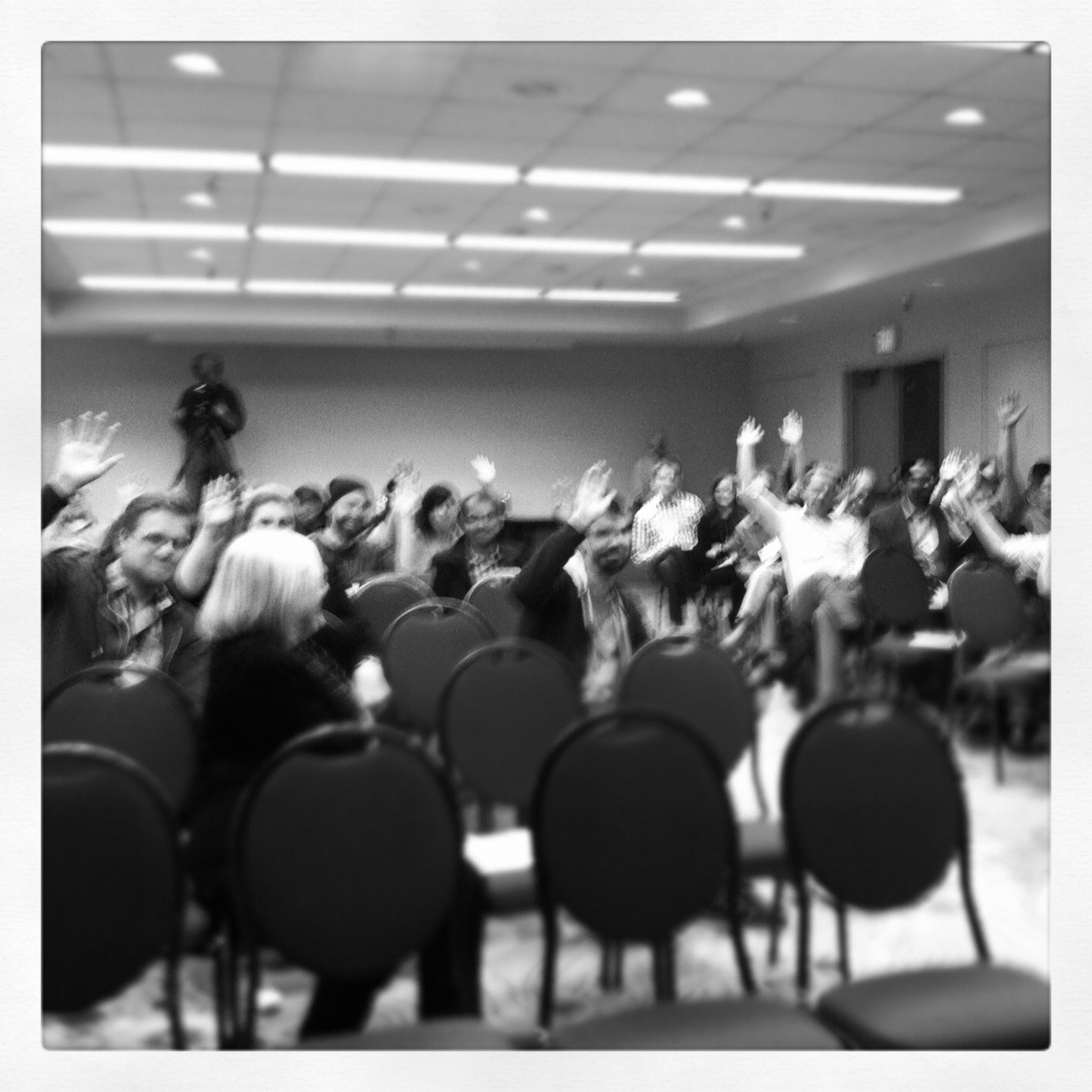
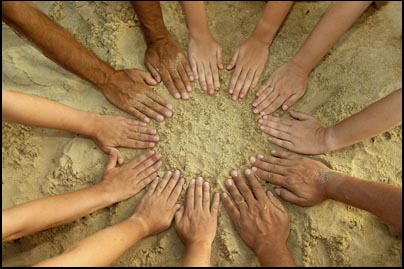
Session Attendees — OK, this was the real fire power at the session. Almost everyone who attended the panel also blogs themselves, and some for longer than the entire panel combined. During the session, we asked how many of them had their own blogs, and the photo on the right shows the sea of hands (as good as an iPhone can show it). In hindsight, we should have really thrown more questions out to the “audience” and had a richer conversation about blogging — and not just our blogs. I wanted to give a shout out to everyone who submitted their blogs to our session’s Twitter feed, but I know there are more.
So that gives the long and short of who was there for the session, and it might also help many of you connect with more of the museum blogging community. Now I wanted to quickly frame some of the issues I brought to the table during the session, and then I invite your feedback and comments below.
Museum Blogging Issue #1: Who Reads This Stuff?
After writing for and managing this blog for over 9 months, I have come to be quite fascinated by blog readership … or clicker-ship, as I’d rather call it (mostly because I can measure how many people click on the blog, but I can’t measure how closely they read it). First of all, there is the actual number of people that museum blogs reach. I estimate that across a few dozen museum blogs (17 of them are listed above), there are approximately 1-2 million people accessing these sites each year. And I don’t think this figure is exaggerated — I recently met an art blogger who gets about 1.25 million hits a year, showing how widespread the reach of this form of content can be. And I want to be clear here: I am not associating the number of hits or clicks with the value of a blog’s content or the blogger. I frankly don’t care whether a blog gets 1 million hits a year, or 100 hits a year — if they both have thoughtful, quality content, then they both serve an important role in this online thinking space.
Beyond the sheer number of hits or clicks, I am way more interested in the organic web of interactions that can take place online after a blog post is published. For example, a blogger can share their post via Facebook, Twitter, Pinterest, LinkedIn, Google+, and their own circles of colleagues and peers. Then, others share or retweet the post, and the ideas start to spread in unpredictable ways. Search engines also direct people to the blog from Google, Bing, Yahoo, etc. Then, people from across the world have the chance to add their thoughts and comments on the blog itself, or on Twitter and Facebook, and the conversation grows beyond the blog. Furthermore, other bloggers can respond to your ideas through their own posts. For instance, my recent post on teen engagement in museums has pingbacks from 4 other blogs — and each of those blogs has its own social media networks and clicker-ship. The term ‘blog’ often seems so two-dimensional and self-directed when you consider the three-dimensional interactions, relationships, and ideating that can potentially ripple out from each post. After hearing a great “Ignite” presentation at MCN from Lori Byrd Phillips on “open authority,” I think I am going with the term “BAZAAR” instead. More to come on that idea in a future post.
Museum Blogging Issue #2: Do Blogs Really Have the Power to Create Communities?
Sometimes people can get quite cynical about blogs, thinking that it is just a bunch of people talking to themselves. Can these sites really create relationships among people and professionals? Are blogs really a way for people to collaborate online and share ideas, questions, and processes? Well, I would not have created this online forum (now with 14 authors) if I didn’t think that it had the potential to create an online community of practice in the field of art museum education. My experience thus far proves that people really do come together through a blog to exchange ideas, ask questions, and challenge each other. Since us art museum educators only come together a couple times a year at conferences (and most museum educators are not able to even attend these conferences), I do find that online communities are finding a new role in the professional field. There is certainly more that sites like ArtMuseumTeaching could be doing to enhance peer engagement, and I hope to explore some of these in the upcoming months.
This whole question of how we build online communities is something that really interests me, and I will be partnering with some amazing colleagues (Dana Carlisle Kletchka and Elyse Eidman-Aadahl) to explore this through a session at next year’s National Art Education Association conference — a session that will have a rich online, digital presence before, during, and after the conference. So I leave these questions open: how do we build communities of practice online, and what does that mean in terms of the way we work, interact, and play together?
Museum Blogging Issue #3: How Well Do We Play With Others?
My final thought simply opens up more questions about how we develop expansive, boundary-crossing communities online. As bloggers, how well do we play with each other? If you have your own museum blog, how many times have you invited other museum bloggers to write a guest post, commented on their blog, or added a link to their blog on your site? Do bloggers reach out to make connections with other bloggers outside of their own national and cultural boundaries? What about across types of museums and academic disciplines? Even outside of the blogging circles — how well do we connect with other existing forms of online interaction (Google Hangout, Blog Talk Radio, or other online communities such as Digital Is)? I, myself, have a lot of work to do in many of these categories, but I wanted to lay out these questions so that we can be thinking of them as we push forward in the blogosphere.
**********
So, I really enjoyed attending MCN, and it sparked all kinds of questions and thoughts in my mind about this site as well as large areas of my professional work. I invite your thoughts and perspectives below, and I am open to all suggestions as to how to grow the community already forming around this online “bazaar” I call ArtMuseumTeaching.com.
During the conference, MCN publicized Twitter hashtags for each session, so I wanted to make available an archive of all of the tweets up to this point that used our hashtag: #mcn2012tale. Here it is in PDF form, with lots of great questions and thoughts from those attending the session and beyond: TweetArchive_#mcn2012tale
During an election cycle it is difficult to turn on the television, read the newspaper or listen to the radio without a candidate or pundit talking about democracy and freedom. Yet, rarely does education factor into these discussions and I have never heard any politician address museums as central to a democratic society. George Hein’s new book Progressive Museum Practice: John Dewey and Democracy elucidates a history of museum education in America that is deeply rooted in building a democratic society and promoting social justice.
John Dewey is often referenced in art museum education for his ideas about active and experience based learning and the promotion of museums as a critical component of a child’s education. George Hein illuminates a much more complex portrait of Dewey. He explores the democratic core of Dewey’s philosophies. Progressive Museum Practice focuses on Dewey’s ideas in relation to museum practice in a Progressive tradition, exploring his predecessors, contemporaries and successors. Hein writes, “What could be more worthwhile than consistently considering how our educational activities might support democracy and social justice?” (Hein, 200). Indeed! This book and the thinking and action it advocates are very worthwhile.
It has been my experience that many museum educators know the work of John Dewey but have read very little if any of his actual work. Who can blame them? Dewey’s writing is dense and complex and often very long. He was a prolific philosopher, writing approximately 40 books and 700 articles in his ninety-two years.
The Essentials of John Dewey and Progressivism
Progressive and Dewey’s core beliefs are essential foundations of Hein’s book, and warrant elucidation here. Hein begins with defining Progressivism, contextualizing Dewey within this movement and outlining Dewey’s theories on education. Three essential attributes of Progressivism that Hein outlines are:
The belief that in our democratic republican society, social problems will not solve themselves; they need to be addressed by direct and sustained social and political action.
A generally optimistic assumption that, although such progress will not come about on its own, society can be improved by concerted and focused social and political intervention that is based on rational policies and actions and that applies the best available scientific practices and findings.
A faith in public education as a particularly useful tool for improving society in the direction of greater social justice and more equitable dispersal of the benefits derived from progress in science and technology. (Hein, 11)
These essential tenets of Progressivism are continuous threads that woven throughout Dewey’s philosophies and writings and a critical understanding of his work.
John Dewey at the University of Chicago in 1902. Source: Wikimedia Commons.
Four Key Beliefs of John Dewey
Dewey believed that education can be the basis for a philosophical system, and that education has both a pedagogic and a social component (Hein, 23). Hein explained four key beliefs of Dewey that define his philosophies:
First, his belief in empirical naturalism, “…the concept that any explanation of life, including thoughts, action and interactions with others, must be based entirely on what we have experienced and have experienced historically—singly or, most especially, collectively. Thus, the definition of “experience” is a fundamental building block of his philosophy” (Hein, 26).
Second, is Dewey’s commitment to a process philosophy, or “determining the worth of any idea by examining the consequences of a belief…based on its consequences in experience” (Hein, 26). Hein goes on to explain, “Dewey’s philosophy does not aim to solve human problems; rather it focuses on the process of addressing problems and the means of ameliorating negative aspects of life and society” (Hein, 27). Thus, reflection on our experiences and what we have learned from them is essential.
Third, Dewey’s philosophies are based on a concept of “human behavior as a social activity” (Hein, 27). Dewey understood human life on a biological model, individual parts interacting in symbiotic relationships. Thus, concepts of community, individuals interacting and self-regulating as part of a larger group, was fundamental to Dewey’s thinking.
Fourth, Hein explains the impact of Darwinian evolutionary thinking on Dewey’s philosophies. Darwin’s theories (On the Origin of Species was first published the year of Dewey’s birth, 1859) demonstrated that change was part of natural life cycles, and that it has direction rather than being viewed as a disruption. Dewey’s philosophies addressed change, not through external forces, but rather through “interactions between an organism and its environment, including social environment” (Hein, 29).
Hein explains that:
“For Dewey, the pedagogic aspects of progressive education were necessarily linked with the social goals of progressivism…In order to engage in progressive educational practice, museum staff need to keep progressive social aims as well as pedagogic practices foremost in planning both exhibitions and programs.” (Hein, 38)
This is, in fact, Hein’s thesis.
Interrogating Museum Education through the Progressive Lens
Hein interrogates three periods in the history of museum education, Dewey’s predecessors, his contemporaries and his successors, each roughly a century apart. With each Hein examines the progressive aims of individuals and institutions, looking at what the social goals of museum practice. Looking to Dewey’s predecessors, Hein characterizes Charles Wilson Peale as a “proto-progressive” in the early republican period in the United States. Peale established his museum in Philadelphia with an expressly educational mission. In the early years of the American democratic experiment, Peale, and his contemporaries amongst the intellectual elite of Philadelphia, believed that education, and thus the museum, was essential to build and sustain a democracy. Hein argues that “Peale pioneered that notion, reaffirmed by Dewey a century later, that as educational institutions, museums should be in the service of democracy, and should provide education that leads to better informed, critical citizens for a more egalitarian society” (Hein, 66).
A century later, Dewey and his contemporaries in the progressive movement, saw education and museums as integral components to ameliorate social problems growing out of increased industrialization, urbanization and immigration. Hein highlights the pioneering work of John Cotton Dana, Louise Connolly, Anna Billings Gallup and Laura Mary Bragg. While Dana’s work is relatively well known today, Hein brings forth the work of these three women and reveals our professional heritage as passionate and driven social radicals. Each woman, in her own way, sought to make museums more accessible to a broad public and responsive to their communities through integrated mission driven programs.
Hein also examines progressive practices in art museums and debates of this period, that also remain relevant today, namely the purpose of art museums as primarily educational or aesthetic. Discussions of Benjamin Ives Gilman, George Brown Goode, and Theodore Low, are particularly enlightening and relevant today in light of recent debates about cuts in professional education staff and increased emphasis on acquisitions over access. Hein brings forth some truly radical ideas and programs that circulated in the early twentieth century that would shock even some of our most liberal educators today. Art museum directors might positively faint! The examples discussed include the Met’s work with the International Ladies’ Garment Worker’s Union in the early 1940s that included evening tours, lectures, and concerts and participation in selecting works for exhibitions, and the work of the New Deal programs, the Federal Arts Project, and the Works Progress Administration that brought art and arts education to a broad public through commissioned public art and establishing small art centers around the country. Hein shows us that our work today has strong historical precedent and these predecessors are arguably far more progressive than we are today.
Hein gives particular attention to a discussion of Albert Barnes. He devotes an entire chapter as well as a section of the discussion on progressive education in art museums, to Barnes’s impact on Dewey’s thinking and the friendship between these two men. Hein notes that Barnes’s reputation as a cantankerous and disagreeable individual has resulted in the tendency to ignore him when considering Dewey and to ignoring his progressive thinking and actions. In art museum education today many associate John Dewey with Art as Experience and his thinking on aesthetic experience. However, this aspect of Dewey’s thinking did not come until late in his career. It was through his discourse and friendship with Albert Barnes that Dewey became engaged with aesthetics. Barnes can be seen as both influencing Dewey’s idea and encouraging him to give them systematic thought, as well as experiment with these ideas and putting them into practice through his foundation and classes. Like Dewey, Barnes shared a deep commitment to potential of education and particular art to benefit and improve the lives of people.
Hein’s discourse on Dewey’s successors looks at museum education in the 1960s and more contemporary practices. Hein argues that the 1960s was America’s most progressive moment, despite progressivism’s association with earlier in the century. Changing museum practices are situated within this period that saw the growth of the civil rights movement, women’s rights, free speech movement, protests of the Vietnam era and a wave of government policies and programs ushered in under President Johnson, including Medicare and Medicaid, Head Start, the Voting Rights Act, the Freedom of Information Action, and the Elementary and Secondary Education Act (ESEA), as well as the establishment of the National Endowment for the Humanities and the National Endowment for the Arts.
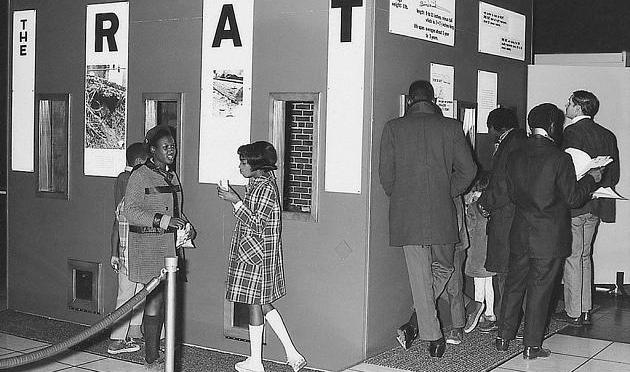
Visitors at the “The Rat: Man’s Invited Affliction” exhibit at the Anacostia Neighborhood Museum. Smithsonian Institution Archives.
Hein highlights the works of three pioneering institutions that illustrate the reemergence of progressive practice at this time, the Anacostia Neighborhood Museum, Science Centers, and the Boston Children’s Museum, each addressing different aspects of progressive practice. The Anacostia Neighborhood Museum, as a satellite of the Smithsonian, addressed underserved audiences in economically depressed areas through establishing a community driven and focused museum. Museum exhibitions were community generated and focused on neighborhood issues and concerns, most notably The Rat: Man’s Invited Affliction, mounted in 1970. Science Centers, such as the Exploratorium in San Francisco, founded by Frank Oppenheimer in 1969, developed engaging hands-on learning experiences that engaged curiosity in everyday things and the world around us. Oppenheimer, who attended the progressive Ethical Culture School in New York as a child, combined his interested in popularizing science and a socio-political agenda, “[his] faith that better science education—based on interactive exploration of the natural world through close observation, experimentation, weighing evidence, and critical thinking in the Deweyan sense—could lead to a better world was repeatedly mentioned…” (Hein, 171).
Dewey argued that schools should be models of a democratic society and community, ones in which children had a voice and rights. Hein points to the work of the Boston Children’s Museum in the 1960s as a museum that created this type of model of democratic communities for children and their parents, both within the museum and working with community partners to reach broader audiences.
Progressive Museum Practice in Museums Today: Are We Embracing Our Potential?
Hein’s final chapter focuses on progressive practice in the twenty-first century, and takes a much less institutional driven approach. He states, “Progressive theory in action combines pedagogic practice with the political aspects of progressivism. The examples discussed here are not presented as models to be reproduced elsewhere, but as indications of what can be accomplished” (Hein, 181). As such, Hein runs through a brief discussion of a number of projects and practices that have progressive potential. Some of these include new technologies, innovative exhibition methodologies, and staffing structure. The one institution he addresses specifically is the Lower Eastside Tenement Museum and its mission to promote social justice. He also addresses the potential of exhibitions to take on socio-political goals with a discussion of Mining the Museum, presented by Fred Wilson and The Contemporary at the Maryland Historical Society in 1992. However, Hein notes that this exhibition, while still greatly discussed as groundbreaking, was mounted twenty years ago.
While Hein’s book adeptly unpacks and elucidates the complex and interwoven philosophies of John Dewey, and illuminates the rich and radical past in museum education in the United States, the book came to a soft and disheartening conclusion. The early chapters of this book were filled will discussions of art museums and the role art played in progressive practice. However, in Hein’s final chapters that address our practice since 1960 there was scant reference to art museums. I do not argue that Hein is an insufficient researcher, to the contrary; rather I argue that art museums have lost their progressive goals and thus their progressive practice.
While Hein regards the 1960s as our most progressive era politically, within the art museum, I argue it is one of our most conservative. In this era the art museum saw the increasing professionalization of art history and curatorial practice as well as other professions within the art museum, including museum education. From the 1960s and arguably into today there has been a rise in the notion of art museums as bastions of unmediated aesthetic experience. Education in these hollowed halls sought to transfer knowledge about art history. Am I being dramatic? A little. But, when attending conferences or discussions with colleagues from all types of museums, I often feel that art museums are lagging far behind in their understanding and willingness to embrace their truly progressive potential to impact individuals and society.
In my graduate school classes we would often ask “WWJDD? (What Would John Dewey Do?)”. So, art museum educators, WWJDD, if he were here today? I think that he would be pleased to see many examples of progressive pedagogy, but charge us to embrace the political aspects of progressivism, and thus a truly progressive practice. I believe that we have an obligation for a greater social commitment. As a field, as institutions, as educators, are we committed to progressive practice?
Educational practices in art museums don’t often make the pages of major newspapers, so I was pleasantly surprised to see this article, “From Show and Look to Show and Teach,” in the New York Times a few months ago (see also Lindsay Smilow’s earlier response to this NYT article). After a cursory glance, I assumed it would detail educational activities as part of an ongoing commitment to fostering free-choice or constructivist learning experiences in some of the most well-known museums on the planet.
As I read, two assumptions of the author began to take shape:
“education” in museums is equated primarily with engaging in processes of art making; furthermore, museum guests expect such offerings under the auspices of “participatory events;” and
the locations of education programs provide significant but conflicting messages.
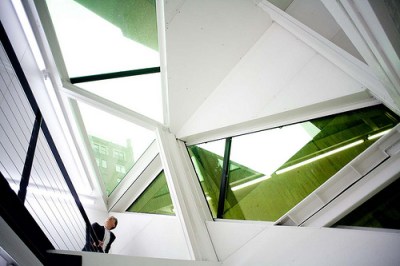
Whitney Studio, designed by LOT-EK. Photo by Inhabitat
On one hand, the writer cites the director of the Whitney asserting that “education is part and parcel of what we do” after explaining that the physical space for educational activities (presumably at other institutions) is often physically isolated. Shortly thereafter, the author lauded the rather unique Whitney Studio, a “pop-up” center for education at the Whitney that is not only isolated, it is separate from the building altogether. It seems metaphorically significant in this instance that this temporary space is made from enormous shipping containers.
These assumptions prompted me to reflect on my own thoughts about what constitutes education in museums, and where that education should occur. As a graduate student in the mid-1990s I was fully ingratiated in the paradigm of Discipline-Based Art Education, in which aesthetics, art history, art production, and art criticism are considered basic subject areas from which to derive content for art education—while art production for me has always been one way to come to a better understanding of art, the conversations that may be engendered in gallery and other spaces have always been far more intriguing and significant in my own educational practices.
I am certainly not the first person to reckon with the importance of art making as part of an overall educational endeavor. My colleague and friend, Professor B. Stephen Carpenter, made an interesting comment during a panel presentation on reconceptualizing curriculum at the 2012 NAEA convention in New York City. He questioned, ever so briefly, whether or not the act of art making is, in fact, the primary goal/foundation of every model of art education, though his question specifically focused on eco-environmental curriculum. At the time, I thought… if it is primary, then where does that leave the myriad other discourses that surround art education and art museum education? What happens when we as professional educators privilege a particular kind of knowing over all other ways of relating to objects in the museum, particularly when few people excel at those skills, especially as they are presented in very short classes?
The article featured other examples of art-making-as-education in spaces outside the museum, such as Open Field, a grassy space next to the Walker Art Center, and several digital spaces, including online art production classes offered by the Museum of Modern Art. Art museum education has long been relegated to basements and other hidden or cordoned-off areas of the museum, and I pause to wonder what messages are being transmitted when learning is offered outside the physical space of the museum.
Does this practice reify the notion that education is a by-product of the more serious business of being in the galleries? Or is it simply a practical response to a space issue for educators who are increasingly offering educational opportunities that are responsive to their particular learning communities, collections, and spaces?
If one considers art making to be an important exercise with which to engage in order to understand art, a separate space is necessary for obvious reasons, as art can be (and should be) messy. If not, then the what and the where of art museum education is an important and evolving conversation.
I invite you to add your own thoughts and perspectives below, so we can continue to engage in productive exchange about these ideas that are core to our profession.
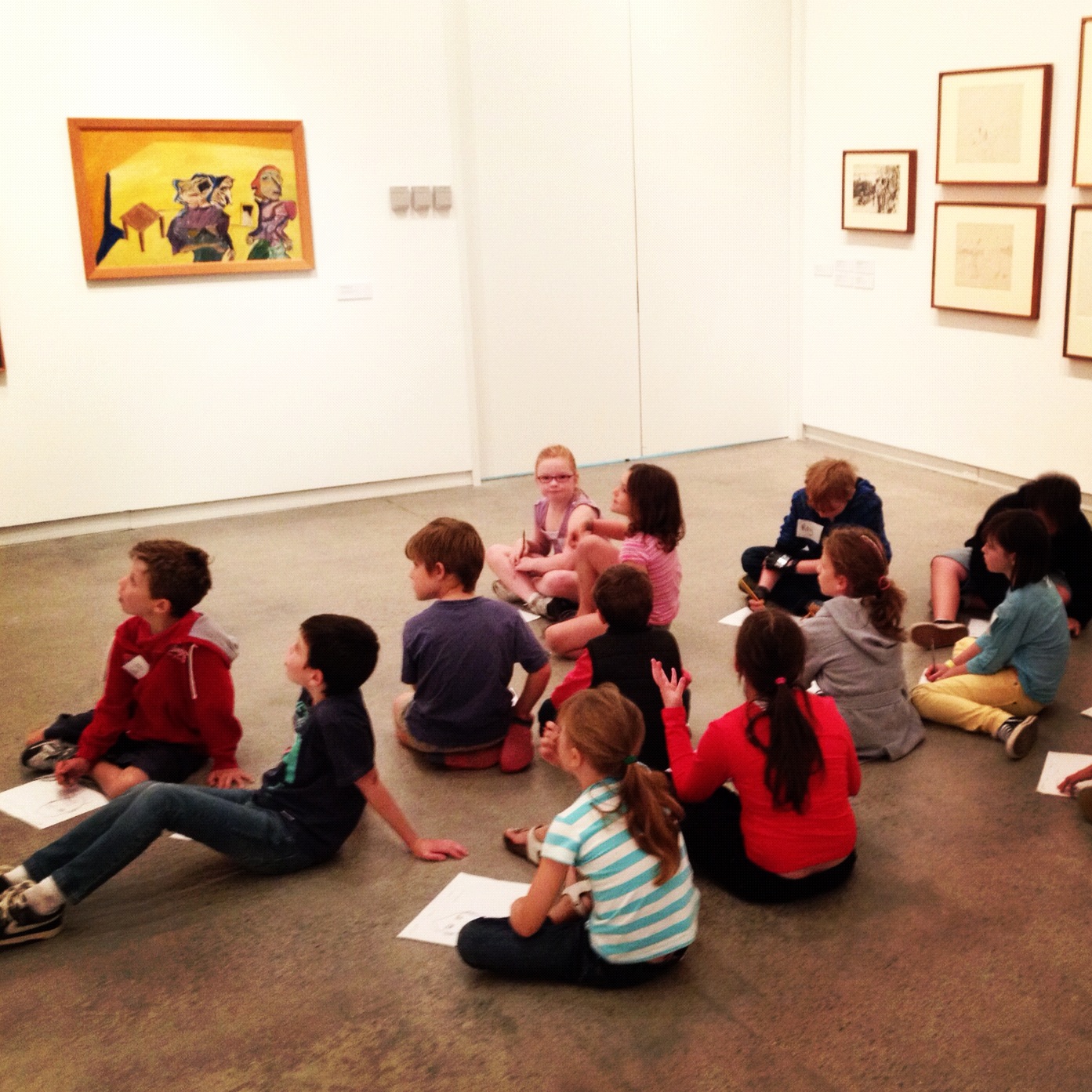
Participatory museum experiences and museum visitor identity seem to be the focus of much attention of late in the museum educator community. It is something I have given a lot of thought to, and I have enjoyed some thought-provoking conversations on Twitter about it. I like to think that students are at the centre of the experiences I create for them at the museum, in the same way that student-centred learning is championed in school-based learning and teaching. But I wonder if student-centred teaching at the museum is something that can actually be claimed as part of our practice.
Placing the students at the centre of a learning experience means knowing who the students are and I wonder how many assumptions can be made about this before they become irrelevant or wrong. In the museum we can’t get to know or form relationships with the students easily. They come to us in batches of around 25 students, ranging from pre-school to high-school levels, staying for a short time, making it practically impossible to know them as individuals, as their school teachers do.
So how do we get to know our students?
I have noticed that I form assumptions about who students are before they arrive on site — that I create a fictitious or generic version of who I think they might be. The information that I base this on is mainly tacit. I know what year level they are and so have an indication of age range, although this may not be a good indicator of maturity. I consider how well prepared the teacher is for the visit and what they hope students get out of the experience. This assists me to understand the students previous learning and the anticipated outcomes of the visit. I know what the curriculum expectations of the visit are, and that these are often the justification for the visit. Experiences with my own and other children I know also informs how I relate to children. For each class or group that visits I test my assumptions to decide on the best level to pitch my discussion with them.
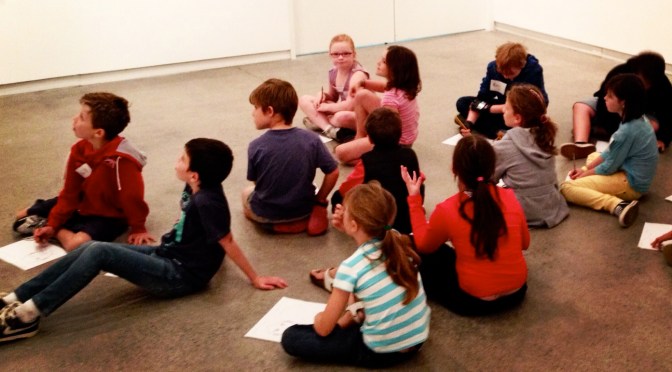
Photo by Christine Healey
My goal is to create an experience that will be meaningful for the students. I want to facilitate the students’ capacity to drive curiosity and find personal meaning, as well as awe and inspiration in the artworks that I choose to show them. I perform in (what I think is) an engaging or entertaining manner to maintain their attention and focus. I make sure I am present in the moment and pay careful attention to what they are interested in. I ask questions and ask for questions. I give and request feedback. I paraphrase to build on what students are noticing and thinking, encouraging others to contribute and find viewpoints of difference or similarity. I tell stories and share what I love about art and artists’ capacity to surprise and delight. I try to let them drive the experience and am willing to be adaptable and flexible to go along with it.
The ‘truth’ is that I don’t know my students. I can’t know them in a once off, one hour visit. But each new experience I have teaching informs the next, and I shape my practice so that I am creating experiences that are driven by the needs of the students generally.
What are some ways you get to know students before they arrive at your museum? As they tour the galleries? After they leave the museum? Before the next school visit?
Students interact with Dan Flavin’s “Untitled (to Donna) 2” (1971) at the Portland Art Museum. Photo by Sarah Wolf Newlands.
Karena, a senior at Portland State University, leads us to reflect on a pool of natural light in a gallery at the Portland Art Museum near a Robert Irwin light and space sculpture. The effect is a state of near-meditation.
Another student, Lisa, asks us to consider the different ways in which we value a work by Dan Flavin. We then move to a darkened classroom to collectively make our own version of a Dan Flavin sculpture out of glow sticks. She informs us that she will be auctioning off our completed work, and that the proceeds will be going directly to the electric bill in order to keep the Flavin work running.
The preceding examples are projects developed by students for a class at Portland State University, called “Object Talks: Creating Meaningful Experiences at the Portland Art Museum,” co-taught in the summer of 2011 by artist and professor Sarah Wolf Newlands, Stephanie Parrish, a senior staff member in the Portland Art Museum’s Department of Education and Public Programs, and myself. The class was an experiment in opening up the interpretation of the Museum’s collections to college students through experiential, conversation-based interpretation informed not only by best practices in the field of museum education, but also by the work of artists engaged in social practice. We collaborated with artist/educators Jen Delos Reyes and Lexa Walsh from Portland State University’s Social Practice MFA program to introduce students to this form of art-making, which we feel shares many concerns with the work of museum educators. These mutual concerns include the need for outreach to communities not necessarily involved in the art world, movement towards the so-called “educational turn” in museums, a desire for collective involvement and collaboration—and above all, an interest in the shared social space that constitutes an experience with a work of art. This linkage between artist and museum educator is nothing new, and its history is chronicled in this excellent article by Michelle Jubin.
However, the involvement of students in this process, who are not necessarily formally trained as educators or artists, and yet, are performing these roles in public outside of the “laboratory” of the classroom, raises questions for me about where the role of interpretation in a museum lies and who has ownership of this process. The training period for docents at the Portland Art Museum is over a year and an MFA in social practice is typically a two-year endeavor. University Museums often employ college students as docents; however, they typically receive much more training than we were able to offer on this class. Our students had eight weeks to craft and deliver their interpretive experiences. A cynic might suggest that we are devaluing a complex skill that requires more expertise than a summer class can provide. Furthermore, this course is part of the college’s University Studies program, a general education requirement for all students which is very interdisciplinary in nature. Critics of these programs often point to interdisciplinarity as responsible for what they believe as the death of specialization. However, I would like to consider this topic through the lens of the deskilling—and indeed, reskilling—movement that has been a concern for artists since at least Duchamp.
In Intangibilities of Form: Skill and Deskilling in Art after the Readymade (a review and summary can be found here)John Roberts addresses this very topic and its implications for the art that has followed Duchamp. His discussion of the readymade and its role in deskilling the work of the artist’s hand in favor of reskilling an artist’s work in the realm of immaterial labor is particularly appropriate for socially-engaged artists. However, I would like to consider this same process of deskilling and reskilling in light of our class. When confronted with the open-ended conversational gallery teaching techniques advocated by Rika Burnham, Elliot Kai-Kee, and many of the other museum educators that they read during the term, several students expressed concern in what they felt was a disengagement from the art historical structures that had colored their past experiences with art. Nor did they like the process of moving away from the more lecture-based modes of presentation they were accustomed to from their art history classes to relinquishing some level of control to their audience for the more conversational methods of inquiry that we advocated. Admittedly, these responses surprised us—even though we are used to these tensions between the fields of art history and museum education, we did not expect them from our students.
Though, in the strictest sense, the term “deskilling” refers to the process of eliminating skilled labor in the workforce in favor of time-saving technologies, it has taken on new meaning within arts discourse. It is linked not only to a movement away from artisanal production in the visual arts of the twentieth century, but also significantly, in aesthetic valuation (Roberts 86). In this sense, deskilling acts not only on physical labor, but on intellectual work as well. It also takes on new meaning in social practice as a way of democratizing the artist’s work (Ibid 159).
In asking our students to think of their projects as social practice, were they not engaging with these discourses of deskilling?
Through streamlining the training process and asking students to forgo some of their learning from previous classes, were we not deskilling some of the intellectual labor of museum interpretation?
Conversely, I would also like to argue that these students engaged in a process of reskilling by learning to be more adaptive and improvisatory in their approach to the works in the Museum’s collection. They often sidestepped certain art historical lines of inquiry in favor of interpretations found in other disciplines, as well as understandings from personal life experience. In learning these skills and in rejecting others for the purposes of this class, I should stress it was not our intent to supplant the skills and knowledge these students were learning in other classes, but rather to provide them with alternative tools for interpretation. Nor was it our goal to replace our experienced docent core with students. Instead, we hope that our work with college students opens up the role of interpretation in the Museum to new voices. After all, we can learn a lot ourselves from the openness, curiosity, and enthusiasm found among students at this crucial stage of life.
Add to the Conversation…
I welcome comments from those of you who have also worked with college students as educators in your museum. What worked in your program and what did not? Furthermore, I would love to hear thoughts on the intersection of social practice and museum education, as well as the place of re- and de-skilling in the museum.
To what extent is the practice of museum teaching a truly democratic process, aimed at bringing multiple voices together, seeing things from multiple perspectives, dialoguing, discussing, debating? As museum educators, do we view learning as an ongoing dialectic process that is built around the experiences of the student — even breaking down the hierarchies between teacher and student? How often would we define our own practice (or the programs we plan, facilitate, or present about) as authentically embracing openness, respectful dialogue, serious inquiry, equity, and comfort with ambiguity?
These are difficult questions we should be asking ourselves as we reflect on the pedagogies we adopt to deepen learning and increase student or visitor engagement in our museums. And one teaching methodology that exists to support and guide this type of Freirean (à la Paulo Freire) framework is Piensa en Arte. Never heard of it? Well we’re about to remedy that.
What is Piensa en Arte?
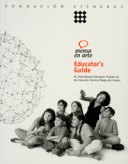
Piensa en Arteis a visual arts education initiative of the Fundación Cisneros and Colección Patricia Phelps de Cisneros (CPPC), aligned with the Fundación’s deep commitment to improving education, promoting the appreciation of modern and contemporary art, and sharing Latin America’s impressive cultural contribution with a wider audience. Through conversational questioning, the use of conditional language, inclusion of contextual and cultural information, and guided reflection, the Piensa en Arte methodology supports mediated learning as the framework for collaborative learning experiences around works of art. Overall, the approach emphasizes learning as a shared endeavor, empowering students to generate their own knowledge. As the CPPC’s website describes:
Piensa en Arte develops a series of exercises that, although generated from works of art, are not recognized immediately as being directly linked to them. Once the exercises are solved, learners discuss the artist’s work in relation to their own problem-solving endeavors. Like the artists whose work they discuss, learners become active participants in the development and questioning of cultural meaning rather than the passive recipients of cultural products, and apprehend education as a process of investigating, questioning and creating.
To date, Piensa en Arte has been implemented in Argentina, Costa Rica, the Dominican Republic, El Salvador, Mexico, Venezuela, and the United States. The program has reached more than a thousand educators, who in turn have brought it to hundreds of thousands of students. One of the main ways it reached the United States was through a unique collaboration between CPPC and Wheaton College, which led to the publication of an Education Guide that provides a useful guide to this teaching methodology as well as a set of teaching posters for use in the classroom designed by Wheaton students and CPPC educators.
The Learning Process of Piensa en Arte:
Piensa en Arte is a methodology that combines the use of various tools, including questioning as a strategy to mediate the conversation along with contextual information related to a work of art. A crucial aspect of the methodology is the inclusion of contextual information that places the work of art historically and culturally.
While the focus of the methodology is to emphasize the art object as a primary source for the exploration, contextual information (carefully selected) and questioning are essential for the best application. An essential component of the methodology Piensa en Arte is mediating learning as a framework to create teaching experiences in a group through conversation.
The process suggests to start the first conversation with the students asking them to establish the rules of the good listener and good talker, having them make a list of attributes of each of them. It is then followed by questioning as a strategy to mediate the conversation. These questions are organized into categories and intended to create a climate of interaction between the students:
Key Questions, that initiate and sustain conversation, and support students to formulate their own ideas:
What do you think can / could be happening in this picture?
What else do you think can / could be happening in this picture?
What do you see in this picture?
What else do you see?
What do you see that makes you say / think that?
Questions Seeking Visual Evidence, that encourage students to provide comments to support their interpretations:
Is there anything else? What makes you think / say …? Please describe it.
What specifically do you see?
What is the visual evidence that support your opinion?
What elements in the image you have to think / say …?
Follow Up-Questions, that invite the exchange amongst students who seek an interest in contributing different views and fosters visual evidence that support interpretations that were not originally thought by them:
Who can add something that … thought / said about …?
What do we see behind it … thought / said about ….?
What other visual evidence can we say about …?
Who can reply to the comment / idea that …?
Questions after providing contextual information for students seeking to return to work as a primary source, after receiving contextual information from you, allowing for the further enhancement of their approach to the works of art.
Now that we know …
How does this information provides to our conversation?
What else can we say about this picture based on this information?
What else do you see in this picture now that we know …?
What would you add to the previous thoughts / ideas now that you know the artist’s words?
How does this affects your thoughts / ideas know that we are having information about the work of art?
It is through the combination of these questions as a strategy to mediate the conversation, plus having the tools for a conversation, as well as the supply of contextual information about the work of art that will facilitate an exhaustive and rich discussion between students. This approach gives priority to the thinking processes of individuals.
Why is Piensa en Arte one of the best kept secrets?
Well, first, we hope that we can help the methodology become less of a secret. And, in addition to questioning, there are several core elements of Piensa en Arte that make it worthy of sharing with colleagues and educators (both in museums and in the classroom):
Use of Conditional Language: Language is a powerful thing, especially when working to create equitable, empowering conversations with students in which the teacher attempts to take a neutral stance. Piensa en Arte recommends paying close attention to the words we use as mediators of conversations, applying words such as “would,” “could,” and “might” when asking questions and rephrasing students’ interpretations.
Providing Contextual Information: While some visual literacy strategies prevent an educator from bringing additional cultural and historical information into the discussion, Piensa en Arte values the way that the context surrounding a work of art can build cultural awareness. Using relevant information to deepen the dialogue, this approach focuses on works of Latin American art from the CPPC (or similar artworks from your own museum’s collection) and can remind students that they are part of a global community.
Enabling Reflection: At the core of the Piensa en Arte approach is the element of reflective practice and metacognition. As outlined by Paulo Freire, critical pedagogy must involve asking questions about our own thinking process. In this way, Piensa en Arte enables students to become aware of the teaching methodology being used and how it is structured. For example, after becoming familiar with the process, students might be asked “What questions do you notice I use frequently during our conversations?” or “How do you think these questions help us analyze the work of art?” This can also model a reflective practice for students, who can apply this metacognitive process to other areas of school and non-school learning.
Modeling Inquiry & Dialogue: Overall, the Piensa en Arte methodology can be a process of inquiry that the students can learn from. Teachers are regularly modeling this open exchange of ideas and opinions so that students can use it respectfully to converse among themselves and ask each other questions.
“Never does an event, a fact, a deed, a gesture of rage or love, a poem, a painting, a song, a book, have one reason behind it. In fact, a deep gesture, a poem, a painting, a song, a book are always wrapped in thick wrappers. They have been touched by manifold whys. Only some of these are close enough to the event or the creation to be visible as whys. And so I have always been more interested in understanding the process in and by which things come about than in the product itself.”-Paulo Freire, Pedagogy of Hope (1994)
Note: Some of the information above has been taken from one of the tutorial programs of Piensa en Arte of Colección Patricia Phelps de Cisneros (CPPC), written by Maria del Carmen Gonzalez, Curator of Education of the CPPC, 2006. Special thanks to Maria for her vision in developing and promoting this transformative approach to teaching with art.
The other evening I had the honor of seeing Nobel Peace Prize recipient Archbishop Desmond Tutu at the Los Angeles County Museum of Art (LACMA) in conversation with Robert V. Taylor, his student and spiritual leader and author, and the museum director, Michael Govan. The conversation centered on spiritual paths to being more human and connecting with the world and others in meaningful ways that bring about profound world change, like ending apartheid. Archbishop Tutu and Mr. Taylor stressed the importance of listening and making decisions to connect with and include others in human interactions each and everyday. It is the collective power of inclusion and care that can bring about great change in our world. Archbishop Tutu’s profound statement “I need you to make me human, and you need me to make you human,” struck me as he spoke, and has stayed with me. It is in the essence of personal interactions that we become human. As the conversation continued, I wove these two worlds—the art museum and the spiritual—together in my mind.
Photo by Harald Walker
The museum collects and displays exemplary works of art that tell myriad stories of human activity. But they themselves are not human and they do not speak. These objects are endowed with profound significance and import by the humans that discuss, interpret and make meaning around them. The personal interactions we have in the art museum explore and unlock the humanity in works of art; it is via these interactions that museum objects can help us develop empathy and imagination. That is, in our encounter with them and with each other we can become more human.
In his 2004 book of collected essays, Whose Muse?, Jim Cuno, currently Getty Trust CEO, writes:
“I think that by providing and preserving examples of beauty, museums foster a greater sense of caring in the world and urge their visitors to undergo a radical decentering before the work of art…. To experience beauty is … to experience an ‘unselfing,’ and all the energy we formerly put into the service of protecting, guarding, and advancing the self is then free to be in the service of something else.”
I wish to ask Mr. Cuno, exactly how do you think this process happens and how did it happen for you?
I have witnessed these moments when eyes and minds open in art museums. I am a museum educator. I teach. I believe deeply in the power and potential of works art to have profound impact on individuals and the world. But I also believe that this quality is not innate and the process is not always transparent. We learn about art and how to engage with it and the humanity of it. Many of us had families or teachers that took us to museums and talked to us about art and encouraged our curiosity. We can sometimes forget that we were not born interpreting paintings and ancient Greek vessels.
It was delightful to witness Archbishop Tutu and Mr. Taylor on stage as models for a teacher and student relationship. Their exchange demonstrated compassionate listening, deep mutual respect and personal growth. It also revealed the often subtle yet profound way teachers guide and support their students.
I am a former Getty gallery teacher. The professionalism of this position afforded me the ability to think deeply about how visitors to the museum were connecting with and appreciating works of art in the Getty collections and how to guide and support them in this process. It also afforded me a sustained daily practice and commitment to teaching. As a gallery teacher I gained more experience teaching in two or three weeks than most docents would receive in a year. I was also supported in reflecting upon and developing my teaching practice by a devoted cohort of fellow gallery teachers and other professional education staff.
I have devoted my career to facilitating moments of ‘radical decentering’ and being human with works of art because I think these experiences are important. I also believe that this doesn’t happen by accident or coincidence. I believe that the institution and the gallery teacher must value this as a goal and plan this outcome as they would any other aspect of their strategic plan.
I see many museums offering less and less training and support for teaching, caring less and less about the quality of the teaching and interactions people have in museums. When this happens, the breadth and depth of educational programs and access to these programs are compromised. In the Getty’s pre-packaged response that appeared on this blog and others, Jim Cuno claims that “this approach will not reduce our educational programs or the quality of teaching available at the Museum.” He goes on to state:
“An expanded docent teaching corps, carefully selected and expertly trained by our experienced gallery instructors, along with the development of multimedia tours, will enable us to meet our goal of 100% guided tours within the constraints of our budget.”
But what will the quality of that experience be? How will a multimedia tour unlock the humanity of works of art for diverse visitors with a variety of learning styles and prior knowledge? When the Getty staff and volunteers are given only a few months to prepare for this ‘approach,’ it is clear that teaching, visitor experience, and the relevance of the Getty collections to all audiences are not central the Getty Trust’s strategic goals.
Maybe we have become victims of our own success. Truly great teaching looks like nothing. It looks effortless and sometimes even magical. But these are teachers who have devoted their lives to being great teachers and are dedicated to their students. Teaching is hard, very hard. And great teachers are amongst our strongest assets. When art museums support their collections through personal human interactions, these moments of humanness and ‘unselfing’ occur. This is when our collections shine and are the most profound. This is when we have real public value.
Don’t our students, visitors, and collections deserve great teachers?
This post is the author’s own and does not necessarily represent the Los Angeles County Museum of Art’s positions, strategies, or opinions.
It seems like most of the articles, books, and blogs I read on teaching in art museums focus primarily on the methods gallery educators employ to facilitate for visitors what John Dewey would say is “AN experience” with a work of art (See “Art as Experience”). But where do all the studio experiences that museum educators provide fit in? What about the various institutions that staff or contract Teaching Artists? Should we be considering the art making experience in the museum as an integral part of having “AN experience” with a work of art?
We all have it in our museum repertoire, and have in some way, shape, or form created artworks with visitors in museums — from a small gallery sketch to a full blown painting workshop. The recent New York Times article “Museums Expand their Educational Offerings” highlights a few museums that have added certain kinds of courses or workshops to their list. And, historically, museums have been spaces where art is not only looked at, but made. Many art museums began as places where art students studied the ‘originals’ or from casts of Greek and Roman sculpture. Take for example the The School at the Art Institute of Chicago, that has its roots in the 1866 founding of the Chicago Academy of Design, which local artists established in rented rooms in downtown Chicago apartments. In 1878, the relocated and renamed Chicago Academy of Fine Arts, expanded its mission beyond education and exhibitions to include collecting, and in 1882 the academy was renamed the Art Institute of Chicago.In this case, and in many other cases of the older encyclopedic museums in our country, art making was a large draw for artists who were a regular visitor core for the institution.
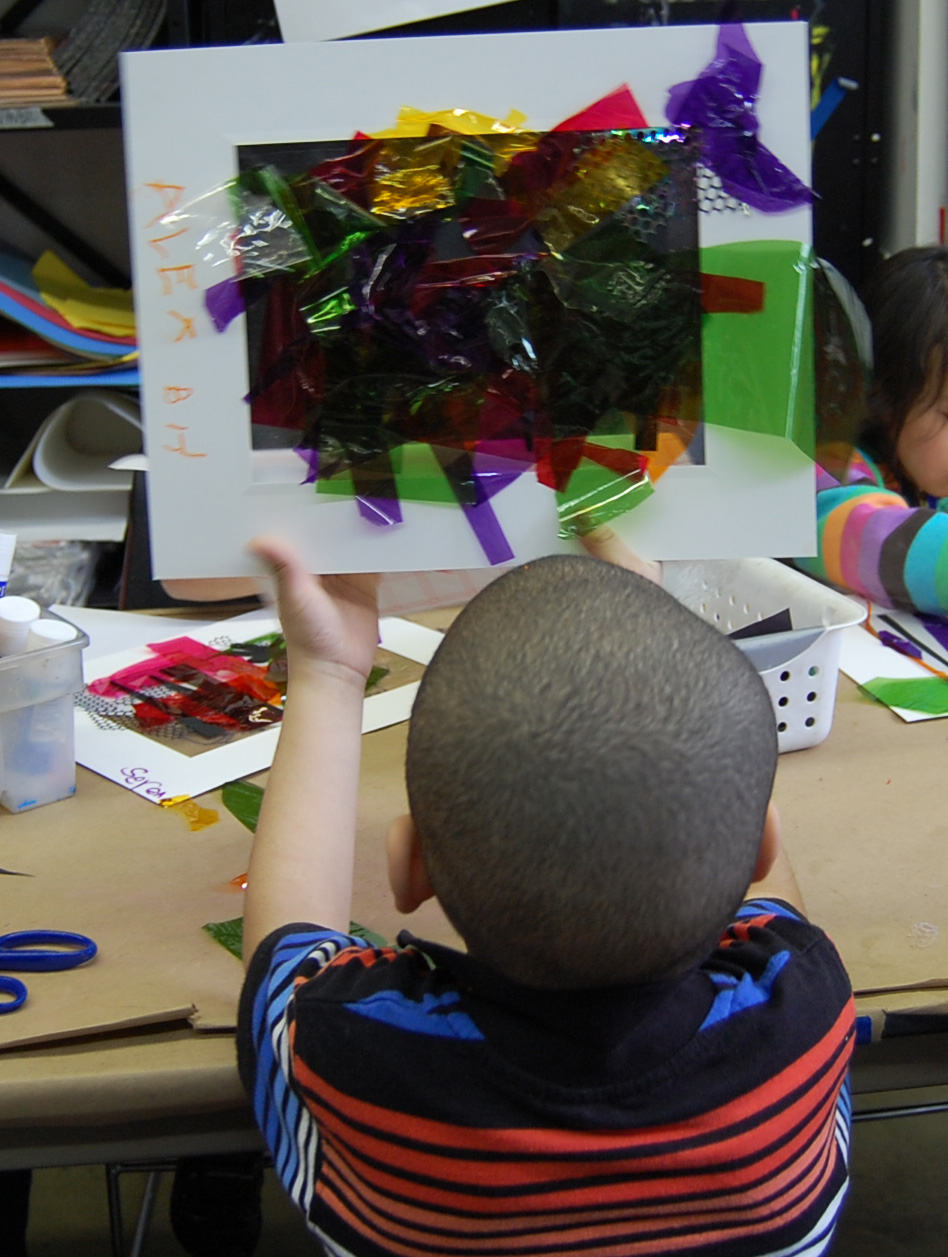
A student admires the fruits of his labor
I guess I’ve just been wondering — is studio practice still a central part of the educational experience at an art museum? And what is the value of adding an artistic, art-making element to these experiences?
I can only speak for myself as a former artist. I say “former” because I wouldn’t consider myself a practicing artist — although getting myself dressed everyday is my favorite and most active form of art expression. When I make works of art, either alongside looking at art or before or after an experience in the galleries, I think about those objects in a very different way. I think about how it is made, what materials the artist used, the difficulty creating the forms I see, its relationship to me, the world, my space, and the spaces of the gallery. I am clearly a visual learner, and by making and doing I am able to reflect on the process behind the object, the artist’s choices as well as his or her state of mind.
In the New York Times article (mentioned above), Wendy Woon, Deputy Director of Education at MoMA, remarks:
“in the 21st century, museums are well-placed as we move from consumption to innovation to stimulate ideas and creativity… In many ways it harks back to the history of MoMA: a place where conversations with artists, architects, designers and the public take place and where art is made.”
Agreed. Museums have changed from places that collect stuff (utterly oversimplified, I know) to places where people go to learn about that stuff and now, back to in this place that exhibits work BECAUSE of the experiences that are had by visitors — quiet contemplation, sharing and talking, making and doing.
Do you think art making is an important part of an art museum experience? Why or why not? Keep the conversation going with me on twitter @lsmilow – use #artsed #museumed and #artmuseumteaching or comment here.
A recent study published by the James Irvine Foundation (October 2011) entitled Getting In On the Act: How Arts Groups are Creating Opportunities for Active Participation draws insights from nonprofit arts groups and experts to explore a new model for understanding and supporting participatory arts practices, a growing trend here in the United States as well as across the globe. Here is how the reports’ authors begin to frame this “siesmic shift” towards a participatory arts culture:
“Technology has fundamentally changed the way people interact, learn, and think about culture. Contemporary notions of creativity, shaped by Web 2.0, center on shared construction of cultural identity and an ethos of participatory experience…. The open, free and instantaneous exchange of digital content affords people the resources to control their own creative experiences and make their own meaning. Interactive experiences of all sorts are now an expected norm.” (6)
But, then the report got a lot more interesting to me…
“This shift is about more than just technology. People are thinking about the experience of culture differently than in the past, placing value on a more immersive and interactive experience than is possible through mere observation…. Americans are activating their own creativity in new and unusual ways … [as] part of a larger ‘participatory economy’ in which social connection eclipses consumption. Americans want to meet the people who make our products, share in the work of the makers, and make things ourselves.” (6)
The report’s human-centered focus brings much-needed attention to the ability of the arts (and arts institutions) to connect people, to create shared experiences, and to contribute to the cultural fabric of the communities in which we live and work.
Photo by Santiago Ochoa
For art museums (and museum educators, especially), the report provides an extremely meaningful tool for reflecting on how we involve audiences in shaping their own experiences and making their own meaning. The report’s “Audience Involvement Spectrum” provides a nice, workable model for audience engagement, from “receptive” involvement (the type of spectating and educational enrichment occurring in the vast majority of arts museums) to increasingly “participatory” involvement (the types of crowd-sourcing, co-creation, and public artistic experiences that more and more art museums are slowly striving toward).
The report is worth a close read. It asks some essential questions about arts programming in the 21st century, and I think art museums would have much to gain by thinking more about how they fit into this new landscape of active arts participation. As museum educators, we have our hands on the wheel when it comes to programs — and the Irvine report clearly and strongly states that “attracting the next generation of audiences and visitors will require a transformation in programming” (11). At the core of this transformation is both thinking outside the box (‘the box’ in this case being the rigid walls and traditions of art museums) and letting go of institutional and curatorial authority so that visitors can feel comfortable and empowered to shape their own creative experiences.
If you have a chance to peruse the Irvine Foundation’s report, I’d love to hear how your institution’s programs (or your own teaching philosophies) fit on their spectrum of audience involvement. Has your institution embraced any of these aspects of participatory arts practice? Do you value these types of creative, artistic experiences when you visit art museums yourself (or do you shy away from them for more passive types of engagement)?
“I see art history, and museums in particular, as a process, an interface, a tool, an ‘agent provocateur’ whose role, rather than being didactic, is to get people to see and think for themselves.”
—Marcia Tucker
Marcia Tucker was the founding director of the New Museum in New York and a visionary curator, also working for many years as a free-lance art critic, writer, lecturer, and professor. Her defiance of conventional practice has always inspired me, even though I only became familiar with her work and writings during the year that she sadly passed away, 2006. Marcia founded the New Museum when she was 37 after being fired from the Whitney Museum of American Art. According to the New York Times, her motto in founding the museum was, “Act first, think later — that way you have something to think about.” This quote by her has driven my own personal philosophy of museum teaching — to “get people to see and think for themselves.”
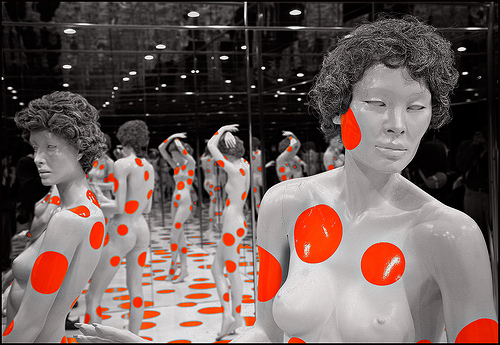
p.s. the image below from an installation at the Mattress Factory was the best I could come up with for a visual of museums as a real interface and provocateur. My only visit to that institution a couple years ago was quite a unique experience in seeing, exploring, wondering, and thinking for myself — culminating in my encounter with this permanent installation space by artist Yayoi Kusama.


 e Want from Online Communities of Practice?”
 “Reimagining Professional Exchange & Peer Networks in a Digital Age”











 Art Museum Teaching