Barriers to Family Engagement in Museums

Written by Marianna Adams, Audience Focus, with Elizabeth Margulies, Museum of Modern Art

Cross-posted from mariannaadams.blogspot.com

All three families scheduled for last week had to cancel or reschedule so it gave me some time to think and have some great conversations with museum educators around the country. What emerged as a theme for me this week was thinking about challenges to facilitating exciting, authentic co-participation in family experiences. I’ve invited Elizabeth Margulies, Director, Family Programs and Initiatives, at MoMA to chime in as she has some valuable reflections to share.

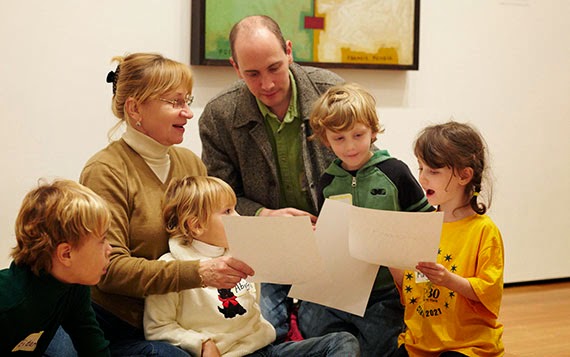
MoMA 1

Since 2004, the USS Constitution Museum has been actively involved in experimenting with and evaluating techniques that foster family engagement. Currently their IMLS-funded project “Engage Families” seeks to identify characteristics of family programming that result in active intergenerational engagement, enjoyment, and learning in museums and libraries. To assist that effort, I implemented an online survey of museum and library professionals around the country in November 2013. Two key findings emerged that will be the focus of this post: 1) professionals value and want to create fun, authentic, opportunities for visitors of mixed ages and interests to co-participate and learn together; 2) accomplishing this comes with many challenges. We want to address two frequently cited challenges here.

1. It’s Really About What You Value

MoMA 3The most frequently cited barrier to achieving their vision for engaging family programs in the USSCM study was lack of resources – specifically time, money, space, and/or staff. Interestingly, whenever I ask museum professionals what prevents them from doing anything this is often the first response. For me, these resources will always be in limited supply, therefore, they become expressions of what we value. For example, we might say that regular exercise is important, but unless we really value it, we will not juggle our personal budgets and complex schedules around to get to the gym or that yoga class.

MoMA is proactively addressing how family programs are perceived and value within the organization by engaging in a cross-departmental dialogue.

As Elizabeth Margulies explains:

Retail, Publications, and Education began meeting over a year ago to see how we might build on the success of some publications written by Education and developed by Retail. In our conversations we realized that we could use some help defining what we all wanted and we hired an outside consultant, Stephen Gass of The Gass Company to work with us. The goal is to articulate the personality and voice of the programs, experiences, and products MoMA creates for kids and families along with the values that drive our decisions. It’s been gratifying to find that everyone thinks this is a worthwhile effort. We wouldn’t have known how important everyone felt the child/family audience was if we didn’t bring them all together to discuss it.

If lack of resources tends to be your main reason as to why you don’t have the kind of family experiences you say you want, then this is where your work has to start.

What are ways that you have been able to shift the culture of your organization towards a more family-friendly position?

2. But Parents Won’t or Don’t Want to Participate!

Museum and library practitioners express concern and even frustration at not being able to get the adults to engage or to engage “properly.” This always raises the question “What is proper?” When I have felt like being the “bad” grandparent and check my phone, it’s mostly because I’m bored. Either I’ve been separated from my wonderful granddaughters or what we are being asked to do is uninspired and/or disconnected from what’s important in the artwork.

It always comes back to intention. If we want co-participation across generations then everything we do has to support that intention. I’ve heard from that when they clearly and consistently communicate the expectation that adult caregivers participate, they have better engagement within the groups.

Certainly we want families to feel comfortable doing what they feel is best. There always needs to be room for groups to engage as much or as little as they want. As the educators at MoMA and the American Museum of Natural History advise, if we communicate clear intentions early and often then we will see more co-participation and enjoyment. More importantly, if what we are asking groups to do is compelling then there will be more engagement. Studies suggest that some parents want to hand over the experience to the program facilitator. We always have to graciously accept that some people don’t want the experience we’ve provided. In that case, if we are true to our intentions they will self-select other programs that better suit their needs. It’s also why a variety of youth and family programs is advisable.

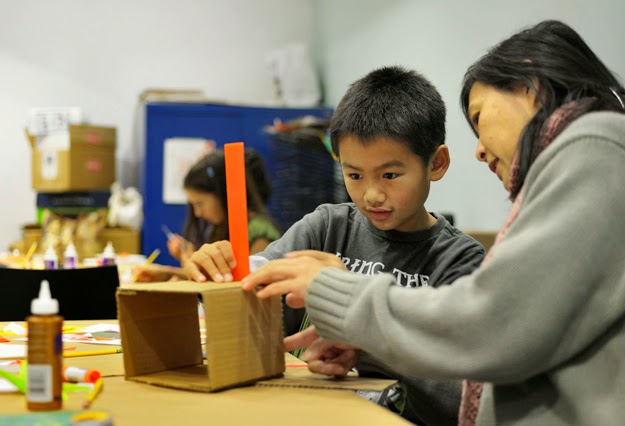
MoMA Education_2012_SMALLBut enough about the parents/caregivers. I want to focus more on the responsibility of the museum educators who deliver experiences designed to encourage co-participation and engagement. Some museums are able to hire experienced museum educators for their family programs, giving greater consistency and depth to the experiences. For many museums, family programs seem to be shuffled off to the youngest, least experienced facilitators who are given almost no mentoring on how to engage intergenerational audiences effectively.

In the UK Kids in Museums is “compiled entirely from visitors’ comments. It’s a practical and powerful tool to encourage and support museums, galleries, and historic houses around the country” to more successfully engage family audiences. For example, a few points from their Manifesto speak to the importance of the educator’s approach:

  • Be positive and do away with the word ‘No’. Tell visitors what they can do at the door, don’t pin up a list of things they can’t.
  • Share storieswith each other. Listen. Families can be experts too.
  • Don’t say ssshhhush! If kids are being noisy, ask yourself ‘Why?’ Is it because they’re excited? Great! Then capture that excitement. Is it because they’re bored? Then give them something meaningful to do.
  • Say ‘Please touch!’as often as you can. Everyone finds real objects awesome. Direct kids to things that can be handled, teach respect and explain why others can’t.
  • Give a hand to grown-upsas well as children. Sometimes it isn’t the kids who are shy – parents need your support too. Produce guides, trails and activities so everyone can join in.
  • Be aware of different families’ needs.Use your imagination with signs, symbols, and words understood by all. Design everything you offer to be equally accessible to disabled and non-disabled visitors alike.

The educators for MoMA’s family programs have developed a range of guidelines and self-evaluation tools to support their family educators. Most importantly, family program facilitators are asked to:

Reevaluate. After your program, think about why families might not have participated as you hoped. Possible reasons:

  • Adults didn’t know they were expected to participate;
  • Adults weren’t asked to participate or work with their child until too late in the program;
  • Instructions weren’t clear about what parents were supposed to do, or the activity, discussion was too difficult (even for the adults);
  • The gallery has too many distractions or logistically doesn’t give families enough room to do what you’ve asked;
  • There is a language barrier;
  • Families couldn’t hear you.

PLEASE SHARE

What strategies do you use to facilitate greater co-participation within and across family groups?

OTHER POSTS IN THIS SERIES:

Towards a More Mindful Practice

Falling in Love with Your Visitors

Evaluation Can Be Fun

*     *     *     *     *

ABOUT AUTHORS

AdamsMARIANNA ADAMS is President of Audience Focus Inc. Her professional roots began in K-12 public and private school teaching (fine art, English literature, social studies, and special education) and segued into museum education where she headed several education departments in Florida museums. She founded Audience Focus Inc., in 2007 after 12 years of conducting evaluation, research, professional development, grant proposal writing, and concept development for the Institute for Learning Innovation. Her degrees are from George Washington University (Ed.D.), University of South Florida (M.A.) and Mercer University (B.A.). In her spare time she is an avid yoga practitioner and teacher.

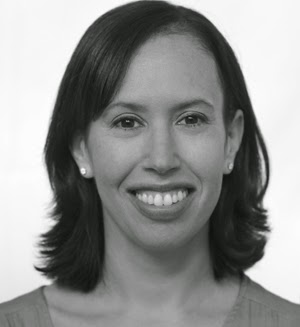
moma Elizabeth Margulies - HeadshotELIZABETH MARGULIES, Director, Family Programs and Initiatives, Department of Education, joined The Museum of Modern Art in 1999. Elizabeth designs, develops and oversees MoMA’s wide array of Family Programs and resources including gallery talks, workshops, artist talks, film programs, digital projects, activity cards, games, audio guides and the Museum’s interactive space, MoMA Art Lab. She collaborates with MoMA Retail and Publications, on children’s books and products, and in 2010 with Cari Frisch, co-authored, Make Art, Make Mistakes: A Creativity Sketchbook. In 2012, she collaborated with colleagues in Education, the Museum’s Digital Media and Graphic Design Departments, and Rendor Monkey, to launch MoMA Art Lab, an app for the iPad. The app won a 2013 Webby Award in the Education & Reference (Handheld Devices) category, and a Parent’s Choice Silver Honor for app design. Before coming to MoMA, Elizabeth worked in theatrical and television production. She holds a B.S. in Theater from Skidmore and a Master’s of Education from Bank Street College of Education. Elizabeth has taught in both public and private schools in New York.

Falling in Love with Your Visitors

Written by Marianna AdamsAudience Focus, 2014 Educator-in-Residence at the Isabella Stewart Gardner Museum

Cross-posted from mariannaadams.blogspot.com

I know this sounds a bit too new-agey but it’s what keeps coming up for me after my first full week in my residency at the Gardner Museum. Three families came to the museum this past week and the best way I can describe the experience is that I just fell in love with all of them. They arrived so excited and in good spirits, even if some of the children were a bit wary at first.  Their openness to new experiences reminded me to be more open in turn  to their unique ways of visiting and looking at art. A few reflections are shared below (while the experience are real, the names of the family visitors have been changed).

It’s About Choice & Control

One of the first things I learned from my mentors, John Falk and Lynn Dierking, was that visitors like and need choice and control in their museum experience. When I checked back with the families a day or so after their visit, the one consistent remark was how much they liked doing their own thing. Cole (age 10) told his mom, who had not been able to come to the museum, that he liked the visit because “they let us do whatever we wanted.”

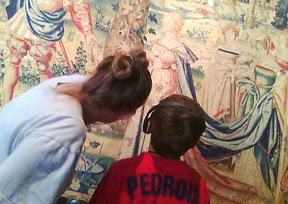
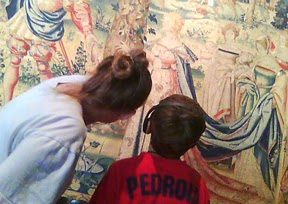
tapestry-smallOne thing visitors like to choose is the pace. Eva, who visited with her two sisters, and her grandniece, Suzie, (age 7) and grandnephew, Chuck, (age 12) said she liked the “very relaxed pace” of the visit and added “this is a great way to come to the museum together.” A rather quick and focused pace was set by 8-year-old Zuri because she wanted to use the family guide, while her father and brother, Cole, (age 10) were happy to keep up. In another family, Baylor (age 10) had recently discovered audio guides and he immediately plugged into one during the visit. This slowed the pace down considerably. As his mother wrote to me the next day, “Using the audio guide really clicked in for Baylor last summer, and has totally changed our museum experience, allowing us both to have more private and quiet looking times as well as more social looking.”

Kids See the Darndest Things

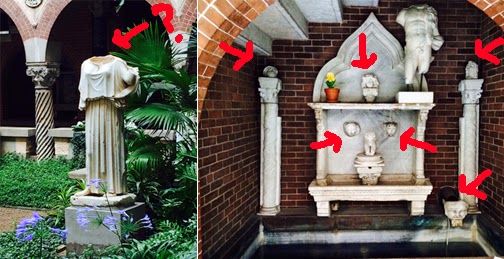
I am continually fascinated by what draws children’s attention and this week’s visits were no exception. Typically it is not what educators tend to include on tours. For example, Suzie was first taken with the missing head on a statue in the courtyard. Throughout the visit she commented on how many statues were missing heads and arms. This caused us all to heighten our attention to what was missing. When we passed along a hallway to go upstairs she paused at a niche housing several stone and marble heads a long with a sculpture missing all limbs and the head. She said, “Oh, so this must be where they keep the heads” and calmly walked on.

combined headless & heads

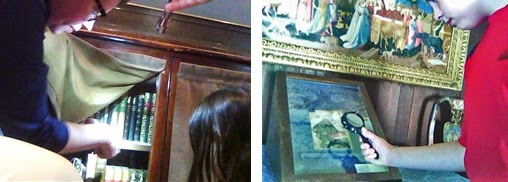
Because the Gardner is one of the few museums lit primarily by natural light, and there are many cases with small, fascinating objects and notes, sometimes things can be difficult to see. Even though, there were opportunities in all the groups where they were straining to see something they did not ask to use the flashlights. or magnifying glasses. Sometimes I would shine the light where they were looking and everyone in the group would gather round and spend more time looking and talking. Reports from families a few days after the visit suggested that the flashlights were a big hit, even though they never directly asked for them.

combined magnify flashlight

They “Stumped the Chumps

Children frequently stumped us all with their insightful questions that we couldn’t answer. When that happened, all of us, adults and children, got involved in the conversation, equally contributing bits and pieces of what we knew and speculating on all the possible answers. Yes, I could analyze these interchanges and point to how they are modeling critical thinking, good inquiry, and how children need to see that no one has all the answers, but I’m not. They were just beautiful moments of people coming together and puzzling out something. I want to leave it at that.

What About Content?

It’s challenging for educators to intentionally lighten up on content in any museum experience, even though research continually finds that family motivations for museum visits is NOT to learn new knowledge. Families seek an enjoyable time together that serves as a sort of family glue, creating memories that they continue to share. Certainly parents and children like to learn things but it’s not the focus or reason for their visit.

At the beginning of the visits this week, I let families know that I did not have any plans for them, I just wanted to wander around with them, that I didn’t know the collection but there was a Gardner Museum educator with us in case there was anything they wanted to know.  Having a knowledgeable person with us proved to be a popular feature for families, for when questions came up Julia Brucker and Michelle Grohe were there. I’m grateful for their skilled ability to know just when and how much to engage so that the experience stayed in the family and was not diverted to the educator. That said, the families did not automatically think to ask the educators when a question arose. In most cases, after listening to families wonder out loud about something, I suggested asking the museum educator, which they eagerly did and it enlivened the conversation. I’m not sure why this is the case and together with families enjoying but not asking for the magnifying glass and flashlight, it feels like a pattern might be emerging. I will see if it continues in this week’s visits.

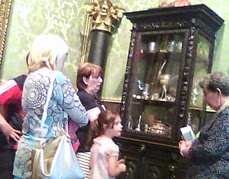
talking with volunter and elbow of hanger-onAt one point a group intercepted a gallery volunteer roaming the gallery for just this purpose. The volunteer noticed that Suzie and Chuck were interested in a silver encased ostrich egg and talked to them about it. This brief interchange warmed my heart as the volunteer was focused totally on the group’s interest and experience. She had no agenda except to facilitate visitors’ interest.

Implications for Practice

Realistically we can’t accompany every family group in this way, but it feels increasingly important that we, as educators, connect with audiences on more than an intellectual level. Finding practical ways to fall in love with the visitors seems key to me. When we connect with visitors on a deeply human level then the way we design experiences will change. When we start to see visitors as thoughtful, insightful friends who are eager to explore what the museum has to offer, we stop seeing them as security risks or potential dollar signs. I invite you to find your own ways to authentically connect with your visitors and share what happened.

Note: All the photos were taken with Blynk a tiny time-lapse camera during the family visits. This little gadget is now my new best data-collecting friend. And the “Stumped the Chumps” reference is a nod to Car Talk.

OTHER POSTS IN THIS SERIES:

Towards a More Mindful Practice

Barriers to Family Engagement in Museums

Evaluation Can Be Fun

ABOUT AUTHOR

AdamsMARIANNA ADAMS is President of Audience Focus Inc. Her professional roots began in K-12 public and private school teaching (fine art, English literature, social studies, and special education) and segued into museum education where she headed several education departments in Florida museums. She founded Audience Focus Inc., in 2007 after 12 years of conducting evaluation, research, professional development, grant proposal writing, and concept development for the Institute for Learning Innovation. Her degrees are from George Washington University (Ed.D.), University of South Florida (M.A.) and Mercer University (B.A.). In her spare time she is an avid yoga practitioner and teacher.

Towards a More Mindful Practice

Written by Marianna AdamsAudience Focus, 2014 Educator-in-Residence at the Isabella Stewart Gardner Museum

Cross-posted from mariannaadams.blogspot.com

Amid many possible areas of exploration I considered for my residency at the Gardner Museum, I decided to see if I can bring more mindfulness to my own thinking about families in museums. Through my research and evaluation on families in many types of museums and my experience taking my granddaughters (currently 6 & 7 years old) to museums, I have been struck by what Ellen Langer refers to as “mindless” practice. It’s when we keep doing the same thing over and over without questioning the underlying pedagogy or assumptions. We stop paying attention and go on autopilot. Nothing very interesting can happen in that place.

I know that there are increasing examples of innovative and thoughtful work by museum educators in the area of family programs and I encourage you to share those ideas with us here. Yet over the years of both watching and participating in family museum programs three key questions keep emerging for me.

Where is the family in family programs?

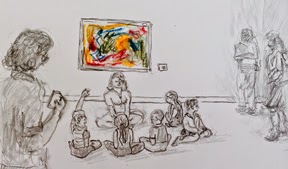
Figure 1: I did this awkward little drawing as a composite memory of many family programs in different museums. While this is from my experience, try a Google image search for "family programs in art museums” and you will find, amidst lots of pictures of kids making art, some images that have this same basic choreography. Yes, the odd tilt of the painting bothers me too.
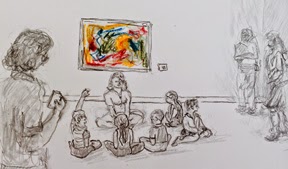
Figure 1: I did this awkward little drawing as a composite memory of many family programs in different museums. While this is from my experience, try a Google image search for “family programs in art museums” and you will find, amidst lots of pictures of kids making art, some images that have this same basic choreography. Yes, the odd tilt of the painting bothers me too.

First, what is billed as a family program often turns out to be a program for kids but the parents/caregivers have to stay with them. Adults are rarely engaged in a meaningful way and connections within the social group are neither acknowledged nor fostered. For example, when a family program facilitator takes families into a gallery, they often sit the children on the floor and the adults (either because they don’t really know what else to do or because they don’t want to sit on the floor) stand around in a semi-circle behind the kids. For me, this is a clear example of an invisible pedagogy. We are teaching adults that this experience is for kids and adults need not participate. When I talk with family program educators, they usually say they want adults to engage in the program. Sometimes they go so far as to imply that it’s the fault of the parents, as in “They won’t get off their cell phones.” Having been one of those adults at a family program who dearly wanted some sort of diversion and thought often about pulling out my phone, I ask, “What are we offering to the adults that is more interesting than their mobile devices?”

A host of questions emerge for me that I would love some e-conversation about: Why do we repeat this model over and over again? Does our training push us towards a developmental model where we know only how to program towards children or adults, but not both at the same time? Is the skill of encouraging parent child engagement one that is better fostered through other disciplines and thus should we be looking at best practices in other disciplines such as social work or psychology?

Why do we use a school model of discussion and interaction in family programs?

I’ve watched many well-meaning facilitators sit or stand in front of a work of art and make eye contact with the children almost exclusively. Not only does this tell parents to stand back but children quickly figure out that they are supposed to look at the facilitator and most of them conform. Children are asked questions and they raise their hand to answer, just like in school. Families tend to have fluid conversations, a lot of give and take, and while we might remind a child to not interrupt we rarely ask our children to raise their hands when having a conversation around the family dinner table. Why then do we default to the school model in the museum experience?

Even more frustrating is that this school model draws attention away from the objects and instead focuses attention on the educator. I’ve taken time-lapse photos and the average time spent looking at the art when sitting in this configuration is about 2-3 seconds – total, unless of course a child is not paying attention to the facilitator and looks at the art anyway.

How does the experience leverage the uniqueness of the museum?

The most important issue for me is that too many of the activities we offer in family programs don’t maximize the value of what the museum has to offer.

Engaging people of all ages in hands-on activities in the galleries can be a wonderful way to guide them into a deeper appreciation of the artwork. Yet, I’m concerned because too often the activities don’t connect very well with the artwork or the way the artist worked. I keep asking, “Why is this activity happening in the museum?” Most of what I see could be done anywhere and, sometimes, would be more effective without the visual distraction and noise of the gallery. I wonder, do we continue to under-maximize the uniqueness of the museum because we aren’t clear on what that is? Or do we operate on the assumption that families aren’t able to grasp it?

What will be my focus at the Gardner Museum this summer?

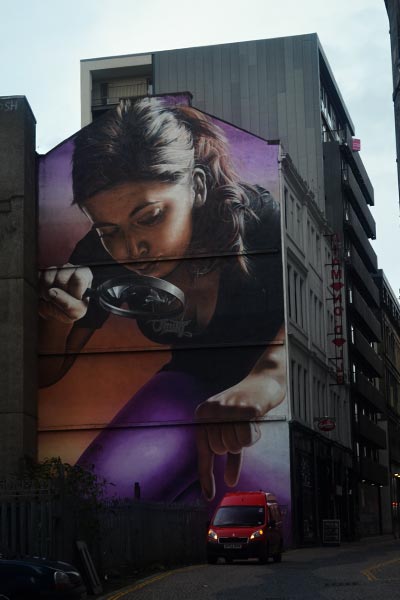
Figure 2: Sam Bates a.k.a. Smug, Girl with Magnifying Glass, Glasgow, Scotland.

As I continued to think about these issues I realized I was focusing only on how the educators planned and implemented programs. I began to wonder if I, too, have gone on autopilot. I know what kind of family experiences I’d like to see in the museum but, as I frequently warn my colleagues, using ourselves as a representative for the general visitor is not very smart. So, during the month of July I’ve invited families to come to the Gardner and allow me to accompany them.

I won’t have an agenda, lesson plan, protocol, notebook, or audio recorder and I plan to allow both the “educator me” and “evaluator me” to recede to the background. I want to explore facilitating “with” families rather than “for” them. I want to pay more attention to invisible pedagogies – both how the physical space itself instructs and how actions from people (me included) communicate behaviors and attitudes. I will invite the families to begin where they want to. I will have a few things with me, such as a flashlight for dark corners, some sketching materials, and magnifying glasses but I may not ever pull them out. I’m imagining, for instance, that as conversations evolve the need for things like that magnifying glass will naturally arise and I will, much like Mary Poppins, slide it out and hand it to the adults so they can facilitate the experience for their family.

Admittedly I’ve had moments of near panic just thinking about the unstructured quality of this experience. I have no idea what will happen and have to trust that if I stay mindful, sensitive, and observant that I will notice new things and be filled with wonder. I’ve invited local museum educators to come hang out with me. They can’t bring notebooks either and they have to agree to talk with me afterwards and write up a reflection of their experience.

The family visits begin on Wednesday, July 9. Meanwhile, I invite your comments. I hope I’ve raised some hackles one way or the other. If everyone is nodding in gentle agreement then I haven’t pushed enough buttons.

OTHER POSTS IN THIS SERIES:

Falling in Love with Your Visitors

Barriers to Family Engagement in Museums

Evaluation Can Be Fun

ABOUT AUTHOR

AdamsMARIANNA ADAMS is President of Audience Focus Inc. Her professional roots began in K-12 public and private school teaching (fine art, English literature, social studies, and special education) and segued into museum education where she headed several education departments in Florida museums. She founded Audience Focus Inc., in 2007 after 12 years of conducting evaluation, research, professional development, grant proposal writing, and concept development for the Institute for Learning Innovation. Her degrees are from George Washington University (Ed.D.), University of South Florida (M.A.) and Mercer University (B.A.). In her spare time she is an avid yoga practitioner and teacher.

What Might Museums Look Like in the Future? NMC Virtual Symposium

Submitted by Alex Freeman, Director of Special Projects, New Media Consortium

The New Media Consortium’s upcoming Future of Museums Symposium will bring together a collaborative global conversation around issues of technology, museums, and the future. This free, online Virtual Symposium will be held on Wednesday, July 23rd, 2014, and will feature keynote speakers and crowdsourced presentations by your peers.

unnamedAs its name suggests, the Symposium looks toward the future: what might the museum world look like in five years? Ten? Further out? Technologies and practices that are just beginning to show promise in an educational or social context may well be commonplace in that time frame. In this day-long event, we are bringing the research and work behind the NMC Horizon Report 2013 Museum Edition to the greater museum community. The Horizon Report’s advisory board participates in thoughtful discussions about an array of museum technology topics, trends, and challenges in the museum wiki that informs the writing of the report — this virtual event will give participants an opportunity to engage in similar discussions with museum thought leaders in real-time.

The Symposium grows from the NMC’s Emerging Technologies Initiative, which seeks to answer the question of how to keep abreast of emerging technologies that may be important to our collective work as educators. At the core of this initiative is a focus on emerging technologies and the ways they can be applied in the service of teaching, learning, research, and creative inquiry. A major goal is to stimulate systematic thinking and discussion of the real challenges that face our world and our society, and in particular, how emerging technologies might be applied to solve them.

The program will run from 11am to 6pm ET and is going to consist of an opening keynote by Jasper Visser, a lunch Keynote by Nik Honeysett, and a closing keynote by Nancy Proctor with a variety of small group discussions based around topics in the latest NMC Horizon Report > Museum Edition  (BYOD, crowdsourcing, location-based services, and makerspaces).

In the past we have utilized platforms such as Second Life to bring our international community of practice together, but for this special museum edition we are exploring the online communication tool Business Hangouts which shares similar functionality to Google Hangouts On Air. A virtual symposium offers many of the affordances of a face to face conference without the need for travel.

To register for this event please visit: http://go.nmc.org/SympReg

Keynotes and Panelists include:

Jonathan Carfagno, Director of Learning and Audience Engagement, Grand Rapids Art Museum (USA)

Lath Carlson, Vice President of Exhibits, The Tech Museum of Innovation (USA)

Marc Check, Associate Vice President, Information and Interactive Technology, Museum of Science, Boston (USA)

Jennifer Corriero, Executive Director, Taking It Global (Canada)

Alex Freeman, Director of Special Projects, New Media Consortium (USA)

Barry Joseph, Associate Director for Digital Learning, American Museum of Natural History (USA)

Jeffrey Inscho, Web + Digital Manager, Carnegie Museum of Art (USA)

Vivian Kung, Former Director and CEO, Balboa Park Online Collaborative (Japan)

Elizabeth Merritt, Founding Director of the Center for the Future of Museums, American Alliance of Museums (USA)

Nancy Proctor, Deputy Director for Digital Experience at the Baltimore Museum of Art and Co-chair of the Museums and the Web annual conference (USA)

Ed Rodley, Associate Director of Integrated Media, Peabody Essex Museum (USA)

Sarah Stierch, Susan B. Miller Fellow,  Berkeley Center for New Media (USA)

Mariano Ulibari, Founder and Director, Parachute Factory Makerspace (USA)

Jasper Visser, Author of Digital Engagement Framework and blogger at “The Museum of the Future” (The Netherlands)

Elycia Wallis, Manager, Online Collections, Museum Victoria (Australia)

Holly Witchey, Director, the Wade Project, Western Reserve Historical Society and Faculty of Museum Studies at Johns Hopkins University. (USA)