OpenThink: Visual Thinking Strategies (VTS) & Museums

VTS-bostonFor the past two decades, the overall discourse regarding Visual Thinking Strategies (VTS) has been the subject of rather thorny debate.  The often-cited conversation between Philip Yenawine and Danielle Rice at the 1999 National Docent Symposium (published in 2002) productively drew out many of the disagreements about the role of information in museum teaching, especially with beginning viewers and first-time museum visitors.  In their recent book Teaching in the Art Museum, Rika Burnham and Elliot Kai-Kee frame VTS as a restrictive teaching method, wondering about participants’ experience in the galleries: “Have they not perhaps been cheated out of an authentic encounter with the painting?”  These debates continue to today, and, at times, it seems like one needs to draw a line in the sand and decide which side they stand on.

So what is VTS?

For those of you unfamiliar with Visual Thinking Strategies, it is an inquiry-based teaching method developed by Abigail Housen and Philip Yenawine more than twenty years ago and used in museums and school classrooms across the country.  Here is how Philip Yenawine describes it in his latest book Visual Thinking Strategies: Using Art to Deepen Learning Across School Disciplines (2013):

“VTS uses art to teach visual literacy, thinking, and communication skills—listening and expressing oneself. Growth is stimulated by several things: looking at art of increasing complexity, answering developmentally based questions, and participating in peer group discussions carefully facilitated by teachers.” (19)

Even those who do not practice VTS may be familiar with the sequence of open-ended questions that form one of the main aspects of VTS teaching practice:

  1. What’s going on in this picture?
  2. What do you see that makes you say that?
  3. What more can we find?

If you are interested in learning more about VTS, the foundational research behind it, and ongoing research in museums and classrooms today, here are some excellent resources:

Pushing Beyond the Protocol

My own approach toward VTS has been to set aside any controversy and more fully explore the research as well as the practical implementation of these teaching strategies ‘on the ground’ in museums.  Back in 2009, I led a panel at the American Association of Museums conference that called attention to the many questions, challenges, and apprehensions that exist regarding this method.  After interviews with more than 30 museum educators from across the country, I was able to gain a more complete and complex view of how VTS (and the research behind it) is being implemented in art museums—including adaptations of the original protocol, metacognitive dimenions as part of the VTS experience, pushing the boundaries of artwork selection, and alternative applications for docent and teacher training.  I have even found institutions that use Abigail Housen’s “stages of aesthetic development” (the core foundation of VTS) as part of their curatorial practice, the writing of labels and wall texts, and working with teaching artists to examine ways of creating art that addresses developmental stages of the viewers.  In addition to being one of the most commonly used teaching methods in art museums today, it is interesting to see how many other ways that VTS and its research has entered into museum practice.

Burning Questions about VTS: Ask Philip Yenawine
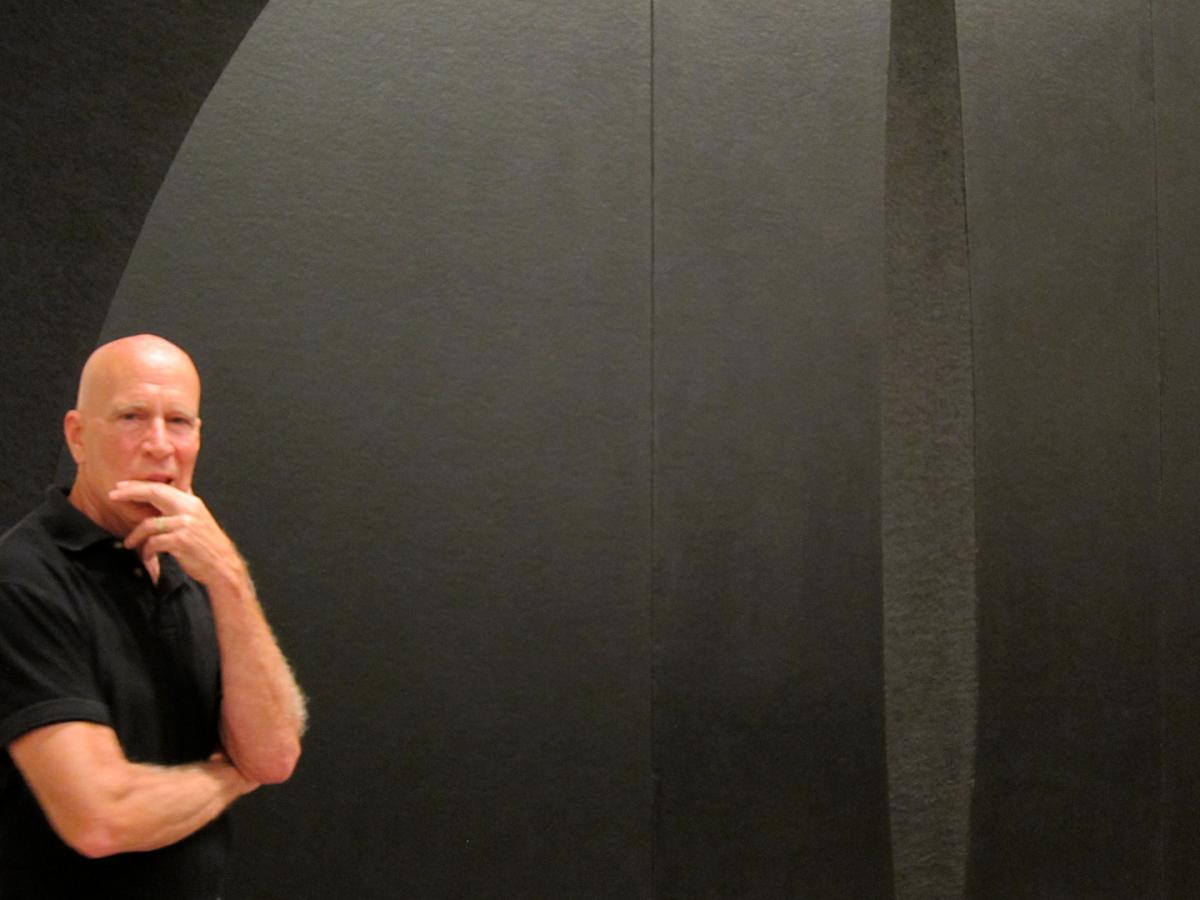
PhilipNeroVTSWhile I have never been trained in VTS myself, I have adopted it as part of my own teaching toolbox — often using its open-ended questions as a way to spark looking, talking, and listening with a work of art.  I respect the research and practice involved with VTS, which is why I jumped at the chance to partner with the national VTS organization to bring Philip Yenawine here to the Portland Art Museum.  Philip has been traveling around the country since his latest book was released last year, and his speaking engagement here at the Portland Art Museum (this Saturday, May 3rd, 2:00pm) will be part of that series of talks.

When we were first offered to host Philip’s talk here in Portland, I invited Philip to also join me for a conversation on stage as part of this Saturday’s program (which he gladly accepted).  I wanted to have the opportunity to discuss the applications of VTS with art museum teaching, and discuss some of the ‘burning questions’ that many museum educators have about VTS research and practice.

So, I am using this blog post (and the ArtMuseumTeaching community) to gather some juicy, burning questions that we all might have about VTS in museum teaching.  To seed this “open think” process of gathering your questions, I asked Jennifer DePrizio and Michelle Grohe at the Isabella Stewart Gardner Museum in Boston (a leading museum in VTS research & practice) to send me some of their questions.  Here is some of what they sent me:

  • We know a lot about what VTS looks like (both in terms of facilitation and types of learning to expect) in elementary students, primarily in grades 3-5.  What does that learning and teaching look like with older students, particularly high school? 
  • Listening is the cornerstone of paraphrasing and ensuring that students know that you not only listened to their ideas, but they were heard as well.  That can be a difficult skill to encourage teachers to develop. Can you really train someone to be a good listener?  How can we design effective professional development experiences that help teachers become aware of how they listen, and how to listen better? What activities and practice can we put into place to help our gallery educators hone their listening skills?
  • Since professional development programs at the Gardner invest a lot of time, over time, with teachers, what does their growth look like in terms of: aesthetic development, comfort with visual art, use of student-centered teaching practices, use of VTS questions with non-visual art, overall attitudes and understandings of teaching and learning and role of visual art in the classroom/school?  
  • What is the long-term effect or stickiness for VTS?
  • What does the use of VTS look like with non-beginners, or with viewers who are moving from beginner viewers (Housen stages I and II), into different aesthetic stages such as Housen’s stage II/III, II/IV and III?  How could we best support their growth while also challenging the students effectively?  What would that facilitation look like?  How would we know that we were addressing the students’ actual questions, not just sharing information that we think would help them?  
  • How do we responsibly respond to the many misrepresentations of VTS that exist?  How do we help colleagues in the field of art museum education understand the nuances that are available within VTS?

ADD YOUR QUESTIONS:

Please help me crowd-source some more ‘burning questions’ about VTS, and use the Comments area below to add your own questions.  If you add your thoughts here between now and Saturday, I’ll bring many of these questions to my conversation with Philip Yenawine here at the Portland Art Museum (and I should be able to post the video of this conversation here next week).

Thanks for helping me think about VTS in this open space for exchange, questions, and ideas!  And I’m looking forward to my conversation with Philip on Saturday (join us if you’re in Portland — the event is FREE and starts at the Portland Art Museum at 2pm).
#PhilipYenawineSelfie #VTSselfie

Building Bridges to Museums: How Classroom Teachers Can Help Reach Marginalized Youth

By Clare HaganDeWitt Clinton High School

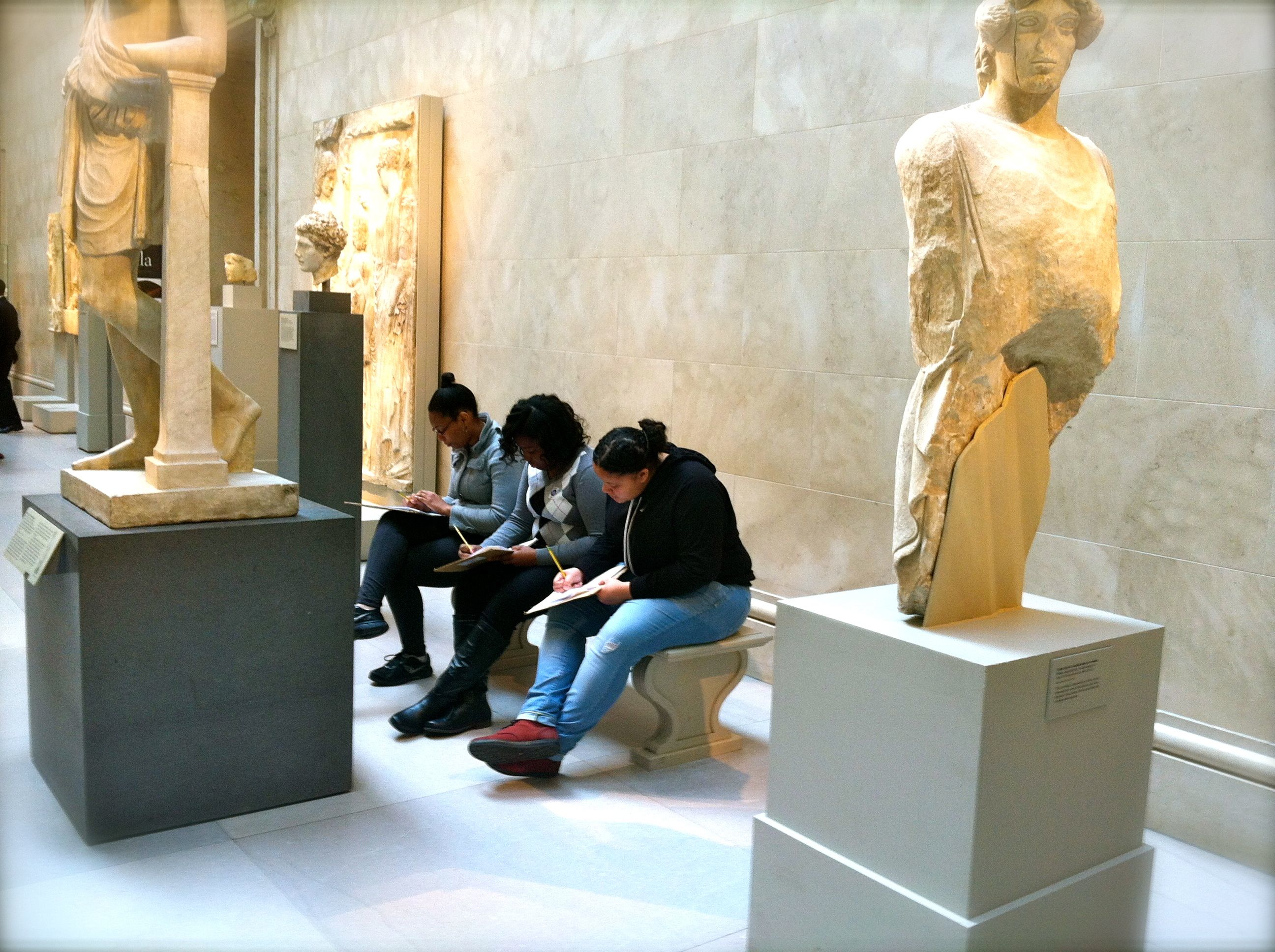
Students reflecting at the Metropolitan Museum of Art

During most days here in New York (and especially the recent spring break), art museums are thronged with families. Parents, grandparents and their children of all ages orient themselves with maps, cruise galleries and favor an exhibit or two leaning in to read labels, manipulate interactives, ask questions and make observations together. They’ve come to be entertained, spend time together and invest in the value of informal education.

As most of us know, families build a foundation for behavior and learning strategies and research indicates that family museum visits lead to adults who find value and comfort in museums. So what happens when children are marginalized because they don’t visit museums with their families? How might they feel comfortable and find value in a museum? While museums turn to more inclusive programs, policies, and exhibits in order to reach more families, what can the individual classroom teacher do to help create lifelong museum visitors?

I am an English teacher at DeWitt Clinton High School, a large public high school in the Bronx. My school currently serves 2,745 students of which 76% receive free lunch and 21% are English Language Learners. Our total population is comprised of 62% Hispanic, 29% Black, 7% Asian, and 3% other.  With the average museum visitor being white, college educated, and affluent, my students are certainly in the minority.  On top of that, due to budget cuts and the growing focus on test scores, schools like ours are taking fewer and fewer field trips.

At the beginning of the year, 83% of my students claim to have never visited an art museum. Nevertheless, after their second field trip, 96% say they are “likely” or “very likely” to return to one. As I look at these results, I try to understand what makes this class work.

Exploring Museums as Cultural and Community Resources

During their senior year, students can elect to take my year-long Humanities class for English credit. As in most humanities classes, my students learn about a long line of classical texts and objects but in my class they also learn about critical issues related to the people and institutions that preserve, shape, and disseminate cultural knowledge. They analyze intentional learning communities from ancient libraries to contemporary museums to the internet through texts ranging from historical records to reviews of current exhibits. They ask:

  • Whose culture is being preserved and how is it represented?
  • Where are the silences and why might they persist?
  • What are the criteria for a good collection or exhibit?
  • How are informal learning spaces different from formal education? How are they the same?
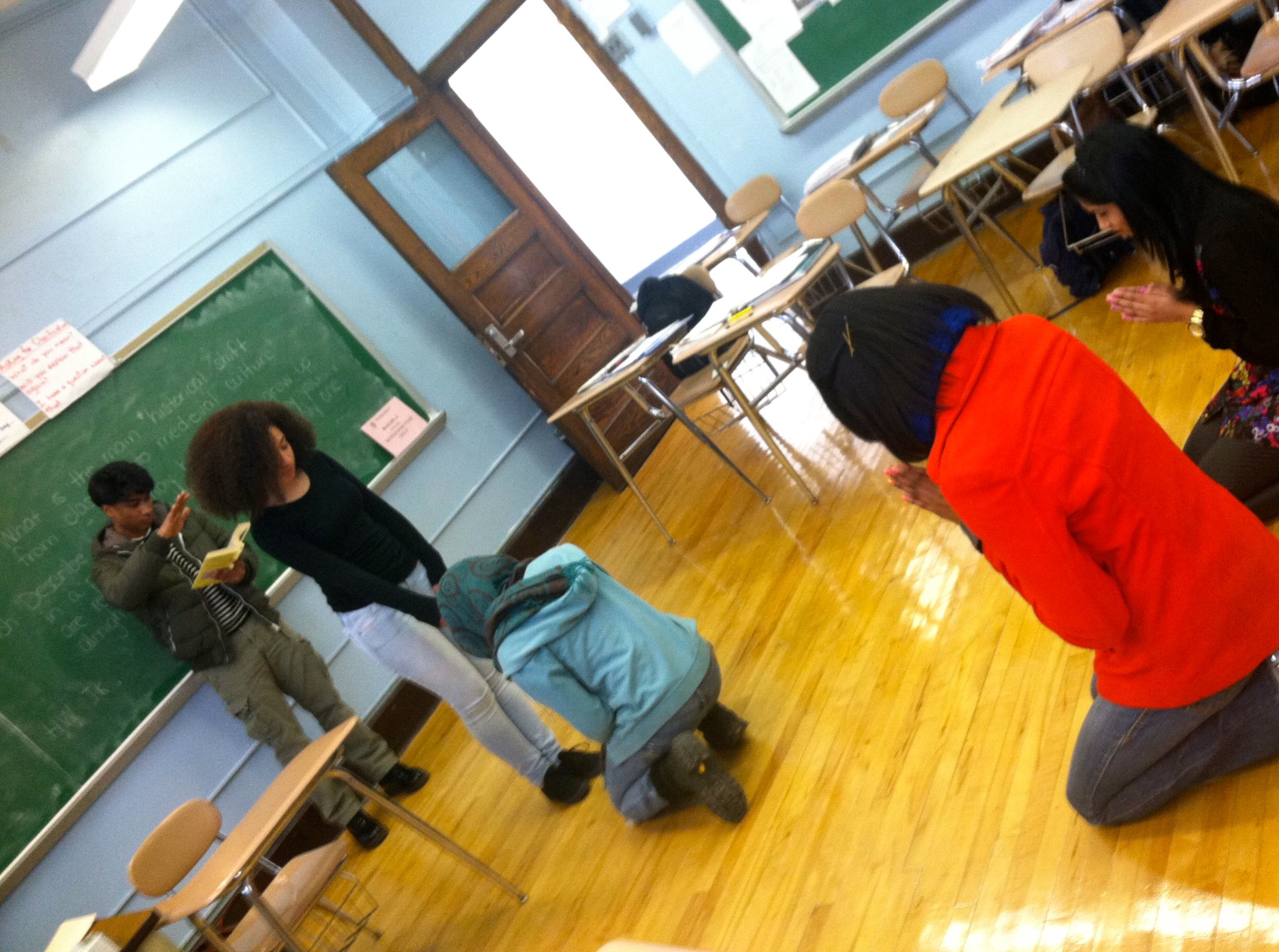
Students embody their interpretations
Students embody their interpretations in the classroom.

In response, their mid-year project is to propose a museum exhibit on a subject of their choice and their year-end assignment is to design a public humanities project for their own community.  Even if all my students don’t become museum curators and cultural events planners, at the very least they know that they can critically engage in public dialogue about cultural heritage, encounter deep experiences with works of art, and participate in self-directed learning in museums.

From day one, my students are engaged in object-based lessons. They read curatorial essays and look at several objects on a weekly basis, mostly from the Metropolitan Museum of Art. By focusing on the Met as a primary resource, my students come to understand it deeply as a public institution.  At the same time, they focus on works of art in depth. Based on my studies with educational philosopher Maxine Greene and through professional development at the Lincoln Center Institute, I have learned to infuse my classroom with aesthetic education practices.

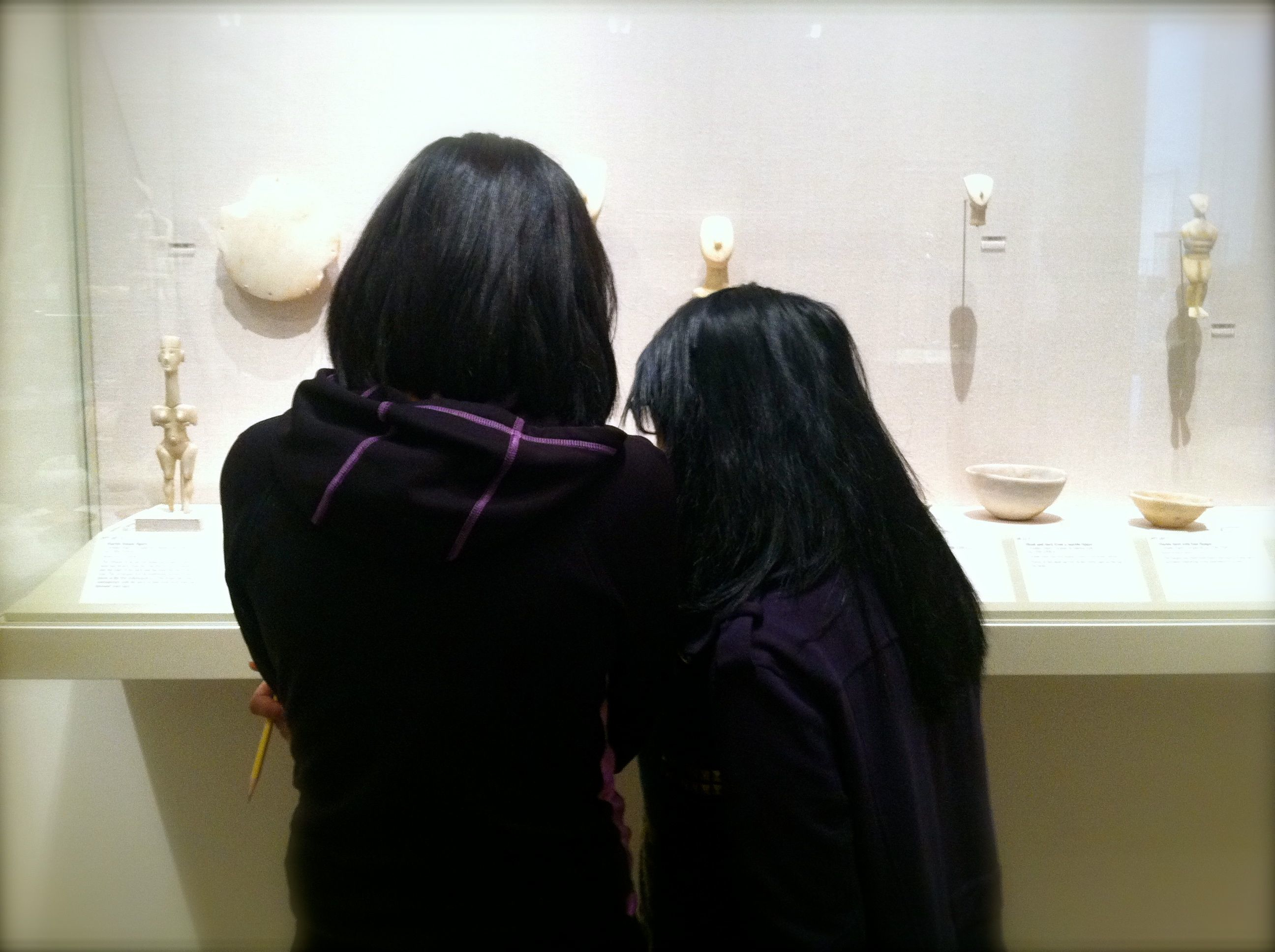
A typical lesson in my classroom involves students in a combination of deep noticing, embodied experiences, play, analysis, discussion, art making, questioning, researching, making connections, and meta-cognitive reflection. Together we wonder about why art matters, why history matters, how both get made, and how both get preserved. In addition, my students learn how to approach an object. In the classroom, groups lean in to an image on an iPad or stand back and discuss an image projected on the wall. They look at the object first and annotate the label second. They learn to look together as well as individually, to listen for their curiosities, find comfort with ambiguity, and to follow through with informal research.

By late fall we are ready for our first self-guided tour and we visit the Met’s Greek Art galleries. It didn’t take long for me to learn that students need preparation for male nudity in theses galleries, so in the days prior to our visit we look closely at nudity and consider its role in ancient Greek culture.  This way their field of vision goes beyond the nudity and they can see these objects from multiple perspectives. At the museum, students look at a few pre-selected objects making connections to our study of Homer’s The Odyssey. Next, they explore the galleries in pairs looking for patterns in order to draw conclusions about motifs.  Finally, students are encouraged to explore independently and gravitate toward one object which they will eventually research and write about. After our trip, we reflect on our visit and share our research.

Students looking together at the Met

In the spring, we return to the Met for a second visit, this time to experience the Islamic Art galleries. My students are noticeably more comfortable during this visit and are able to take on an additional assignment. This assignment asks students to use photography to develop intimate engagement as well as critical distance. Each student is asked to submit four distinct shots: an architectural detail, a fleeting moment, a close up of an object (one they will also research), and a selfie. Upon returning to the classroom we view our collection of photographs, share our research, and reflect on the visit as seen through our own eyes.

Creating Deep Connections with Museums

When students visit museums, they gain experiences and build knowledge. As teachers and museum educators, we often activate schema before, during, or after experiencing a particular object or exhibit in order to make meaning. We do this to help students make connections. But the schema that experienced museum visitors activate is not only related to the content of objects and exhibits. It’s about what to expect from a museum visit and how to make the most of it. How to lean in and look deeply, how to explore independently and together, how to listen to and follow our curiosities. Even how to play or to take a critical stance.

When students don’t visit museums with their families they need classroom teachers to introduce them to the inroads of experiencing one. Otherwise they might never feel welcome or even inclined to try a visit. From my experience, curriculum and lessons based on aesthetic education practices that also familiarize students with museums as a resource need to happen through repetition over an extended period of time, spiraling throughout the course of a semester or a year. This is possible when teachers choose one museum to focus on using objects and text related to their collections. I also believe that teachers need to layer their curriculum with a range of critical questions and projects related to the sources of our cultural heritage.  By becoming aware of the ways our cultural heritage is shaped and disseminated, students are empowered and see themselves as active participants in cultural dialogue.

Where else can we find success in reaching marginalized youth and what other roles can classroom teachers play? And finally, how can more teachers be persuaded to create deep connections with museums?

Students leaning in at the Met

About the Author

Clare Hagan head shotCLARE HAGAN: Humanities teacher at DeWitt Clinton High School in the Bronx, NY. At DeWitt Clinton, Clare has developed and implemented curriculum based on museums as a resource, museums as an object of study, aesthetic education and object-based lessons. She has presented her Humanities curriculum at the Metropolitan Museum of Art and has conducted professional development workshops on object-based lessons. In addition to her MA in English Education from Teachers College, Columbia University, she has studied critical issues in museum education at Teachers College and aesthetic education at Lincoln Center Institute. Currently, through generous funding from the National Endowment for the Humanities, she is studying Islamic verse and will be publishing her museum infused curriculum online this summer. Clare’s postings on this site are her own and don’t necessarily represent DeWitt Clinton High School’s positions, strategies, or opinions.


Long Live the Spirit of Play: Tracking a Theme through NAEA 2014

By Rachel Ropeik, Brooklyn Museum

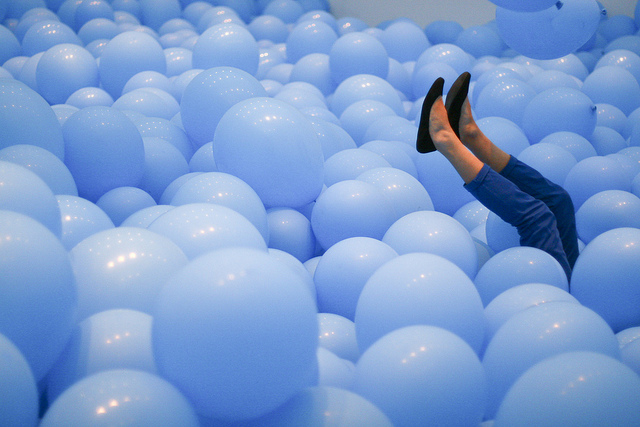
Nothing signifies 'play' like this installation by Martin Creed. Photo by Nicolas Mirguet.
Nothing signifies ‘play’ like this installation by Martin Creed. Photo by Nicolas Mirguet.

What do maker spaces, bodily collisions with strangers, and sculptures made of Turkish delight have in common?  They were all part of sessions at the recent 2014 National Art Education Association Convention in San Diego.  To be more specific, they were all part of sessions that focused on a theme threading through the four days of sun and arts teaching: the spirit of play.

That’s how I’m referring to it, at least.  The same idea was talked about as “being OK with failure”, “going in without predetermined outcomes”, and “iterative approaches”, but it was all shades of the same thing, and it was popping up everywhere.  (Side note: The importance of play in our work lives has been a topic beyond the museum sphere for a while.  Here’s a nice, clear Psychology Today article from 2008 that talks about what play means for our brains.)  People are interested in testing new ideas without knowing how they’ll end up, and I love it.  Like my theme tracking after the last AAM Annual Meeting, I want to follow this one through the NAEA Convention, highlighting some (though by no means all) of the conversations, actions, and tweets that made it one of my top conference takeaways.

Talking about play started out at the Museum Education Division Preconference, which was hosted at Balboa Park, home to some inspirational collaborations between cultural institutions.  Collaboration was the theme of the Preconference, and the very first session of the day, a keynote panel of experienced museum collaboration facilitators, included advice like:

and

Conference attendees were excited about this theme, too, and talked/tweeted about it throughout the day.

Seema Rao of the Cleveland Museum of Art reminded us about taking chances.

David Bowles from the Metropolitan Museum of Art talked about what motivated him to take part in the Noguchi Museum’s Teacher Think Tank (a program that started with the open-ended goal of getting museum educators and K-12 teachers together to think about museums and schools working together).

On Saturday morning, a session called Museum Maker Spaces: Creating and Play for Adults (not to be confused with “adult play”) took up the playfulness banner.  I’m sorry to have missed that session, but thanks to colleagues like Emily Holtrop (from the Cincinnati Art Museum) and Cate Bayles (from the John Michael Kohler Arts Center), I heard about some of its key themes on Twitter.

https://twitter.com/EmArtGirl/statuses/449944722451083266

https://twitter.com/FreshInTheField/statuses/449948897473875969

No pressure for an end product?  What do we get out of play?  As the larger debate continues about how to make museums relevant, I’m glad these are some of the issues being posed.  I’m a firm believer that the museum can be a space for more than an in-depth, object-centered experience.  As a museum educator, yes, that’s at the heart of what I do in many ways, but is it the only thing I do?  No.  The only—or, dare I say best—thing visitors can experience when they come to a museum?  Heck, no!

Museums can be many things to many people.  For those of us dedicated to making museums meaningful, setting up experiments and pushing the boundaries of what makes a “good museum visit” is a great way to find out what some of those many things might be.

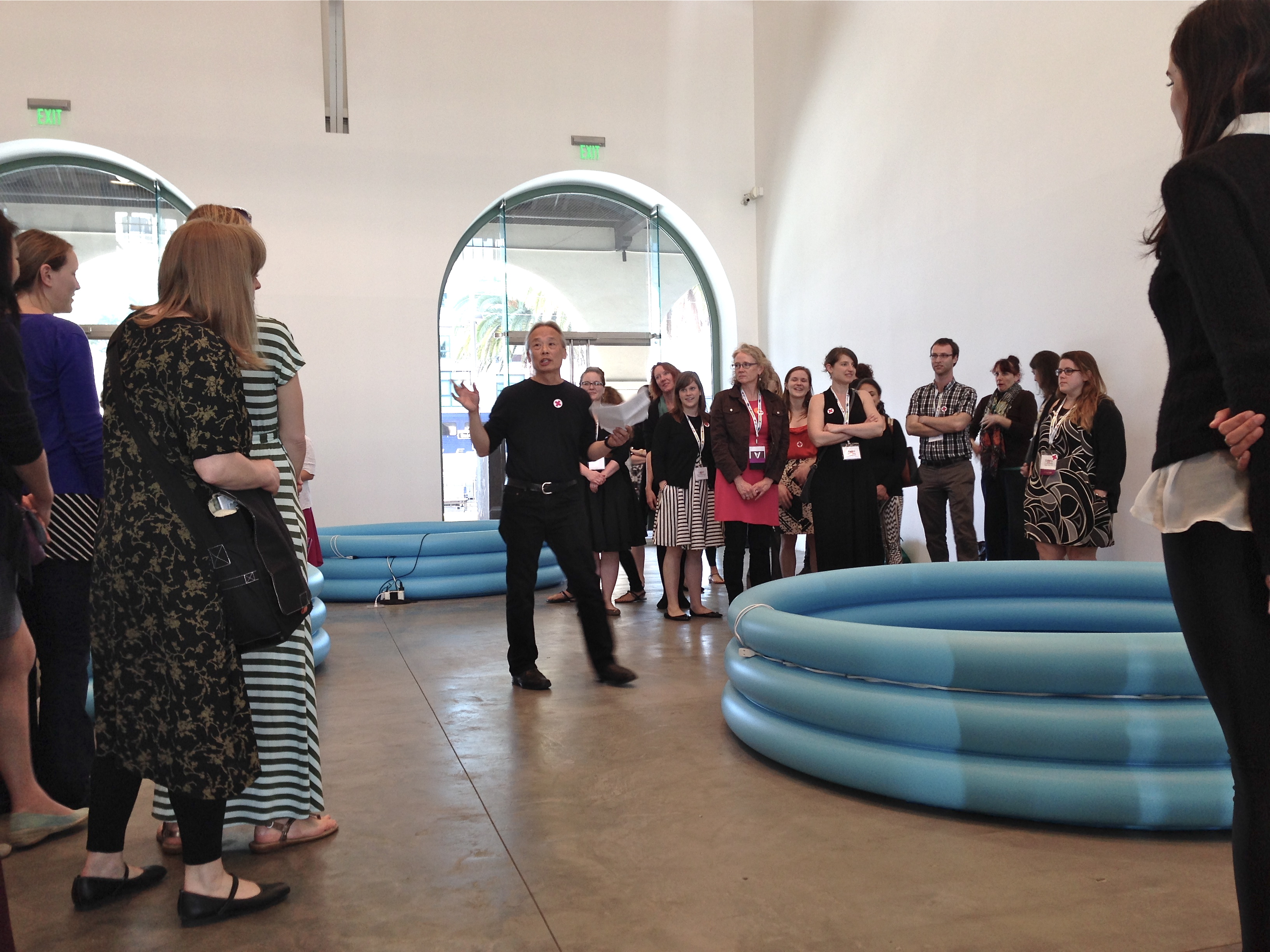
That was exactly the spirit of the Gallery Teaching Marathon, organized by this site’s Mike Murawski and hosted at the Museum of Contemporary Art San Diego on Sunday of the NAEA Convention.  As any regular reader of ArtMuseumTeaching.com knows, Mike is a voice for pushing our museum education practice, and he invited us to do just that through in-gallery sessions throughout the day.  In his original email looking for educators interested in leading a session, here’s how he put it:

“I would encourage people to think of this as an opportunity to try something new, take risks, and know that you will be among supportive colleagues, peers, and educators.”

And for those who ventured into one or two or all of the Gallery Teaching Marathon sessions, risks and newness were there for them to find.  Without speaking for my talented fellow educators who offered a wide range of experiences in the galleries that day, I will say the session I facilitated was exciting and invigorating to lead, and I hope fun to take part in.

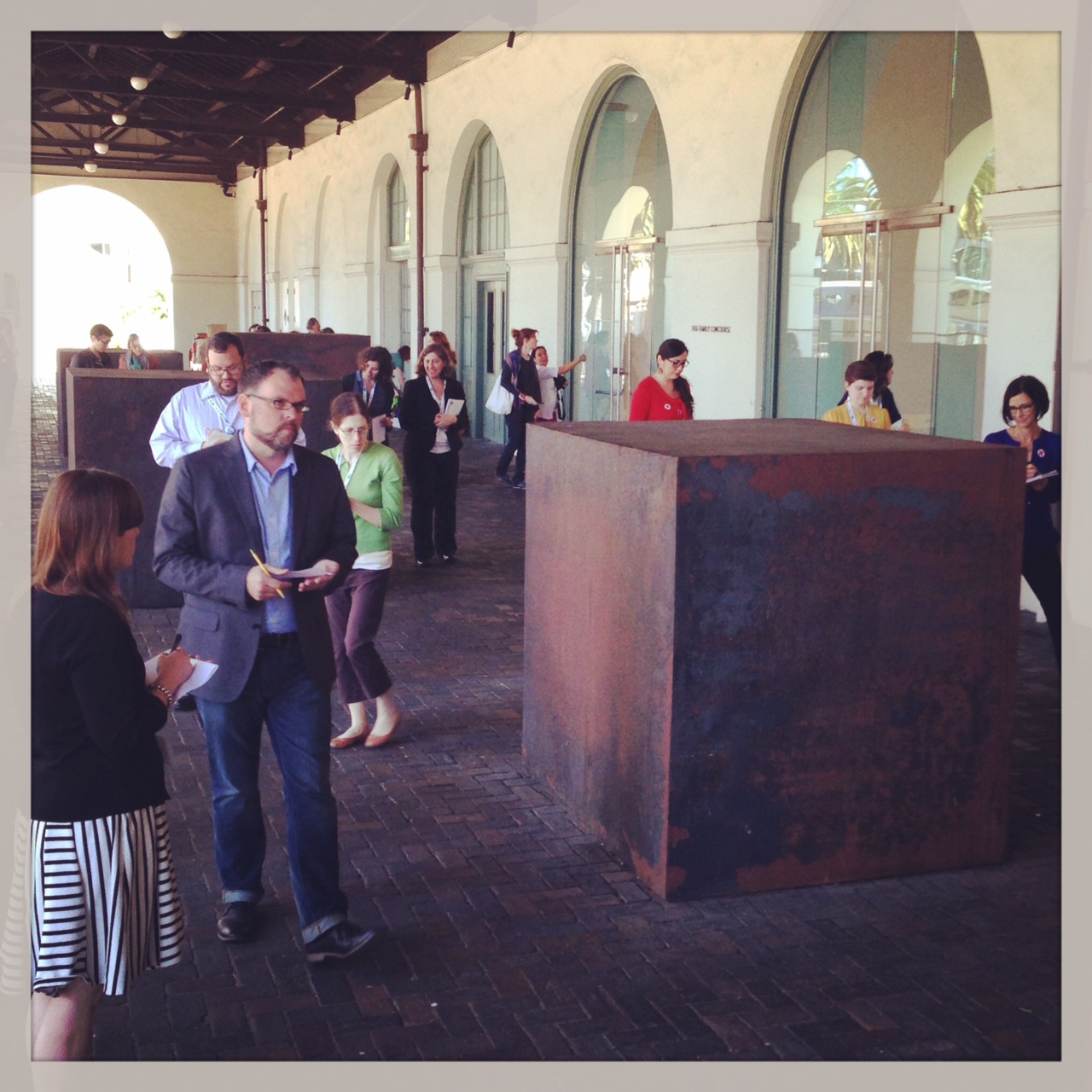
photoWe used Richard Serra’s site-specific work, Santa Fe Depot to inspire us to write found poems, to focus on the environment around the work (up to and including the tourists dancing on top of Serra’s forged steel blocks, the commuter trains arriving and departing immediately next to us, and the pile of “organic sculpture” a dog had left behind next to the artwork), and finally, to create our own interpretive movements based on the words we’d generated.

Throughout the day, the Marathon sessions were full of eager, interested attendees, gung-ho for all the weirdness that might come their way and then ready to reflect on it. For my part, I found it incredibly liberating to be trying something with no idea how it would go over.  I liked explaining to the experimental adventurers at my session that I’d never done this before and talking about which elements of what we did made them uncomfortable and why.  It felt like an exciting deviation from what I expect from my own teaching, which led directly to me thinking about how to make it less of a deviation.

How can I take that spirit of fun, unexpected experiences in the museum and layer it into my job?  How can I give the teachers I work with—especially now, when so many are stressed over standards and evaluation—the same kind of joyful, playful invigoration that I felt from all these NAEA sessions and colleagues?  How can I spread my own belief that sometimes the most fun you can have in a museum comes from doing something within its walls that you would never have expected to do?

That’s what I’ve come home thinking about, and I’d love to hear if this idea affected any of you, too.  Any anecdotes to share about how the spirit of play has impacted your museum work?  Any advice for spreading the enjoyably surprising?  Any other NAEA sessions you attended that connected to this idea?  Share your thoughts in the comments.

If you want to read more about some of the things I’ve mentioned, check the Twitter hashtags #naea14, #naeamused14 (for museum-related content), and #galleryteachingmarathon.  There’s also my complete Storify account of the Convention, which has plenty more tweeting about the spirit of play, and Olga Hubard’s recent reflection on the Gallery Teaching Marathon itself (touching upon some of these same ideas).

In the Midst of Practice: Reflections on the Gallery Teaching Marathon

By Olga Hubard, Teachers College, Columbia University

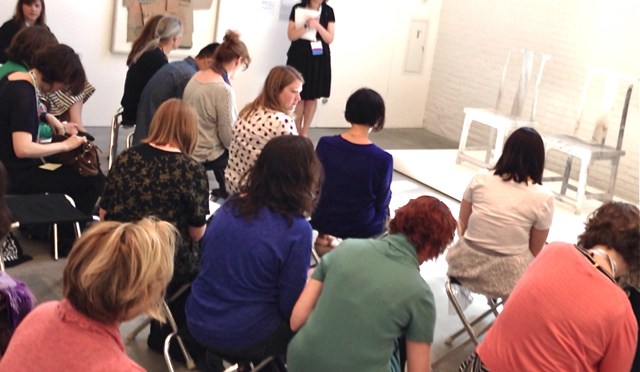
Liz Diament leading part of a gallery teaching experience with Ai Weiwei's "Marble Chair."
Liz Diament leading part of a gallery teaching experience with Ai Weiwei’s “Marble Chair.”

We all know that one way we grow as museum education professionals is by sharing our practices and the thinking that surrounds them. In most cases we do this through traditional presentations: our ideas and experiences tidily packaged; challenges and difficulties presented as something that occurred (safely) in the past, and which we now frame as food for productive reflection. The experimentation and messiness that is so often part of our work — at least if we take the risks necessary to keep evolving — do not often occur in front of our colleagues. That is, unless we participate in a Gallery Teaching Marathon like the one that took place in the Museum of Contemporary Art San Diego during the NAEA conference this spring.

I left the Gallery Teaching Marathon both inspired and hopeful. One important reason was the very nature of the marathon: a group of seasoned museum educators guiding each other in engagements with works of art. Some, by their own admission, did “something they had never tried before;” others shared approaches that had been tried and tested but with works that were new to them. The fact that these educators felt comfortable enough to make themselves vulnerable in front of their colleagues is indicative of extraordinary trust among this community. As well, it reflects the passion and indomitable spirit of a group of professionals who have helped shape our field from the ground up.

For those of us who have become accustomed to teaching in the galleries, it was a luxury to be on the audience end of things, with the primary responsibility of helping make meaning of a series of compelling artworks. It was also fascinating to witness a range of teaching approaches that overlapped as much as they were different. I know many of us left the marathon with new ideas — particular strategies that we plan to borrow from our peers, and which will likely be incorporated into our practice soon enough.

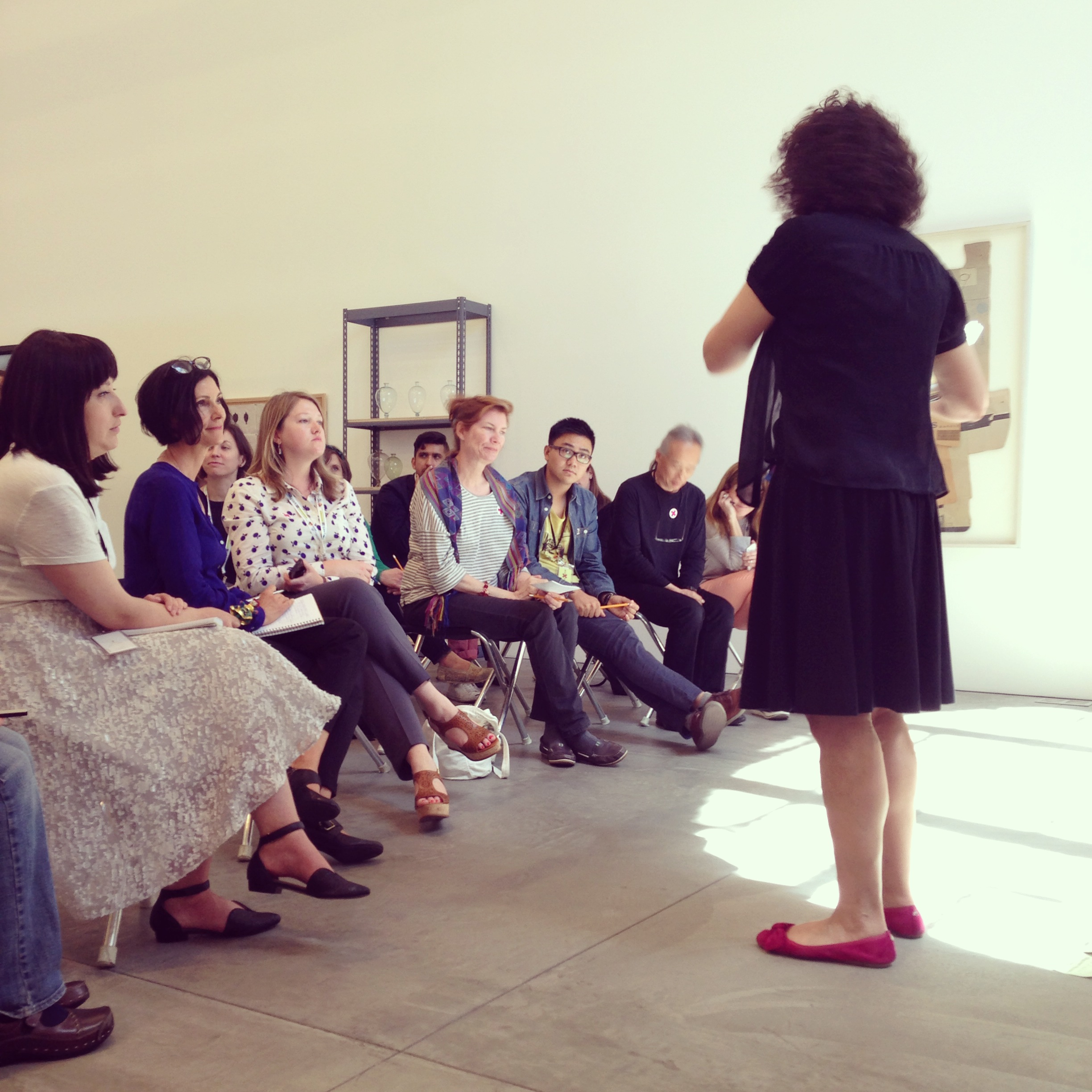
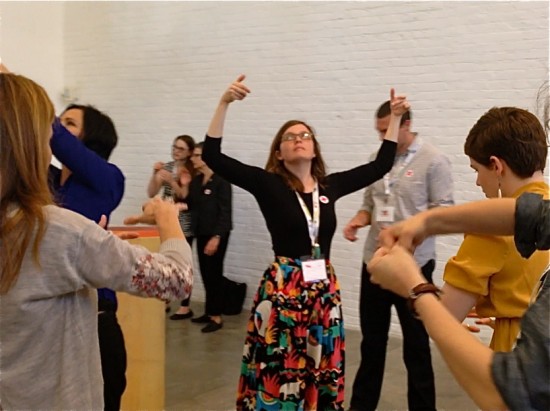
Participants engaging in movement and pantomime strategies led by Jen Oleniczak.

I am ready, for example, to invite viewers to think more explicitly of the layers of meaning that a work might yield (Niki Ciccotelli Stewart), or to encourage them to enact the movements they might make if they could go inside a picture (Jen Oleniczak). I am also keen to have visitors post written questions on the periphery of a work (Heidi Hinish and Liz Diament), or to ask them to do what a particular work “is asking them to do” (Elliott Kai-Kee). More than anything, I am curious to see what happens as other educators in the group borrow and adapt this or that approach, make it their own, and come up with yet other ideas. It is this sort of cross-fertilization that keeps things moving along.

Another gain for me was renewed empathy with audiences. Throughout the marathon, I was acutely aware of how I responded to the various conditions that shaped our gallery interactions. When did the pace of a conversation leave room for my comments and when did it seem too fast or too distant from my ideas? In the case of non-discursive activities, when did I feel too self-conscious to really be in the experience and when did I feel comfortable “going for it”? How did the educator’s demeanor influence my interaction with the work and with others in the group?

By taking the participant’s seat, I was also able to re-discover something I already knew — or thought I knew. Like all of you, I have known for years that partner talk is a valuable approach in the galleries (of course!). But at MCASD, when a group got too large, or when for whatever reason I did not feel prepared to share my thoughts in a group dialogue, how grateful I was to be able to share what had been in my mind all along with a partner! The next time I facilitate partner- or small-group work I will do so from a renewed level of empathy and awareness. Perhaps like me, some of you also left the marathon with your own “re-learnings,” which can only work to enhance visitors’ experiences in the museum.

Beyond specific strategies and empathy, the gallery teaching marathon animated some larger issues that underlie our work. Two that are particularly alive for me at this point:

  1. If the experiences that took place in MCASD are in any way representative of the field, it would seem that we have come to accept that the meanings that viewers shape through words and rational thought are no more worthy than those they shape through poetic and non-discursive modalities. In an educational milieu that values rational thinking and word-based forms of meaning making above all, this places us at the vanguard–but also in tension with the status quo. Given this, how might we work to deepen and strengthen a commitment to poetic/artistic and multimodal ways of knowing so that museum visitors can continue to benefit from rich, multidimensional experiences with museum objects? How might we articulate the educational worth of diverse modes of meaning making? And how might we avoid dichotomizing rational, word-based approaches vis-à-vis more poetic ones, which might put us at risk of throwing out the baby with the bath water — or from recognizing when the two intersect?
  1. A few times during the marathon, I heard participants note that certain activities had taken them away from, rather than closer to, the works that were the target of our exploration. In the same breadth, these people added something along the lines of, “I’m not sure that it matters, though; the activity was worthwhile anyway.” For us educators, this raises a question of intentionality: When are our activities meant to bring us into deeper interaction with an object? When are they meant to spark off creative activity beyond the work itself? When are they meant to do both–or to do something different altogether? Does it matter and, if so, in what way? (These questions remind me of my colleague Megan Laverty’s provocative idea that perhaps the main purpose of art is to generate more art.)
Elliott Kai-Kee leads group to openly explore the question "what is this particular artwork asking me to do?"
Elliott Kai-Kee leads group to openly explore the question “what is this particular artwork asking me to do?”

With these and other questions in mind, throughout the marathon, part of me kept wishing for more time to debrief and reflect on what we were all experiencing. The rest of me was content with the limited reflection time we had, however — there was something wonderful about spending an entire day in the midst of practice; a day of sharing our work in the making; our practices in all their messiness and all their (realized and yet-to-be realized) potential. Perhaps an idea for another occasion might be to have a one-day gallery teaching marathon followed by a half-day reflection session.

But back to the event at MCASD. Early in this post, I said that the Gallery Teaching Marathon left me hopeful. I meant it. As I think back to our day together, I am hopeful for what is to come for our field, full as it is of courageous and dedicated educators who continue to build from the ground up, and to push us all to think and play and interact in thoughtful, imaginative ways. This is significant work for us as educators, and I trust that in time it will lead to more meaning-full museum experiences for visitors.

UPDATE: Response from Elliott Kai-Kee, J. Paul Getty Museum

Olga Hubard’s reflection on the issue of non-discursive and ‘poetic’ approaches versus word-based and ‘rational’ approaches struck a responsive chord with me. I like the way she cautions us against putting the two in opposition rather than seeing them as ‘intersecting,’ or even better, complementary. Indeed, I think it’s crucially important to figure out ways to work them together. I commonly see docents separate their school-group lessons into ‘activity’ stops and ‘discussion’ stops. How is it that we have defined the two in ways that result in such a dichotomy? They must get this from us somehow. Is it a reflection of an argument pitting engagement against interpretation? Materiality against symbolism? The Gallery Teaching Marathon demonstrated a wonderful variety of approaches to the practice of gallery teaching. Is there a way of thinking about teaching that brings them together in a way that would make them more powerful in combination?”

About the Author:

hubardOLGA HUBARD: Associate professor of art education at Teachers College, Columbia University. Olga is interested in the humanizing power of art and in how educators can help promote meaningful art experiences for learners. She has published extensively about this issue, particularly in the context of museum education. Her scholarship has appeared in journals including Studies in Art EducationCurator: The Museum JournalInternational Journal of Art and Design EducationJournal of Aesthetic EducationJournal of Museum Education, and Art Education: The Journal of the National Art Education Association. Olga’s writing is informed by years of experience as a museum educator and art teacher, and by her ongoing studio art practice. She holds doctoral and master’s degrees in art education from Teachers College, an MFA from the School of Visual Arts, and a BA in Art History from the Universidad Iberoamericana (Mexico). Olga’s postings on this site are her own and do not necessarily represent Columbia University’s positions, strategies, or opinions.

Openly Networked Learning In and Across Art Museums

How can museums begin to more closely connect with in-school and out-of-school digital literacy practices, tapping the tools of the digital age as well as the elements of making, connecting, and experimenting that create powerful possibilities for learning?  Can we, as museum educators, begin to see ourselves as designers, and reposition ourselves as active agents of change in today’s education environment?  In what ways can museums be more involved in re-envisioning what education looks like?

These questions, among others, have been sparked by my involvement over the past few years in the research and practice around a social and participatory model of learning called Connected Learning —  as well as my work with an inspiring group of educators within the National Writing Project.  And while art museums have been only tangentially related to this practice (which I blame more on us museum educators and less on NWP), I was fortunate enough to be invited to submit a case study for the latest ebook entitled Teaching in the Connected Learning Classroom (published online in February through the MacArthur Foundation’s Digital Media and Learning initiative).  This volume highlights compelling firsthand counter-narratives from educators engaged in solving an array of challenges in today’s classrooms, drawing together a collaborative network of instructors who have been contributing to the NWP’s web community, “Digital Is.”

I wanted to take the opportunity of this volume’s publication to begin writing more about Connected Learning, sharing its principles and exploring more connections with the practice of teaching and learning in museums.  Below is the text of my case study entitled “Openly Networked Learning in and Across Art Museums,” published first in February 2014 as part of the Teaching in the Connected Learning Classroom volume.  This short case study examines the aspects of “openly networked” reflective practice in my work as a museum educator and blogger, pushing forward the concept of museums as spaces where communities of learners can connect, intersect, make, collaborate, and share.  I encourage anyone unfamiliar with Connected Learning to learn more by visiting connectedlearning.tv or downloading the 2013 report Connected Learning: An Agenda for Research and Design — and I plan to write more here at ArtMuseumTeaching.com in the near future.


Openly Networked Learning In and Across Art Museums

What happens when educators converge around shared interests and purposes in the spaces of museums?  How can museums more effectively build diverse networks of educators that support our teaching and learning practice?  Faced with the complex landscape of formal and informal education in the 21st century, museums across the globe have been rethinking their role as actors within their educational community. Not only are museum galleries increasingly becoming open spaces in which communities of learners can connect and intersect, but museum professionals are also developing online spaces of exchange and reflective practice.

As a practicing art museum educator as well as a museum blogger, I find myself constantly in the process of discovering how “openly networked” an art museum can be.

While the growth of online learning communities and Google Hangouts for museums certainly promotes this principle of connected learning, I want to begin by focusing on how museums can support openly networked experiences in the analog, physical space of their galleries.

Museums as physical, analog networks

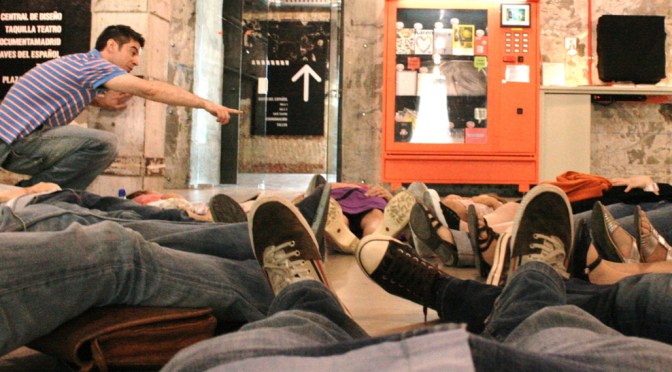
In November 2011, I was invited to lead an in-gallery workshop for educators at the High Museum of Art as part of a conference hosted by Harvard University’s Project Zero. The experience centered around an extended engagement with Jackson Pollock’s “Number 1A,” 1948, which was on loan from the Museum of Modern Art in New York as part of a special exhibition. Instead of an experience guided by information, we began an open, embodied exploration through a series of scaffolded exercises that included slow looking, sharing observations, quick sketches, free writing, and variety of ways to use sound and movement to create responses to the work of art.  Small groups of participants were then invited to pull together sounds, movements, and words to develop creative a public performance in response to the Pollock painting.

teachers explore layers of paint through dynamic movement

One memorable group of three teachers worked together to choreograph a short piece that used their bodies to perform their response to the complex layering of paint and brushstrokes. Freely responding to this single painting through multiple access points as well as public performance, we were able to have a collective learning experience outside of our comfort zone and then immediately “poke at it” and see into the experience as a group. In this case (and many others like it), the art museum becomes a safe, open, and public space in which professional educators from museums, schools, and universities can come together to make learning visible and then reflect upon our practice in a shared space.

Museums as participatory spaces

CoLab community of educators exploring learning at the Saint Louis Art Museum in 2012.
community of educators openly exploring learning processes at the Saint Louis Art Museum in 2012.

While an art museum gallery can be an amazing place to meet with a class or group of teachers, museums and museum educators must work to actively support openly networked learning experiences. First of all, museums need to see teachers and students as active participants in the learning experience, pushing beyond mere “spectating” or “learning at a glance” toward a more participatory and process-oriented experience.  Part of this involves museums letting go of their ‘authority’ over knowledge and meaning-making, and instead empowering educators to co-create learning experiences with museums — as opposed to passively receiving content from museums, whether that be text panels, audio guides, curators, or museum educators.

Part of achieving this “letting go” is simply valuing teachers’ voices and recognizing teachers as creators of content, knowledge, and meaning in relation to museums. Professional development workshops can be re-envisioned with more of an emphasis on developing communities of practice where we learn from each other no matter what our “home” educational setting might be (school classroom, university, museum, etc.). This sense of creating a community of practice then builds toward a shared, reflective process that leads to professional growth on the side of both teachers and museum educators.

Building online networks of museum educators

The openly networked reflective practice described here does not need to be confined within the walls of a single museum, though.  This is where my experience as a museum blogger has expanded the way that people can connect around issues of museum teaching and learning.  After facilitating the educator workshop at the High Museum of Art back in 2011, I decided to create a multi-author online forum to publicly reflect on my own teaching practice, spotlight the practice of other educators, and provide a space for conversation around larger issues of teaching and learning in museums. Since its launch in February 2012, ArtMuseumTeaching.com has brought together more than 30 authors actively contributing to a growing online community of practice that reaches out to thousands of educators each month.

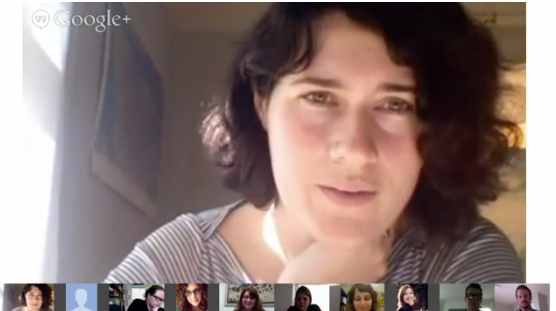
ArtMuseumTeaching.com Google+ Hangout On Air
ArtMuseumTeaching.com Google+ Hangout

In addition to standard blog-style posts and comments, the site has hosted face-to-face Google+ Hangouts On Air with museum educators and teachers from across the world. The site creates a networked space across museums and teaching contexts, allowing readers and contributors to see into and reflect upon the practice of a wide community of educators.

In their 2012 book Networked: The New Social Operating System, Lee Rainie and Barry Wellman have argued that large online communities actually expand opportunities for learning, problem solving, decision making, and personal interaction.

“People’s relationships remain strong—but they are networked. Neighbors, and neighborhoods still exist, to be sure, but they occupy a smaller portion of people’s lives. It is hard to borrow a cup of sugar from a Facebook friend 1,000 miles away, but it has become easier to socialize, get advice, and exchange emotional support at whatever distance. Where commentators had been afraid that the internet would wither in-person ties, it is clear that they enhance and extend them.”

As ArtMuseumTeaching.com continues to expand as an online space for reflecting on museum practice, I have been exploring how we—as museum and education professionals—maneuver within a technology-mediated world in a way that allows us to cultivate productive, human-centered networks and communities.  Museums and schools have been widely engaged in how digital media and technology can connect them with their students and audiences. But what about the potential of these same technologies to build entirely new “communities of practice” among professionals—whether teachers, university faculty, or museum educators?

I am especially interested in the ways in which an online community like ArtMuseumTeaching.com can, in turn, bring people with shared interests together in physical spaces in new and meaningful ways.  Since 2012, the ArtMuseumTeaching community has hosted several in-person gatherings, including conference sessions, happy hours, and recently the first-ever Museum Teaching Throw Down as well as Gallery Teaching Marathon. As many as one hundred people have come together for these face-to-face social experiences — creating new professional connections and enriching existing collaborations that continue to grow through the online/digital forum.  After all, the relationships we develop online are complex, as a simple Twitter follower or blog reader can quickly become a close colleague, friend, and mentor.  One ArtMuseumTeaching.com Google Hangout in 2013 brought together educators from Australia to New York in real time, and these connections develop new peer networks, partnerships, and professional exchanges that help us all grow personally and professionally.

Through this work that I have been engaged with thus far — both online and in the physical spaces of museum galleries — I feel that the art museum has begun to make a shift in what it has the potential to become: a dynamic cultural landscape where authentic, learner-driven experiences are developed and enacted by teachers and their students. These experiences are opening up museums as places for educators to chart their own path in unpredictable ways, and to invite parallel exploration, risk-taking, and fresh discovery on the part of learners across a variety of contexts.


Originally published in: Garcia, Antero, ed., 2014. Teaching in the Connected Learning Classroom. Irvine, CA: Digital Media and Learning Research Hub. This report series on connected learning was made possible by grants from the John D. and Catherine T. MacArthur Foundation in connection with its grantmaking initiative on Digital Media and Learning.