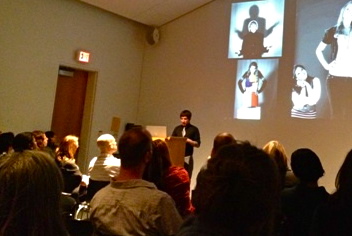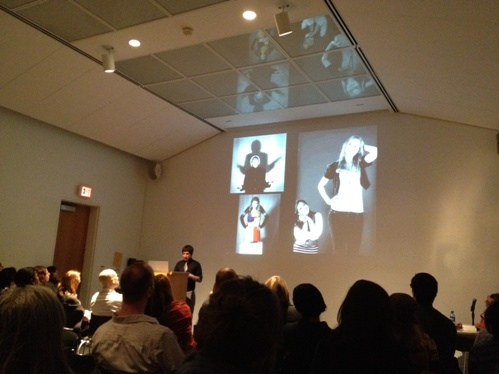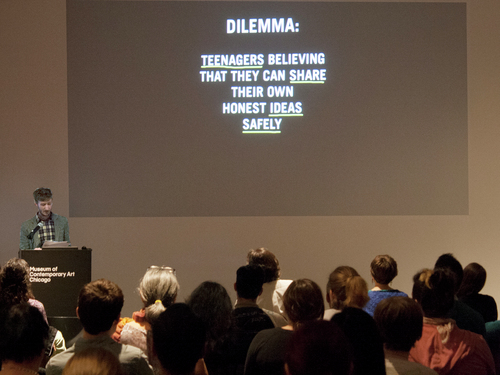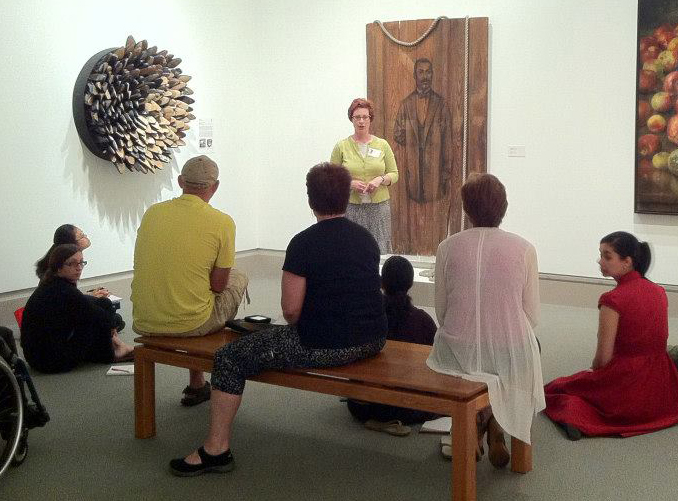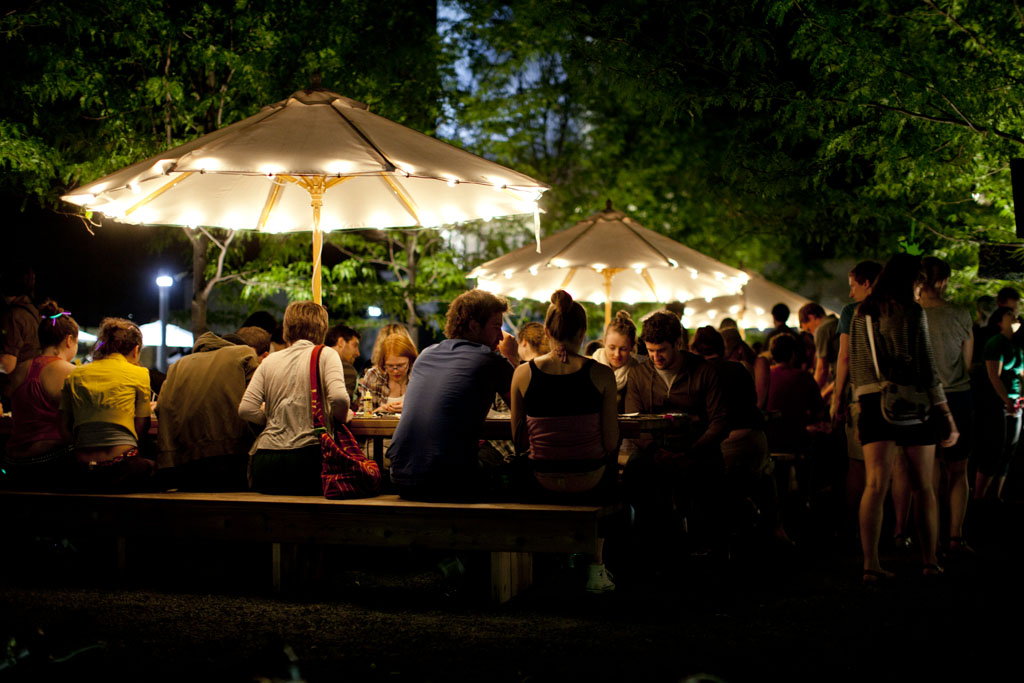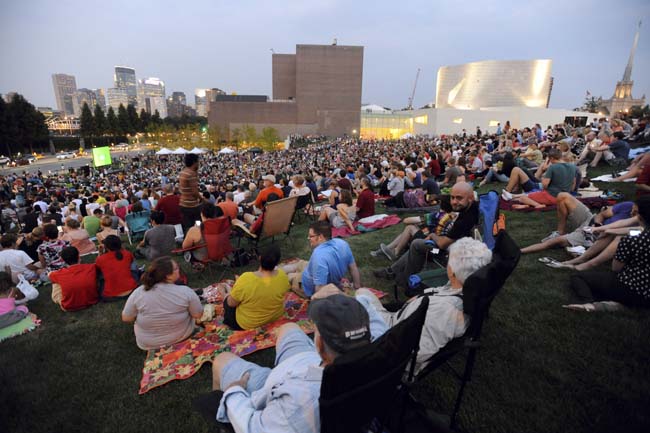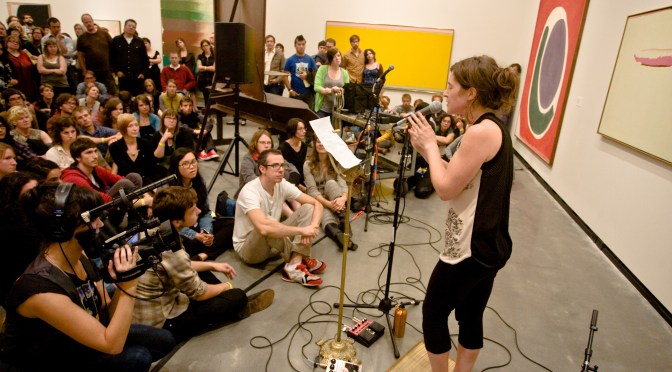
Curriculum SLAM: Contemporary Art, Contemporary Pedagogy

curriculum-slam2Submitted by Lydia Ross, Programmer of Education, School and Teacher Programs, Museum of Contemporary Art Chicago. Re-published from NAEA Digication e-Portfolio site.

As 21st century art teachers there are so many competing pressures for time and attention that it can sometimes be difficult to focus on a core concern of creative teachers. How to gather innovative ideas for projects and curriculum that introduce students to a wide range of contemporary artmaking strategies?

“Recognizing the need to create opportunities for teachers to share innovative practice and understanding that old style curriculum sharing methods may not be the most efficient or engaging ways of exchanging quality curriculum, the Museum of Contemporary Art in Chicago’s Educator Salon invented a fast-paced and fun format to share art projects—the Curriculum Slam!” explained Chicago art educator Olivia Gude.

“Today’s society of media saturation has given us all a touch of ADD. The curriculum slam format works well because it’s quick and entertaining and because the careful selection and preparation process guarantees that the content is fresh and well-thought out—based on significant contemporary ideas about making art.”

Inspired by the emceed hip hop-style poetry slams pioneered in Chicago in the 1980s that brought contemporary aesthetics and style to traditional poetry readings, the Curriculum Slam! re-invents the old-style curriculum fair by adapting a 21st century presentation innovation—the rapid style PechaKucha format. PechaKucha (in which 20 images are set to advance automatically every 20 seconds) was developed by the Klein Dytham architectural firm in Tokyo because there was a need for a public forum to share innovative work, but if you “Give a microphone and some images to …most creative people…and they’ll go on forever!”

curriculumslam

The Curriculum Slam! has become a popular yearly feature of the MCA’s teacher programming since 2010. Teachers have presented on a wide range of topics—using the work of contemporary artists to inspire contemporary curriculum. Presentation subjects have ranged from 5th graders making paintings with the self-imposed limitations (based on the work of Matthew Barney), building and photographing miniature environments (in the style of artists such as Laurie Simmons and outsider artist Mark Hogancamp), humorous horror drawings (inspired by drawings and animation of Tim Burton) and explorations of self-identify in the digital age in which students’ text messages contribute to making self-representations.

“The Museum of Contemporary Art is a learning institution as well as a presenting institution. Through this project we are tapping into many forms of contemporary pedagogy. We are learning from teachers.” -Marissa Reyes, Associate Director of Education, School & Teacher Programs at the MCA

The PechaKucha format has been adapted to enhance curriculum sharing—“We have been using a 14-slides-in-40-seconds format to allow teachers the time to explain some of the details relating to core objectives, materials, choice of artists and other details that contribute to successful projects. We wanted to create a format that balanced being fun and sort of frantic with conveying useful content.”

Curriculum Slam! Goes to San Diego

Now, Chicago brings this dynamic presentation format to the country with the first ever NAEA National Conference Curriculum Slam! emceed by OMGude, Marissa Reyes and DJ Jamie Rees. The event will be held during the 2014 NAEA National Conference in San Diego (March 29-31, 2014) on Monday, March 31 from 4 to 5:50pm. NAEA Secondary Division Director, James Rees commented, “One thing teachers seem to be always looking for is timely content that matters to their students.  This curriculum slam will model a dynamic method of communication, along with a dizzying array of meaningful curriculum. This will be a must attend event this year at the conference!”

How to Get Involved at the NAEA Curriculum Slam!

All members of the NAEA community are invited to apply to be a presenter in the San Diego conference Curriculum Slam! by sending in a short initial application explaining how the teacher’s curriculum unites great contemporary art and great contemporary curriculum, accompanied by a few images. The Museum of Contemporary Art Teacher Advisory Committee will review the applications, conduct phone interviews, choose participants and help presenters prepare for the fast-paced format.

See below for more information on the process of submitting an application by downloading the application forms and template for sample 3 slides in the presentation.

Applications are due on January 6, 2014.

Click here to download the NAEA Curriculum Slam! Fact Sheet (PDF)

Applications have 2 parts:

  1. Word document answering a few questions–who, what, why. Download Application Part 1 (Word)
  2. Submit a Powerpoint with only 3 slides–just give us a taste of what you plan to do. Download Application Part 2 (PPT)

That’s it. Send to MCA School and Teacher Programs at teacherprograms@mcachicago.org

We’ll be in touch by within a few weeks of the December 18 deadline to let you know if you made the Slam! Team for 2014.

After you’ve been selected MCA staffer and Pecha Kucha coach Lydia Ross will “phone meet” with you to assist in making the most dynamic, inspiring and info-packed presentation possible.

Hope to see you in San Diego!

Hangout with NAEA’s New Online Peer-to-Peer Initiative

By Chelsea Kelly, Manager of Digital Learning,  Milwaukee Art Museum

Have you ever gotten home from a conference abuzz with excitement about all the new ideas, people, and programs you’ve learned about and discussed? If so (after you finally recover from all that intense thinking), I’m betting you then thought: “Wow, it’d be great if I didn’t have to wait a full year to get a taste of that again.” Well, that’s exactly why we began a Peer-to-Peer Initiative for the National Art Education Association’s Museum Education Division — to use technology to connect with colleagues and share our ideas and programs in an informal way, outside of conferences.

Google-Hangouts-banner-640x312We’re pleased to announce a pilot series of Google+ Hangouts On Air in the next month. These Hangouts will highlight current work in our field in the conference-like spirit of sharing, discussion, and best practices. (Minus the week-long period of exhaustion and hundreds of emails in your inbox to catch up on afterwards!)

So, please join us for any or all of the below Peer-to-Peer Hangouts this month! Each is about an hour and they are open to all museum educators, regardless of whether you’re an NAEA member.You can find detailed login information for each Hangout on the NAEA Google+ Page.

Tues, Nov 26 | 4 PM EST
Social and Interactive Programs for Adult Visitors
Molly Kysar (The Metropolitan Museum of Art), Katie Hill (Minneapolis Institute of Arts), and Jaime Kopke (Denver Art Museum)

Tues, Dec 3 | 4 PM EST
Discussion: “Teaching in the Art Museum” in Practice
Amy Kirschke and Chelsea Kelly (Milwaukee Art Museum)

Fri, Dec 6 | 1 PM EST
Model of Practice: Professionalizing and Integrating a Docent Program
Mark Osterman (Vizcaya Museum and Gardens)

Tues, Dec 10 | 4 PM EST
All Together Now: Talking about Teens and Museums
Gabrielle Wyrick, Cecelia Halle, and Aric Oak (ICA/Boston)

Fri, Dec 13 | 1 PM EST
Art Museums and the Common Core State Standards
Claire Moore (The Metropolitan Museum of Art), Sara Egan (Isabella Stewart Gardner Museum), and Theresa Soto (Getty)

Fri, Dec 20 | 1 PM EST
Artists as Audiences
Michelle Hagewood (The Metropolitan Museum of Art)

Some friendly reminders on how to Hangout — be sure that you sign up for, or activate, a Google+ account (not just a Gmail account). You can’t actually “hang out” if you don’t have Google+! Find instructions here. Once you’ve got an account, add NAEA Museum Education Division to your circles so you can easily join in the Hangout event. And if you need more details on how to Hangout, there are some more materials on how to join in on the NAEA Museum Education Division page (scroll down a bit to find the resource).

And of course, once you’re hanging out with us or after you watch an archived Hangout, join the conversation on Twitter using #MusEdPeers!

Since this is a pilot, we’d love to hear feedback from you as the Hangouts launch. Similarly, if you have an idea for a future Hangout, post it on our Google+ page or contact Michelle Grohe or me.

hang-outWe can’t wait to Hangout with you soon!

Editor’s Note: As ArtMuseumTeaching stays connected to NAEA’s Peer-to-Peer Initiative and all of these fantastic Hangouts, you’ll be able to find discussions and links to post-hangout video archives here, as well, on this sites Google+ Hangout section.  So let’s all get connected, and spread the word!

RELATED POSTS THAT MIGHT BE OF INTEREST:

Google Hangouts: Live Video Chatting Between Museums and Communities

Reimagining Peer Networks in a Digital Age

When Bloggers Collide

Exploring Teacher Professional Development in Art Museums: CALL FOR PAPERS

By Dana Carlisle Kletchka, Curator of Education, Palmer Museum of Art at Pennsylvania State University

Although art museum educators exist in the interstices of teaching, learning, and research, it is not often that we are invited to share our professional experiences in the form of a scholarly publication. It is clear from the content on this blog and others, however, that we have a lot to say and a great deal to share with one other. In that spirit, I invite you to consider the following Call for Papers for an edited volume on professional development for preK-12 art teachers, with particular consideration to how it occurs in museum spaces. My co-editor, B. Stephen Carpenter II, and I hope that it will ultimately be a resource for university and art museum educators, preK-12 art teachers, and graduate students in art and art museum education/museum studies courses.

CALL FOR PAPERS

Art museum educators and academics who engage in or study professional development for teachers:

2013 Summer Institute on Contemporary Art, Pennsylvania State University

We are accepting chapter abstracts for an edited book that explores the history, philosophy, and theoretical foundations of professional development in and from art museums; provides examples of meaningful professional development experiences with particular attention to the broader impact and translatability of such experiences; and delineates institutional partnerships between academic entities and art museums.

A central tenet of the book is that collaborative engagements with works of contemporary art in art museums, coupled with critical reflection and pedagogical application, provide art educators opportunities for professional development that renew, strengthen, and expand their effectiveness and influence within art educational spaces.

Please send a 250-word summary of your proposed chapter to: Dr. B. Stephen Carpenter at bsc5@psu.edu or Dr. Dana Carlisle Kletchka at dck10@psu.edu before Monday, November 18, 2013.

2013 Summer Institute on Contemporary Art, Pennsylvania State University

RELATED POSTS THAT MIGHT BE OF INTEREST:

Rethinking the Way Museums Work with Teachers

Integrating Art Museum Education into a K-12 School

A Manifesto for Schools Visiting Art Museums

Not Just for Field Trips Any More: 7 Ways to Ignite Learning at the Art Museum

Open Letter to The Walker Art Center

Editor’s Note: While ArtMuseumTeaching.com does not frequently republish posts from other sites, there are interesting and urgent issues raised periodically that, I feel, could spark productive conversations, exchange, and potentially even change in our field.  The provocative post below published at Opine Season has already sparked lots of thinking and questioning, and I’d like to utilize the online space and community of ArtMuseumTeaching.com to allow for an OpenThink on these meaningful issues of diversity, audience, community, and social responsibility.  As the letter’s authors state below, “we write this not as disgruntled individuals wanting access to one event. We write this as a collective who are asserting their voice to hold the institutions in their community accountable to a higher responsibility of service.”  I invite everyone to share thoughts, questions, and experiences below.

Written by Chaun Webster, Jeremiah Bey Ellison, Arianna Genis, Shannon Gibney and Valerie Deus

Originally posted at Opine Season on October 29, 2013.

To Whom It May Concern at The Walker Art Center,

We have learned that on October 30, The Walker Art Center will be showing the film, 12 Years a Slave, directed by Steve McQueen, and followed by a talk with the director on Nov 9. This film is perhaps one of the most honest and visceral visual representations of the horrors that were part and parcel of the institution of slavery. Furthermore from the beginning, 12 Years a Slave has been, from its firsthand account, to the writer, to the director and leading actor, one of the most highly recognized, fully Black cinematic collaborations in the history of film.

12yearsWe are concerned that though this film is being shown, that peoples of African descent, whose ancestors’ lives and histories were disrupted by the slaveocracy, will be largely underrepresented in the audience. Our position is that equity is not just about the diversity in the art being shown but the material work of creating greater access to exhibitions to ensure that audiences are representative of the subject matter.

We understand that these events were publicized to members of The Walker and on The Walker’s website. As you may or may not know, when marketing strategies are limited in media and points of origin, the race, class, gender and other layers of social location are also limited.

Within the Walker Art Center’s Mission Statement the institution is described as “a catalyst for the creative expression of artists and the active engagement of audiences” and having programs which “examine the questions that shape and inspire us as individuals, cultures and communities.” Which communities do you seek to inspire and what questions do you seek to examine with the creative expression of artists?

Over the years we have become acutely aware of the way that art institutions are guided by an exceptionalism that will welcome works of art by select artists of African descent and other historically marginalized groups but will largely have little to no relationship with members of those communities. This in no small way contributes to the issue of representative audiences.

stevemcqueenRepresentative audiences insure that narratives are not placed in a vacuum where art institutions can be absolved of responsibility to the cultures and traditions that those stories come from. When white-dominated spaces, often of a homogenous class, bring work like McQueen’s 12 Years a Slave in, they in many ways manage the narrative and the way that it gets interpreted. In these spaces the participant/viewers are freed of any responsibility, social or otherwise, to historically marginalized groups and in so doing re-inscribe the roles of colonialism in art production, distribution, and consumption. In other words, in this case, African art can be present and maybe even a few “exceptional” African artists, but by and large African bodies are unwelcome.

In light of all of this we are calling on The Walker Arts Center to recognize their exclusive practice of not intentionally involving historically marginalized groups at the table for this occasion. This recognition can in part take the form of publishing this letter as an addendum to the material circulated at the screening of 12 Years a Slave and director talk.

We urge The Walker to open up more ticket space for both the screening and the discussion with Steve McQueen. This ticket space would be freely given to reputable organizations of our choice that work with underrepresented youth.

We urge The Walker to arrange another screening and talk with the director that we would host in a community space of our choosing.

Lastly we are calling on The Walker to host a panel discussion at The Walker where we can convene a public conversation on art and social responsibility as it relates to the artist and art institutions.

The tremendous contributions of Africans, on the continent, in the United States, and other parts of the diaspora cannot be understated. These contributions stand in chorus with that of other historically marginalized groups whose communities continue to be denied access to tables carved from their own wood.

The Walker can serve a role in equity as it relates to the production, distribution, and consumption of art in the Twin Cities, but that will require a resolve to listen to its diverse constituents who represent a variety of cultural and ideological perspectives. We write this not as disgruntled individuals wanting access to one event. We write this as a collective who are asserting their voice to hold the institutions in their community accountable to a higher responsibility of service. It is our belief that this is not only possible but imperative as we move forward.

*     *     *     *     *

About the Author

chaun-webster-e1362580382950Chaun Webster is a Twin Cities activist, publisher, and poet in the Black radical tradition. Founding Free Poet’s Press in 2009 with the intention of empowering Black and Brown artists to control their own images, Webster is a 2011 Verve Grant recipient and is preparing for the release of HaiCOUP: a fieldguide in guerrilla (po)ethics. More information about Chaun Webster and Free Poet’s Press can be found at www.freepoetspress.com.

RELATED POSTS THAT MIGHT BE OF INTEREST:

Blurring the Lines: Walker Art Center’s Open Field

Reflecting on Our Radical Roots

Making the Conversation More Inclusive


Getting a Better Sense of the Terrain: Machine Project at the Hammer Museum

This post is part of a series I am writing this week to explore the role of artists and artistic practice in the experimental work occurring in art museums across this country, and beyond.  In order to more effectively examine the ways in which art museums have become sites for socially-engaged practice and new forms of artist-driven public engagement, I’m interested in taking some time to showcase three telling cases that have been developed in museums at a parallel moment these past few years:

Selected from more than a dozen examples of this type of practice, these three projects each have stretched and pushed their institutions in new and productive ways, opening up unanticipated, thought-provoking, exciting, and even uncomfortable ways for visitors to experience an art museum.

To help get a sense of how many arts enthusiasts, museum professionals, and educators are aware of these types of experimental museum projects, I’ve been asking readers to please take a few seconds and complete the poll below, if you have not already.

Thanks for responding to the question above.  Now onto the second telling case of great work being done in this area of museum practice.

Machine Project at UCLA’s Hammer Museum

“Almost every day now I think about the power that intimacy can have, and that we don’t need to serve a thousand people with each project. We’ve talked often about how you measure success: it’s not just the number of people that come through; quality is part of it.”  Allison Agsten, Machine Project Hammer Report

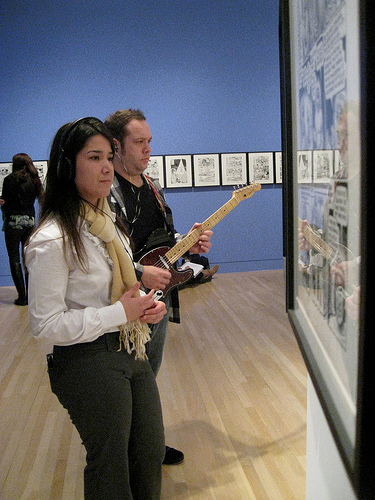
Machine Project’s Live Museum Soundtrack at the Hammer Museum. Guitarist Eric Klerks improvises music for each artworks this visitor views.

In 2010, the Hammer Museum at the University of California, Los Angeles, invited the artist/performer collaborative Machine Project to produce a year of programming which proposed new, alternative, and experimental ways of presenting work at the museum. This decision came out of a process in which the museum worked with a newly-created Artist Council to address many of the visitor services issues the museum was struggling with. Striving to be a truly artist-driven institution, the museum received funding from the Irvine Foundation to create its Public Engagement Artist in Residence program, with Machine Project being the first. Over their residency, twenty-six projects were implemented, including personal soundtracks for visitors, staff pet portraits, table tennis, printmaking workshops, micro-concerts, and a giant animatronic hand that pointed people to different areas of the museum.

The Hammer’s Public Engagement Artist in Residence program specifically sought to bring the creative process of artists into the museum, setting out to utilize artists as problem solvers for visitor services and operational concerns.  As Mark Allen, Director of Machine Project, discusses in his introduction in the Machine Project Hammer Report (2012), however, this became a point of tension between the museum and Machine Project artists:

“When people at an institution speak of a problem, it is often to indicate something that interferes with their operation. From the artist’s perspective, a problem is a provocation or a site to which the artwork responds by creating something that engages the problem and makes it visible in a different light. The problem is aestheticized, framed, or reconfigured; it is seldom erased or resolved.”

micro-concert as part of Machine Project's residency at Hammer Museum.
micro-concert as part of Machine Project’s residency at Hammer Museum.

The Hammer Museum and the artists working with Machine Project have been transparent about these tensions in a unique way that spotlights how productive it can be for visitors to think critically about the museums they visit. While bringing in artists to “fix glitches” may not be a successful goal for experimental practice like Public Engagement, having artists collaborate with museums does work toward more process-oriented goals of having critical conversations about creative negotiation, of building capacities for collaboration, of encouraging museums to cede more control to their communities, and of reconsidering how these institutions engage their publics.  Reflecting upon the project in 2012, a year after its conclusion, the team at Machine Project observed:

“A year later, what seems most interesting about this project is not just what the public experienced, but everything that took place behind the scenes – the conversations with artists, the challenges inside and outside of the museum, the logistic and philosophical issues involved in attempting to suggest other uses for a major cultural institution.” 

This single example of the Hammer Museum’s Public Engagement Artist in Residence program clearly indicates the value of artist-driven visitor engagement, and their work has served as a guide for other institutions to have “a better sense of the terrain” in pursuing similar endeavors.

OTHER POSTS IN THIS SERIES:

Possibilities for Evolution: Artists Experimenting in Art Museums

Blurring the Lines: Walker Art Center’s Open Field

Rethink What Can Happen in a Museum: Portland Art Museum’s Shine a Light

RELATED POSTS:

Towards an Even More Participatory Culture in Art Museums

Participate: Designing with User-Generated Content (book review)

Doing, Not Just Viewing: Working Towards a More Participatory Practice

‘Getting in On the Act’: Exploring a More Participatory Arts Practice

A Museum Experience Is Not One-Size-Fits-All

“Dialogue isn’t for everyone.”

These words were said to me recently regarding change in an educational mission. I couldn’t agree more – it’s why we as educators carry a toolbox; activities for any occasion, any learner, and keep them at the ready for our audience.

Fresh from this experience, I read another article by Judith Dobrzynski, this time drawing attention to Bruce Bratton, a Santa Cruz columnist who outwardly attacks Nina Simon and the changes taking place at the MAH. While Bratton is cited by Dobrzynski as an “institution” in Santa Cruz, I hesitated to give him attention, realizing everyone has an opinion. However, since art journalist Dobrzynski addressed the article, it’s only fair to have an opposing piece.

A museum experience is not one-size-fits-all.

Pop Up Museum turn Living Room as part of Santa Cruz Open Streets. Photo by Karen Kefauver. http://www.santacruzmah.org

After my initial inflammatory reaction to the Times Op-Ed, I now commend Dobrzynski for drawing attention to the other side. As museum educators, we are consistently looking for ways to make art interactive and for experiences to happen in the gallery. There are people that just want to sit, look at a works and have a quiet moment. This is still available – on my recent trip to MFA Houston, I was welcomed into quiet galleries and had a beautiful moment with a Turrell Ganzfeld, alone. Even in a busy NYC museum, you can find yourself alone in a space, enjoying the art.

But it’s not for everyone.

Some people literally do not know what to do with a work in front of them. They think it’s important, only because it’s hanging on a museum wall. They look at the label and don’t have a clue what that odd decimal-ed number is. Exhaustion sets in after seeing the whole place, and they leave, barely remembering anything. Hopefully they come back, but chances are, some of them don’t. Nothing inspired curiosity, so why come back?

The truth is, we aren’t all art nerds. Formalism isn’t sexy to anyone but art people. Museums, unless they want to be seen as elitist institutions, have to appeal to more than just the art appreciators. Museum programming opens up the world beyond the quiet sitters and lecture attendees.

The problem with both Bratton and Dobrzynski is neither quotes any specific interactive programming as a problem. Sure, in her Times piece, Dobrzynski critiques interactive art, but really, people hated the Impressionists too. But where is the study of the actual programs? Dobrzynski is a New Yorker – I promise you there is no shortage of programs she could attend and critique. Bratton states in his column:

Remember … when you could sit or stand and just think about the art pieces you were able to see in person? Think how many thousands/millions of students and artists were influenced by seeing circulating masterpieces or from the local collections…not now. Consider the impact on the next generation of art and history-lovers; the kids. Where can we take our kids now to learn how to experience a real museum; a place that challenges the attention span a little? There are experiential activities everywhere, as I mentioned but the former MAH was our only real museum environment that offered art in a museum context; a respectful place that created the sense that what you’re seeing is important, and worthy of your consideration.

Why can’t you sit in the gallery any longer and look at a work of art? I popped onto the MAH event listing, and found a film festival, some walks that take place outside of the museum and a free Friday event that features music after 6:30pm. Which of these events are disruptive to the people who don’t want participatory experiences? Furthermore, which events change the ‘real’ museum environment?

And which events bring new visitors? new people to see museums as important cultural institutions?

Bratton posted some support to his article, and a few mentioned my next point – this idea of a ‘real’ museum. What is a real museum? In the past, it was an activity for society. Dress up, visit the salon, look at the work deemed appropriate to be hung on the walls. But as times changed, the ideas behind museums have changed. Said nicely in an article that addresses this change, “in the last few decades, as the museum field has grown more serious about independent learning, deep audience engagement, and participation, museums have been able to bring that inspirational experience to more of their visitors.”

Visitors bond and bridge through participatory experiences at MAH. http://museumtwo.blogspot.com

Isn’t this a good thing? Don’t we as a society want museums to be seen as incredible places where people can think anything and connect with our past as humans? All people are not the same, and not everyone is a quiet sitter or a lecture attendee – and not all of the sitters or lecture attendees understand why the art is ‘important’ or why it’s there. I’ve given member tours, and gently pushed passed the initial “I already know everything, I’ve been to lectures” to the “wow – I’ve never seen that in this work before.”

Museums are links to our history. Art is not created in a bubble – each work has stories, amazing stories, attached to the artist, the process, time period, acquisition. But for some people, they see a canvas on the wall with some paint. They think it’s important because it’s hanging in a museum, but they don’t understand WHY.

And for many people, they don’t even go to the museum because of hours, past experiences as kids brought to expand their attention span, stigma. So if they go to attend a dance party, and take part in an amazing conversation on a work in the African collection they never knew existed, great. Even better if the experience inspires them to come back. Museums are for everyone.

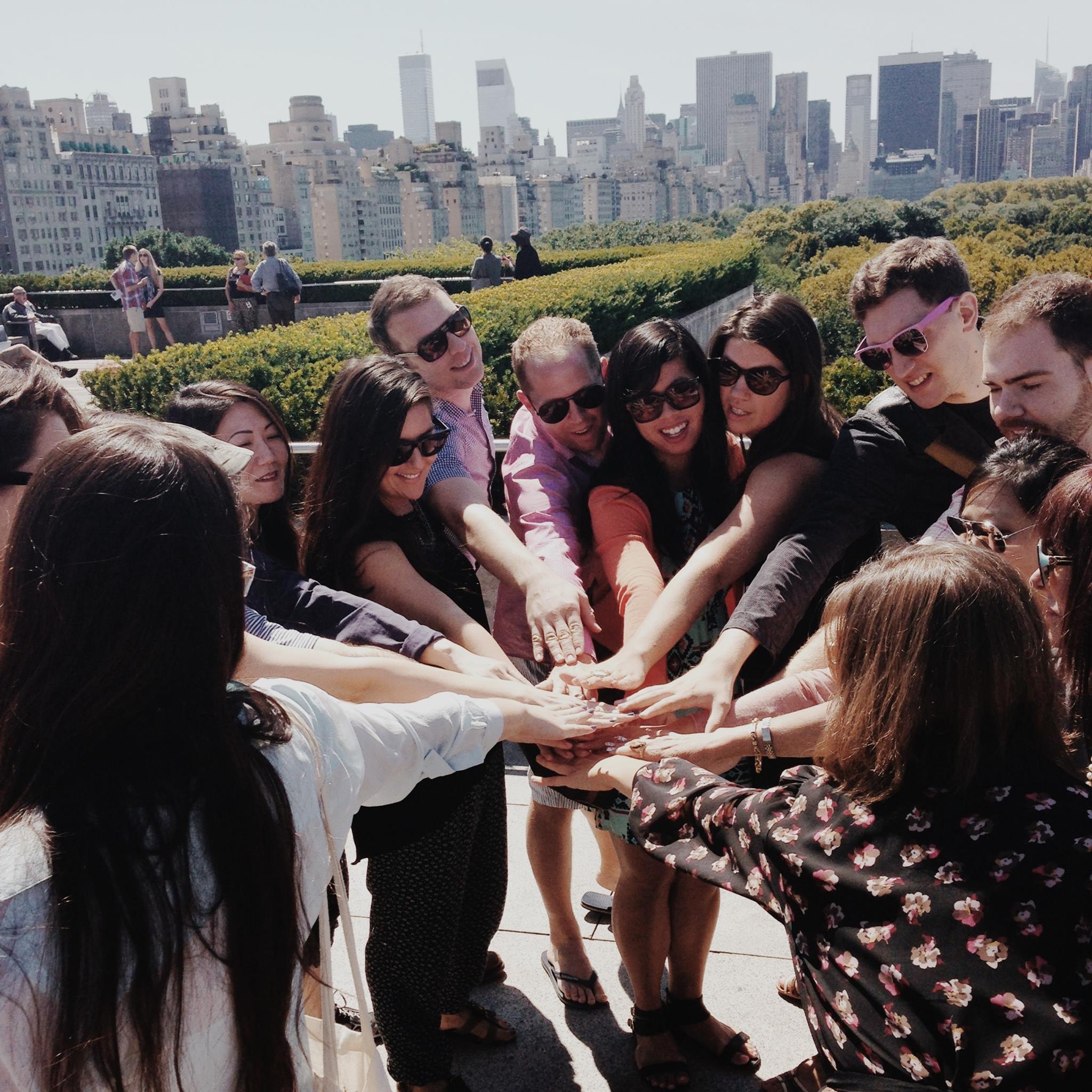
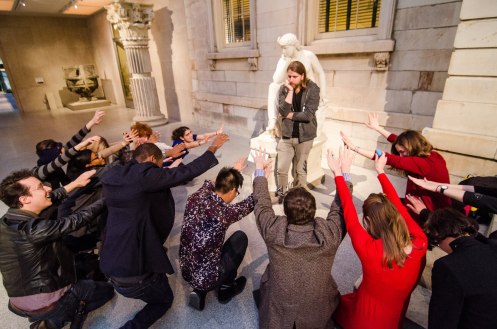
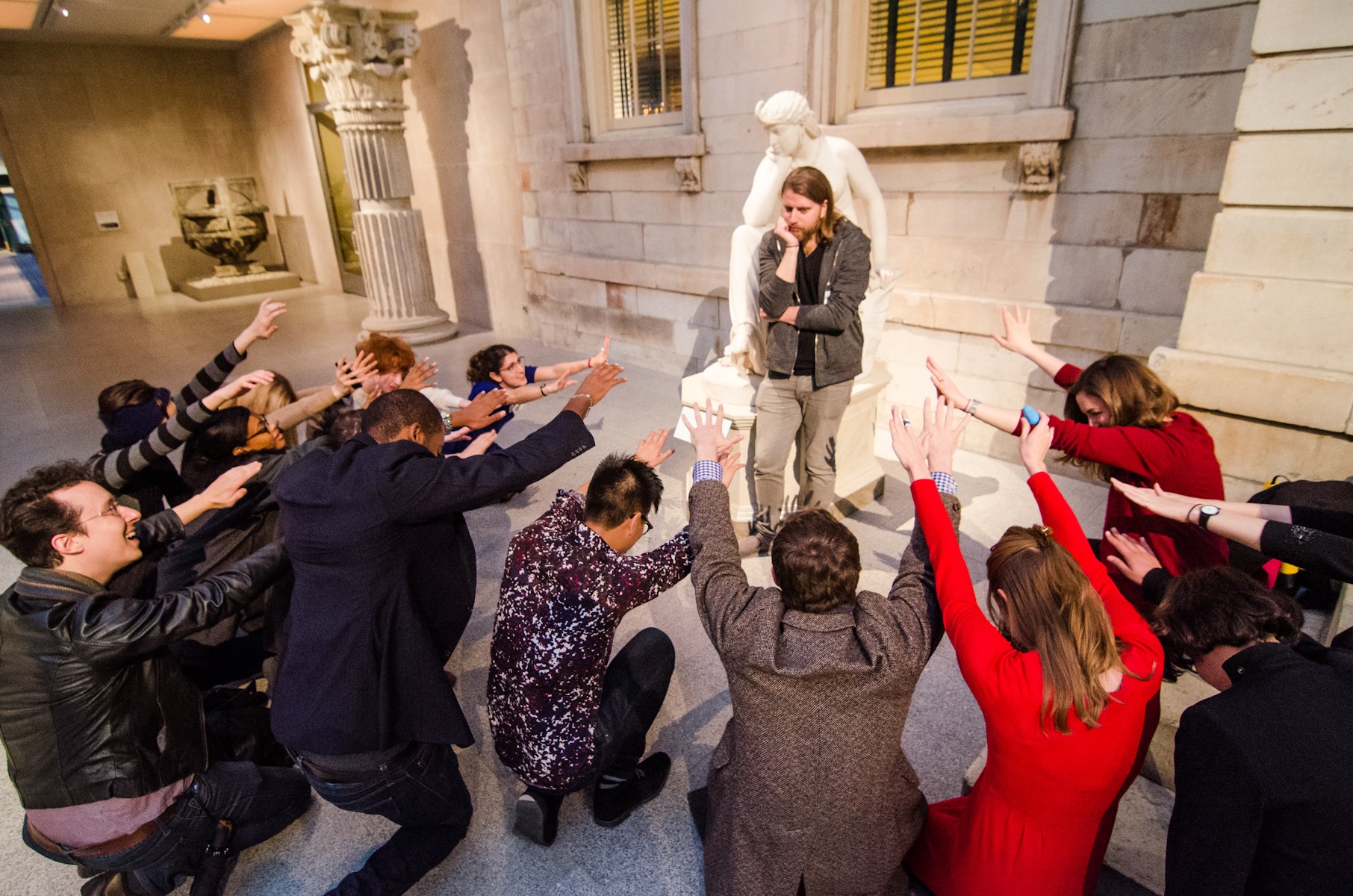
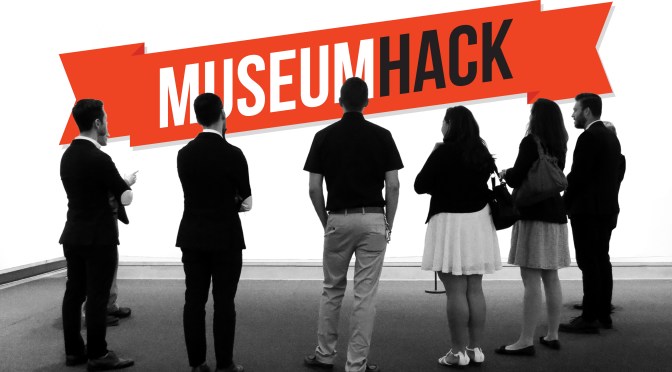
So kudos to Nina Simon for revising the MAH mission statement and taking chances to make the museum a participatory space for the WHOLE community. Congrats to Museum Hack, for challenging the notion of what a museum tour is. Three cheers to Brooklyn Museum for every First Saturday. And the biggest thank you to every single education department working to make the institution accessible, available and awesome to everyone.
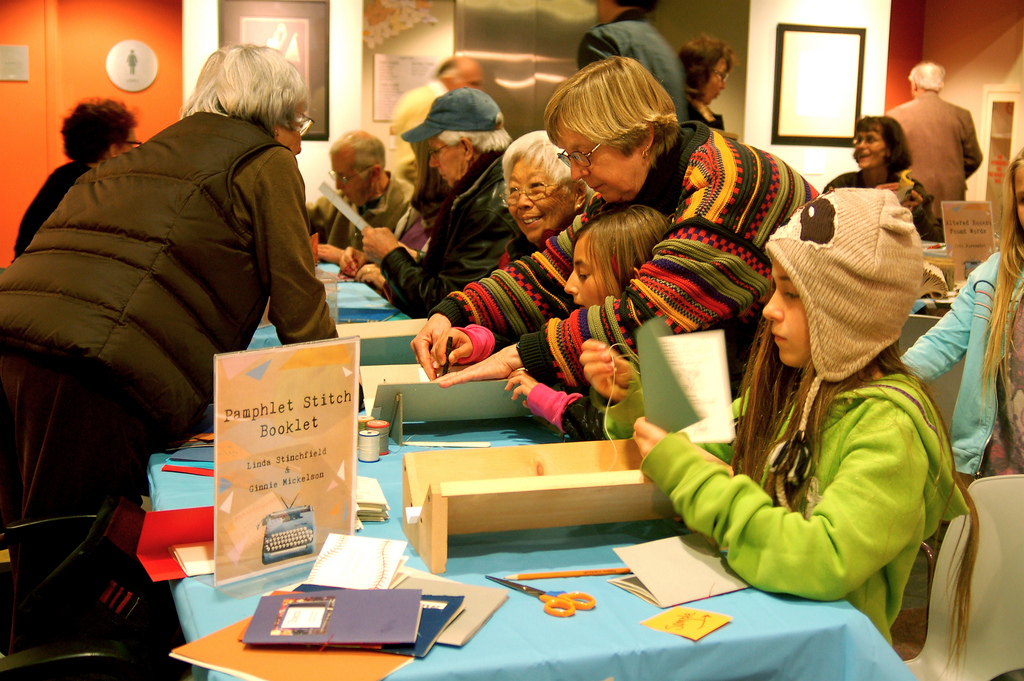
And to Bratton and Dobrzynski, an open invitation to come as my guest to any participatory program that I am leading or attending. Before you write another criticism, I encourage you to be an active participant. Try asking other participants what they think. Open your mind and attempt to see that a museum experience is not one-size-fits-all.

*     *     *     *     *

Editor’s Note: Given that Judith Dobrzynski’s opinion pieces have once again flared controversy and passionate responses from many in the museum and education community, I wanted to take this opportunity not only to feature Jen Oleniczak’s personal response, but also to utilize the community of practice that exists at ArtMuseumTeaching.com to share additional responses from contributors.  Below are some of this community’s response to this issue and to this challenging of participatory practice in art museums.  I also invite others to post their response and thoughts below in the Comments section, and add to the rich exchange already happening.

Rachel Ropeik

As a museum educator with an art historian’s training, I sometimes feel split on the “museums as experiential space” vs “museums as reflective space” debate. Personally, I love having quiet time to sit and bask in the presence of an inspiring work of art.  But professionally (which is, of course, personal, too) I’m aware that not everyone enjoys that sort of museum engagement, and, more importantly, some people feel active barriers blocking their way to it.  For those people (and of John Falk’s five types of museum goers–explorers, facilitators, experience-seekers, professional/hobbyists, and rechargers–it’s a minority who only want reflective museum time all the time), there need to be alternatives provided.

Museums have a well-established international history of being large, stuffy, intimidating institutions full of stringent rules to be followed.  That doesn’t sound fun, even to me, who loves museums passionately.  Instead of furthering that stereotype, we need to do what we can to, if not destroy it, poke some serious holes.  We need to meet visitors where they are, not where we think they should be.  Our visitors (and yes, that includes more and more who view our collections online and never set foot inside our galleries) should welcomed using a whole range of techniques that will stimulate and intrigue and invite and amuse and confound.

Museums have always been contemporary spaces serving contemporary audiences’ needs, and what those contemporary audiences need changes right along with history.  While we who work in museums may be dedicated to preserving the legacy of the past, we are also dedicated to sharing that legacy with the public.  Like it or not, time marches on, and continuing to look backward to the past for some sort of ürmuseum is never going to cut it in a society that’s moving ever-faster forward into the future.

Felice Cleveland

My father visited me as I was studying abroad in Paris. He had to get his passport in order to make the trip and we went to the Louvre where I was taking a class at the time. My father is not what you would call an art aficionado and hasn’t visited museums extensively. We were in a gallery with just one piece of artwork, a lot of people were taking pictures, and all of the lights in the room were trained on this one piece. All of the visual cues were in place and my father whispered to me, “Is this something important?” It was the Venus de Milo.

I think of my father often as I work to create programming and educational materials. Museums often don’t have to work hard to already convince the art-lover to visit. It is working to be inclusive and open doors to people who might not see the museum as a resource. The museum I currently work at is in a residential neighborhood and our collection is contemporary installation art. Some of the work is very complex and deals with challenging issues. It is important to me that the museum is more than a place to just view artwork every once in awhile. As a museum educator, I want to create a safe place to explore new and challenging ideas. I want to create programming that welcomes all audiences. I want to create a place that is a laboratory to experiment with new ideas and materials. I want to create a go-to place for the community. If museums don’t work to include the community – then what is the purpose? How do we make ourselves relevant if we don’t invite visitors to share and explore? Do we just house art? Do we just put artists on pedestals? What is a real museum? How can we respect the creativity that our community brings to viewing artwork? I have seen museums come in many shapes and sizes, which is one of the reasons I love them so much and keep exploring museums in new cities the world over. I want to be surprised and see things in a new way. There are all types of museums for all types of people. And on different days people want different experiences at different museums. As a museum educator, I work to create experiences for as many visitors as possible to engage on the level that they feel comfortable with. And every day I work to open our doors just a little wider.
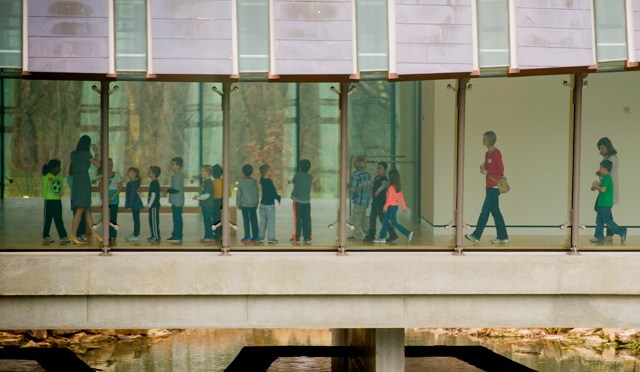

What’s the Value of an Art Museum Field Trip?

Photo by Stephen Ironside

By Anne Kraybill, School and Community Programs Manager, Crystal Bridges Museum of American Art.

Early in my career, I worked at an art museum that experienced what many art museums have experienced, a steady decline in school tours. Our tours did not cost anything to the schools, we had a grant for some transportation and the school district had funding as well. As an institution, we were puzzled. If the tours were barrier-free in terms of cost, what could be causing this? This was just around the time of the initial implementation of No Child Left Behind (NCLB), and we had anecdotal evidence that preparing for the NCLB test was deterring administrators from approving field trips during the months preceding the exam.  But even in the non-test prep months, attendance was down.

As I progressed throughout my career, I continued to face the challenge of convincing administrators that a trip to the art museum is a worthy endeavor. Even with funding for transportation, it has been a difficult case to make with little rigorous research available to back up our arguments. Through my teaching practice in the gallery, I can see the connections students are making: the critical thinking and inference, and the expansion of their interpretive framework that opens up their world. But could it be proven? We needed hard numbers:  How does a one-time field trip to an art museum actually impact a student, and is that impact enough to convince an administrator?

Fortunately, Crystal Bridges Museum of American Art inherently believes in the power of the field trip and the multiple effects it has upon student learning. Thanks to the generosity of the Willard and Pat Walker Charitable foundation, the Museum established a $10 million endowment that provides every school with transportation, substitute teachers, and a lunch for students during their museum visit. This makes a field trip barrier free and as one might imagine, the demand was high. Everyone wanted to visit the Museum when we first opened. But as I had experienced previously, financial barriers are not the only challenge to ensuring school visitation. How could we ensure that five or ten years from now we still had the same interest and support from school administrators?

Photo by Stephen Ironside

Located in the Ozarks, Crystal Bridges is the first large art museum in the region. Prior to the opening of our Museum, schools would have to drive to Tulsa or Little Rock to visit an art museum. The combination of never having an art museum in the area, plus a demand for field trips that exceeded our Museum’s initial capacity, lent itself to a natural experiment. We contacted the University of Arkansas, Department of Education Reform to measure the impact a one-time field trip has upon students.

Researchers Jay Greene, Brian Kisida, and Daniel Bowen designed a random assignment study. Schools applied to visit the Museum in grade levels or pods. Groups were matched and then randomly assigned whether they would get the field trip right away, or if they would get the field trip later. Once the study began, the treatment group visited the Museum and the control group was surveyed. Following the field trip, the treatment group was surveyed (an average of three weeks after). The research was conducted from March through December 2012. There were almost 11,000 students and 489 teachers at 123 different schools throughout the region in this study.

Tour Methodology

Crystal Bridges school tours are similar to those at many art museums. We use interactive dialog that allows the tour to be student driven. Students make observations or statements and Museum Educators respond through paraphrasing, questions, or layering additional contextual information for the student to a level of understanding that they might not get to on their own. For many students and their teachers this is their first time on an art museum field trip. We want to be sure they know this is not about the passive reception of information. We emphasize to the students that this tour is about their ideas, and we produced a video to help deliver this message:

Tours are led by Museum Educators that are on staff rather than a volunteer corp. As they are leading tours daily, the educators are continually refining and reflecting. In addition, peer review and mentoring is part of the training process.

The Findings

Photo by Stephen Ironside

The researchers were interested in revealing several areas of possible impact. These included cognitive and non-cognitive skills from knowledge acquisition, critical thinking, tolerance, historical empathy, and desire to visit museums in the future.

  • Overall, students remember what they learn from works of art! Shocking I know, but students were able to answer very specific questions about contextual information, demonstrating that they retained that information not because they had to for a test, but because it was interesting information to keep.
  • In critical thinking, students also displayed more observations and inferences if they had been on a field trip.
  • Students indicated that they would be more open to diverse opinions, even if they were in opposition to their own thinking.
  • Students were better able to imagine a situation unlike their own in the form of historical empathy.
  • There was also a built-in behavioral measure indicated if the treatment or control group would be more likely to come back to the museum. The treatment group did independently return with their families at a higher rate than the control. In all of the areas there is an impact, but the most significant impact is found within student populations that are considered to attend low-socio economic and/or rural schools.

With recent research in non-cognitive abilities as a predictor of student success, these findings help to make a rigorous case to administrators, policy makers, philanthropists, and educators that there is significant value in a field trip.

To learn more about the findings and research methodology, read the article in Education Next.

To hear the research team discuss the findings, view the September 16th Media Conference.

*     *     *     *     *

About Author

AnneKraybillANNE KRAYBILL: School and Community Programs Manager at Crystal Bridges Museum of American Art. With a team of educators, she developed and implemented all programming related to K-12 students, teachers, and pre-service teachers as well as community groups. She has held positions at the Walters Art Museum in Baltimore, MD, the Pennsylvania Academy of Fine Arts, Norton Museum of Art in West Palm Beach, the Center for Creative Education, and the Vero Beach Museum of Art. Prior to joining Crystal Bridges, she worked as the Art School Director at the Durham Art Council, managing visual and performing arts classes for over 3,000 youth and adult students annually. She is currently developing a distance learning initiative for Crystal Bridges and pursuing her Ph.D. in Education Policy at the University of Arkansas. Anne’s postings on this site are her own and don’t necessarily represent the Crystal Bridges Museum of American Art’s positions, strategies, or opinions.

It’s Time to Recognize Excellence

trophies-in-a-rowAs art museum educators, we get so wrapped up in our own practice and day-to-day work that there are many things we sometimes do not have time for. From writing that article we’ve always wanted to write to simply spending more time in the galleries looking at art, we can get so busy that these things speed past us. Too frequently, recognizing the work we do as educators also falls by the wayside. So I am calling on you to press the pause button for one moment and recognize the excellent work your peers are doing in the field. It’s time to recognize excellence in art museum education!

Nominate a colleague for the National Art Education Association Museum Division Awards! This is such a simple process, and you can nominate any current NAEA member for Regional Awards as well as the National Award. Here is what you need to do:

  1. Take 5 minutes and think of someone who is making a difference in your work as a museum educator — whether they are a super supportive mentor, a transformative colleague, or an emerging educator whose hard work is deserving of recognition.
  2. Contact them — shoot them an email saying that you think they simply ROCK, and that you would like to nominate them for an NAEA Museum Division Award (regional or national).
  3. Write a short letter saying how great they are! What has been exemplary about their practice or their role in the field of museum education? What impact are they making at their institution; in their community; in the National Art Education Association? How have they pushed you to become a better educator? Please make them blush when they read it.
  4. Ask your rock star nominee to fill out the short CV form (download here) and to select 2 people to write short, glowing letters of support. Again, this is usually very easy, since as a field we are all here to support each other and recognize excellence. Ask the nominee to have their support letters sent directly to you.
  5. Submit this entire packet (nomination letter, CV form, and 2 letters of support) to Ben Garcia (ben.garcia@berkeley.edu) or myself, Mike Murawski (murawski27@gmail.com), no later than October 1st. Please don’t miss this deadline! We really want to consider your nomination and recognize excellence in your colleagues.

NAEA_Awards_2014_cvrYou can find all of this information and forms by visiting the NAEA Awards website here.

Over the past 30 years, the National Art Education Association has recognized excellence in nearly 150 museum educators that are members of NAEA, many of them are mentors and colleagues that we have had the pleasure of working with or continue to work with now. The list includes “movers and shakers” in our field, but also the quiet, modest, yet powerful educators who would not have been recognized without being nominated by someone like yourself.

So take the time to recognize the excellent and transformative work happening in our field, and nominate someone for an NAEA Award!

If you have any questions at all, or need help with this process, do not hesitate to email me at murawski27@gmail.com or Ben Garcia at ben.garcia@berkeley.edu. Remember that the deadline for submitting nominations is October 1st!

A Forum for Reflecting on Practice