Written by Linda Forshaw, guest author
_______________________________________
In recent years there has been a new player in the field of education. MOOC (massive open online courses) have taken the world (somewhat) by storm with various free courses from prestigious (and sometimes not so prestigious) universities and colleges. Here is a quick YouTube video describing the basic nuts and bolts of a MOOC, if you are thinking “What in the world is a MOOC?”
Despite there being some skepticism — mainly in relation to the quality of education, incidents of plagiarism, and low completion rates — the popularity of online education platforms continue to grow. In an article entitled “The Year of the MOOC,” Laura Pappano writing for the New York Times reports how the online learning revolution–that reportedly started when more than 150,000 willing students enrolled on an “Introduction to Artificial Intelligence” course back in the fall of 2011–has grown at an ever increasing pace. As an example, some 370,000 students signed up for the first official courses from edX, a nonprofit MOOC created by Harvard University and the Massachusetts Institute of Technology. edX is not alone in attracting record numbers of online students. Coursera, a for-profit MOOC created by Stanford professor Andrew Ng, has seen 1.7 million students sign up since its inception.
The pace at which online learning is traveling continues to grow. The year 2013 is set to herald a new offering from the UK’s Open University. Futurelearn, the country’s first real step into MOOC platforms is set to offer courses from Kings College London, the University of Warwick, and others. Meanwhile, back in the U.S., 2U (one of ten startups changing the world according to Forbes) is planning to advance the field of online learning even further by by offering paid, for-credit undergraduate degrees from the likes of Duke, Vanderbilt, and Emory Universities.
With online learning platforms showing no immediate signs of abating, the question remains how art museums can play a role in this sweeping open education movement? It seems that they already are to at least some extent . Initiatives to deliver art to the masses by the likes of the Khan Academy, Google Art Project, The Virtual Hampson Museum, The Giza Archives, and Europeana have been heralded by some as offering an opportunity for those alienated from the world of art to get involved and slated by others who argue that images of famous painting and other artifacts are all well and good, but fall short as an adequate substitution for the real thing.
Perhaps the best path forward for museums looking to make inroads in online learning is to create courses that can act as complementary to personal visits, but also provide more than enough information to be sufficient in their own right for those who cannot (for whatever reason) attend in person. Thanks to the Google Art Project and the expansion of the Khan Academy into art history, displaying works online is likely to become increasingly commonplace for museum and art galleries. Steven Zucker and Beth Harris, in their article explaining why the Google Art Project is important, report that other museums have started to make public domain images available for download – namely The Brooklyn Museum,, Metropolitan Museum of Art, and The National Gallery of Art. As a result, those who do not get involved may well be left behind.
While there is much discussion about what these open technologies are not, what we do know is that they are expanding opportunities like no other and it can be reasonably said that the museums themselves should join others in discussing the options for learning.
And isn’t learning what it’s all about?
Author
Linda Forshaw is a Business Information Systems graduate from Lancaster University in the UK. A contributor to Degree Jungle, she is a full time writer and blogger specializing in education, social media, and entrepreneurship. Contact her on Twitter @seelindaplay
“The value of museums begins and ends with the relationship with our visitors. It’s a contract that is renewed each and every time they engage with us, and if we don’t live up to it, we will be usurped.” — John Falk, speech to AAM (2010)
Encountering Space, Center for Creative Connections at the Dallas Museum of Art. Photo by Maria Mortati
Working in museums can be a messy, messy game, but I always love the conversations that crop up when you get a handful of museum educators together to talk ‘shop.’ A couple weeks ago at the National Art Education Association 2013 annual conference in Fort Worth, there was certainly a lot of that happening. I was fortunate enough to be invited to present — or rather have a public in-process conversation — about participatory culture in art museums with an incredible group of colleagues: Preston Bautista (Deputy Director for Public Programs & Audience Engagement, Indianapolis Museum of Art), Judy Koke (Director of Education & Interpretive Programs, Nelson-Atkins Museum of Art), and Susan Diachisin (Director of the Center for Creative Connections, Dallas Museum of Art). By far, the best part of preparing our presentation was the series of winding, organic conversations that led to Fort Worth.
Not only were we all wildly passionate about visitor engagement and participatory practice, but our own working environments were all changing rapidly — from my own move from St. Louis to the Portland Art Museum this past fall, to leadership changes and various grants & innovation projects. All in all, we were fairly hyper-motivated to talk about these issues with each other and, ultimately, to explore concepts of participation and exchange in our institutional cultures.
How does an institution’s hierarchy, leadership, and organizational structure actually enable (or disable) participatory practice? How could museum educators at various levels become more involved in fostering an institutional culture focused on visitor experience and engagement? Could these values find ways of ‘trickling up’ from participatory programs and smaller-scale education projects or exhibitions?
“If … museums must move away from assumed public value and begin to measure their impact, and if … museums must achieve impact for the community instead of impact for the museum, then the impetus is on museum education to rise to the challenge that lies before us and reposition the museum in the eyes of the public.” — Tina Nolan, JME (2010)
As we entered our NAEA session entitled “Toward an Even More Participatory Culture in Art Museums,” we had decided on a set of assumptions that were key to making this a valuable and productive conversation:
conversation at our session (yes, we exploded the traditional conference furniture layout)
There is a shift happening. Art museums across the continent are taking big steps to change the ‘business as usual’ model, creating structures to put the public’s expectations, needs, and experiences at the center of interpretive planning and exhibition development. We can see this in institutions such as the Detroit Institute of Arts (see great article by their Exec Dir of Learning & Interpretation), Art Gallery of Ontario, Denver Art Museum, Indianapolis Museum of Art, Nelson-Atkins Museum of Art, and the Philadelphia Museum of Art, among many others. In the specific realm of ‘participation’ and public engagement, it is always important to note the Irvine Foundation’s support for institutions such as the Oakland Museum, as well as museum “Innovation Stories” featured via EmcArts & ArtsFwd. If you still need convincing that change is afoot, watch this video compiled by the Innovatrium at their January 2013 ‘think tank’ of museum leaders.
We’re all in this together. Instead of anyone pretending to be an ‘expert’ about these changes in organizational culture, we wanted to be conscious of the fact that we are all co-learning with each other. It doesn’t matter the size of one’s museum or how involved your senior leadership is in this shifting landscape — we’re all working toward the greater public value and relevance of museums in our communities and beyond. And this needs to be an open, inclusive conversation if it is to be meaningful one.
You can’t talk about participatory practice without becoming participatory. I always feel like every lecture on “visitor engagement” and “participatory practice” is, in part, quite disingenuous if it does not attempt to actually ENGAGE. Even if an attempt to activate a lecture hall full of 200 spectators fails, I always feel that we should try — walk the walk, right?! So I was able to convince our group to do a crowdsourcing activity to engage those attending our session, and pull out their ideas in a participatory way.
“For a museum to truly engage its users, it must cease acting as a controlling gatekeeper to its collections and expertise. Rather, the museum must work with its users and communities to unlock the stories its collections hold, responding to the choices its users make. As such, it must give up its traditional authoritarian voice so that users are free to question, debate, collaborate, and speculate — seeking out those issues that most concern them — and are given the support and inspiration required to do so.” — Graham Black, Transforming Museums in the Twenty-First Century (2012)
After our initial discussion and framing of these issues, we jumped right into the crowdsourcing exercise to activate everyone’s thinking and to have the group generate ideas. To prevent this conversation from quickly deteriorating into a litany of complaints, barriers, and reasons why we might not be able to enact change at our institutions, we granted everyone in the room freedom from all of these restraints … with a magic wand. Therefore, without concern about budget cuts, personality conflicts, and perceived curatorial barriers, we invited each participant to take two or three minutes, envision some ways to engender a more participatory culture at their institutions, and then write down a “what if” statement on a small slip of paper. We collected more than 50 “what if” statements, crowdsourced them with the group, and then spent the final chunk of time opening up a conversation around these ideas. Here are the 4 statements that, at this moment and with this group, bubbled to the surface:
What if everyone in the museum understood everyone else’s job?
What if there was a real plan for interpretive team development of exhibitions and permanent collections? What if curators and educators didn’t feel like they were ceding territory when they worked together?
What if educators/interpreters and curators worked collaboratively on creating in-gallery participatory experiences?
What if I could include funds for “things I may think of after the budget process” [an “innovation” fund] when I’m writing my department budget?
sampling of the 50+ “what if” statements that participants brainstrormed for crowdsourcing
Rather than recount the conversation or provide my own opinions, thoughts, and perspectives here, I wanted to take this opportunity to open the conversation … to OpenThink the “what if” statements we collected during our NAEA session. So below is a link to all of the “what if” statements that we were able to collect, in no particular order. Feel free to peruse, and add Comments to the GoogleDoc if you choose.
I invite you to share these with colleagues, send this to others at your museums (yes, curators, too!), and let’s create a conversation in the GoogleDoc or below in the Comment area. Do you have a “What If” statement that you would like to add? Are these concerns about exhibition planning, community involvement, and staff development similar at your institution, or different? How can we engender more participatory practice/culture in our work? in our institutions?
Modern Art Museum of Fort Worth, one of the places hosting NAEA museum preconference activities and a must see while in Fort Worth. Photo by Thomas Hawk
Once again, art and museum educators from across the country (and outside the US) begin to pack their bags and prepare to head to Fort Worth, Texas, next week for the National Art Education Association annual conference (March 6-10). And I thought it would be interesting again this year to offer another quick breakdown of the sessions being offered in conjunction with the Museum Education Division. There are some great sessions being offered this year, in addition to an exciting pre-conference program run by the Museum Division that will for the first time include lots of in-gallery teaching focused on some of the great collections in Fort Worth.
The following stats are pulled only from sessions officially labeled “Museum Education,” so keep that in mind — there are certainly lots of other sessions across divisions that engage with museums, museum learning, and how museums interact with schools and higher education (and I always encourage museum educators to branch out and participate in sessions beyond our “comfort zone”).
But within our own Museum Education Division, here is what it looks like this year at a glance. Click here to compare with last year’s numbers.
Total Museum Education Sessions: 75
Total museum educators presenting: 159 (plus or minus — with 23 people presenting more than 1 session this year)
Most Frequent Session Topics:
Visitor/Audience Engagement (various ways of being more responsive to our audiences and visitor needs, etc.) – 11
Teacher Professional Development – 9 (duh, it’s NAEA — thousands of teachers attending)
K-12 Museum/School Partnerships and School Programs – 8
Interpretive Resources (gallery didactics, print, web, and mobile) – 6
Peer Learning & Communities of Practice (for museum professionals) – 5
Art Making & Working with Artist – 5
Rather than focusing on what IS popular or in the spotlight this year, I’m so much more interested in what is NOT so popular or prevalent. After reviewing all of these sessions, I found it interesting that the least frequent topics (although still addressed by someone) include Latino outreach and curatorial collaborations. These both seem cause for concern. Our museum recently has some great senior staff discussions around the November article “Diversify or Die: Why the Art World Needs to Keep Up with Our Changing Society” (see the powerful graphic below). Author Ben Davis quotes the 2010 Center for the Future of Museums (CFM) report “Demographic Transformation and the Future of Museums,” worth a read for what it says about the scandalous state of diversity in the visual arts:
“This analysis paints a troubling picture of the ‘probable future’ — a future in which, if trends continue in their current grooves, museum audiences are radically less diverse than the American public, and museums serve an ever-shrinking fragment of society.”
While these issues may come up more frequently at AAM, ICOM, or other professional conferences with wider participation than arts educators and art museum educators, the issue is certainly something we, as a field, must be addressing as central to our work. Perhaps these issues will find themselves woven into myriad sessions on visitor and audience engagement in general, but I do fear that when we use the words ‘audience’ or ‘visitor,’ there is a chance that we might unintentionally still be thinking of white, non-Hispanic visitors. I only present this as a potential spark for some conversation, and I’m always open to being corrected and proven wrong (please, prove me wrong here!).
In addition to this blind spot, I also am concerned about the lack of sessions pushing core collaborations with curators — an area that was also severely lacking last year at NAEA. This year, the word ‘curator’ was only mentioned twice in any of the 75 Museum Education Division sessions. At a moment when I know that many major museums are re-imagining (and, in some cases, totally disrupting) the traditional relationships between education and curatorial, this lack of engagement via this year’s NAEA sessions is worth notice. Especially because I know that this issue will find its way into most of the dinner conversations each night in Fort Worth as well as the quick coffee chats we have in the halls between sessions, as it did last year. I am guilty myself, as we have not drawn much attention to this here at ArtMuseumTeaching.com. Given this, I would love to find ways to share the successes and failures of our curatorial collaborations and partnerships, and find ways to push this type of work forward. If you are doing work in this area, let’s get some posts up to shine some much needed light on these collaborations.
Lastly, when I ran a quick analysis of the session titles and short descriptions this year, the most common words used (outside of “art” and “museum”) were, in order of frequency: community, visitors/audience, learning, education, and engagement. While I’m not sure how much this actually tells us, I continually find it interesting to examine the language and vocabulary we use to describe the work we do as museum educators (in fact, there is a session on this very topic on Thursday morning, “Intentional Language: How We Describe Museum Education Can Make All The Difference”). This year, the word ‘community’ rose to become the most common word in the session descriptions, followed by visitors and audience — perhaps showing a bit of a shift in how we are perceiving our work and its relationship with the communities in which we exist. A couple of the least common words to note are ‘curator,’ as mentioned, as well as ‘experimental’ (something we should be doing and sharing more and more).
For those of you attending the NAEA Convention in Fort Worth next week, I would like to extend an invitation for you to join the editors and authors of ArtMuseumTeaching.com for a casual Happy Hour event on Thursday, March 7, from 5-6pm at the Flying Saucer (111 E Third St, a short walk from the Convention Center). We’re interested in continually extending and opening up this conversation, and wanted to find a moment at NAEA to pull together anyone who has been involved in the project thus far, as well as anyone interested in learning more.
What: ArtMuseumTeaching.com Happy Hour When: Thursday, March 7, 5:00-6:00pm Where: Flying Saucer in Fort Worth, 111 E Third St
I look forward to seeing many of you in Fort Worth, and also getting more of your voices and perspectives involved in the ArtMuseumTeaching.com community!
By Mike Murawski, Portland Art Museum; Dana Carlisle Kletchka, Palmer Museum of Art, Pennsylvania State University; Elyse Eidman-Aadahl, National Writing Project, University of California Berkeley
“People’s relationships remain strong—but they are networked. Neighbors, and neighborhoods still exist, to be sure, but they occupy a smaller portion of people’s lives. It is hard to borrow a cup of sugar from a Facebook friend 1,000 miles away, but it has become easier to socialize, get advice, and exchange emotional support at whatever distance. Where commentators had been afraid that the internet would wither in-person ties, it is clear that they enhance and extend them.” (Lee Rainie & Barry Wellman, Networked: The New Social Operating System, 2012).
In their recent book Networked: The New Social Operating System, Lee Rainie (director of the Pew Charitable Trusts Internet & American Life Project) and Barry Wellman (Professor of Sociology at the University of Toronto and Director of NetLab) have argued that the large online social circles of familiar platforms such as Facebook, Twitter, Pinterest, etc. actually expand opportunities for learning, problem solving, decision making and personal interaction. Their work at the Pew Internet Project and the NetLab (especially research for the Connected Lives Project) suggests that digital technologies are not isolated — or isolating — systems, but rather networked systems built upon these social networking platforms as well as mobile device technologies.
As Rainey and Wellman remind us (although we need no reminder):
“Daily life is connected life, its rhythms driven by endless email pings and responses, the chimes and beeps of continually arriving text messages, tweets and retweets, Facebook updates, pictures and videos to post and discuss. Our perpetual connectedness gives us endless opportunities to be part of the give-and-take of networking.”
But how do we—as museum and arts education professionals—maneuver within a technology-mediated world in a way that allows us to cultivate productive, human-centered networks and communities? Museums and schools have been widely engaged in how digital media and technology can connect them with their students and audiences. But what about the potential of these same technologies to build entirely new “communities of practice” among professionals—whether art teachers, university faculty, or museum educators?
These questions are at the core of a series of conversations that we will be facilitating over the next several weeks, centered around a panel discussion that will be part of the National Art Education Association annual conference in Fort Worth at the beginning of March. Through these organic and open conversations, we hope to begin exploring models of human-centered professional exchange and peer networks suited to the increasing complexity, connectivity, and velocity of the 21st century. Drawing on innovative work from the National Writing Project (such as Digital Is), sites of exchange such as this one (ArtMuseumTeaching.com), and connected learning models developed with MacArthur Foundation’s Digital Media and Learning Initiative, we’ll be discussing how online networks and communities can harness the power of emerging technologies and social media to share, collaborate, curate, and participate with peers both today and in the future.
One way to more easily digest this sizeable topic is perhaps to take it one bite at a time. So we’re excited to be facilitating two public “on air” Google Hangouts along with the session at NAEA—one hangout prior to the conference to take that first bite, and one a couple weeks after the conference to extend our thinking and perhaps follow-up on questions raised in the panel. The online Google Hangout format also allows us to potentially engage a wider range of people than just those attending the NAEA conference, while at the same time practicing one of the most widely used technologies for face-to-face online engagement.
CONVERSATION #1 – Come Chat With Us via Google Hangout
“What Do We Want from Online Communities of Practice?”
Open Google Hangout w/ Mike Murawski, Dana Carlisle Kletchka, Elyse Eidman-Aadahl
Thursday, February 28th – 1:00pm Pacific / 4:00pm Eastern
For this preconference conversation on Google Hangout, we thought we might simply ask: “what do we want from online communities of practice and peer networks?” What online networks and communities are you involved with? When you consider jumping into a new online community, what do you hope it will achieve? What types of exchanges and experiences keep us engaged and prevent us from leaving (or ignoring) the online network? During this conversation, we were able to gather your thoughts, questions, and experiences which will inform our discussion at NAEA on March 7th.
Couldn’t join the Google Hangout? Watch the broadcast above, and please add your thoughts and perspectives to the “Comments” section below, and we’ll utilize this space to keep the conversation going.
CONVERSATION #2 – NAEA Conference Session
“Reimagining Professional Exchange & Peer Networks in a Digital Age”
NAEA Panel Session w/ Mike Murawski, Dana Carlisle Kletchka, Elyse Eidman-Aadahl
Thursday, March 7th, -12:00-12:50pm, Meeting Room 121C/Center/1st Floor
At this session, we gathered with a great group of peers to share some of our own experiences working as developers, researchers, and participants in online networks and communities of practice, but also spent time opening up the conversation about key issues (many pulled from the preconference Google Hangout). For example: how do we promote online ‘contributing’ instead of just online ‘visiting’ when it comes to these experiences? What are some ways to build co-learning interactions online?
Couldn’t attend the session? Please feel free to connect with either of the Google Hangouts, or chime in via the “Comments” section below.
CONVERSATION #3 – Reconnect via Google Hangout
“The Digital Follow-Up: How Do We Drag Everyone Back to Their Screens?”
Open Google Hangout w/ Mike Murawski, Dana Carlisle Kletchka, Elyse Eidman-Aadahl
Thursday, March 28th – 1:00pm Pacific / 4:00pm Eastern
One of the most difficult things to motivate busy museum and education professionals to do is to reconnect online after the conference or workshop. While we all know the values of extending these relationships and opportunities to reconnect, it can be so difficult to make these a reality. It only seems appropriate to make this one of the topics of our own ‘digital follow-up’ discussion. How do we manage and nurture online professional networks so that members stay active, build stronger ties, and feel supported? We also kept this follow-up conversation open to issues and questions that were addressed in the panel session at NAEA.
We look forward to continuing this exciting series of conversations! If you have any ideas for a future Hangout or online get-together, let me know and we can work to schedule here within the ArtMuseumTeaching.com community.
I’m not exactly sure when or where it started, but I give credit to Ed Rodley at the Museum of Science in Boston for introducing me to the concept of the “Drinking about Museums” professional meet-up. What could be better than meeting up with museum folk, playing around in our galleries & exhibit spaces, sharing ideas, and topping it all off with drinks. Boston is doing it! Sydney is doing it! Denver is doing it! So it was time to get “Drinking about Museums” started up here in the Northwest — Portlandia style. And since I’m still the new kid in town, this was a great way to get outside the walls of the Portland Art Museum and meet other creative museum people. So here is my report from the inaugural “Drinking about Museums” in Portland, Oregon:
Who: Sparked by my new love for OMSI and their staff, we gathered together interested people from their education and exhibit design departments along with people from our education and digital collections departments at the Portland Art Museum.
The evening began at the Oregon Museum of Science & Industry (OMSI) in their technology lab and maker space — an area of their museum in which they are playing with new forms of creative engagement and participatory design. David Perry, OMSI’s Director of Museum Education, and Kristin Bayans, Senior Educator, both hosted the group along with many other OMSI educators and staff. We all got to know each other through some fun (aka ’embarrassing’) activities, but mostly we played around in the learning lab space and got to chat with each other about what we do.
When you get so many creative, high-energy museum people together in one place, the ideas start flowing … and I feel that we came away from the night with tons of potential for meaningful collaboration. For me, one of the first experiments that will likely come out of this exchange is a couple MakerBot 3D printing workshops at the Portland Art Museum, allowing education staff from both institutions to play with this technology and its potential applications for an art museum.
MakerBots!
So this brings me to the next topic of my post … MakerBots! I have been eyeing the MakerBot station at OMSI for months now, chatting with their staff and volunteers about how it is being used, why it is being used, and what are the potential ways it could be used in an art museum context (or even with artists). Kristin Bayans, who manages this innovative lab space at OMSI, has been such an amazing person to brainstorm with, and she was able to download some objects from the Metropolitan Museum of Art’s collection to print for us yesterday. Yes, earlier this year, the Met teamed up with MakerBot to make statues, sculptures, and other three dimensional artworks from the museum’s collection available for anyone in the world to access virtually on Thingiverse.com and physically recreate with The Replicator™– MakerBot’s third-generation 3D Printer. As Jackie Terrassa, the Met’s Manager of Gallery and Studio Programs, wrote about this Hackathon event:
“… by partnering with artists and programmers who are already using these accessible technologies as creative tools, we will advance a core component of the Museum’s mission to encourage the study and development of the arts, enhancing the Met’s role as a dynamic site for creativity, inspiration, and exploration by artists and visitors alike.”
I could not agree more, and this has made me so excited to experiment with some workshops here at the Portland Art Museum around these technologies, and ensure that the museum can be a place for open creative exploration. And, besides, now I have my very own 3D-printed replica of the Met’s sculpture of Marsyas by 17th-century German sculptor Balthasar Permoser … what could be cooler than that! Obviously, there will be more discussion coming up on this site around 3D printing and museums, especially the impact this type of work might have in the teaching and learning realm of the museum. But I would encourage everyone to learn more about what the Met has been doing, and check out the objects and the 123D Catch scene files you can download to make your own replicas.
OK, so that is a quick report from Portland’s first ever “Drinking About Museums.” I look forward to opening this up to more and more museums across Portland, and exploring the way we can learn from each other as professional, as creative thinkers, and as people. Cheers!
“Marsyas” (2013) by MakerBot, and “Marsyas” (1680-85) by Balthasar Permoser
As the first year of the ArtMuseumTeaching site wraps up, I thought it would be good to post a brief “Year in Review.” Not that we need any more end-of-the-year lists or calls for resolutions, but I think it can be meaningful to take a minute and look back at some of the issues that have been on our minds this past year. From the Getty staff reduction to a cantankerous teenager writing about museums, there have been a lot of sticky topics that we’ve discussed here on this site.
Through its inaugural year, ArtMuseumTeaching has grown from a tiny blog seedling planted back in February to an online community that now has 16 authors, 52 posts, and more than 50,000 views from readers in 99 countries. I hope that the online community and conversation around this site will continue to grow, include more perspectives, and be a space of exchange where we can connect on issues of teaching, learning, and community engagement that matter most.
Year in Review: 5 Most Read Posts of 2012
1. “Why Museums Don’t Suck: The Current State of Teen Engagement” (October 2012): Howard Hwang’s indictment of museums in his teen article for LA Youth sparked the most widespread discussion of the year, bringing out some great perspectives on teen engagement as well as some key questions and challenges we should all be addressing.
2. “Responding to the Getty Cuts: A Significant Step Backward” (May 2012): While we all have become well-acquainted with the budget cuts and lay-offs of the recent recession, the move earlier this year by the Getty to cut its education staff caught many of us by surprise — and was certainly a crisis moment for our profession.
3. “Public Value and Being Human: Gallery Teaching is Core to Our Mission” (May 2012): One of the real crisis moments of the year for our field also brought out some exceptional reflections from within, and this thoughtful post from Briley Rasmussen helped us focus on the human element of our shared work in museums.
4. “Teaching with the iPad: Adding a New Dimension to the Museum Experience” (April 2012): As technology edges its way into every museum, the iPad has been drawing a lot of attention. While we don’t know what device or new technology will sweep across museums over the next few years, it was nice to look at some of the basic ways that a simple tablet device can transform even the most traditional museum experience.
5. “Gallery Diving: Interns Tackle Public Engagement” (August 2012): One of the big themes of 2012 was definitely ‘experimenting in museums,’ and I am still so proud of the risks that this group of interns took this past summer through our public engagement project. It inspires me to continue pushing toward a DIY mindset.
Enjoy these popular posts from 2012, and see you in 2013 — a year that promises to bring a whole new set of challenges, success stories, and new ways of thinking about both the theory and practice of art museum teaching. If you would like to share the projects you’re working on or the issues and challenges you are grappling with, please add your voice to this growing community (and just send me a tweet at @murawski27). Cheers!
“Stories matter. Many stories matter. Stories have been used to dispossess and to malign, but stories can also be used to empower and to humanize. Stories can break the dignity of a people, but stories can also repair that broken dignity.”
—Chimamanda Ngozi Adichie
Early in 2012, I came across a particularly inspiring TED talk by Nigerian novelist Chimamanda Ngozi Adichie. Her talk entitled “The Danger of a Single Story,” quoted above, warns that if we tell or hear only a single story about a people or culture, we risk a critical misunderstanding. Our lives and our cultures are composed of many overlapping stories, and all of those stories matter and deserve to have a voice. As I was listening to Adichie’s transformative words, I immediately thought about museums and the cultural power they have historically possessed to tell a single story—the single story. As museums continue to adapt to become more relevant in the 21st century, they have also been struggling with whose stories to tell, whose voices can participate in that telling, and how much power can or should be handed over to our communities to tell and share their own stories.
Since first listening to Chimamanda Adichie’s talk almost a year ago, I have experienced an exciting career and life transition as I moved from St. Louis to Portland, Oregon, to become the Director of Education & Public Programs at the Portland Art Museum. And these issues of power, voice, storytelling, and community engagement are central to one of the Museum’s most widely expanding educational projects, Object Stories. Launched almost 3 years ago, this project begins to address the need for museums to reject the single story, to create and share a multiplicity of stories around its collection, and to bring the meaning-making process of storytelling into the galleries. This post provides a much-needed spotlight on the Object Stories project, and I will definitely follow-up with future posts that reflect on the further challenges and successes of this exciting work.
Explore more than 1,000 stories through the Object Stories website, objectstories.org
The Portland Art Museum’s Object Stories project was recently featured by EmcArts and ArtsFwd in their ‘Business Unusual’ Contest, and I’m very proud to say that we won the contest with a broad base of support from across our community (the Mayor of Portland even gave us a shout out, along with dozens of other cultural organizations across Oregon). Originally posted on ArtsFwd.org, the text below was created through a full team effort from the Education Department, including Stephanie Parrish, Amy Gray, Danae Hutson, Jess Park, Betsy Konop, and especially my amazing predecessor Tina Olsen, who passionately led this project from its inception to where it stands today. As a team, we are pushing this project to new areas and breaking down boundaries inside the museum as well as both locally and globally.
• • • • • •
In light of the challenges of the 21st century, institutions across the globe are reassessing their strategies to be more relevant in the lives of their communities. Framed by this larger discussion, the Portland Art Museum began to rethink how we relate to our audience. We questioned the role of the public as mere consumers of information and strove to diversify the populations that we serve. In doing so, we uncovered that both the Museum and the public needed a catalyst for active participation, personal reflection, and meaningful ways to rediscover works of art in the collection. It was out of this larger, ongoing thinking that the Object Stories initiative was born.
Launched in March 2010, Object Stories invites visitors to record their own narratives about personal objects—whether a piece of clothing, a cherished record album, or a family heirloom. By capturing, honoring, and sharing participants’ stories, this project aims to demystify the Museum, making it more accessible, welcoming, and meaningful to a greater diversity of communities – while continuing to highlight the inherent relationship between people and things. Nearly one thousand people from throughout Portland—most of who had never before set foot in the Museum—have participated as storytellers in this project.
How Object Stories works
A user-friendly touchscreen inside the Object Stories booth guides participants through the recording process.
Current visitors to the Object Stories gallery encounter a recording booth, where they can leave their own story, as well as a central table with two touchscreens that enable them to browse, search, and listen to hundreds of collected stories about personal objects and works from the collection. On the surrounding walls, guests find a rotating selection of museum objects that have been the subject of recent stories in concert with portraits of community members posing with their personal objects.
The Museum has also produced a series of Object Stories that brings out personal perspectives on selected objects in the permanent collection, with recordings of the voices of museum staff, local artists, and cultural partners. This stage of the project has added a personal dimension to visitors’ experiences and their interpretation around works of art in the collection.
Change in organizational approach, a new culture of dialogue
This overarching shift in the Museum’s relationship with our audience is the culmination of a series of other changes away from “business-as-usual.” The internal process of developing and implementing Object Stories has encouraged the dissolution of long-established departmental silos, the growth of new partnerships with community organizations, and the confidence to experiment with a formative approach to programming that incorporates audience feedback.
A user-friendly touchscreen inside the Object Stories booth guides participants through the recording process.
Before the launch of Object Stories, the education departments of the Museum and Northwest Film Center partnered with Milagro Theatre and Write Around Portland to develop community-generated prototypes that led to the existing recording process and prompts. This prototyping phase brought in staff from across the Museum—as well as local design firms—to challenge our assumptions of who could and should hold authority in these decisions about content and interpretation within the museum. While more work has to be done to build upon this internal culture of dialogue and collaboration, this project has successfully led to a shared understanding of the value of representing community voices and displaying public-generated content on gallery walls.
A new platform for community collaboration
Since 2010, the Object Stories concept has essentially evolved into a comprehensive educational platform for engaging audiences and forging community collaborations. The Museum has since extended Object Stories into a multi-year partnership with area middle schools that involves in-depth teacher professional development, artist residencies, and multiple visits to the Portland Art Museum that culminates in students’ own personal “object stories.” Further success has brought the Museum into a new international partnership with the Museo Nacional de San Carlos in Mexico City, and a more locally-focused proposed Object Stories project with the Native American Youth and Family Center in Portland. These outreach efforts will also bring the storytelling process outside of the Museum through a new mobile iPad application currently in development.
Big impact with room for growth
The biggest shift and impact caused by Object Stories is the changing viewpoint of diverse audiences, who now see the Portland Art Museum as a place that invites the voices and stories of its community and welcomes the public in this act of co-creating content. As the Museum continues to integrate the Object Stories initiative into its growing educational programming and interpretive planning, we will no doubt discover new challenges, as well as exciting opportunities.
We’re super excited about where this project has been and where it is going, but I wanted to end with some open questions to invite your thoughts:
In what ways does storytelling and personal meaning-making enter the fabric of your institution?
What are some challenges to having these types of projects enter the ‘mainstream’ of museum planning around visitor experience and interpretation?
How can museums do a better job to design and support opportunities like this for visitor and community voices to enter the galleries?
And, finally, a big question that is very much on our minds: what is the next step for projects like this?
Please post your thoughts and questions below, and add to the ongoing conversation. You can also learn more about the thinking behind Object Stories by reading Nina Simon’s interview with Tina Olsen at Museum 2.0.
Flickr photo of visitor at California Academy of Sciences, one of Howard Hwang’s favorite museums these days. Photo by Alastair Green.
Many times when I have encountered a brusque and surly teenager in the museum (whether on a tour, in a program, or simply visiting with his or her family), I do wonder what that kid will be like years down the road. Maybe it’s the parent in me, but I can’t help thinking: will that teenager still roll their eyes during museum visits? will they perhaps change, and gain a new perspective toward museums? These same questions arose when I first read Howard Hwang’s now-infamous article “Why Museums Suck” — would he really be such a choleric and grumpy person after he became an adult? Could we ever see Howard visiting a museum alone or with his family, and loving it? If I could only hop into a time machine, and ask him myself.
Well, as it turns out, no time machine is necessary! As I dug further and further into the LA Youth article, I not only found out that Howard wrote the piece 11 years ago (part of a fall 2001 issue), but I was able to get in contact with Howard himself to ask him a few questions. And while I would have loved to actually use a time machine to write this epilogue to my original post “Why Museums Don’t Suck,” I was lucky enough to speak with the now 26-year-old Howard about his article, his thoughts about museums, and what he thinks about all this attention surrounding his article so many years later. In my opinion, this is a fascinating turn of events in a story that has garnered so much attention from across the museum community.
Here are my notes and thoughts from my short but very interesting phone conversation with Howard Hwang:
and now, the rest of the story…
Thoughts on writing the original LA Youth article: I began by asking Howard to tell me a bit more about why he wrote that article back in 2001 about “why museums suck,” and his thoughts at the time. He remembers writing the article as part of a group/community paper, focusing mostly on it being a piece that kids his age would read. It grew out of a high school project in which he was analyzing museums, so the article seemed a natural extension. “I wanted to be very honest, very blunt, and not sugar-coated,” recounts Howard. After writing the article, he recalls telling his sister, “I want to write something that will make people feel that I am talking to them.” This is a tone that made the piece more visceral for me and many of the museum professionals who have since commented, and I think it represented a certain level of honesty that many of us admired.
Thoughts on reading the article 11 years later: Howard’s editor from LA Youth (11 years ago) contacted him recently to let him know about all the back-and-forth going on in the blogosphere about his article, thinking he might enjoy seeing the ArtMuseumTeaching.com blog post and comments. So Howard did, and then he also read his original article which he hadn’t returned to since it was first published. So what was his immediate response? “My face turned bright red,” says Howard. He told me that he feels totally embarrassed by his teen article, especially because his entire perception of museums is completely different now. I asked him a little more about why he might have written something like this back as a 15-year-old, and he remembers being very “A.D.D.” with a low threshold for attention — something had to really jump out at him to win his favor.
Current thoughts about museums: It was great to hear that Howard’s attitude towards museums has totally changed. But I asked a little more about why, and how did that change come about. Howard attributes much of this shift to visiting museums in college for certain classes. Majoring in molecular biology at the time, Howard says “I really started going to museums when they related more to my own interests.” And those interests were obviously there in Howard when he was 15 as he capped his grouchy LA Youth article with unique praise for the Natural History Museum of Los Angeles, writing: “All you museum people should go over to the Natural History Museum. This is a great museum.”
Any favorite museums these days? My final question for Howard related to any museums he might visit regularly now, and why. He quickly mentioned the California Academy of Sciences, which he visits regularly (being a resident now in the San Francisco Bay Area), and actually just visited a few weeks ago to see their newest exhibits. Our conversation concluded with a brief discussion of what might make a museum more attractive to him these days, and Howard spoke of the volunteer tour guides and docents that interact with the public. “The quality of tour guides,” says Howard, “are a very powerful thing for the museum experience, increasing the attractiveness of museums.” He recounted the knowledgeable tour guides at the California Academy of Sciences during tours he has taken, and he wrapped up our conversation chatting about the importance of human interaction in museum learning.
I extend an enormous thanks to Howard for agreeing to talk with me about his article and his thoughts 11 years later, and I appreciate how much his article challenges us as museum professional to reflect on the extent to which we do, or do not, ‘suck’ when it comes to teen audiences. All we can do is continue to reach out to all audiences, and know that cantankerous teenagers may very well grow up to be dedicated, thoughtful museum visitors. Thanks, Howard!
I recently was invited to participate in a panel session on museum blogging at the 2012 Museum Computer Network (MCN) conference, which was luckily hosted in nearby Seattle. The session was pulled together by power blogger Ed Rodley (aka Senior Exhibit Developer at the Museum of Science in Boston) and moderated by what I would now consider the new James Brown of museum technology, Koven Smith (aka Director of Technology at the Denver Art Museum). It was my first time attending MCN — which I had followed closely via Twitter during their last conference — and I was blown away at the energy and passion of this group of museum professionals that represented so many areas of museum work.
Since this conference has sparked a lot of thinking for me, I may end up writing a few MCN-related posts in the next week or so, but for now I wanted to focus on the reason I was there in Seattle this past week — the bringing together of a diverse group of active bloggers to dissect the how, why, and who of museum blogging. For me, this was the first time meeting these other bloggers “in the flesh” or face-to-face — what would happen? I could not help thinking about my favorite lines from the 1984 classic film Ghostbusters:
Egon: There’s something very important I forgot to tell you. Peter: What? Egon: Don’t cross the streams. Peter: Why? Egon: It would be bad. Peter: I’m fuzzy on the whole good/bad thing. What do you mean, “bad”? Egon: Try to imagine all life as you know it stopping instantaneously and every molecule in your body exploding at the speed of light.
Luckily, just as in the movie, that’s not what happened at all. It turns out, when bloggers collide, you get some productive conversations about professional and personal (or offline and online) identity, the complex networks that these blogs build online, and the ways in which these online entities may even push museum thinking forward. In this post, I would simply like to introduce those who came together for this MCN session, and then lay out three questions that I spent time thinking about before participating in the panel (and that we grappled with a bit during our conversations).
The Blog Roll
Here is a quick run down of the other bloggers/blogs represented at this exciting MCN session:
Ed Rodley, Eric Siegel, Me, & Suse Cairns
Suse Cairns blogs at Museum Geek, and is also currently a PhD candidate at the University of Newcastle, Australia. She holds a unique position as an emerging museum professional without a museum institutional affiliation, perhaps permitting her to strike up a bit more of a disruptive conversation (or maybe that’s her indie rockstar background). She contributed a guest post to ArtMuseumTeaching.com about “Getting Uncomfortable in Museums.”
Ed Rodley blogs at Thinking About Museums, and currently works as Senior Exhibit Developer for the Museum of Science, Boston. He also coordinates a series of conversations & explorations among the Boston museum community that he has dubbed “Drinking About Museums,” posted to his blog regularly (here is the most recent installment). Ed and I are in a similar boat in which we blog independently of the institutions we work for — making for a slightly more complex situation when it comes to our more ‘rebellious’ ideas or questions. I’m grateful that he pulled this panel together for MCN.
Eric Siegel blogs at The Works, a New York Hall of Science blog, and is currently that institution’s Director and Chief Content Officer. With 30 years of experience in museums, Eric writes about challenging aspects of innovative projects in exhibition, technology, and education as well as collaborations and current thinking in museum work. One of his great recent posts discusses the ReGeneration exhibition being developed at the New York Hall of Science that will bring together contemporary art and science. Not only does Eric blog about projects like this, but he also supports his staff creating their own blog content across the institution — see SciSpotlight.
Session Attendees — OK, this was the real fire power at the session. Almost everyone who attended the panel also blogs themselves, and some for longer than the entire panel combined. During the session, we asked how many of them had their own blogs, and the photo on the right shows the sea of hands (as good as an iPhone can show it). In hindsight, we should have really thrown more questions out to the “audience” and had a richer conversation about blogging — and not just our blogs. I wanted to give a shout out to everyone who submitted their blogs to our session’s Twitter feed, but I know there are more.
So that gives the long and short of who was there for the session, and it might also help many of you connect with more of the museum blogging community. Now I wanted to quickly frame some of the issues I brought to the table during the session, and then I invite your feedback and comments below.
Museum Blogging Issue #1: Who Reads This Stuff?
After writing for and managing this blog for over 9 months, I have come to be quite fascinated by blog readership … or clicker-ship, as I’d rather call it (mostly because I can measure how many people click on the blog, but I can’t measure how closely they read it). First of all, there is the actual number of people that museum blogs reach. I estimate that across a few dozen museum blogs (17 of them are listed above), there are approximately 1-2 million people accessing these sites each year. And I don’t think this figure is exaggerated — I recently met an art blogger who gets about 1.25 million hits a year, showing how widespread the reach of this form of content can be. And I want to be clear here: I am not associating the number of hits or clicks with the value of a blog’s content or the blogger. I frankly don’t care whether a blog gets 1 million hits a year, or 100 hits a year — if they both have thoughtful, quality content, then they both serve an important role in this online thinking space.
Beyond the sheer number of hits or clicks, I am way more interested in the organic web of interactions that can take place online after a blog post is published. For example, a blogger can share their post via Facebook, Twitter, Pinterest, LinkedIn, Google+, and their own circles of colleagues and peers. Then, others share or retweet the post, and the ideas start to spread in unpredictable ways. Search engines also direct people to the blog from Google, Bing, Yahoo, etc. Then, people from across the world have the chance to add their thoughts and comments on the blog itself, or on Twitter and Facebook, and the conversation grows beyond the blog. Furthermore, other bloggers can respond to your ideas through their own posts. For instance, my recent post on teen engagement in museums has pingbacks from 4 other blogs — and each of those blogs has its own social media networks and clicker-ship. The term ‘blog’ often seems so two-dimensional and self-directed when you consider the three-dimensional interactions, relationships, and ideating that can potentially ripple out from each post. After hearing a great “Ignite” presentation at MCN from Lori Byrd Phillips on “open authority,” I think I am going with the term “BAZAAR” instead. More to come on that idea in a future post.
Museum Blogging Issue #2: Do Blogs Really Have the Power to Create Communities?
Sometimes people can get quite cynical about blogs, thinking that it is just a bunch of people talking to themselves. Can these sites really create relationships among people and professionals? Are blogs really a way for people to collaborate online and share ideas, questions, and processes? Well, I would not have created this online forum (now with 14 authors) if I didn’t think that it had the potential to create an online community of practice in the field of art museum education. My experience thus far proves that people really do come together through a blog to exchange ideas, ask questions, and challenge each other. Since us art museum educators only come together a couple times a year at conferences (and most museum educators are not able to even attend these conferences), I do find that online communities are finding a new role in the professional field. There is certainly more that sites like ArtMuseumTeaching could be doing to enhance peer engagement, and I hope to explore some of these in the upcoming months.
This whole question of how we build online communities is something that really interests me, and I will be partnering with some amazing colleagues (Dana Carlisle Kletchka and Elyse Eidman-Aadahl) to explore this through a session at next year’s National Art Education Association conference — a session that will have a rich online, digital presence before, during, and after the conference. So I leave these questions open: how do we build communities of practice online, and what does that mean in terms of the way we work, interact, and play together?
Museum Blogging Issue #3: How Well Do We Play With Others?
My final thought simply opens up more questions about how we develop expansive, boundary-crossing communities online. As bloggers, how well do we play with each other? If you have your own museum blog, how many times have you invited other museum bloggers to write a guest post, commented on their blog, or added a link to their blog on your site? Do bloggers reach out to make connections with other bloggers outside of their own national and cultural boundaries? What about across types of museums and academic disciplines? Even outside of the blogging circles — how well do we connect with other existing forms of online interaction (Google Hangout, Blog Talk Radio, or other online communities such as Digital Is)? I, myself, have a lot of work to do in many of these categories, but I wanted to lay out these questions so that we can be thinking of them as we push forward in the blogosphere.
**********
So, I really enjoyed attending MCN, and it sparked all kinds of questions and thoughts in my mind about this site as well as large areas of my professional work. I invite your thoughts and perspectives below, and I am open to all suggestions as to how to grow the community already forming around this online “bazaar” I call ArtMuseumTeaching.com.
During the conference, MCN publicized Twitter hashtags for each session, so I wanted to make available an archive of all of the tweets up to this point that used our hashtag: #mcn2012tale. Here it is in PDF form, with lots of great questions and thoughts from those attending the session and beyond: TweetArchive_#mcn2012tale
Note: This is NOT Howard Hwang. Flickr photo by Kaptain Kobold.
This week, one of the contributing authors here at ArtMuseumTeaching.com, Dana Carlisle Kletchka, brought to my attention a recent column from LA Youth written by 15-year-old Howard Hwang who felt compelled to write about his distaste for visiting museums. His piece entitled “Why museums suck” seems to have already generated an interesting response from the museum community and beyond, so I thought perhaps I would throw this post up and see if, in fact, anything productive could come from this teenager’s rant. Howard admittedly hates museums, but he recently decided to visit six of them in the LA area anyway and then filed his ‘report.’
So the question presents itself: do museums really suck?
I’m probably not using Howard’s exact language or ideas when I define what it means for a museum to “suck,” but I think many of the reasons for his lack of connection with these institutions are not necessarily new. For him (and he is definitely not alone), museums are boring and notfrequently places where teenagers go to have fun and hang out. But is this entirely true? While Howard’s article seems to provide an opportunity for us museum folk to lament on the perpetual problems museums have engaging teenagers (adding fuel to Howard’s flame), I would rather take this as a moment to shine some light on what museums are doing that doesn’t suck. I’m certainly not saying that museums are doing everything necessary to engage teen audiences (far from it), but I would rather counter Howard Hwang’s diatribe with some thoughts on “why museums don’t suck.” And then maybe the conversation can productively refocus on what museums could be doing better to connect with teens like Howard.
So what are some ways that art museums are pushing forward with teen engagement?
It only seems appropriate to begin this look at museum teen programs and offerings by checking out what some of the museums that Howard visited actually offer for teens. In other words, if Howard had decided to hop on the Internet before his visits, what would he have found about their offerings for he and his friends?
Norton Simon Museum: Not sure Howard would have found much at the Norton Simon. They do offer a Teen Art Academy program, but the next session is not being held until December 1st when artist J Michael Walker leads a group of teens through the galleries to examine self-portriature, followed by a workshop in which students create their own self-portraits. Pretty cool artist to work with, but certainly not a pop-in experience (the workshop asks teens to give up 3 hours spread across 2 days).
Los Angeles County Museum of Art: Being one of the largest art museums in the country, it is not surprising that LACMA has a range of teen programs. But it’s still exciting to see LACMA trying out new ways of bringing in the teen audience. They offer teen art classes periodically and a free NexGen membership to those 17 and under, but I think Howard would be more interested in their “After Dark” teen night that is free for teens, ONLY for teens, and offers a chance for LA teens to hang out, see art, and have fun. LACMA also has offered a teen High School Internship Program for several years, which sounds like a great opportunity for interested teens (perhaps not Howard) to learn more about museums and gain in-depth experiences with art and artists.
J. Paul Getty Museum: Hmmmm, looks like the main Getty Museum does not offer any programs specifically geared toward teens. The Getty Villa does have an interesting Teen Apprentice Program and Summer Latin Academy, but I think both sound more suited to Howard’s ‘nerdy’ friend Jennifer than to him (perhaps maybe even too academic for her). But, come on Howard, you can’t beat those views of LA from the Getty.
Skirball Cultural Center:The Skirball offers an interesting Teen Corps volunteer program that exposes interested teens to a range of museum jobs and skills. Yet, I think the work that the Skirball has done to rethink its visitor experience and interpretation model has done more to improve its experience for teens than anything else. Howard seemed to connect to this institution more than any other, likely in large part due to their work to reinvent exhibition design. I also noticed that they installed an exhibit a few years ago on immigration in LA that was told from the perspective of local teenagers — and that would only happen at an institution that seems to truly value teen voices.
Teen Art Lounge at the Walker Art Center. Photo by starfive
Outside of Howard’s tour-de-LA-museums, there are lots of art museums that have developed robust programs to connect in meaningful ways with teenagers. I wanted to highlight a few of them, but this list is no where near exhaustive. Almost all art museums these days offer something for teens, from drawing classes and high school art projects to full-blown teen councils, teen-designed websites, parties, internships, etc. Here are a few of the best that I have learned about over the past several years (please add your favorites by commenting below):
WACTAC: Working to target teen audiences and engagement for more than the past 15 years, the Walker Art Center certainly gets a nod here. I remember speaking with their education staff a few years ago during a visit I made to Minneapolis, and I was blown away by everything they were doing to attract teen audiences and, more importantly, to listen to teen voices as they programmed and planned. Their WACTAC (Walker Art Center Teen Arts Council) provides the institution with a dedicated, core group of teenagers who work closely with staff to plan program and events for teens. Past programs have included teen art exhibitions, printed publications, performances, film screenings, artist talks, and art-making events. They even worked to design the museum’s teen website, which I think is awesome (how many museums let go this much, and open the thinking process to teenagers). The Walker also holds teen art workshops, exhibits the work of area teenage artists, and offers additional internships for this age group.
MoMA Teens: While I have always been a fan of MoMA‘s teen website called Red Studio (which is really quite fantastic, you should check it out), I recently learned more about their other offerings for teenagers. Beyond Red Studio’s teen interviews with artists and online art activities, MoMA offers free classes, film screenings, Teen Night Out events, and other websites designed by and for teens. One, called Pop Art developed in 2009 in conjunction with MoMA’s Youth Advisory Council, seems to be a new way to browse selected work in the collection and share them with friends (and I’ll admit that I spent a bit too much time on the site making my own collections and simply exploring the artworks that popped up on my screen). And if you’ve ever been to MoMA on one of their Free Fridays, you know that they are not having too much trouble attracting young audiences.
Teen Night at the ICA Boston. Photo by believekevin
ICA Teens & the National Convening for Teens in the Arts:The institution that has continued to impress me the most when it comes to teen audiences is the ICA Boston. Like the Walker and MoMA, they utilize a core Teen Art Council to help them plan events for teenage audiences, such as their upcoming Teen Night in November that merges early hip hop with the imagery of dreams through live music, breakdancing tutorials, and spinning all night from the ICA teen DJ collective (yes, you heard me correct … they have their own DJ collective). The ICA also runs a program called Fast Forward that brings together teenagers around creating film, video, and new media. Yet above and beyond all of these individual programs, the ICA Boston has worked to pull off its annual National Convenings for Teens in the Arts — an event that was initiated “in response to the lack of opportunity for students and educators to collaboratively discuss the issues, challenges, and possibilities facing the field of contemporary arts education for urban teens” (2011 Education Report). The convening brings together teen arts leaders and museum educators to explore the role museums can play in youth development, teen program advocacy, and experimenting in museums. The ICA has created an Education Report for each of the past events, and these documents are available on their website and totally worth a close look.
This just skims the surface when it comes to teen engagement in museums — notable mentions should also go out to the Whitney Museum of American Art’s Youth Insights program, as well as the much smaller but perhaps equally-as-powerful YouthSmart program at the Saint Louis Art Museum that hires Summer Teen Assistants to work closely with education staff and artists as well as lead tours for thousands of youth groups (unfortunately, you can’t find much information at all about this incredible opportunity for teens at SLAM, making it that institution’s best kept secret).
While this wide array of teen councils, parties, and online activities certainly shows that museums are paying attention to teens, I’m still unsure how these types of programs make a difference for the drop-in teen visitor (like Howard). Have these institutions and others changed their visitor experience due to their close work with teenagers? Is the remainder of the museum experience simply “business as usual” (which, for Howard and most teens, would mean ‘boring’)?
A Challenge to Museums
So I’m going to wrap-up this post where I started, and let the conversation turn back on museums. As I mentioned, the link to Howard Hwang’s article came to me via a great colleague and friend, Dana Carlisle Kletcka, who directs education programs at the Palmer Museum of Art at Penn State (meaning that she is constantly struggling with issues that pertain to the slightly older teen audience). In her email to me, she summed up what many of us museum educators are thinking when we read Howard’s words and reflect back on our own efforts (or lack of effort) to listen to teenagers, open up opportunities for younger voices to be heard in our institutions, and allow for something interesting to happen as teens like Howard walk through the door. So I’ll give Dana the last word here, and I invite your thoughts and responses below:
“[Howard’s] words certainly made me wonder what museum staff and volunteers can do to respond to his very honest assessment of museums, which is present in a certain portion of the population whether we like it or not…. What I had hoped to do by passing along this article was to stimulate thinking as to how the role of educators in museums–volunteer or not–can mitigate and in fact change such superficial reactions to the museum. What if he had been in a group with a really good docent? What if he had engaged in conversation with the other nameless gallery visitors who challenged his “I could do that” thinking? What if he had been greeted at the door by a friendly adult? What if he had engaged in any type of art-making activity that showed him just how challenging it can be to make something with your hands in concert with your mind?
“I’m certainly not suggesting that we modify our practices to suit one surly 15-year-old. But it is worth pondering how the work that we do is a catalyst for changing such opinions and in fact igniting sparks of intellectual curiosity that will grow in time.”
UPDATE: I was lucky enough to speak with the now 26-year-old Howard about his article (actually written in 2001), his thoughts about museums, and what he thinks about all this attention surrounding his article so many years later. Here is the link to my “epilogue” to this post, which includes notes and thoughts from my short but very interesting phone conversation with Howard Hwang:“Epilogue – Why Museums Don’t Suck: Connecting with Howard Hwang”
Teen group drops by for a visit at the Minneapolis Institute of the Arts.
It is impossible not to be utterly fascinated and inexplicably drawn to a unique event that hits the Institute of Contemporary Art in Boston this weekend … Cliff Diving! Yes, the Red Bull Cliff Diving World Series has made the ICA its US leg of the tour for the second year in a row, bringing professional cliff divers from all over the world to jump off the cantilevered roof of the museum building and plunge into Boston Harbor 80 feet below. It’s almost enough for me to hop onto a plane right now, and see this for myself. I love the idea of 23,000 people gathering at an art museum to connect with an extreme event based entirely on risk, fear, and pushing the limits.
I have often figuratively compared the risk of experimenting in museums with that of “jumping off a cliff,” so the direct connection with the ICA’s event was irresistible for me. But I want to turn my attention now to a slightly-less-death-defying yet perhaps even riskier set of museum experiments with public engagement that were enacted a few weeks ago at the Saint Louis Art Museum.
Why RISKIER? Well, that’s because these experiments were envisioned, designed, and enacted by a group of 18 part-time volunteer interns over the course of 10 weeks this summer at the Saint Louis Art Museum. These interns had never done anything like this before, so we were all faced with more fear and uncomfortability than any professional cliff diver likely experiences (except for maybe that first plunge off the cliff). And the best part about this intern-driven series of public engagement experiences is that the participating interns chose to call it Gallery Diving (yes, the connections with cliff diving keep on coming).
What is Gallery Diving?
It all started in June when the Summer Museum Teaching Internship Program began and a group of enthusiastic interns came together to begin our explorations. As I have previously written about, the entire project began with individual need statements (“What do you need most today?”) and some open thinking about how museums might connect with those needs. We had several weeks of exploring the museum in a variety of ways, including drawing, writing, personal response, theater exercises, movement, and conversation. We also learned about other experimental museum programs such as the Walker Art Center’s Open Fields, the Portland Art Museum’s Shine a Light, the Dallas Museum of Art’s Center for Creative Connections, and the UCLA Hammer Museum’s Machine Project — all great inspiration for designing museum experiences that engage a broader public in new, active, and less-information-centered ways.
A few weeks into the program, the interns were then asked to begin envisioning and building their own public engagement experiences that might explore the museum in a new way — perhaps even something that connected back to their personal need statements. This process took several weeks, and we used some elements of design thinking and ResponsiveDesign (from my work with the CoLab) to harness a mentality of risk-taking and failing forward. Project teams were formed, and everyone’s ideas were refined and supported by the entire group (in what turned out to be a truly collective process).
During one of the last meetings, we all came together to try and title this project — what would we call it? How could we encapsulate all the experimentation we had been involved in during the summer, as well as the experience we hoped to generate with the public audience? We threw 18 possible titles into a crowd-sourcing process, and the phrase “gallery diving” came out on top. What a fantastic metaphor for this type of elastic experimentation in which we would be asking public visitors to “dive” into the unknown within the galleries of an art museum.
On August 9 and 10, the interns enacted their Gallery Diving projects across the museum — 14 projects in total. Through creative writing, closer looking, collaborative drawing, blind contour drawing, dance & movement, retitling works of art, theatrical performance, music, poetry readings, use of social media, and a range of enticing conversations, this group of energetic and dedicated interns connected with more than 500 museum visitors during this 2-day period. Some of these participants came to the museum for the first time to be involved in one or more of these projects, and many museum visitors stumbled across these projects and stayed for hours. The experiences were powerful as hundreds of people learned to connect with their art museum in a whole new way … and as a group of undergraduate and graduate student interns learned to see the museum through a very different lens.
“I don’t think ideas are very valuable in themselves. It’s only in the doing of the idea that you learn anything, or anything interesting happens.”
– Mark Allen, Machine Project Hammer Report
You can find out more about this series of public engagement projects by visiting the Gallery Diving Tumblr site that the interns designed themselves as part of their projects: gallerydiving.tumblr.com
As a constant learner myself, I always find that working with student interns can force me to reflect on my practice and its philosophical grounding in surprising, unexpected ways. First, I believe that there is an incredible value to bringing in a diverse group of voices to the museum, openly and freely exploring the galleries and collection in nontraditional ways, and then empowering the group to share their perspectives and to take action on the issues and questions that bubble up out of these conversations.
I also gained an ever greater understanding of the power of “yes, and” thinking over “yes, but” thinking. I did not want this summer to be a constant barrage of “no” every time an intern came up with an idea. We brainstormed and came up with lots of really interesting ideas, and then built from those ideas toward the projects that were implemented at the end. The idea of creating a more positive mentality in museum work is something that really interests me, especially because I have run into the “big bad no” so many times. I hope to explore this more fully in a future post. But for the purposes of our summer internship program, I made every attempt to establish the museum as a safe, creative space for ideas to be formed and to flourish.
What did the interns take away from this experience?
Well, I think it would be best to hear from them in their own words. So I invite this summer’s interns to add their reflections and thoughts in the “Comment” section below to help document the significance of this 10-week experience. While I know that many of them are returning to college right now, I hope some of their voices can be added to this conversation.
Special thanks to everyone at the Saint Louis Art Museum who supported this project (from Education, Marketing, Protection Services, Curatorial, and the Registrar’s Office) and especially the entire 2012 Summer Museum Teaching Intern group who, in ten short weeks, certainly gained the fearlessness and tenacity of professional cliff divers. Each and every one of them has now begun the much larger task of transforming museums one experience at a time. Please never stop ‘gallery diving.’
On this blog, I have been wanting to experiment with a more “open,” participatory format for posts that engage us all in a dialogue with each other — something that steers away from the “I know something I want to share with you” and moves more toward “I wonder about something and I’d love to know what you, my peers, think.” So I’m going to give this a try in a new category that I’m calling OpenThink. I’ll experiment with some other technology-based ways of doing this, but I thought I would start out by just inviting your thoughts in the traditional “comments” field below. I’m keeping it simple this first time, mostly because I am typing this from the beautiful island of Barbados as I attend the Fifth International Conference on the Inclusive Museum.
My questions for us to consider in this OpenThink are focused around my interactions during Day 1 of this fascinating and fruitful conference:
How can we make the conversation about museum education more global and inclusive?
What are some ways in which we can more effectively connect and share our practice across borders & boundaries?
Do we have a professional responsibility to ground our work in a consciousness of the world around us? Why is this important and valuable for the field of museum education?
The conversations I have had thus far at the Inclusive Museum conference have made me immediately wonder about some key fundamental questions that this transformational knowledge community has been asking for several years. I want to pull some of the language they use in their 2012 conference program to help define and clarify what I might mean above by “more global and inclusive,” and to frame some of the key issues this group is grappling with:
“The annual conference continues to ask fundamental questions about the role of museums during rapid change that characterizes societies everywhere in the world. It is envisaged that museums, both as a creature of that change and also as agents of change, are places where museum practitioners, researchers, thinkers, and educators can engage in discussions on the historic character and future shape of museums. The key question of the conference is: How can the institution of the museum become more inclusive?”
“No longer the universal individual citizen of our recent modern aspirations, visitors of today are recognizably diverse. The dimensions of this diversity are material (class, locale, family circumstances), corporeal (age, race, sex & sexuality, and physical and mental characteristics), and symbolic (culture, language, gender, family, affinity, and persona). These are the gross demographics, the things that insist on our attention. But if we take the time to look more closely at today’s public, it is qualified by intersections and layers of identity which immediately turn the gross demographics into dangerous oversimplifications. The paradox of today’s public is that, in an era of globalization, actual cultures are diverging: dispositions, sensibilities, values stances, interests, orientations, affinities, and networks.”
And the question that resonates with me the most…
“How do we create a museum where the text is open, where every visitor is allowed the space to create their own meanings, where no visitor is left out?”
Here at ArtMuseumTeaching.com, out of the 75 countries accessing the site, only about 20% of the readership comes from outside the United States, and more than one third of those are from Australia, Canada, and the UK. Only 2.5% of those who visit with this site are from nations outside the US, Canada, Europe, and Australia. I’d like to open this up more, but I am not exactly sure where to start (although attending the Inclusive Museum conference has been a good beginning, meeting museum peers from across the globe who share a passion for transforming what learning looks like in museums — I hope several of them will be adding their voices to this site in the upcoming months).
So I have posited my wonderings — now I ask you to chime in and add to the conversation below.
(CAVEAT: Given that I am in Barbados, I will do my absolute best to get comments posted promptly — but do bare with me, especially as this Tropical Storm Ernesto makes its way across the island this morning … should be interesting).


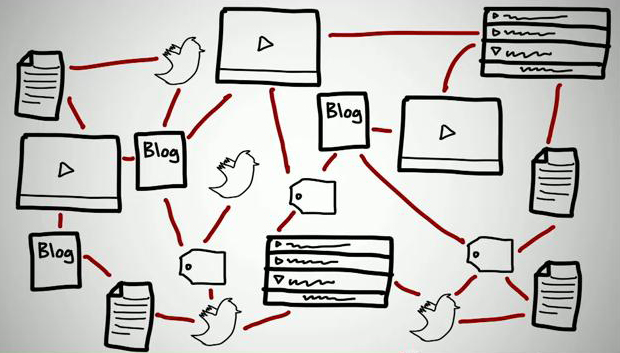 In recent years there has been a new player in the field of education. MOOC (massive open online courses) have taken the world (somewhat) by storm with various free courses from prestigious (and sometimes not so prestigious) universities and colleges. Here is a quick YouTube video describing the basic nuts and bolts of a MOOC, if you are thinking “What in the world is a MOOC?”
 Perhaps the best path forward for museums looking to make inroads in online learning is to create courses that can act as complementary to personal visits, but also provide more than enough information to be sufficient in their own right for those who cannot (for whatever reason) attend in person. Thanks to the Google Art Project and the expansion of the Khan Academy into art history, displaying works online is likely to become increasingly commonplace for museum and art galleries. Steven Zucker and Beth Harris, in their article explaining why the Google Art Project is important, report that other museums have started to make public domain images available for download – namely The Brooklyn Museum,, Metropolitan Museum of Art, and The National Gallery of Art. As a result, those who do not get involved may well be left behind.
 Linda Forshaw is a Business Information Systems graduate from Lancaster University in the UK. A contributor to Degree Jungle, she is a full time writer and blogger specializing in education, social media, and entrepreneurship. Contact her on Twitter @seelindaplay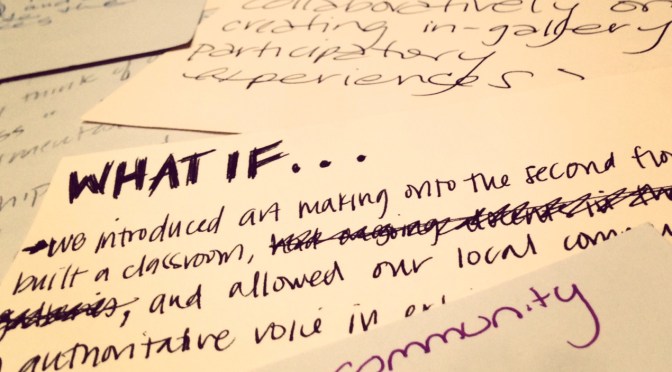
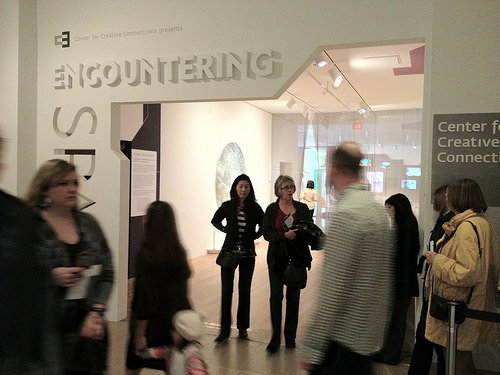
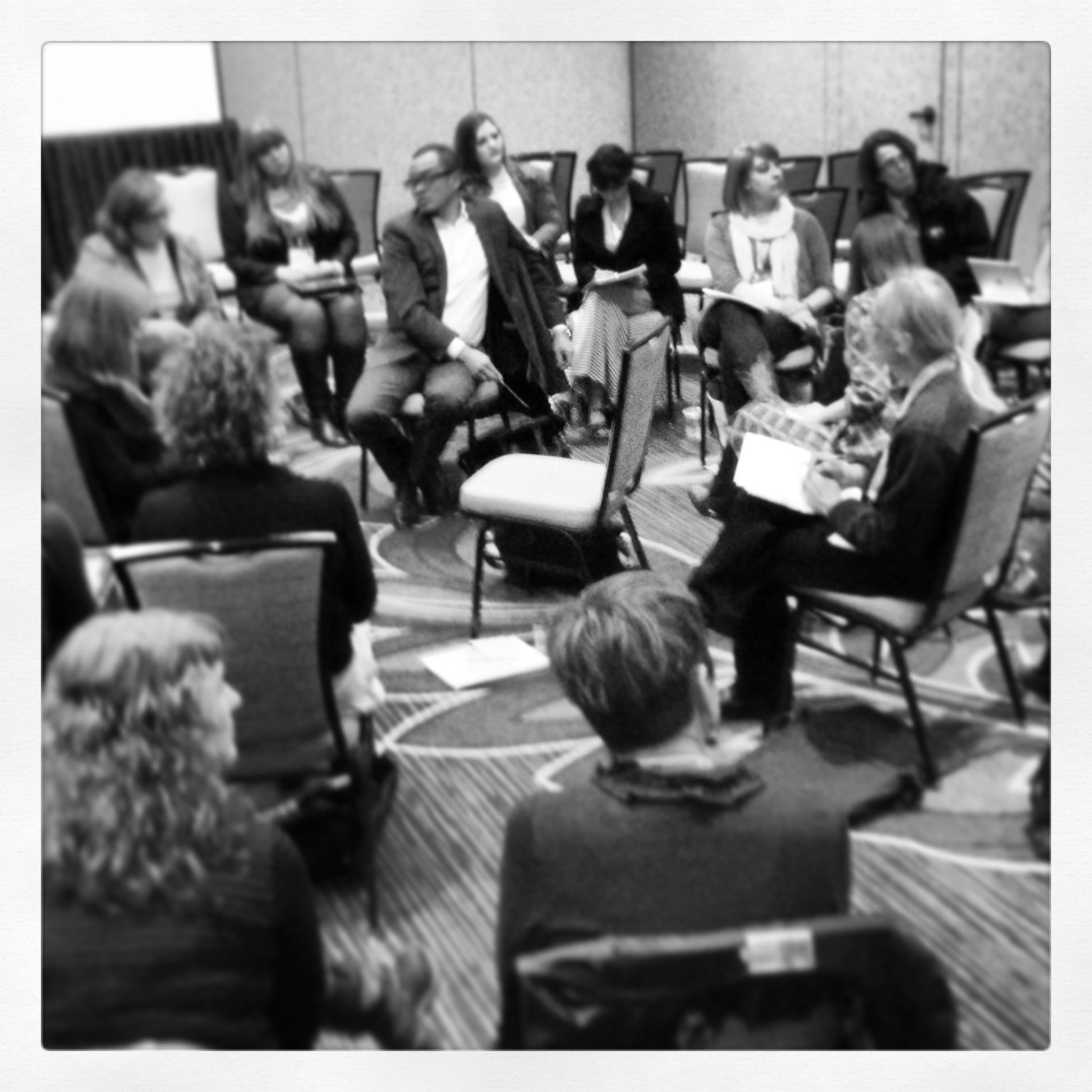

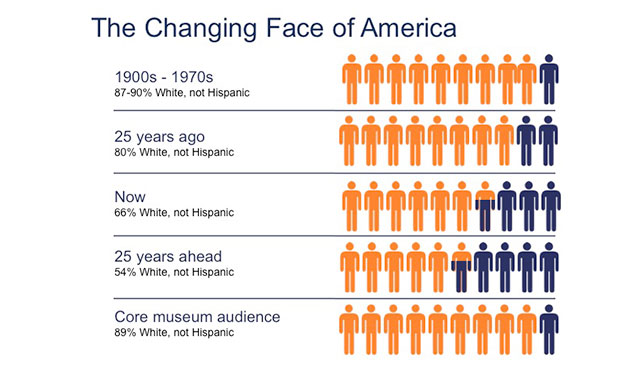
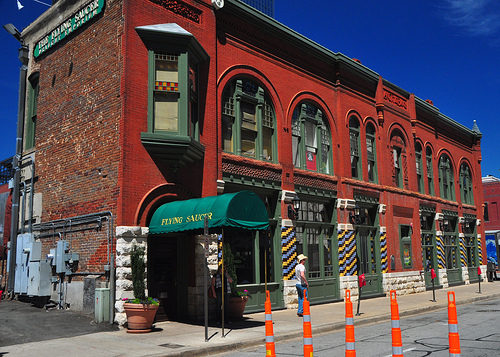


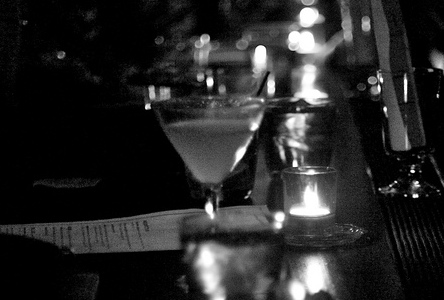
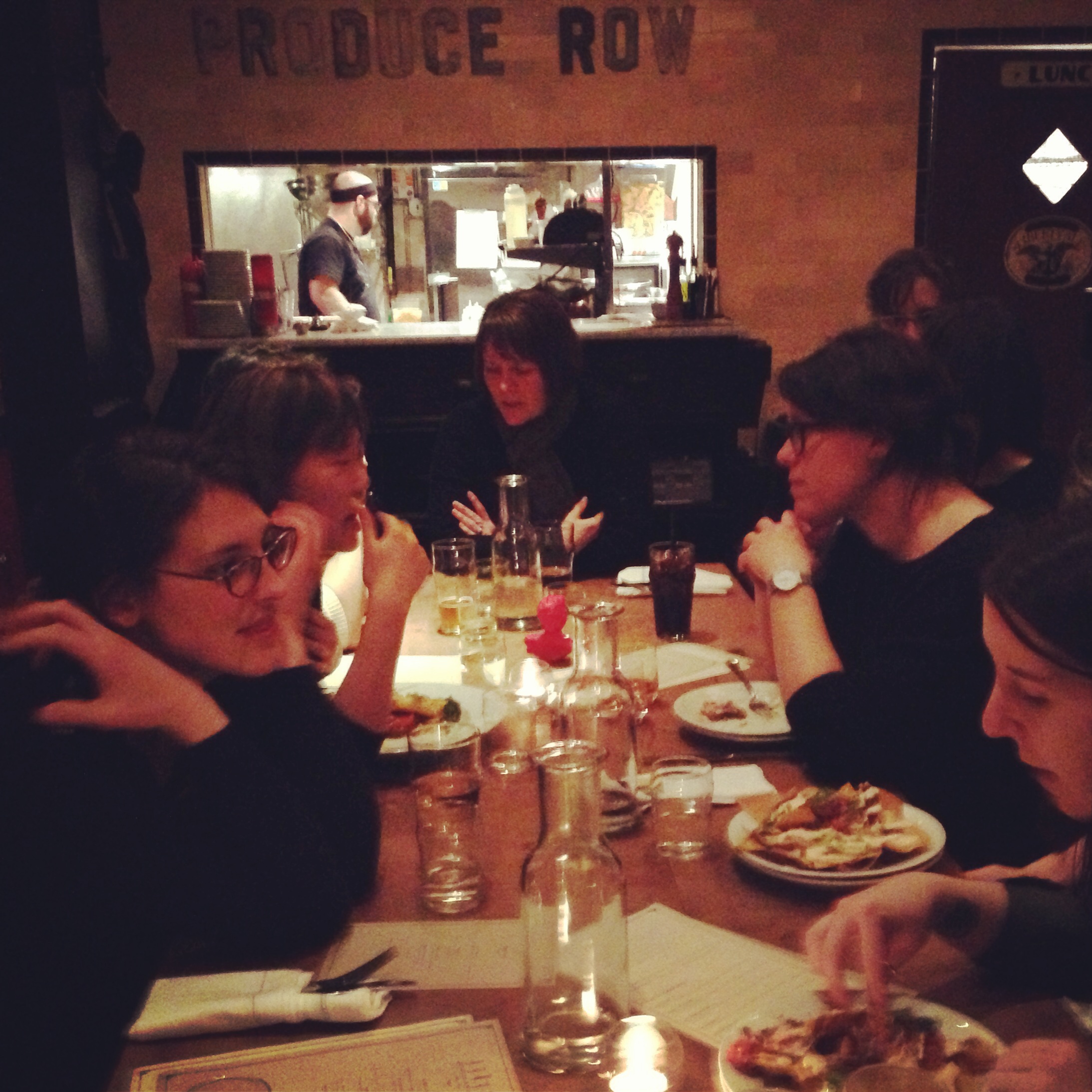
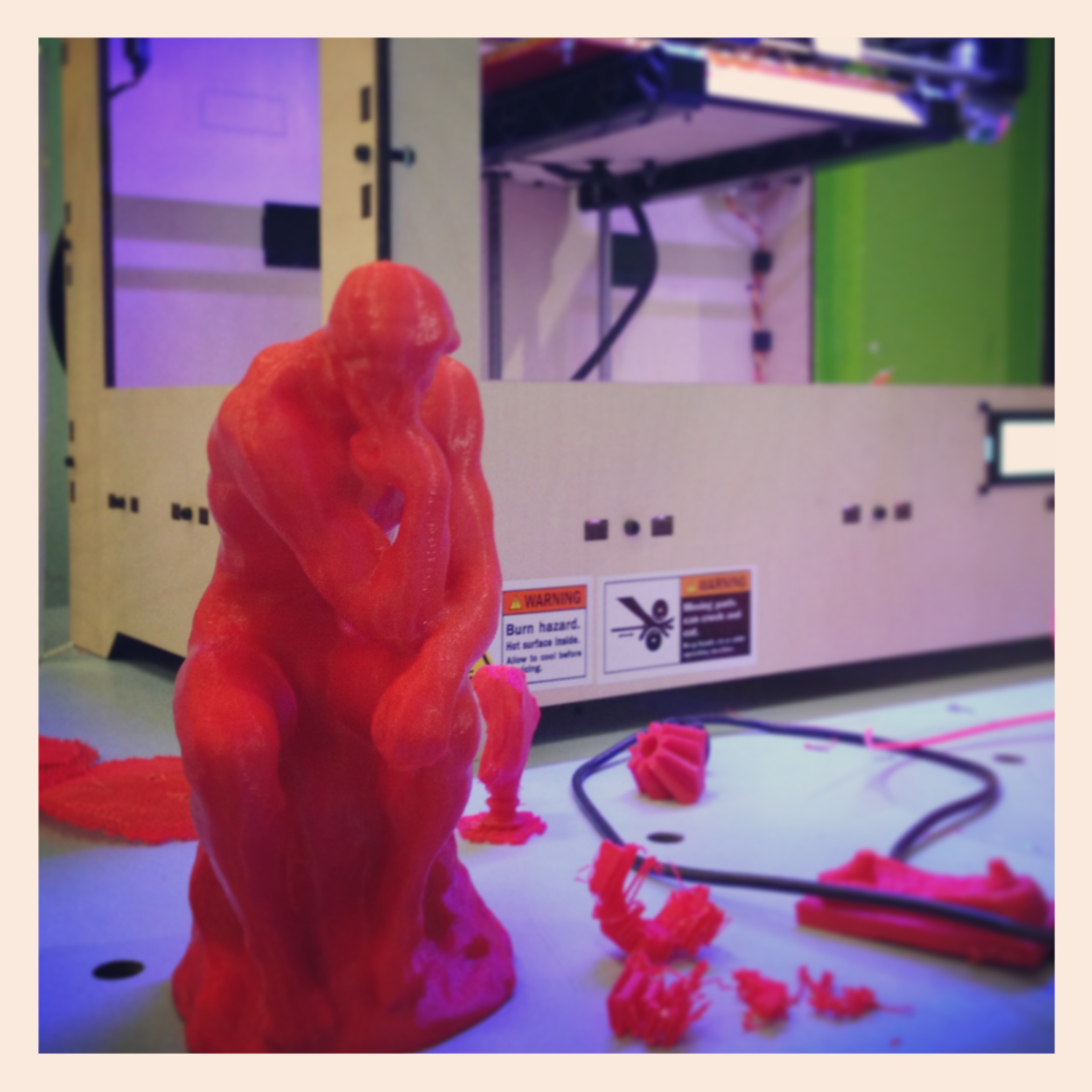
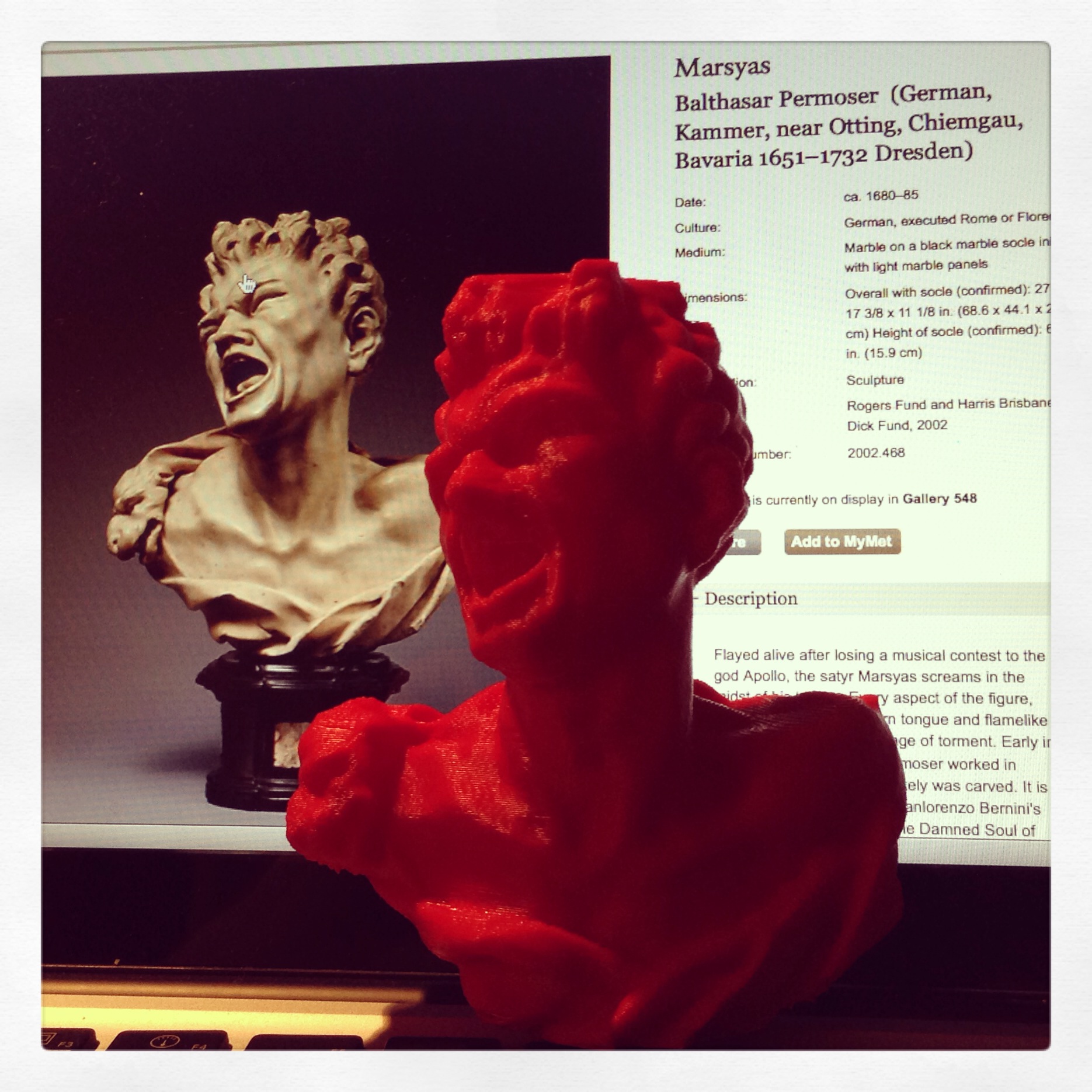

 As the first year of the ArtMuseumTeaching site wraps up, I thought it would be good to post a brief “Year in Review.” Not that we need any more end-of-the-year lists or calls for resolutions, but I think it can be meaningful to take a minute and look back at some of the issues that have been on our minds this past year. From the Getty staff reduction to a cantankerous teenager writing about museums, there have been a lot of sticky topics that we’ve discussed here on this site.
 1.
1.  2.
2.  3.
3.  4.
4.  5.
5. 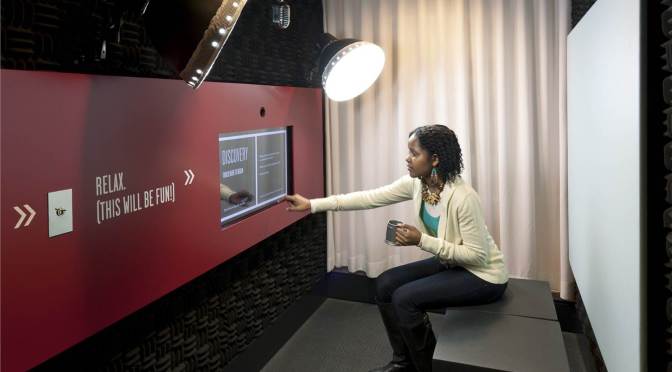
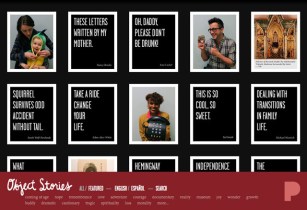


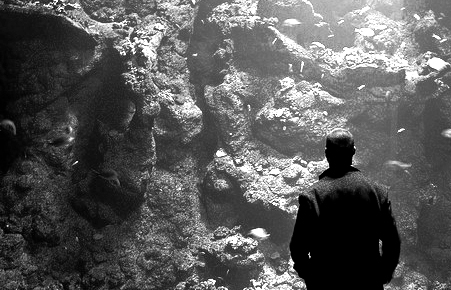
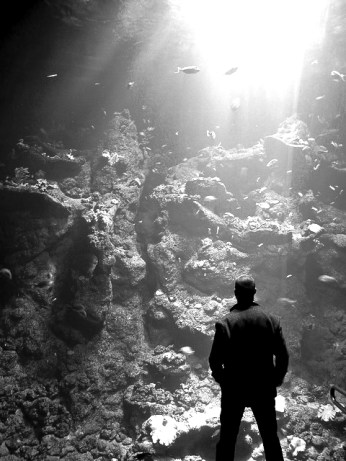


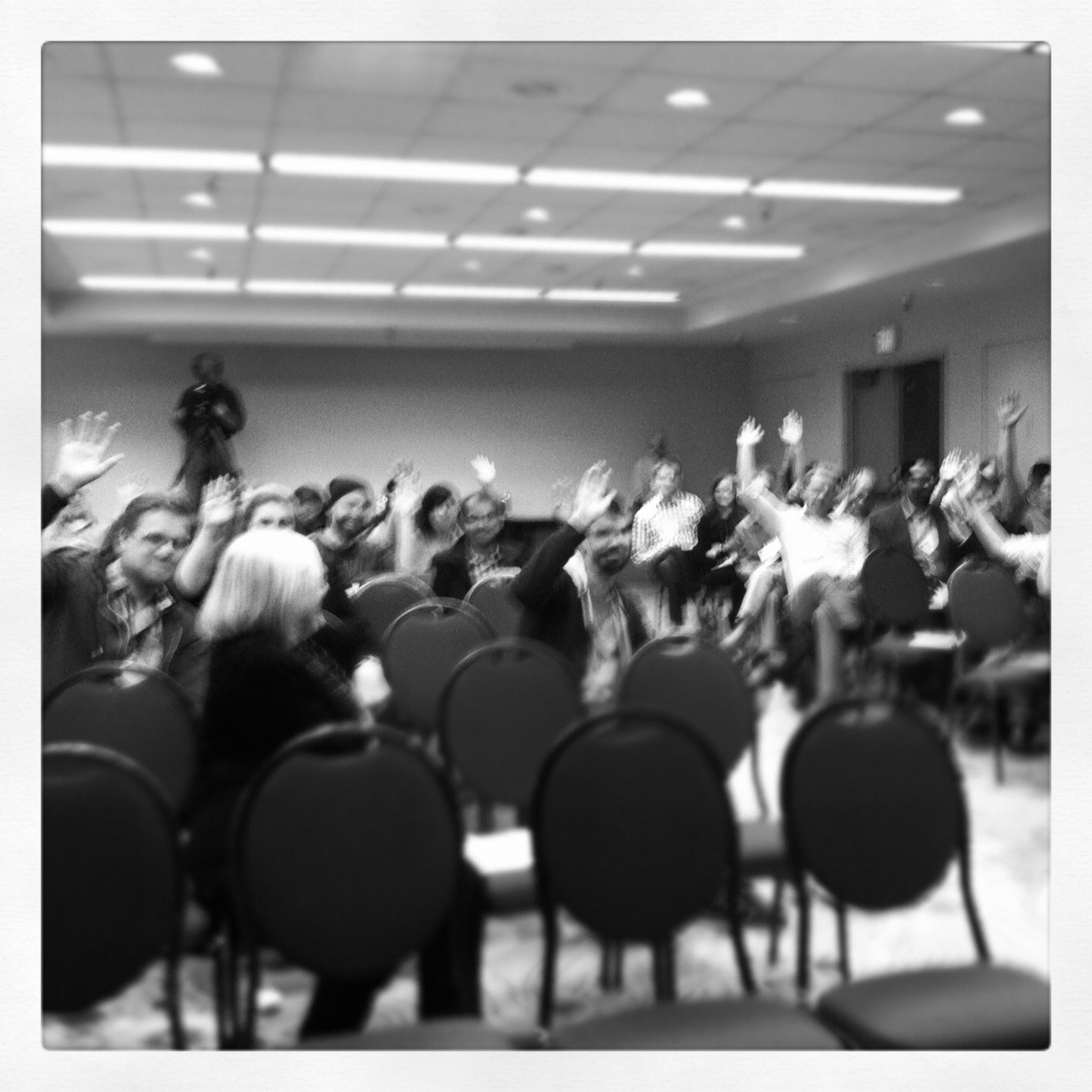

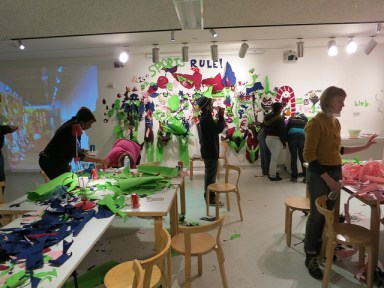

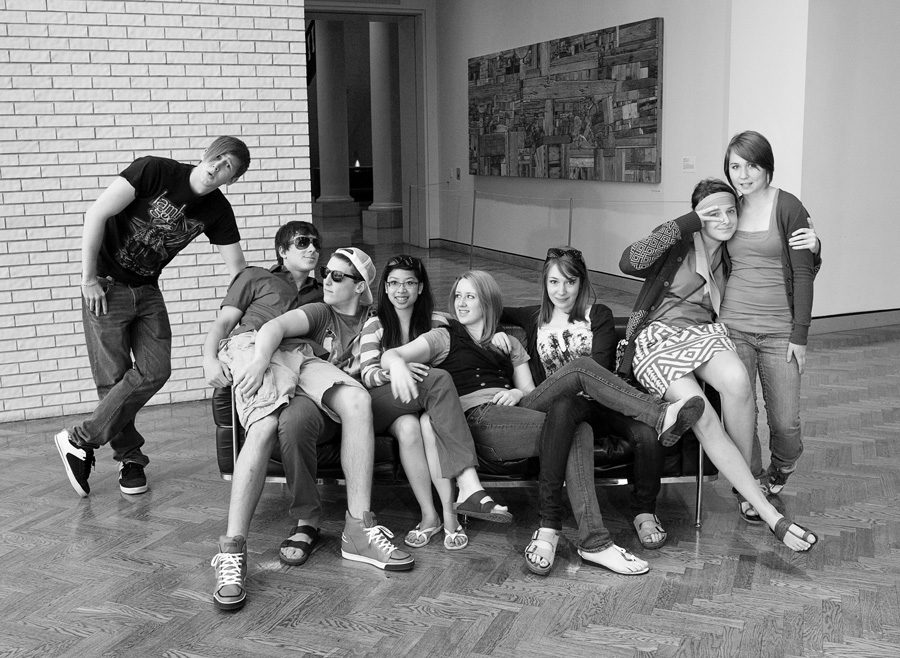
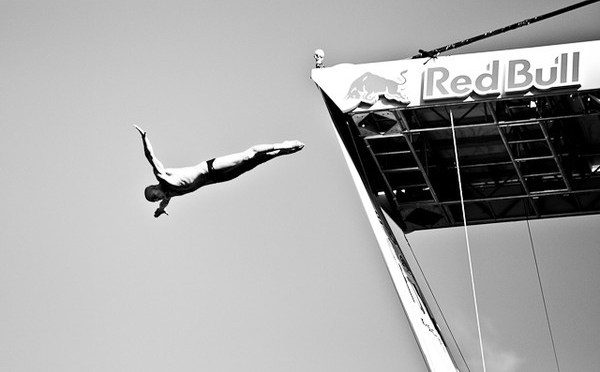
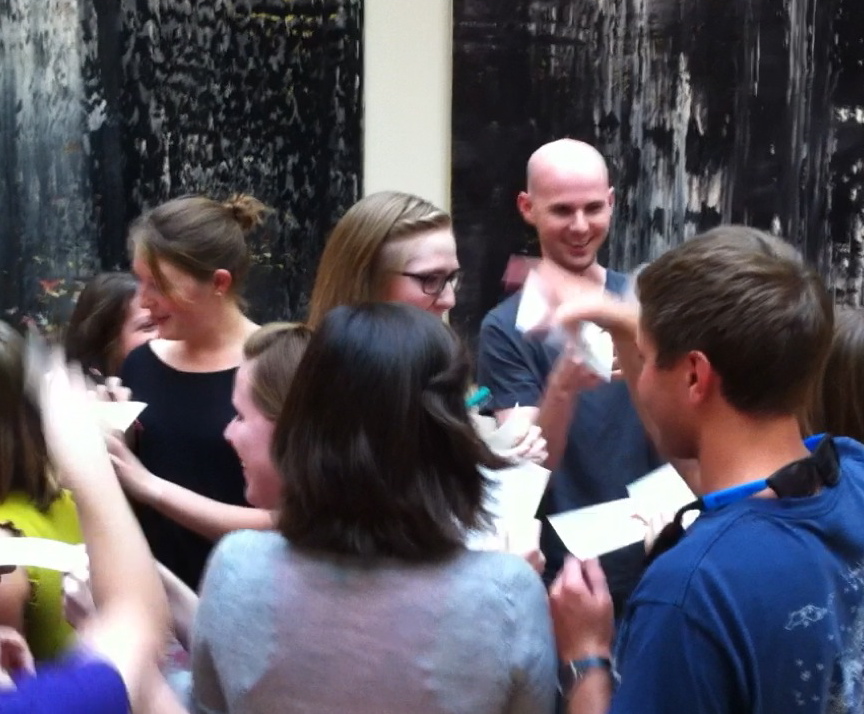
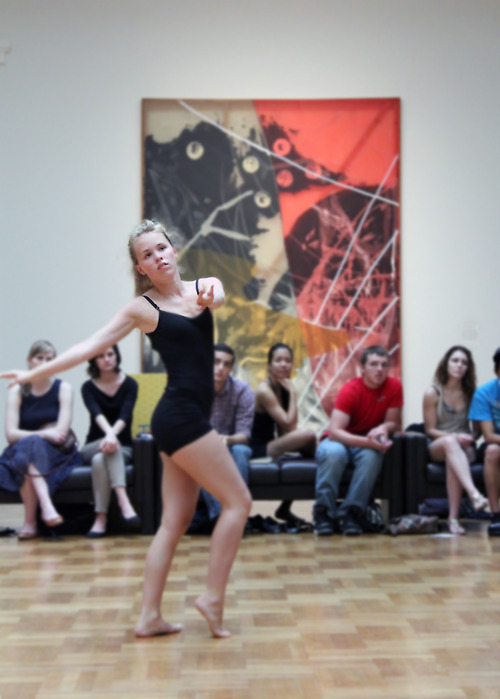
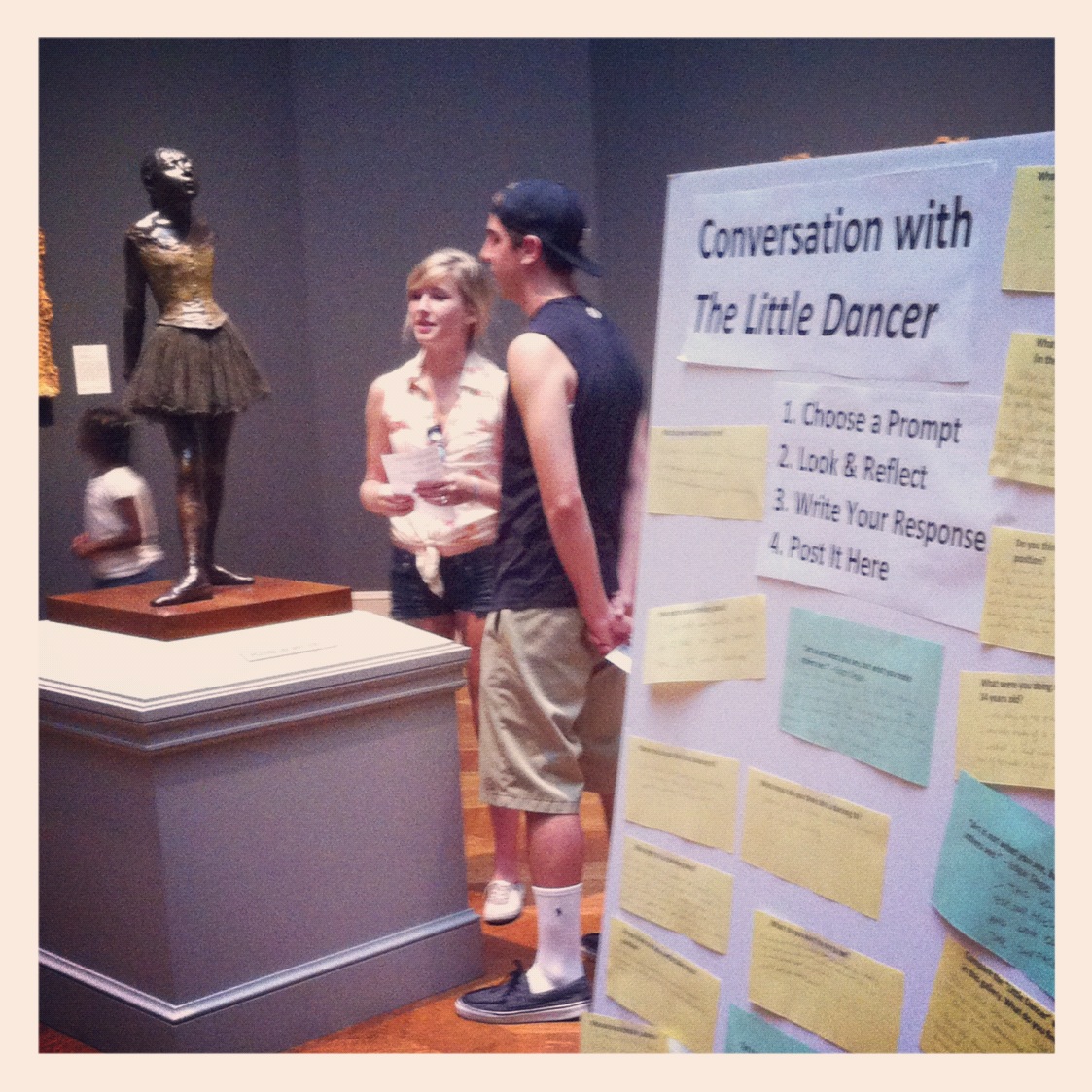
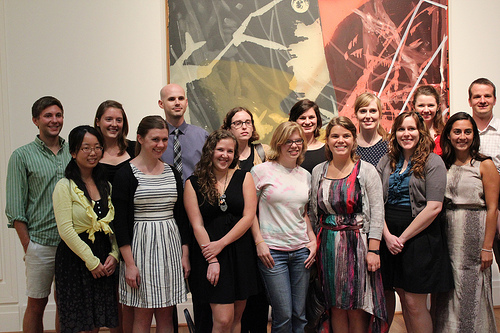


 Art Museum Teaching