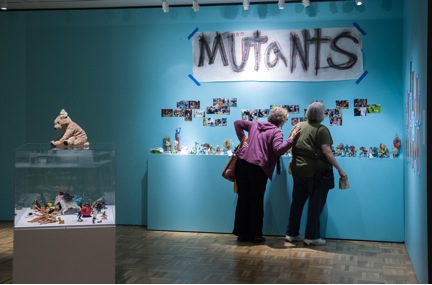
Category Archives: Experimenting in Museums

Design Thinking in Museums: Stepping into the “Continuum of Innovation”

How can I kick off design thinking in my own institution?
This is something I was asked by numerous colleagues after co-presenting a paper on design thinking and launching a new site, Design Thinking for Museums, at the 2013 Museums and the Web conference with Molly Wilson and Maryanna Rogers.

I talked a lot about implementing design thinking inside one’s own institution with attendees in the halls of the conference hotel and over a “Birds of a Feather” breakfast. And since returning from Portland, I’ve had numerous inquiries from colleagues at institutions around the world about how to get started with design thinking, a human-centered process for innovation.

Image from dt4e.org, Design Thinking for Educators

The museum profession is embracing new ways of problem solving, collaborating, and innovating like never before. And perhaps that’s why the concept of “design thinking” struck a chord at this year’s Museums and the Web conference.

Design thinking is mindset and a methodology for fostering creativity and solving complex problems with innovative solutions. It can transform the way a museum or cultural institution develops digital or analog offerings, visitor experiences, or visitor services by giving staff the analytical, creative, and intuitive techniques and tools to solve multifaceted problems. In the museum setting, design is usually used in the context of making objects, but design is also a process. Design thinking is a process for framing and solving problems and discovering new opportunities. It’s a powerful protocol that can lead to truly innovative outcomes.

There are many starting points and incremental steps along the way, but there is no single, definitive way to move through the design thinking process. As Tim Brown, CEO of IDEO, writes in “Change by Design” (2009), design thinking is a “continuum of innovation…a system of overlapping spaces rather than a sequence of orderly steps.”

To step into into this “continuum of innovation,” there are some strategies and approaches you can implement to kick-off the process and start infusing the design thinking ethos into your work culture. Some of these are more attitudinal, while others are tactical.

1) Get away from your desk and talk to visitors

visitors in galleries
A mother and daughter I interviewed in the SFMoMA galleries.

The power of talking to real users—from visitors to members to donors—can have a transformative impact on staff attitudes and insights. It sounds simple, but the mere act of moving from abstracted discussions about “the public” to interactions with real, live people is incredibly powerful. Spending as little as one hour a day over the course of three days interviewing visitors can lead to deeper, more nuanced understanding about the needs of visitors—and insights around how to meet those needs.

At the San Francisco Museum of Modern Art (SFMOMA), where I worked for over 10 years and introduced and championed design thinking, I led a team of colleagues through in-house trainings on how to interview museum visitors for empathy. The materials, including the slide deck for an in-house SFMOMA staff training and “cheat sheets” for conducting interviews on the museum floor, are all available on the Design Thinking for Museums.

2) Set time constraints

The temptation to work on projects until they are “perfect” is not uncommon in most organizations, and is especially endemic in art museums, where the notion of the precious, beautiful object has a longstanding precedent. Setting time limits, even artificial ones, lowers the stakes and expectations around tangible products.

For example, if you only spend one hour making a prototype, it’s hard to have the urge to cling to what you’ve designed and become overly attached to it. It’s much easier to change course and make adjustments. Bringing a scrappy prototype to a meeting or a user test frees a team from getting hung up on colors, fonts, and implementation details, and allows them to focus on the concepts.

The notion of time limits applies not only to the development of prototypes, but to all phases of the design thinking process itself. By setting time limits at every stage of the process, the team is forced to keep moving forward and not get mired in details and delays. In fact, the entire cycle can be experienced in 90 minutes, as modeled in a free, open, online “crash course” in design thinking created by the Stanford d.school.

3) Saturate your space

saturated work space
The SFMOMA web team workspace, covered with images of visitors in the galleries.

Saturating your space means filling your work environment with photographs, notes, and stories about the users you have observed and talked with. This makes their stories more genuine and compelling to internal stakeholders, and keeps you “accountable” and true to your users. Being constantly reminded of these real people with real needs through visual cues in one’s work space can inform your every decision.

It’s also a powerful “ice breaker” for getting skeptical colleagues on-board. When the wall outside my cubicle at SFMOMA was plastered with photographs and stories about SFMOMA visitors, I had queries from colleagues in almost every department. (I chose this particular wall because it’s very visible to anyone traveling between the conference room and the restrooms!)

4) Adopt an optimistic and collaborative approach

The design thinking ethos is one of openness, optimism, and collaboration. In many ways it’s similar to improv in that it’s biased towards action and focuses on building on each other’s ideas and opening up possibilities, trusting that the process will bear fruit even if the path is not always clear. In many museums it can be hard to remain upbeat as resources shrink and workloads increase, but this is a process that demands optimism and openness.

5) Find a buddy

This is probably the most important tactic for kicking off design thinking in one’s institution. Changing ways of working and thinking inside an organization is not easy, and it’s even harder to go it alone. Finding a colleague who is interested in trying—and failing—along with you can make all the difference. Ideally your buddy can be someone inside your own institution, but if that’s not possible, find someone at another institution with whom you can share stories and ideas.

For more resources and tips around implementing design thinking in your own institution, please see the website Design Thinking for Museums. And to learn more about how SFMOMA applied design thinking to a big challenge, please read the recent Museums and the Web paper, Design Thinking for Visitor Engagement: Tackling One Museum’s Big Challenge through Human-centered Design.

This article was adapted from a post originally published on www.designthinkingformuseums.net.

Google Hangouts: Live Video Chatting between Museums & Online Communities

By Brinker Ferguson, Digital Media Fellow, Fine Arts Museums of San Francisco

In the past several months, many museums have begun using live video chat as a way to enhance and foster new online discussions and interactions between museum educators and the public. One of the most popular tools has been Google Hangouts which is part of the Google+ social network. It allows for up to 10 users to video chat together and gives them the ability to broadcast the video stream live to a large audience and even record the session for future viewing. The recorded video, which is archived on the museum’s G+ page and YouTube channel, can be shared on various social networks. In addition, the videos collect (limited) analytics information so museums can track the attention it receives. Users who express interest in a museum video session ahead of time can be alerted when it is about to begin via Google+ email messaging.

This use of video chatting has spawned a new online forum that helps to bring together museum curators, directors, historians and educators with different virtual communities for in-depth conversations of art and ideas. Rather then a YouTube video, which disseminates information in a “I talk, you listen” format, video chatting can enable a more flexible and collaborative seminar style discussion. This idea of accessible online videos is very much in keeping with many museums’ mission of providing an open space for dialogue, learning, and exploration for the public, and working toward developing meaningful online communities of practice.

Current Projects

Though relatively new, there have been a large number of museums using Google Hangouts from all over the globe. This past month alone, MoMA debuted its “Art Hang” series, which brings together art educators with other art enthusiasts to discuss topics surrounding art and identity. The Google Art Project began its #ArtTalk hangouts with the National Gallery on March 20th and more recently with the Metropolitan Museum of Art. The series, which discusses the stories behind famous works of art, will continue to take place each month at different cultural institutions such as the Museo Nacional de Arte in Mexico and the Museum of Islamic Art in Qatar.

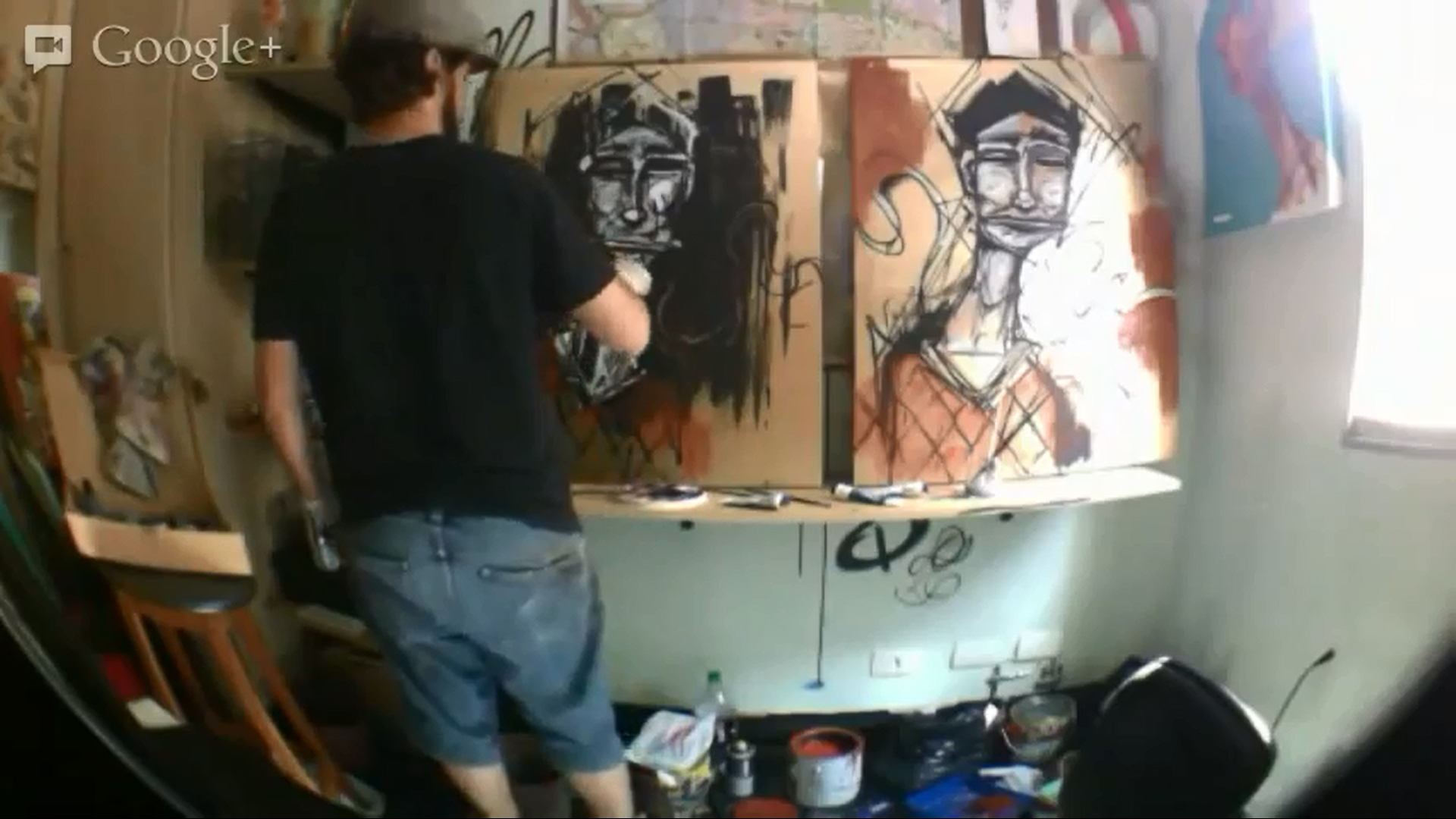
screenshot of Google Hangout of artist Felipe Iskor

Hangouts have also been leveraged in several other artistic ways. For example Google Brazil has used hangouts for their street art campaign, where artist Felipe Iskor created a mural live.

Likewise artists have conducted live studio visits, in which they talk with interested online groups about what inspires them, what their next artwork might look like, and get much needed critical feedback from online art communities.

Understanding Its Impact

Of course, use of a new medium brings new challenges. In trying to gauge the success of video chats, museums are learning how to interpret the relatively sparse analytics information provided by Google+ and YouTube. Statistics like “this video was viewed 5000 times” does not paint a full picture of just how beneficial the video was for the museum and its viewers. It is very clear, however, that hangouts have the ability to reach far greater percentage of the global online community and can do so in a more engaging way. And while it can be difficult to measure the success of these videos, museum educators know it is worth their time to continue exploring the limits of new this technology in order to captivate a broader audience and share more of the museum’s passion for art and cultural heritage.

Possible Uses in the Future

Tools associated with video chatting such as live commenting, image sharing, hash tags, and social media sharing have become additional ways of connecting online viewers with the live discussion. Recently, Mike Murawski of the Portland Art Museum brought up another possible use for video chatting. He suggested using Hangouts as a way of connecting living contemporary artists with museum visitors both in the gallery and online. What would it be like then to talk with an artist about his/her work right in front of the artwork in the gallery? Or watch an artist explaining his/her artwork online while you ask questions?

How can we use these new tools to better facilitate learning and interaction onsite and online in the future? Are there other ways that Google Hangouts or other chatting services will connect people, or perhaps help the museum’s visitors feel closer to its collection?

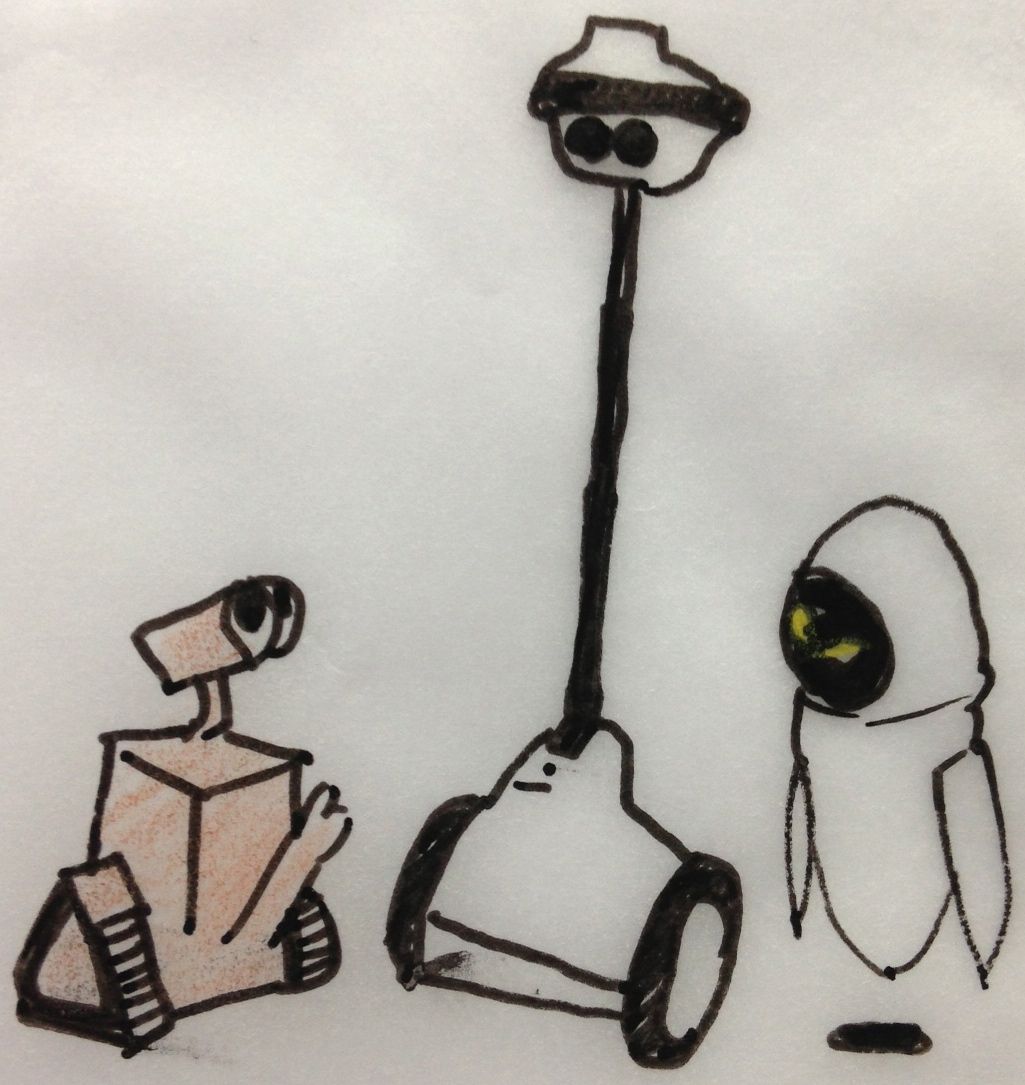
Anybots meets Wall-E and Eve.

Taking this question further in a mini-thought experiment, imagine what would happen if the video feed were not fixed to the wall. What would a more intimate conversation with an artist look like? While you ebb and flow around the gallery, could an artist virtually tag along with you?

One company exploring the idea of digital presence is Anybots, a team that has created a roving avatar robot with video screen projecting the face of a remote participant. The robot is controlled remotely and reacts to speech frequencies to directly address and react to questions or comments from multiple people. Right now, the Anybots are in the hypothetical realm (due to the hefty $15,000 price tag).

While video chatting environments will continue to develop (though at the moment we are not yet sure in what form they will appear) the strides taken by #ArtHang, Google Art Projects, and many other institutions and artist communities will continue to push online connection and conversation.

Blending Art, Technology, & Interpretation: Cleveland Museum of Art’s Gallery One & ArtLens

By Caroline Goeser

I am part of the team that has led the development of the Cleveland Museum of Art’s Gallery One and ArtLens iPad app. These new initiatives – blending art, technology, and interpretation – are garnering interest in the press and among museum colleagues. Many thanks to Mike Murawski for asking me to offer my perspective on the project, understanding that it is newly launched and we are in the process of gathering initial feedback. This project is the focus of a paper session at Museums & the Web 2013 in Portland (link to paper here). Responses so far have been enthusiastic as well as probing and have challenged us to think in new ways about what we’ve created and how we want to move forward. Recurring questions from reporters, colleagues, and visitors can serve as a way of introducing some of our goals and future ideas.

What was your plan behind integrating technology?

A view of Gallery One from the main lobby of the Cleveland Museum of Art. Photo courtesy of Local Projects.

Our plan conceives technology as an interpretive tool to drive active experiences with art at CMA. Creating Gallery One and the ArtLens app has been part of our mission to put visitors front and center. We wanted to build a gallery experience at the entrance to the museum that would welcome all visitors, with particular focus on families, college students, and young professionals – audiences that have not always seen CMA as their kind of place. We wanted to offer them new possibilities to experience art in a participatory way through the medium of interpretive technology. We also wanted visitors’ encounters in Gallery One to spark interest in the museum as a whole and to provide tools of understanding and enjoyment that could enhance their experience of art in the galleries.

On January 21, 2013, we opened Gallery One and went live with the ArtLens iPad app. Gallery One is a unique space just off the museum’s main lobby in which 55 top-quality art objects from the permanent collection are arranged in thematic groupings that cross time and cultures. This organization allows visitors to make connections across CMA’s comprehensive collection of world art. For example, sculptures of the human form from ancient Rome, Japan, Africa, and 19th-century France greet visitors as they enter the gallery, prompting them to experience how our bodies have inspired art differently over time. Another installation groups paintings and ceramics from Europe and Asia, asking visitors to engage with roots of our contemporary, global culture. Interactive, multi-touch screens interpret selected art installations, allowing visitors to engage actively with the works on view by virtually creating their own works of art, or by physically striking a pose inspired by a work of art they see. Gallery One also includes Studio Play, a dedicated family space with hands-on art-making activities, as well as interactive technology stations that provide young children and their families with fun ways to have first encounters with art and CMA’s collections.

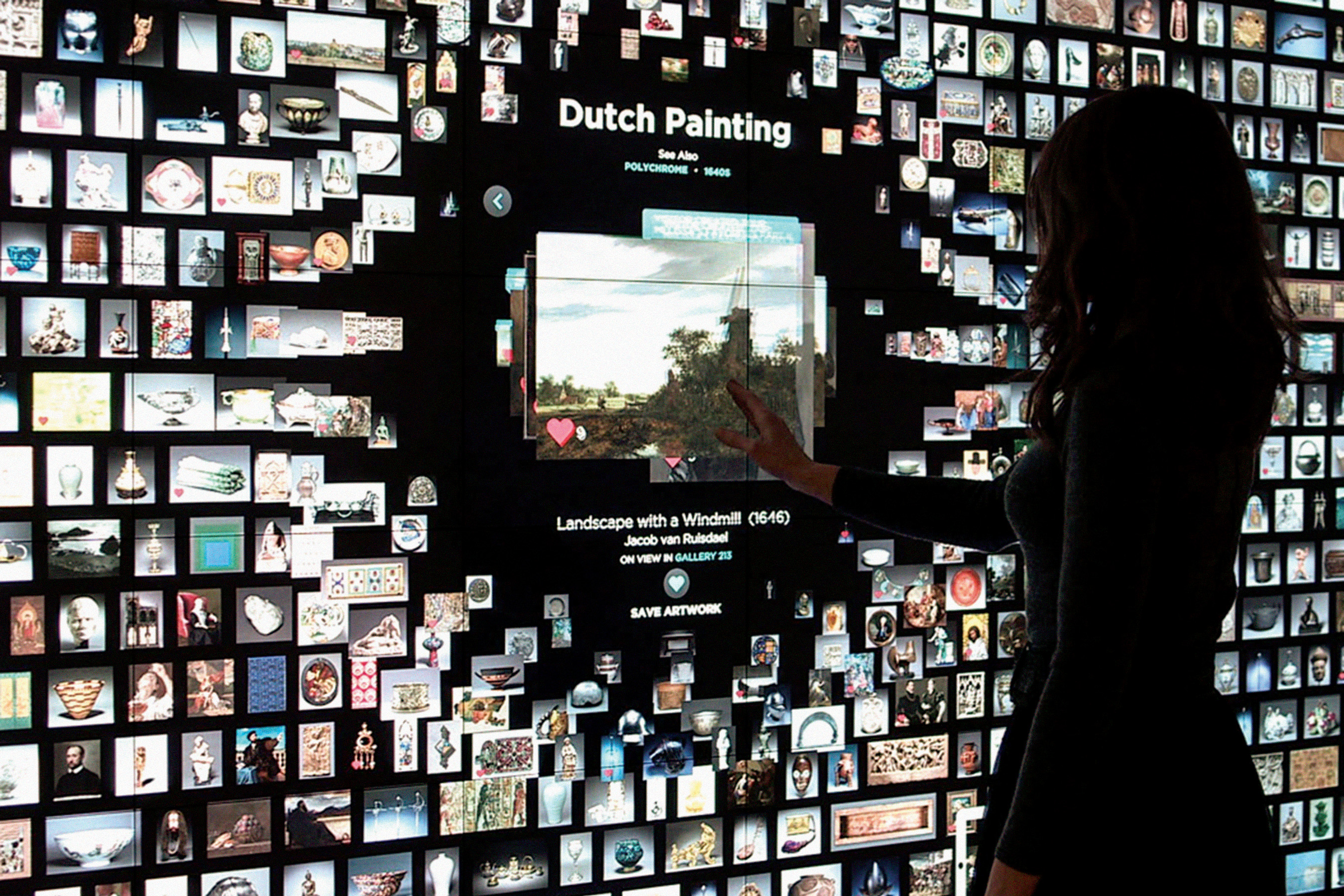
A detail of the Collection Wall in Gallery One. Photo courtesy of Local Projects.

Within Gallery One, just off our new central atrium, a one-of-a-kind, 40-foot multi-touch Collection Wall displays high-resolution images of almost 4,000 works of art from the permanent collection, most on view in the galleries. Every 40 seconds, the wall changes views, showing groupings of art objects based on themes, allowing visitors to see that the collection is dynamic, depending on how you view it. Visitors can touch and browse objects on the Collection Wall to discover other artworks that are related and to find tours that connect objects throughout the collection.

The Collection Wall functions as a place to organize a visit through the permanent collection galleries by way of a unique connection with the ArtLens iPad app. By docking their iPad (or one available for rent) at the Wall, visitors can save their favorite objects to the app and create a personalized tour through the museum. The app’s way finding system directs them to the objects on their tour or to other objects in the collection. They can also find CMA-created tours to organize their visit according to themes they like. Alternatively, they can browse through the galleries and find works of art that engage them, discovering text and video interpretation within the app, or even scanning two-dimensional objects through image recognition to find quick bites of text or video.

What are your learning goals for visitors?

Our goals for what visitors take away involve experience rather than content. We hope that:

  1. visitors have fun with art
  2. the interactive games and interpretation provide tools for understanding and spark social experiences with art
  3. visitors find transformative moments of discovery about continuing creative traditions that make art relevant for them.

Above all, we want to refrain from providing a single, authoritarian guide but instead to offer a variety of choices for visitor engagement. Rather than designing content to meet our own goals for visitors, we have learned from our audience evaluation and responded to the way many of our visitors browse through our galleries, drawn to particular works of art based on their own visual interests and prior knowledge. We’ve been mindful of Jay Rounds’ prescient advice in Curator (2006):

“Visitors come to museums for their own reasons, and those reasons are not necessarily congruent with the goals of the museum. No doubt their browsing through exhibits is suboptimal when compared against [a] museum’s goal that visitors ‘engage in systematic study or exploration.’ But the same [browsing] behavior may prove to be an intelligent response to the situation when measured against the goals of the visitors themselves.” (p. 134)

Sculpture installation in Gallery One. Photo courtesy of Local Projects.

Gallery One and ArtLens were designed to honor browsing behavior. There’s no preferred path through Gallery One; visitors can move from one art installation to another, each with its own story. The Collection Wall asks visitors to browse rather than search: to find artworks they like visually, and to discover connections to related works by theme, medium, or time period. The “Near You Now” section of the ArtLens app follows browsers as they meander through the permanent collection galleries, indicating where they are in the building and the artworks near them. For objects with video interpretation, visitors can find a variety of short segments that they can choose according to their personal preferences rather than a prescribed sequence.

When visitor evaluation begins later this spring, we can find out how these tools are working for our visitors. In the meantime, we’ve been fortunate to have visits from a variety of museum colleagues who have shared initial responses. Following his on-site visit, Peter Samis of SFMoMA wrote to our CMA team:

“The Collection Wall reminds me of David Weinberger’s Everything Is Miscellaneous (2008): it makes every artwork equally available, democratizing the collection…, it enables me to create a tour that threads me like a needle through all the various parts of the building. It disappears the architecture, the molecules, and replaces them with a new organizing principle: visual interest.”

Cool! Interpretive technology serves visitors’ visual interests and democratizes the collection. The challenge comes in the connectivity between the Collection Wall and the iPad app. With the ability to save almost any object to their iPad, what will visitors expect when they reach the actual objects in the galleries? Currently only a portion have video and audio interpretation within the app, some draw web texts and label copy from our databases, but others feature only basic “tombstone” information. We’re eager to discover visitors’ expectations, and in the meantime, to develop priorities for creating new interpretive content.

How can visitors contribute their own art interpretation within the iPad app?

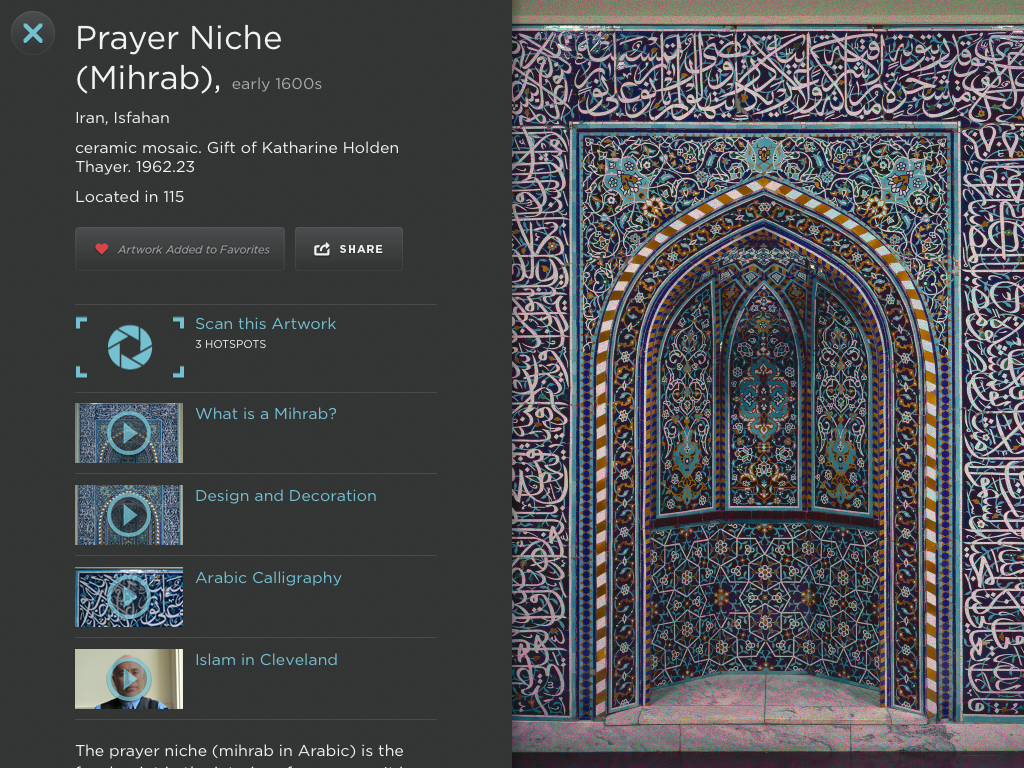
ArtLens video and audio content draws on conversations with curators, educators, conservators, and community members. We hope the variety of voices allows visitors to feel part of the conversation and to suggest that there is no single way to interpret or enjoy a work of art. The community voices are particularly important, as they call up continuing traditions that grow from the artworks on view and connect visitors with people in their community – like the Imam of the Cleveland Mosque for whom the Islamic prayer niche in our collection is part of a living tradition, or the Cleveland ballet dancer who brings his creative perspective to Degas’ Frieze of Dancers.

: Object page for CMA’s Prayer Niche (Mihrab) in ArtLens. Photo courtesy of the Cleveland Museum of Art.

ArtLens also allows visitors to create their own tours – playlists of their favorite objects with their own catchy titles: “Randomness and Variety,” and “Lightning Tour Before Dinner Dash.” They can share favorite objects through Facebook and Twitter. We conceived these as first steps toward more extensive visitor participation. We’ve discussed the potential for gathering visitors’ stories about CMA’s artworks and incorporating them into the app. We’ve also dreamed about the potential to capture visitors’ voices within the app, so that they can contribute their own insights about their favorite works of art from the galleries or from off site.

We encourage you to download ArtLens to your iPad and give us your feedback. Our project is ambitious – an interpretive system that reaches throughout CMA’s permanent collection. I’ve outlined some of our ideas and plans here, but there’s much more to come, so stay tuned!

I want to extend huge thanks to the members of my CMA team in Education and Interpretation responsible for the development of interpretive content in Gallery One: Seema Rao, Patty Edmonson, and Hajnal Eppely, and in ArtLens: Jennifer Foley, Lori Wienke, and Bethany Corriveau. They are part of CMA’s Gallery One development team, led by Griffith Mann in Curatorial, Jane Alexander in Information Technology, Jeffrey Strean in Design, and myself. Local Projects of New York is responsible for all media design and collaborated with us on the concept development. Earprint Productions of San Francisco produced the ArtLens app digital content, in collaboration with the CMA interpretation team.

ABOUT AUTHOR

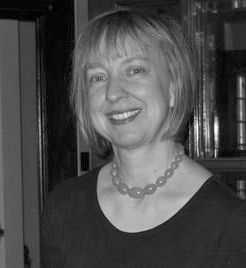
image005CAROLINE GOESER currently serves as the Director of the Department of Education and Interpretation at the Cleveland Museum of Art. Joining the museum in 2009, she reorganized the Education Department in 2012 to focus on two primary goals: 1) invigorating classroom experiences through object-based educational programs, and 2) creating vital experiences with works of art in the galleries through interpretive text, technology, gallery teaching, and public programming for visitors of all ages. Caroline collaborates with the Chief Curator and Directors of Information Technology and Design to oversee the new Gallery One, an interactive gallery for intergenerational visitors. She has facilitated and enhanced the museum’s collaborative interpretation program, which has garnered national recognition with the recent award of an NEH Challenge Grant. With colleagues at CMA and Case Western Reserve University, she has worked to re-envision the joint CWRU-CMA doctoral program in art history, which recently received a major grant from the Mellon Foundation to focus on object-based study. Caroline’s postings on this site are her own and don’t necessarily represent the Cleveland Museum of Art’s positions, strategies, or opinions.

Toward an Even More Participatory Culture in Art Museums

“The value of museums begins and ends with the relationship with our visitors. It’s a contract that is renewed each and every time they engage with us, and if we don’t live up to it, we will be usurped.” — John Falk, speech to AAM (2010)

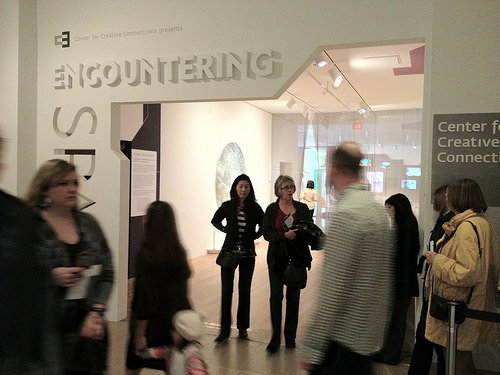
Encountering Space, Center for Creative Connections at the Dallas Museum of Art. Photo by Maria Mortati

Working in museums can be a messy, messy game, but I always love the conversations that crop up when you get a handful of museum educators together to talk ‘shop.’  A couple weeks ago at the National Art Education Association 2013 annual conference in Fort Worth, there was certainly a lot of that happening. I was fortunate enough to be invited to present — or rather have a public in-process conversation — about participatory culture in art museums with an incredible group of colleagues: Preston Bautista (Deputy Director for Public Programs & Audience Engagement, Indianapolis Museum of Art), Judy Koke (Director of Education & Interpretive Programs, Nelson-Atkins Museum of Art), and Susan Diachisin (Director of the Center for Creative Connections, Dallas Museum of Art).  By far, the best part of preparing our presentation was the series of winding, organic conversations that led to Fort Worth.

Not only were we all wildly passionate about visitor engagement and participatory practice, but our own working environments were all changing rapidly — from my own move from St. Louis to the Portland Art Museum this past fall, to leadership changes and various grants & innovation projects.  All in all, we were fairly hyper-motivated to talk about these issues with each other and, ultimately, to explore concepts of participation and exchange in our institutional cultures.

How does an institution’s hierarchy, leadership, and organizational structure actually enable (or disable) participatory practice? How could museum educators at various levels become more involved in fostering an institutional culture focused on visitor experience and engagement?  Could these values find ways of ‘trickling up’ from participatory programs and smaller-scale education projects or exhibitions?

“If … museums must move away from assumed public value and begin to measure their impact, and if … museums must achieve impact for the community instead of impact for the museum, then the impetus is on museum education to rise to the challenge that lies before us and reposition the museum in the eyes of the public.” — Tina Nolan, JME (2010)

As we entered our NAEA session entitled “Toward an Even More Participatory Culture in Art Museums,” we had decided on a set of assumptions that were key to making this a valuable and productive conversation:

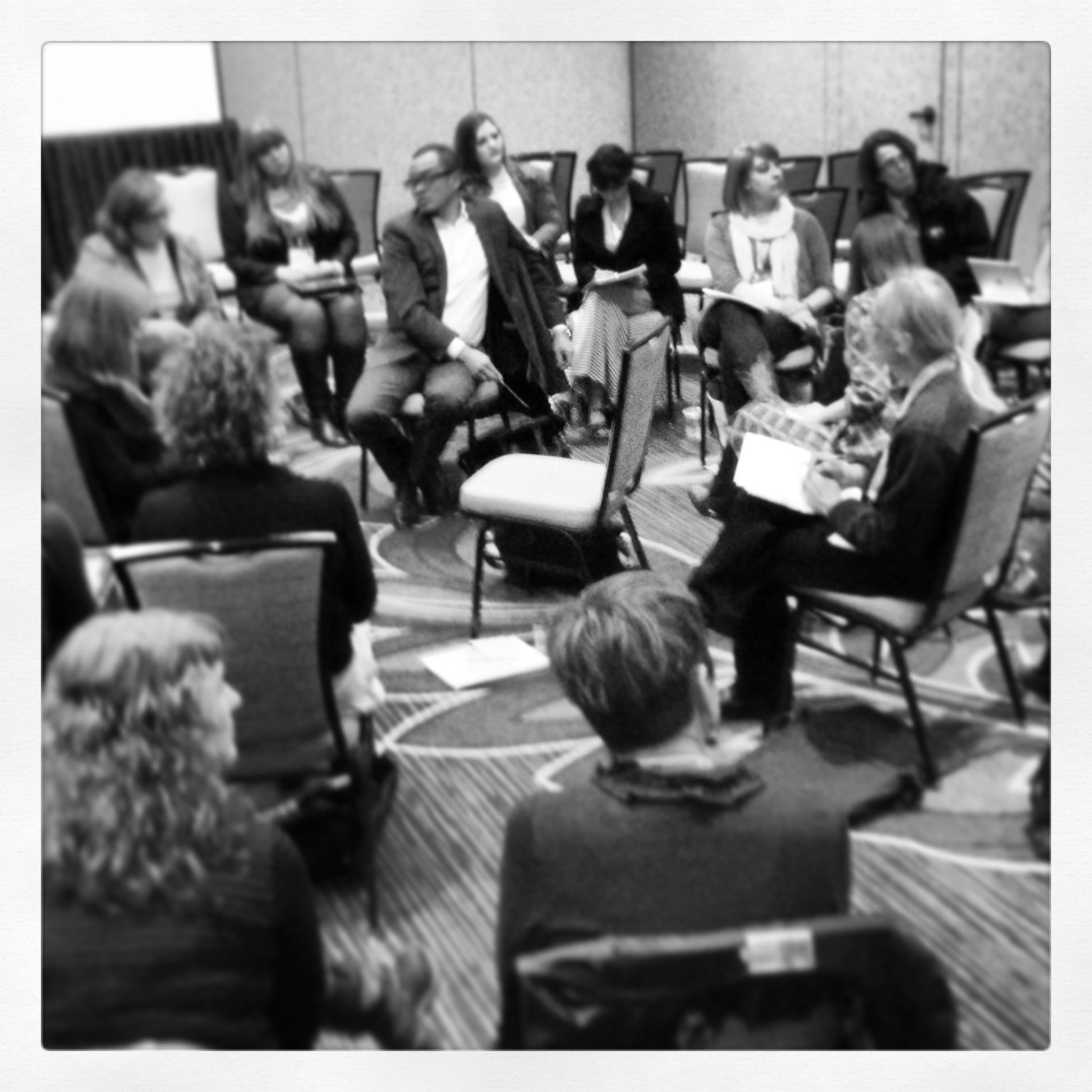
  • conversation at our sessiomn (yes, we exploded the traditional conference furniture layout)
    conversation at our session (yes, we exploded the traditional conference furniture layout)

    There is a shift happening.  Art museums across the continent are taking big steps to change the ‘business as usual’ model, creating structures to put the public’s expectations, needs, and experiences at the center of interpretive planning and exhibition development. We can see this in institutions such as the Detroit Institute of Arts (see great article by their Exec Dir of Learning & Interpretation), Art Gallery of Ontario, Denver Art Museum, Indianapolis Museum of Art, Nelson-Atkins Museum of Art, and the Philadelphia Museum of Art, among many others. In the specific realm of ‘participation’ and public engagement, it is always important to note the Irvine Foundation’s support for institutions such as the Oakland Museum, as well as museum “Innovation Stories” featured via EmcArts & ArtsFwd.  If you still need convincing that change is afoot, watch this video compiled by the Innovatrium at their January 2013 ‘think tank’ of museum leaders.

  • We’re all in this together. Instead of anyone pretending to be an ‘expert’ about these changes in organizational culture, we wanted to be conscious of the fact that we are all co-learning with each other.  It doesn’t matter the size of one’s museum or how involved your senior leadership is in this shifting landscape — we’re all working toward the greater public value and relevance of museums in our communities and beyond. And this needs to be an open, inclusive conversation if it is to be meaningful one.
  • You can’t talk about participatory practice without becoming participatory.  I always feel like every lecture on “visitor engagement” and “participatory practice” is, in part, quite disingenuous if it does not attempt to actually ENGAGE.  Even if an attempt to activate a lecture hall full of 200 spectators fails, I always feel that we should try — walk the walk, right?!  So I was able to convince our group to do a crowdsourcing activity to engage those attending our session, and pull out their ideas in a participatory way.

“For a museum to truly engage its users, it must cease acting as a controlling gatekeeper to its collections and expertise. Rather, the museum must work with its users and communities to unlock the stories its collections hold, responding to the choices its users make. As such, it must give up its traditional authoritarian voice so that users are free to question, debate, collaborate, and speculate — seeking out those issues that most concern them — and are given the support and inspiration required to do so.”  — Graham Black, Transforming Museums in the Twenty-First Century (2012)

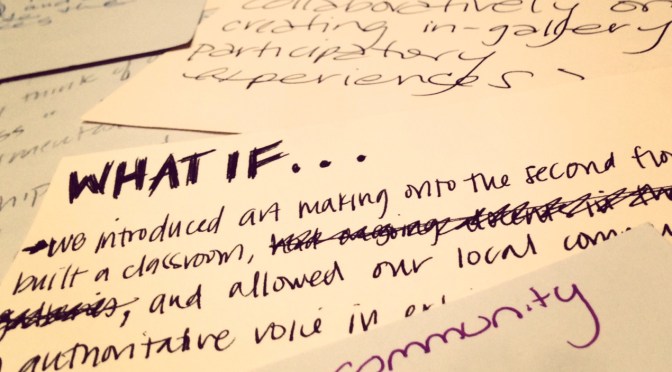
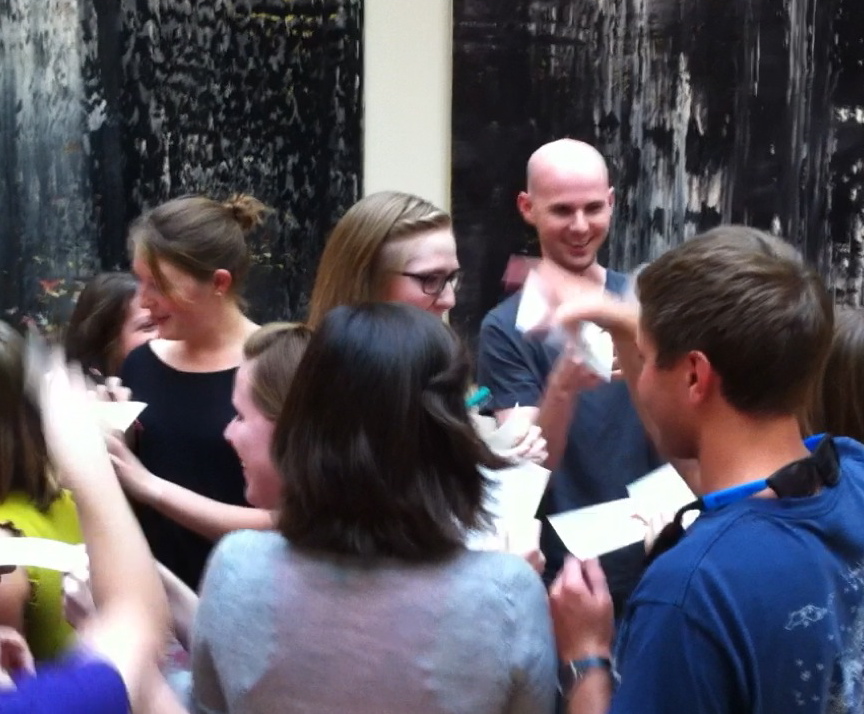
After our initial discussion and framing of these issues, we jumped right into the crowdsourcing exercise to activate everyone’s thinking and to have the group generate ideas. To prevent this conversation from quickly deteriorating into a litany of complaints, barriers, and reasons why we might not be able to enact change at our institutions, we granted everyone in the room freedom from all of these restraints … with a magic wand.  Therefore, without concern about budget cuts, personality conflicts, and perceived curatorial barriers, we invited each participant to take two or three minutes, envision some ways to engender a more participatory culture at their institutions, and then write down a “what if” statement on a small slip of paper.  We collected more than 50 “what if” statements, crowdsourced them with the group, and then spent the final chunk of time opening up a conversation around these ideas.  Here are the 4 statements that, at this moment and with this group, bubbled to the surface:

  1. What if everyone in the museum understood everyone else’s job?

  2. What if there was a real plan for interpretive team development of exhibitions and permanent collections? What if curators and educators didn’t feel like they were ceding territory when they worked together?

  3. What if educators/interpreters and curators worked collaboratively on creating in-gallery participatory experiences?

  4. What if I could include funds for “things I may think of after the budget process” [an “innovation” fund] when I’m writing my department budget?

sampling of the 50+ "what if" statements that participants brainstrormed for crowdsourcing
sampling of the 50+ “what if” statements that participants brainstrormed for crowdsourcing

Rather than recount the conversation or provide my own opinions, thoughts, and perspectives here, I wanted to take this opportunity to open the conversation … to OpenThink the “what if” statements we collected during our NAEA session.  So below is a link to all of the “what if” statements that we were able to collect, in no particular order. Feel free to peruse, and add Comments to the GoogleDoc if you choose.

>>Click here to see ALL of the “What If” statements<<

I invite you to share these with colleagues, send this to others at your museums (yes, curators, too!), and let’s create a conversation in the GoogleDoc or below in the Comment area.  Do you have a “What If” statement that you would like to add?  Are these concerns about exhibition planning, community involvement, and staff development similar at your institution, or different? How can we engender more participatory practice/culture in our work? in our institutions?


What Do You Customize? OMCA’s we/customize project

The we/customize project at Oakland Museum of California explores the Bay Area perspective on the popular cultural activities of hacking, remixing, tailoring, modding, mash-ups, kit bashing, and customizing. The connecting spark in each of these spheres of activity is the shared impulse of the maker to radically alter the familiar to personal standards.

we/customize was born of a conversation about custom motorcycles, and grew into something akin to adulthood as the consequence of friendship and collaboration.

As non-participants in this part of our culture, Carin Adams­ (Associate Curator of Art and Material Culture) and I (as the Research and Experience Coordinator) were trying to find the kernels of interest connecting us to choppers. This lead us to observe how people form communities focused on the radical alteration of objects, how these groups self select themselves, and develop identity by means of their chosen activities. To round out the team and help us think about connecting disparate groups, Carin and I asked Evelyn Orantes (Senior Experience Developer) to join us to create our curatorial trio.

To create an exhibition around the activity of customization and the associated communities, we set out to develop the project differently than through the traditional museum approach. Our goal wasn’t to create a new working model for museum exhibitions, nor would we necessarily recommend the particular path we took. We wanted to have fun putting the project together while finding a means to exhibit the content we felt was the most exciting. This subject matter lent itself to be sifted out of conversations and by building relationships with these communities. Our process of content development, did however, reinforce the changing role of the museum as a forum for living cultural activity.

To build the exhibition in conversation with audiences – we made our initial public foray on two fronts. First by going out into the public at Oakland Art Murmur and asking people on video – “What do you customize?” The second, we hosted a panel discussion at OMCA, with Johnny Chung Lee, Jesse Hernandez, and Daniela Rosner about their work and views on customization. These conversations became the basis for how we framed our research, and the public interviews remain part of the content.

To further the dialog, we began with our interviews and panel discussion, we decided to continue going out into the public to build the content for the exhibition. This decision either allowed or forced us to divide the public side of the project into three main phases.

PHASE I: September 26–December 22, 2012

Photo by Ryan LeBlanc

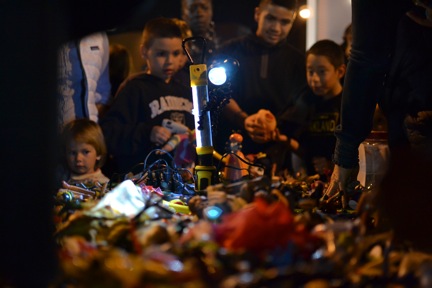
Using the Oakland Rover—a Might-E Truck by Canadian Electric Vehicle, customized by designers Martin Sprouse and Dan Rosenfeld for Oakland Museum of California, we traveled throughout the Bay Area engaging communities in creative projects that explored how people modify objects to serve their own needs. From toy hacking to airbrushing, sound remixing and bike modification— Oakland Rover programs led to rich interactions with the public, who contributed their projects and ideas. These “missions” featured customizers who brought the public a variety of workshops, demonstrations, and participation in the conversation about customization.

The first phase of our project also saw the launch of our social media campaign to continue our conversations with the public online with our blog (wecustomize.org) and on Twitter (@OaklandRover). These exchanges gave us valuable feedback shaping the second and third phases of the project.

PHASE II: December 22, 2012–January 28, 2013

The Oakland Rover’s missions ended when it rolled into OMCA’s Great Hall on December 22. The exploration of customization continued with the transformation of the gallery itself. With paint still on the walls from the previous exhibit, we filled in the space with findings from the Oakland Rover missions as well as visitor input. Starting January 4, guest customizers began on-site demonstrations of their work and invited visitors to join their projects. From scraping out bikes to toy hacking to clothing customization, visitors helped us prototype the Customizer-In-Residence Series and develop interactives.

Photo by Johnna Arnold

PHASE III: February 9, 2013­–June 2, 2013

The final phase of the we/customize project is the exhibition, exploring the many forms of customization. The weekly Customizers-in-Residence Series will activate the space through live interactions with people from a variety of customization groups. Through the four months of the exhibition, the space will continue to build, with new projects by both our audience and our Customizers-in-Residence living in the space.

Photo by Johnna Arnold

While planning the project we realized a tradition opening celebration was out of context with our intent. As the exhibition transforms over time – as a consequence of customizers on site and the objects we’re accumulating – we realized the exhibition wouldn’t be complete until the show closed. With this in mind, we’ve planned on brining all the Customizers-in-Residence as well as museum staff together for a final closing party. Not only as a celebration of the conclusion of the project but our final attempt at igniting that initial spark, within each of these spheres of activity, in a culminating experience.

“What do you customize?” – Join the Conversation

The we/customize project began when we asked ourselves how we connect across communities. We launched the project by asking the public “What do you customize?” While we’ve refined our questions as the project developed, we still want to know – What do you customize? What do you start with? What tools do you use? and Why? Where is the boundary between a customization and an invention?

Authors/Project Collaborators:

seanSean Olson is the Research and Experience Coordinator at the Oakland Museum of California, and is a member of the we/customize curatorial team trio. An artist and an educator, he has an MFA from Mills College. He has taught at Diablo Valley College as well as Mills College. Sean lives and rides his bike in Oakland. Look for the guy with the custom dress shoes with SPD cleats.

CarinCarin Adams is the Associate Curator of Art and Material Culture at the Oakland Museum of California and is a member of the we/customize curatorial team trio. She joined OMCA in 2006 as curator for the off-site exhibition program at Oakland International Airport. A resident of Oakland and the mother of two, Carin has an endless supply of toys to hack. She has BFA from California College of the Arts and a MFA from the Art Institute of Chicago.

evelynEvelyn Orantes is the Senior Experience Developer at the Oakland Museum of California, and is a member of the we/customize curatorial team trio. With over a decade of museum work at OMCA under her sparkly belt, she delivers meaningful moments of honor, discovery, memory and inclusion for visitors, from the annual Días de los Muertos special exhibition to programs stimulating the minds of all ages. A graduate of UC Berkeley, she is the queen of California culture mash-ups, dishing the authentic complexities of California, one exhibition or program at a time.

Drinking about Museums: Portlandia Edition … and MakerBots!

I’m not exactly sure when or where it started, but I give credit to Ed Rodley at the Museum of Science in Boston for introducing me to the concept of the “Drinking about Museums” professional meet-up.  What could be better than meeting up with museum folk, playing around in our galleries & exhibit spaces, sharing ideas, and topping it all off with drinks.  Boston is doing it!  Sydney is doing it!  Denver is doing it!  So it was time to get “Drinking about Museums” started up here in the Northwest — Portlandia style. And since I’m still the new kid in town, this was a great way to get outside the walls of the Portland Art Museum and meet other creative museum people.  So here is my report from the inaugural “Drinking about Museums” in Portland, Oregon:

Drinking about Museums — Portlandia Edition

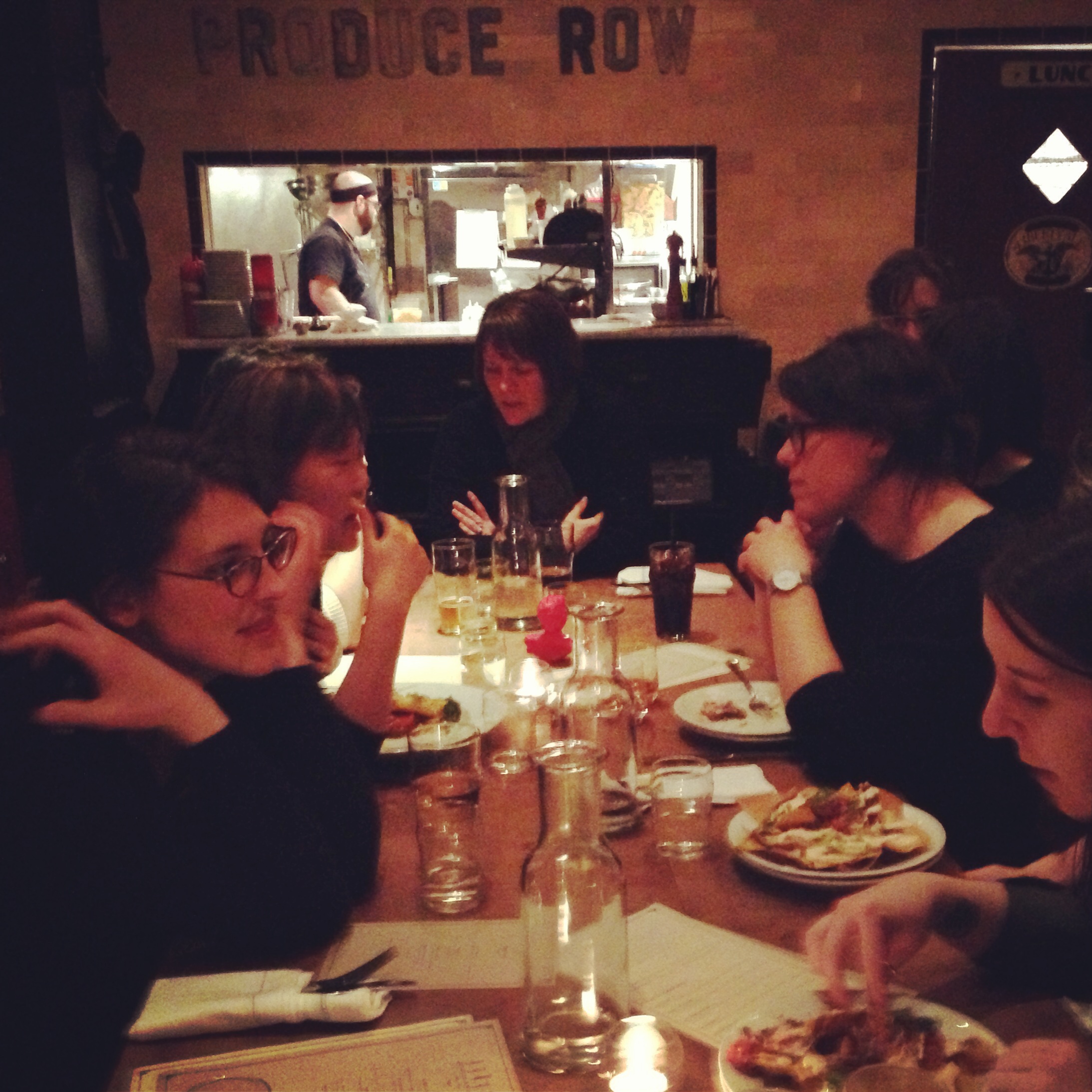
GroupProduceRowWhen:  January 9, 2013

Where: Oregon Museum of Science & Industry (OMSI) and Produce Row

Who: Sparked by my new love for OMSI and their staff, we gathered together interested people from their education and exhibit design departments along with people from our education and digital collections departments at the Portland Art Museum.

The evening began at the Oregon Museum of Science & Industry (OMSI) in their technology lab and maker space — an area of their museum in which they are playing with new forms of creative engagement and participatory design. David Perry, OMSI’s Director of Museum Education, and Kristin Bayans, Senior Educator, both hosted the group along with many other OMSI educators and staff. We all got to know each other through some fun (aka ’embarrassing’) activities, but mostly we played around in the learning lab space and got to chat with each other about what we do.

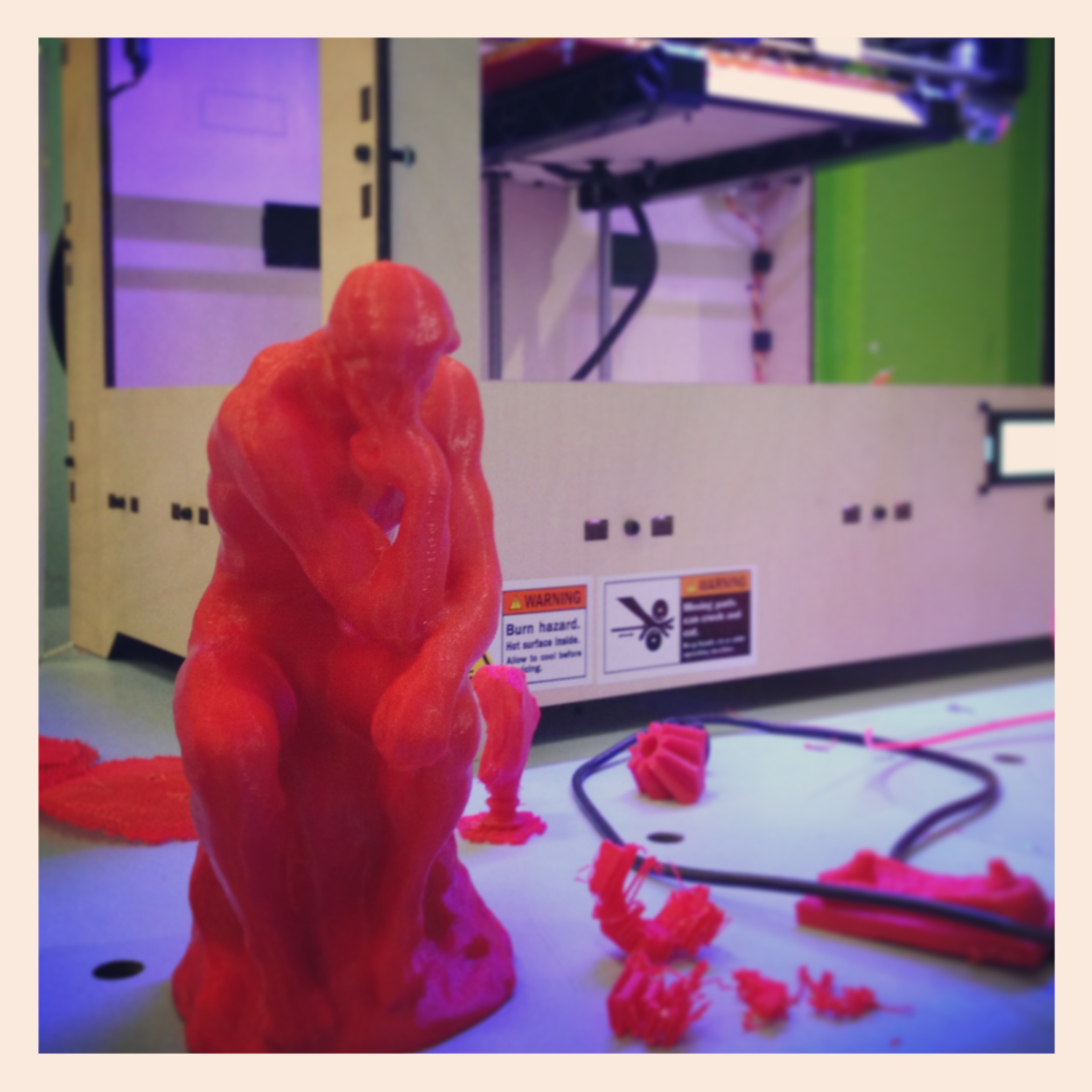
When you get so many creative, high-energy museum people together in one place, the ideas start flowing … and I feel that we came away from the night with tons of potential for meaningful collaboration.  For me, one of the first experiments that will likely come out of this exchange is a couple MakerBot 3D printing workshops at the Portland Art Museum, allowing education staff from both institutions to play with this technology and its potential applications for an art museum.

MakerBot-RodinMakerBots!

So this brings me to the next topic of my post … MakerBots!  I have been eyeing the MakerBot station at OMSI for months now, chatting with their staff and volunteers about how it is being used, why it is being used, and what are the potential ways it could be used in an art museum context (or even with artists). Kristin Bayans, who manages this innovative lab space at OMSI, has been such an amazing person to brainstorm with, and she was able to download some objects from the Metropolitan Museum of Art’s collection to print for us yesterday.  Yes, earlier this year, the Met teamed up with MakerBot to make statues, sculptures, and other three dimensional artworks from the museum’s collection available for anyone in the world to access virtually on Thingiverse.com and physically recreate with The Replicator™– MakerBot’s third-generation 3D Printer. As Jackie Terrassa, the Met’s Manager of Gallery and Studio Programs, wrote about this Hackathon event:

“… by partnering with artists and programmers who are already using these accessible technologies as creative tools, we will advance a core component of the Museum’s mission to encourage the study and development of the arts, enhancing the Met’s role as a dynamic site for creativity, inspiration, and exploration by artists and visitors alike.”

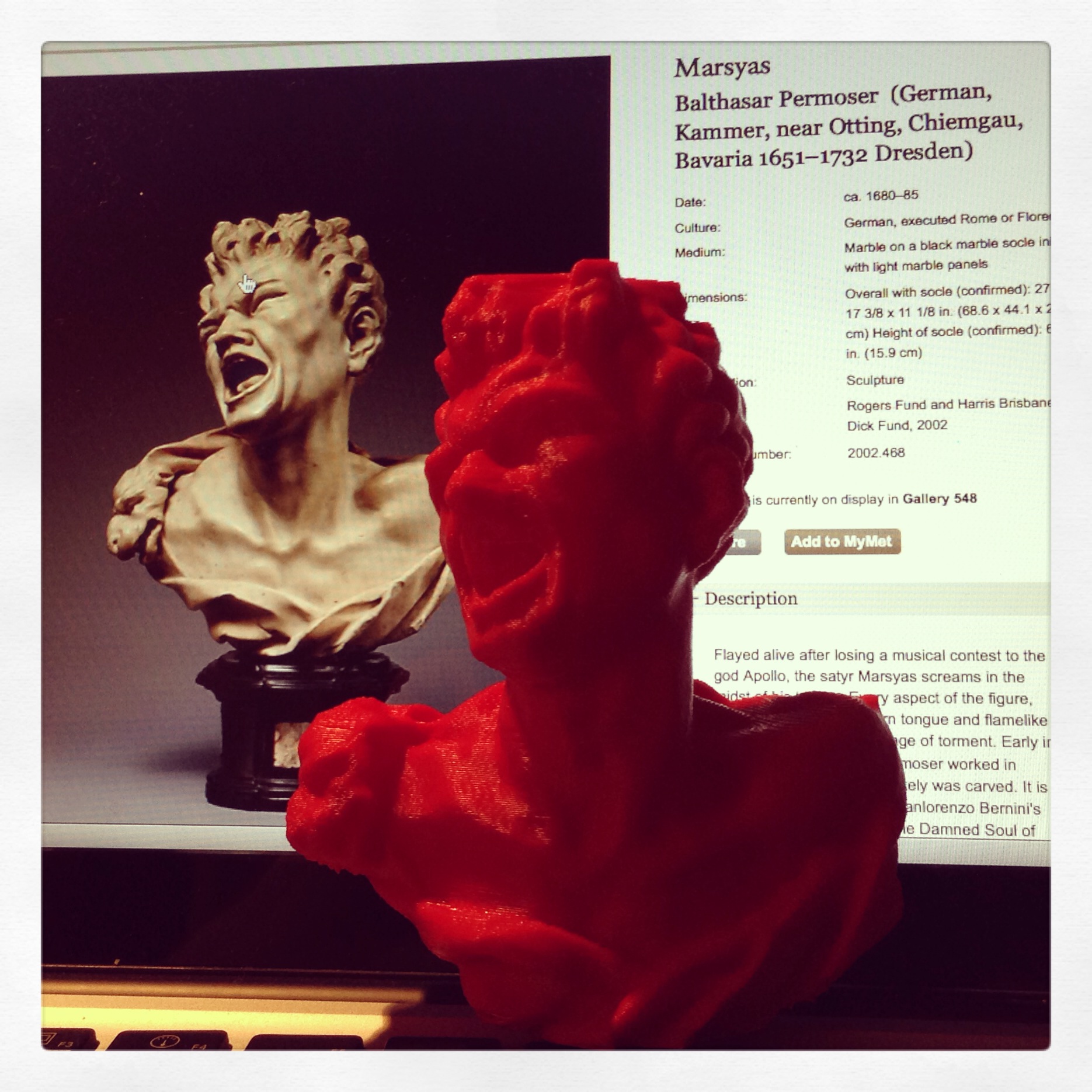
I could not agree more, and this has made me so excited to experiment with some workshops here at the Portland Art Museum around these technologies, and ensure that the museum can be a place for open creative exploration.  And, besides, now I have my very own 3D-printed replica of the Met’s sculpture of Marsyas by 17th-century German sculptor Balthasar Permoser … what could be cooler than that!  Obviously, there will be more discussion coming up on this site around 3D printing and museums, especially the impact this type of work might have in the teaching and learning realm of the museum. But I would encourage everyone to learn more about what the Met has been doing, and check out the objects and the 123D Catch scene files you can download to make your own replicas.

OK, so that is a quick report from Portland’s first ever “Drinking About Museums.”  I look forward to opening this up to more and more museums across Portland, and exploring the way we can learn from each other as professional, as creative thinkers, and as people.  Cheers!

"Marsyas" (2013) by MakerBot, and "Marsyas" (1680-85) byBalthasar Permoser
“Marsyas” (2013) by MakerBot, and “Marsyas” (1680-85) by
Balthasar Permoser

Tools for Understanding Your World: Museums + Beyond

Can you describe the space you are in right now? Have you thought about the temperature, the colors, the lighting, how the furniture is arranged, the sounds you can hear, the textures you feel, the smells that you associate with this space? When any of those elements change, how does that alter the space? How does that change how you interact with this space?

Yayoi Kusama
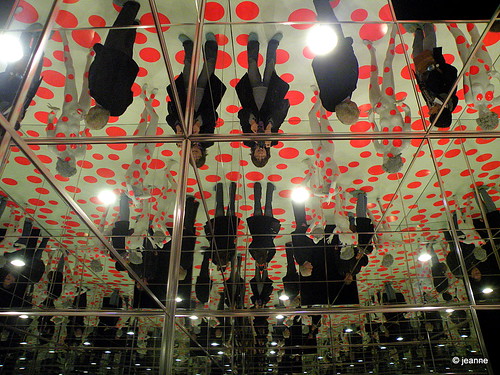
“Infinity Dots Mirrored Room,” 1996. Mattress Factory. Photo by Jeanne Kliemesch

These questions are the beginning of many conversations and inquiries we explore at the Mattress Factory on a daily basis. The Mattress Factory is a contemporary art museum with room-size exhibitions. We are committed to supporting artists and their practice. Exhibiting artists are invited to stay in a nearby residence while preparing new work, and the galleries serve both as studio and exhibition space during their stay. The installation art at the Mattress Factory is truly art you can get into. We support artists through the whole process of creation and experimentation, we don’t ask for proposals, and know that the work will transform and often take new shapes throughout their time here.

The experience of visiting the Mattress Factory is very different than a traditional museum environment. There are no guards, much of the art you can touch and explore in a close and more intimate way than is possible in many other museums (you can lay on the floor, reach into, sit on and step inside many of the pieces). This leads to an experience that can be very personal and powerful but also puzzling. The installation is built to be experienced. Sometimes the artwork is not translated easily into a photograph. It can be difficult to describe and to really understand how all the elements fit together – you need to physically be in the room.

With that in mind, we find ourselves asking some questions familiar to us all:

  • How can we create an experience for students that mirrors what happens here?
  • How can we make the museum visit more than just a fun field trip and turn it into a unique and deep learning experience?
  • How do we communicate and share the experience of Installation Art – and all of the rich dialogue that experience sparks – with students that are not able to visit the museum?
  • How do we translate the museum experience to a classroom, a library, a community center?

At the Mattress Factory we decided to do what we do best – and pose these questions as a challenge to a group of artists. We asked them not to make a piece of artwork, but instead to create a tool – one that could be used to inspire the same sort of conversations we have at the museum about space, memory, sound and a plethora of other big ideas. We titled the project The Space I’m In: Tools for Understanding Your Environment.

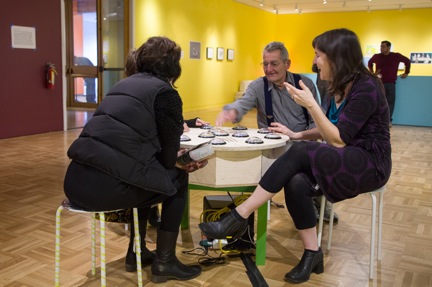
Interacting with Tametabako and thinking about space.

The Mattress Factory partnered with the Intermediate Unit 1 (a public education service agency dedicated to the counties we were working with) including nine different schools in counties outside of Pittsburgh and students who had little if any exposure to the concepts of contemporary installation art. Art teachers from each of the schools chose a fellow teacher from another discipline to participate in the program. The teams then reviewed the test scores of their schools and chose a subject area where scores were weak. The challenge was to create lesson plans using materials from the museum to improve learning in the targeted area. We provided professional development opportunities and support for teachers as they paired up to create interdisciplinary lessons inspired by the experiences these tools created. We diligently recorded students and teachers experience before and after their experience with The Space I’m In. Student learning in these weak testing areas improved dramatically.

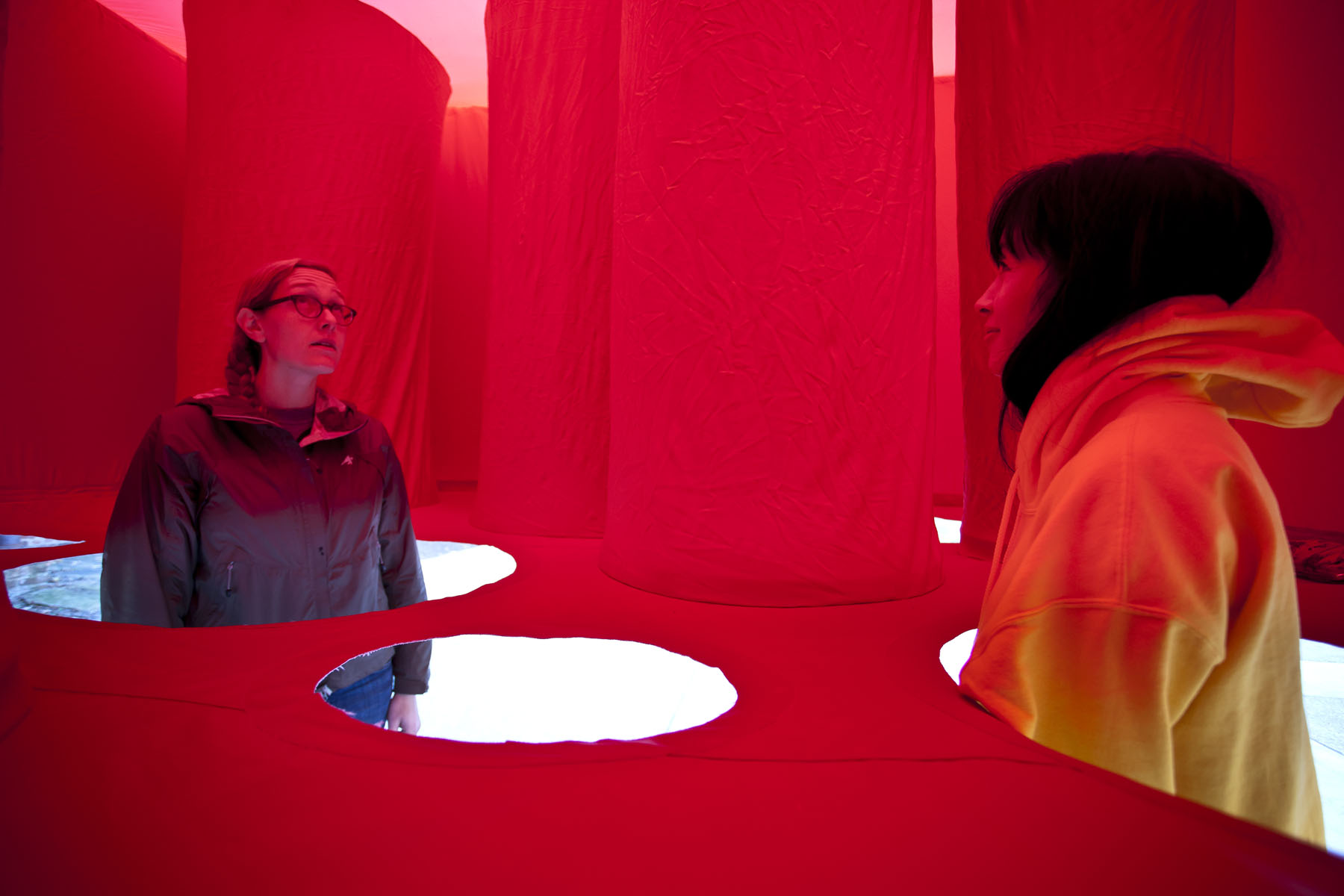
Currently we have a small variety of tools that we offer to schools and teachers as a starting point in their exploration of our environment. One tool is titled Tamatebako designed by artist Yumi Kori. This tool is a large tented cube that you enter through the lower open portion and find various smaller dark tubes, open red environments and even a small opening to the sky. Each of these spaces can provide a different experience, a small dark space that can feel safe or scary, an open space that shifts colors and views. Another tool is a set of Sound Blocks by artist Jeremy Boyle. The Sounds Blocks change pitch when reacting to motion around them, creating an alternative way to explore space through an auditory experience.

Interacting with Tametabako.

We learned that as teachers became familiar with some of these concepts and working with students on these big ideas, they began to not even need these tools. The tools served as an entry point for the students and teachers to create new lessons and work through concepts in a new way. Teachers were often placed outside of their educational comfort zone and challenged to approach a lesson in a new direction. The conversations about space were able to happen in simple and subtle ways and students were challenged to slow down and think more about the environment surrounding them. The project creates connections between our memories, sensory understanding, physical spaces, and engages many different disciplines such as science, technology, math, language and the arts.

The long-term investment of creating relationships and training the teachers became the real key to the success of this project. From the museum end, we had to teach museum educators the language, the ideas, the artists, and the flexibility to translate the museum experience to the world beyond. They became the liaison to working with a teacher in their environment to ensure their comfort with these concepts. We learned that there are so many ways to change, alter, and think about our environment. We learned that we could use these same lessons without the tools.

Working in a museum environment we often take for granted the lingo we use and the knowledge we have acquired. Collaborating with teachers forced us to step back and start at the very beginning. We learned not to assume anything and to work through every step of the process in explaining and teaching the big ideas that go with installation art.

Student and teacher exploring the environment created by The Walls, a tool as part of The Space I’m In project.

Getting Uncomfortable in Museums

Guest post by Suse Cairns, doctoral candidate in the PhD Fine Art program at the University of Newcastle, Australia, and blogger at http://museumgeek.wordpress.com.

This post has been a long time coming. When Mike first contacted me about the possibility of doing a guest post for Art Museum Teaching many weeks ago, I was too busy to immediately do so. I thought it was just a lack of time and clear head space. But even after the deadline driven urgency of that time had passed, I still hesitated and put off writing. Why? I was writing amply on other things, so it was no longer time that was the problem, nor general inspiration. So what was it? What was preventing me from starting this project?

It turns out that my problem was one of elasticity, or more accurately, a lack thereof. I was feeling stretched, and my avoidance of writing this post was a tactic to avoid the discomfort that brought.

Photo by Redfishingboat

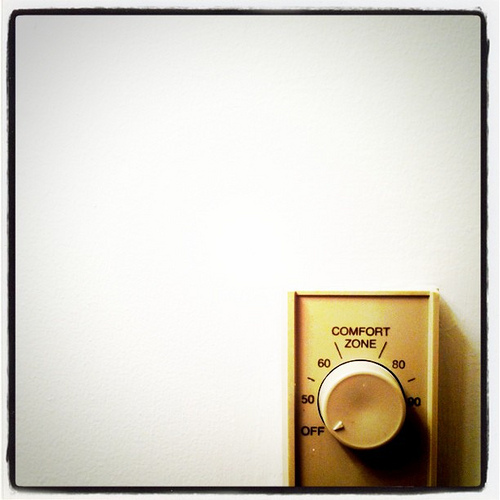
Let me explain. When I write for my own blog, I have a very definite comfort zone. I have defined the intellectual space, and I know intimately its boundaries.  In fact, its boundaries are my boundaries. I can stretch or push them, I can expand them as far as I am comfortable, and still exist within a very safe space. I recognise the likely readers and know their vocabularies and topical touch points. I know intimately what’s been covered before and what people have responded to, because it has all been within my own domain. The community of readers is my community; the space is my environment. Even when I am exploring ideas that are at times uncomfortable and that push me to consider things that I have not previously, I still retain a certain level of control.

But I don’t have the same sense of easy intimacy with the Art Museum Teaching website or audience. I know less who reads this site, and the sorts of topics and ideas they will respond to. I have not worked as a museum educator myself, and was uncertain what I could contribute that would be of interest to those who are.

So even though I was undertaking an act that I do regularly (writing), I was on edge. Unnerved. Stretched.

Such feelings, then, seem to resonate with two concepts that are at the very focus of the current investigations here on Art Museum Teaching.

The first of those is of art museum education itself.  When students come into a museum, or come into contact with art – sometimes for the first time – they may be out of their own comfort zones. That sensation can be in response to the physical space of the museum, where students might not know the rules or customs of the space; and it can be intellectual, when students have not encountered or don’t know about art and may not understand its language or how the art world is constructed. In many cases, students will feel both these sensations – out of place and uncertain of the context in which they find themselves.

The second way this sense of being stretched beyond comfort resonates is in the professional space of the museum, when ideas like the Elastic Manifesto that push for experimentation require that the museum itself, and its staff, make themselves deliberately uncomfortable.

Innovation and learning both require a certain amount of discomfort. They need a step into unknown territory, which will often be accompanied by a reciprocal jolt of fear. For some people who crave the new and who yearn to explore new spaces, this will be a great sensation. Such natural adventurers will likely thrive from these conditions. But there are many who will find such sensations stressful and do what they can to avoid them.

Henry Kissinger said that “The task of the leader is to get his people from where they are to where they have not been.” It is a useful angle for conceiving of the role of both art museum educators, and advocates for change and experimentation in the museum.

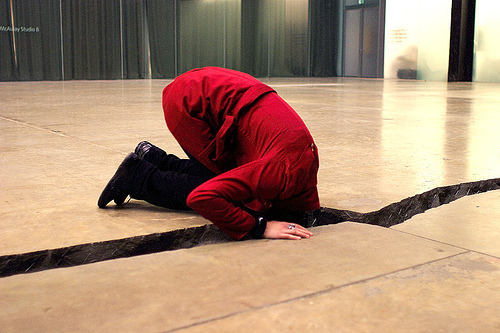
Visitor interacting with Doris Salcedo’s “Shibboleth” at the Tate Modern. Photo by truu.

Getting uncomfortable is important for growth, but mitigating that discomfort to keep it at an acceptable level is also useful. How can we provide scaffolding for that process, so that those who embark on the journey to somewhere new have the tools and permission to explore and accomplish, without fear that making an error will be cataclysmic? How can we make the museum space a safe environment for exploration and unknowning, both for students and staff?

I’d argue that one step in this process is for those who advocate for change in others spend a little time getting uncomfortable themselves, to remember the mildly unpleasant sensations the process can evoke. Stretching yourself, reaching beyond your normal boundaries can remind you that even small moves into unfamiliar territory can be challenging. Even writing this post, beyond my own ‘normal’ space, has required that I extend and stretch myself to find a creative solution. It has been a thoroughly rewarding process, but was neither easy nor fast. It required getting uncomfortable, and living in that state for an extended period of time. Being aware of such things is useful.

What do you think? How can we as museum professionals make sure that the museum is a safe space to get a little uncomfortable? How can we scaffold the process of experimentation, innovation, and learning, to draw out creativity and productivity, whilst mitigating the pain of the unknown?

(And if you don’t normally comment on posts, feel free to use this as an opportunity to get a little uncomfortable and step beyond your own safe space.)

Experimenting in Museums: What do you need most today?

Photo: Yang Weidong – http://www.smh.com.au

For the past 4 years, Chinese artist Yang Weidong has posed a deceptively simple question to over 300 Chinese intellectuals: “What do Chinese people need most today?”  These wide-ranging interviews have now become the core of a book by Yang as well as a in-progress documentary film titled “Xu Yao” or “Need” in Chinese, and “Signal” in English.  As for their answers … “Of China’s thinkers,” Yang tells NPR’s Louise Lim,  “more than 95 percent of those I interviewed need freedom, though they used different ways to express this.”

“Freedom of speech,” “freedom of expression,” and “free space for creative work” are combined with other responses in which people talked about the need for faith or spiritual life.  As the Sydney Morning Herald’s John Garnaut succinctly puts it, Yang’s project is about “China’s thirst for freedom.”  His simple question opened up some really powerful conversations with China’s intellectual and creative class about sincere needs and legitimate concerns — conversations that, interestingly enough, have not yet been shut down by the Chinese government (despite repeated searches of Yang’s home and after some of the interview tapes have been confiscated).

Taking the spark of motivation from Yang’s inspiring and ongoing “Need” project, I recently decided to develop an experimental prototype that would explore how museums might interact with this idea of personal/universal needs — real, sincere needs that could build toward new forms of public engagement. For the second year in a row, I am facilitating the Summer Museum Teaching Internship Program at the Saint Louis Art Museum, a unique program that brings together a diverse group of undergraduate and graduate students to explore and create different types of museum teaching and learning experiences.

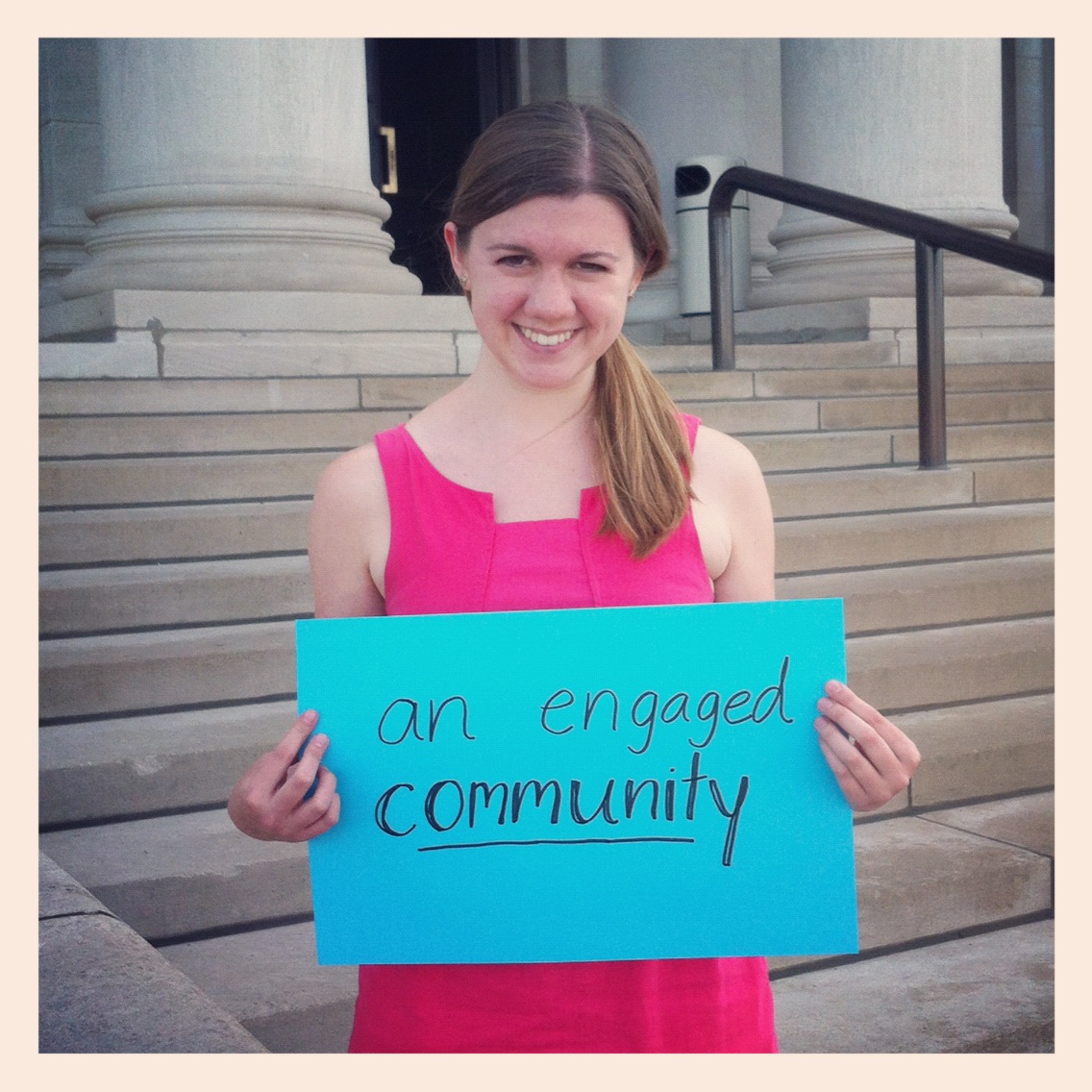
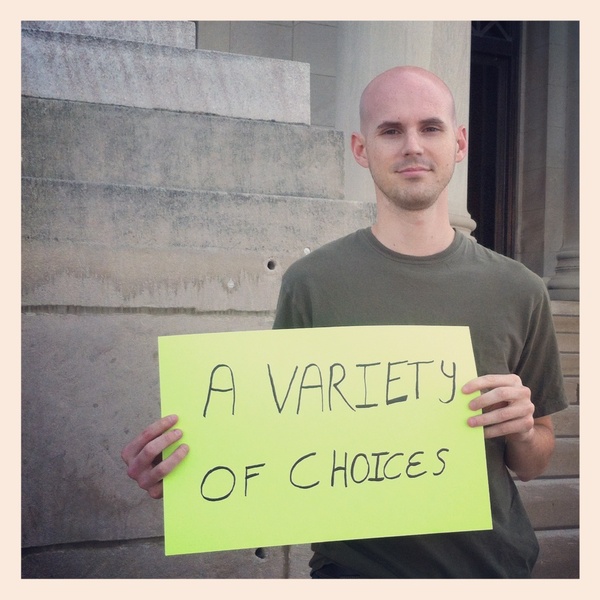
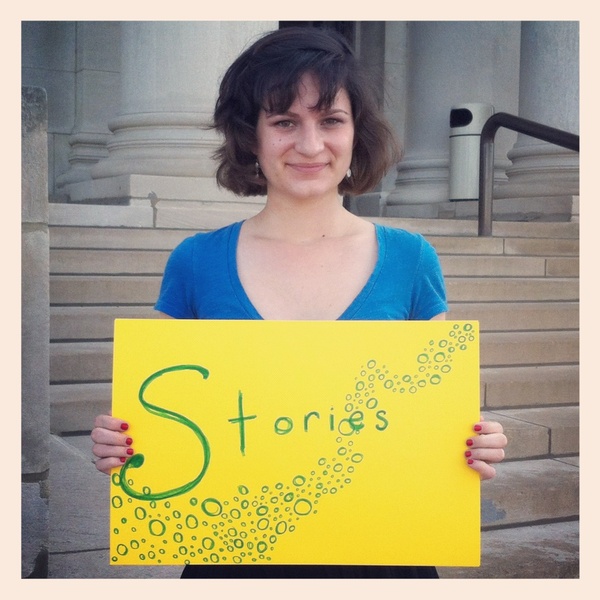
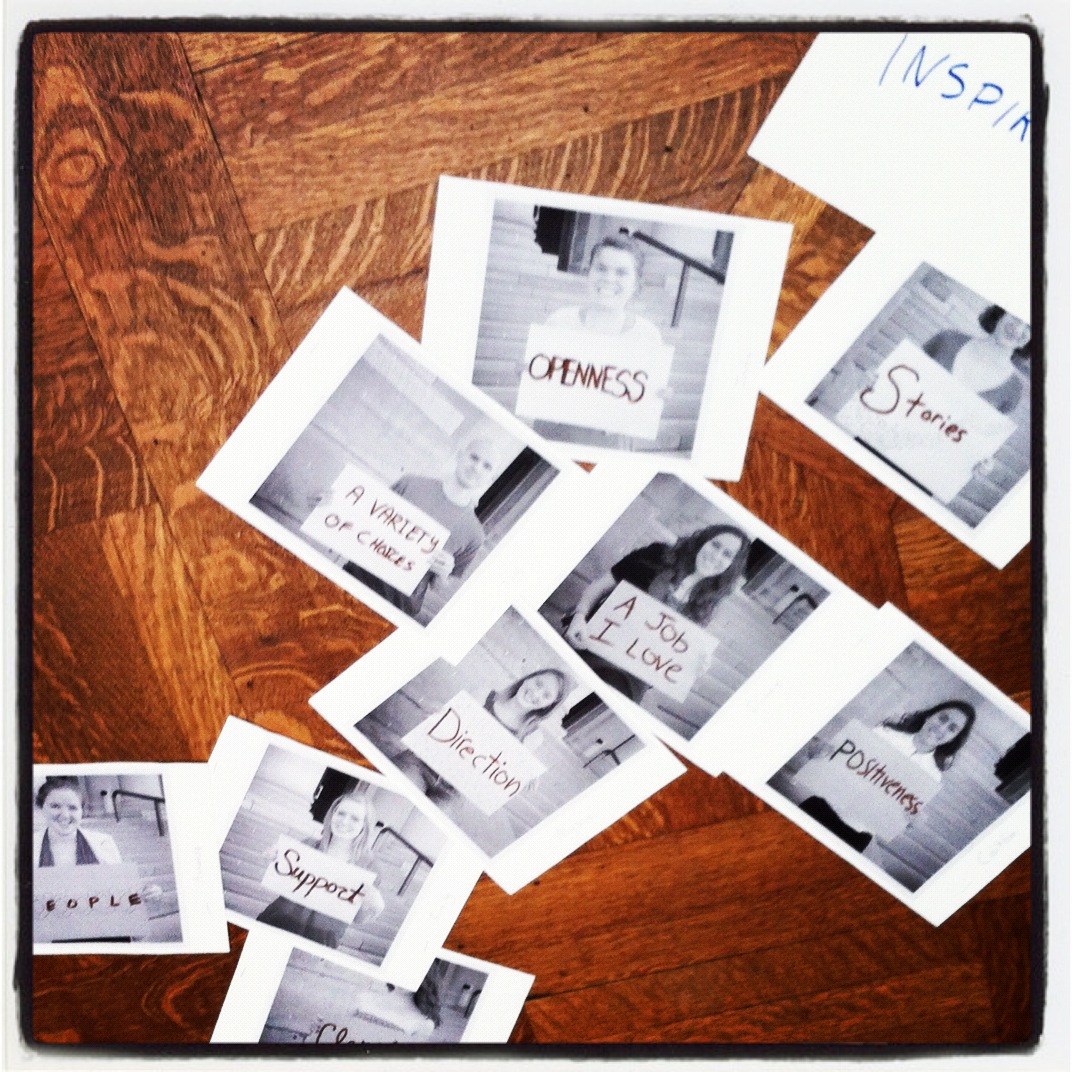
On the first day of this summer’s program, I invited each of our 18 interns to take some time and reflect on the big question: “What do you need most today?”  Not thinking about museums or art in anyway, their task was simply to dig into their own, personal needs and decide on one that seemed urgent right now (‘today’).  After everyone had identified their “I need” statement, they wrote their needs on large pieces of posterboard and stood on the front steps of the art museum so I could take each intern’s photo (see the Pinterest board of all the photos).

For me, this was planting the seeds of a 10-week project through which these interns are slowly and intentionally developing their own public engagement projects to be enacted in August. And the next step pushed things in that direction the following week, as each intern was invited to reflect on their need statement and think about how, in some way, museums might fulfill that need — thinking creatively and outside-the-box.  Below are just a few excerpts from those reflections:

An engaged community: “Experiencing art is a tangible way to engage with and learn about others – it’s an opportunity to have a conversation, which builds a community by sharing experiences that can be taken home with you. In this way, the art museum offers a unique setting for community engagement. I believe that viewing art as this kind of open invitation is what inspires visitors to return, and it is the museum’s responsibility to continue this discussion”

A variety of choices: “I believe the museum setting encourages a structured approach to the works contained within them … the standard Look, Read, Look, Move On.  [B]ut without encouraging or allowing new ways to interact with the works, most viewers will stay within the confines of the standard viewing methods.  By encouraging a variety of ways to interact with the works within the museum, it will allow for a visit that breaks from the norm, and encourages the development of new avenues of interest, and make visits a more unique experience.”

Stories: “People love stories — to feel connected to their fellows even across the boundaries of nationality, culture, and language.  We like to know that we are not alone in our desires, our longings, and our needs. [And] an art museum seems to me to be the perfect place to go to find stories.  One could invent a story based on a single painting or sculpture; perhaps all the works in a gallery could be different parts of the story; maybe the different parts of a story are scattered across the museum and the game is to find them all.  Art museums have endless possibilities for finding stories.”

For the past 3 weeks now, we have been extending our conversations about these needs and how they might build toward a public engagement project at the museum.  First, we laid out everyone’s needs and did a short mapping activity — a great way to make our thinking visible and allow us to explore potential connections and relationships among the group’s needs.  Then, from there, everyone got into pairs based on “adjacent” needs on the map, and each pair interviewed each other about their need and how it might translate into a museum-based project.  Most recently, we all connected with experimental museum work at institutions such as the Walker Art Center’s Open Field and the Hammer Museum’s Public Engagement programs, paralleling our learning about “public engagement” and social practice with our own developing ideas.

As we enter our 4th week of this summer’s program, I think we’re heading in interesting directions.  This week, we will begin to form more concrete ideas and develop prototypes for projects.  While I know we have lots of questions to ask and issues to navigate, I am excited to have launched into this project over the summer.  The Summer Museum Teaching Internship Program has always been an exceptional time and place for experimentation, especially due to the diverse and energetic group of students who participate each summer.  For me, exploring museum work from the point of view of personal and universal “needs” has the potential to make these projects so much more relevant, sincere, and “real” (however you define that).  And these are all things on the minds of museums — and especially museum educators — as we trudge through the second decade of the 21st century.

Much like artist Yang Weidong’s “Need” project, mindful museums have tremendous potential and power in their engagements with communities and the issues that these communities care about most.  Sometimes simply discovering those needs is an important first step, building up from them to create opportunities for engagement and learning that are more responsive and relevant to the issues facing us ‘today.’  Towards the conclusion of his 2009 book entitled Museums in a Troubled World, Robert Janes provides us with some provocative thoughts that may connect with why this type of work is valid and valuable:

“All museums have the responsibility and the opportunity to become synthesizers, and foster an understanding of the interconnectedness of the problems we face, both environmental and social. A mindful museum can empower and honour all people in the search for a sustainable and just world — by creating a mission that focuses on the interconnectedness of our world and its challenges, and promotes the integration of disparate perspectives.” (p. 166)

“It has been noted that ‘There is no power for change greater than a community discovering what it cares about.’ Will communities continue to care about museums in their current guise? Will museums discover what they care about? Or are museums at risk?” (p. 168)

I will certainly be posting again as the summer’s intern program continues and we get closer to the series of public engagement projects we plan to enact on August 9 and 10.  So stay tuned.  In the meantime, I invite your thoughts and perspectives below.  How might you tap into “needs” (external/internal/audience) as a core for experimental program development?  How important is this type of work for museums?  Share your stories and practices here or on Twitter via @murawski27.

________________________________________________________

SERIES NOTE: This post is part of a series from ArtMuseumTeaching.com designed to respond to and grow from the ideas explored in An Elastic Manifesto for Museums & Artists, first presented at the 2012 American Association of Museums Annual Meeting. If you have your own response or project to share, please contact me via Twitter @murawski27.  See all posts in the series by clicking here.