Reposted from the Skirball Cultural Center’s Building a Better World blog, a place on their website dedicated to sharing some of the ways Skirball educators partner with families, schoolchildren, teachers, and community organizations to take concrete action to promote a more just society.
Written by Anna Schwarz, Skirball Cultural Center
The Skirball’s in-school residency program is one of the rare opportunities we have to work closely with students, exploring issues that are important in their lives and how art can be a tool for civic and social action. Over the course of eight to ten weeks, one class of students and their teacher collaborate with skilled teaching artists and a Skirball educator (in this case, me!) to build identity and community through collaborative and creative practices. As we tailor every residency to the exhibition content presented at the Skirball in a given year, the teaching artists and the art medium also change yearly. Recent residency projects have ranged from dance pieces exploring gender disparity, to radio stories about incarceration, to noir-style films about contemporary high school issues. Through these various projects, educators and students creatively explore how art can become a platform for student voices and storytelling.
In our most recent residency earlier this year, we wanted to focus on the Skirball’s mission, particularly the imperative to “help build a more just society.” We collaborated with poet and arts educator Kahlil Almustafa, writer and performer Julia Grob, and one class of tenth grade LAUSD students from the Community Health Advocates School (CHAS) at Augustus Hawkins High School. Maria Gaspar, a social studies teacher at CHAS, invited us into her classroom where we met twice a week. During the one-hour workshops, students practiced using poetry as a vehicle for self-expression and activism.
The residency began with setting intentions. Together, we decided to create an anthology of poems to document students’ lives and their hopes and dreams for the future. We also planned for students to share a selection of these poems in a culminating performance at the Skirball in front of their peers from all over LA. In preparation, students listened to voices of contemporary poets—young and experienced—including Audre Lorde, Elizabeth Acevedo, and finalists of the Brave New Voices festival created by Youth Speaks. The teaching artists, Kahlil and Julia, also performed live in the classroom, which made the entire experience even more special and personal. With all this inspiration, students asked questions and began creating their own original poetry.
Guided by the teaching artists, students develop content for their original poems.
Similar to other creative projects, our original intentions evolved as the students explored how they could use spoken word as a tool for building self-confidence and imagination. A pivotal moment in this evolution was the students’ visit to the Skirball for a powerful performance of the play Riot/Rebellion, presented by the Watts Village Theater Company. Through a theatrical interpretation of first-person interviews with residents and community members, Riot/Rebellion introduced students to the history of the 1965 Watts uprising. The residency class felt a deep connection to the themes of the play—especially having recently protested the US presidential election and inauguration. Moved by Riot/Rebellion and the discussion with the actors and creators following the show, the students decided to change the plan for the residency. Instead of each person creating his or her own poems, the students decided to work together to develop a play that incorporated elements of poetry and focused on the value of protest. With six weeks to go, students began their work on a script for their very first original play, Walkout!, and they transformed into writers, editors, actors—and leaders.
In the Q&A after the performance, members of the Watts Village Theater Company discuss the importance of speaking up through protest. This conversation inspires students to create an original play rooted in students’ lived experience. Photos by Timothy Norris.
On March 22, 2017, I sat in the audience filled with excitement and emotion as CHAS students proudly presented their work-in-progress on stage at the Skirball. Over 200 of their peers from other LA-area high schools filled the seats. Like Riot/Rebellion, Walkout! incorporated first-hand stories of the students’ experiences. But this play was truly unique—the personal poems throughout the performance were a reflection of the trust and support this group of young people had built with one another. Their dedication to the project and personal connection to the material translated on stage into a beautiful community of people celebrating the opportunity to speak their truth and build a more just society. It was a true joy to be a part of such a strong and meaningful process!
At the Skirball, before the final presentation took place, the audience members participate in hands-on community activities, including creating their own poetry. Photos (left to right) by Skirball staff and Mercie Ghimire.CHAS students perform one of their original poems, “Human Wall,” on stage at the Skirball during the culminating event. Photo by Mercie Ghimire..Teaching artists, Kahlil and Julia, (left) and CHAS students (right) are all smiles after their successful performance. Photos by Mercie Ghimire.
If you are in Los Angeles and would like to see our upcoming in-school residency in action, join me on December 7, 2017, for the culminating presentation of Mark-Making in LA: Stories of Our City. E-mail education@skirball.org for more information or register now.
Reposted from Anabel Roque Rodriguez’s blog. Anabel is a curator, writer, and historian who focuses on political art, the artist as activist, art as labor, feminism, photography and the art market. ArtMuseumTeaching is thrilled to share her thoughts about the issue of museums and neutrality.
Written by Anabel Roque Rodriguez
The online dictionary Merriam-Webster defines neutrality as “the quality or state of not supporting either side in an argument, fight, war, etc. : the quality or state of being neutral”. The question is whether institutions who deal with primary sources, historical and contemporary narratives and a culture that decides which discourses get public attention should engage in neutrality? My opinion is that Museums are not neutral.
We live in a time where people mourn their dead, fear crawls into daily life and one headline leads to another. A certain narrative seems predominant these days trying to make us believe that we are divided by more than we have in common – depriving us of our humanity. There is no question whether museums can be part of these dialogues. They can, in fact, they have to and their museum policy resembles the questions of our time. The core of every institution is its people: the arts professionals employed there, artists and their own narrations their bringing, and, of course, the public. How could we not embrace the dialogue when people come together? And aren’t museums exactly a space for encounter, for getting acquainted with familiar problems that we engage with, or with unfamiliar things that spark our curiosity and of course with narrations we find problematic, and where silence is no longer an option.
I find myself often in passionate conversations about, whether museums are (still) relevant and/ or that museums should be neutral. Let me state loud and clear, that museums have never been neutral. An important part of a museum is to state facts. There shouldn’t be a confusion about whether museums need to speak up against any form of misinformation, lack to state the sources, fight any form of hate in its community, protect the values that embrace the integrity of minorities and discuss which narratives need to be enforced.
And still, I do find myself in arguments that if museums use public money they should not have any political opinion; that museums are temples of knowledge and need to keep their neutrality as they are above the everyday; that art in general cannot change anything…; What these people don’t acknowledge is the fact that museums have evolved from a temple of muses and knowledge that preserved the purity of the genius of a few (usually straight white men) to huge and central figures in the cultural and economic life of a city. There is no doubt that museums enrich the cultural economy of cities and become leading tourist attractions. As soon as there is money involved interests come into conflict (Sponsorship does matter!).
The range of visibility of big museums and museum brands like the Guggenheim, Tate or Louvre is different than the one of more regional or local museums. Nevertheless, museums cannot act outside the circumstances of the time they are in. If we want them to freely act as pillars of our cultural dialogues we need to carefully talk about their sensitivity to political decisions, censorship and the financial economy.
I sometimes do get the impression that the people who argue so passionately that museums need to keep their neutral role are afraid to endanger the purity of the art temple and that art might suddenly be complicated and relevant, and actually be open to engage with the whole public and not just with a few who are able to decipher the art code. And there is indeed the danger that if museums do take a stand, they might get instrumentalized by politics, be more sensitive to suffer financial cut backs and they risk not being “liked” by everybody anymore (has there ever been an illusion that we are?). A clear language might not be common in a world in which we talk in PR statements and a so called thought leader constructed a concept that we actually refer to as “alternative facts”. But if museums, who deal with history and the contemporary, choose neutrality they choose silence and as history has shown us in many examples: Silence means complicity with the demons of their times.
IF WE WANT TO ENGAGE CRITICALLY WITH HISTORY AND WITH OUR PRESENT TIMES WE NEED TO ENGAGE WITH THESE QUESTIONS:
If our definition on the neutrality of museums is based on (hetero)normative standards, shouldn’t museums engage with what and who states the “norm”?
There should be no doubt that commemorative culture is highly political. Which narrative gets valued in our historical thinking? Who gets publicly commemorated and space or monuments to enforce the narrative?
How can museums engage with their communities without turning into dispassionate agents?
How can museums take a stand and still try to be sensitive to the future discussions without limiting themselves to the possible outcome? Museums can’t dictate what people are going to think or how they’re going to respond and react.
How much freedom of expression are institutions willing to give to all of their employees?
How can a code of ethics concerning the limits of museums neutrality look like? An ICOM Code of Ethics for Museums does exist but it does not contain concrete parts on museum neutrality and resulting conflicts. Keywords such as diversity, equality and community engagement are never free of political implications.
What you’ve just read is my opinion and I hope that more people will join this conversation. I’d love to hear from you. Have a look at the hashtag #MuseumsAreNotNeutral and make yourself heard.
This post is part of a series focused on the myth of museum neutrality. My friend and colleague, LaTanya Autry, and I decided to collaborate to create a t-shirt along with a campaign to spark conversations about the role of museums, while raising funds to support the work of the Southern Poverty Law Center.
We hope you can order a t-shirt, wear it proudly, and talk about the potential of museums to do good work, advocate for human rights, and take a stand against hate. Museums can be agents of positive social change in our communities, and it’s up to us to make this happen together.
The profits from each t-shirt purchased go directly to support the critical work of the Southern Poverty Law Center in combating hate, injustice, and discrimination through education, legal services, advocacy, and anti-bias resources. You can also donate directly to the Southern Poverty Law Center through this link to their Donate page.
The first time I experienced a Smithsonian Asian Pacific American Center (APAC) Culture Lab, a pop-up museum experience, it was as a visitor repeating the word “finally.” Crosslines: A Culture Lab on Intersectionality took over the Smithsonian’s Arts & Industries Building during Memorial Day weekend in 2016, and was APAC’s first Culture Lab. It was a truly immersive experience with emotional weight—over 40 artists from all over the country created original works of art and interactive spaces where visitors of all ages and backgrounds entered to learn about, challenge, and be challenged by the Lab’s theme of intersectionality. The atmosphere was festive with a constant murmur of excitement as deep conversation filled the air of an historic building erected as the first United States National Museum. Since Crosslines, APAC has co-created Culture Labs in New York City (CTRL+ALT: A Culture Lab on Imagined Futures) and most recently in Honolulu (‘Ae Kai: A Culture Lab on Convergence). Culture Labs are built with communities, a co-created and collaborative experiment that has since impacted the way we think about and approach the idea of what a museum should be.
I am grateful to be a part of APAC as their Education Specialist. Since joining the team earlier this year, I find the one question I get asked by my fellow museum educators is, “What does museum education look like at a Culture Lab?” My answers can be found in APAC’s Culture Lab Manifesto, which was published this July in an all-Asian American issue of Poetry Magazine (see full text below, along with links to Culture Lab’s Manifesto page).
As a museum educator, I think back to my impressions of Crosslines, and how surprising it was to walk into a museum space feeling like I belong, like my voice would be heard and that I would experience genuine empathy. How often can you walk up to an artist at a museum and jump right into conversations about intersectionality, what our futures may hold, and how our stories may converge into paths of better understanding? What I love most about being a museum educator is what is learned and shared from visitors of all ages and backgrounds. Creative dreaming and building with communities is something we don’t often allow ourselves the time and space to do in our professional realm. This manifesto was created out of a team effort steeped in reflection and proactive energies—it was time to share our vision and belief in how museums could be re-built with communities.
As an education program builds at APAC and future Culture Labs, I welcome conversation, idea sharing, and creative dreaming. I hope you will take a look at our manifesto and reach out if you would like to discuss re-building museum spaces with communities.
“Hijabs & Hoodies,” portraiture installation, 2016, by Tracy Keza with Studio Revolt. Photograph by Les Talusan.
Culture Lab Manifesto
BY SMITHSONIAN ASIAN PACIFIC AMERICAN CENTER
We at the Smithsonian Asian Pacific American Center believe the soul of a museum lies not in its brick-and-mortar walls but in what happens inside those walls — the experiential friction between guests and hosts, history and future. We believe that curation can be a form of community organizing; that art can be collaborative, participatory, and socially responsible; that those who have historically been pushed to the margins hold the stories that will center our future.
With these beliefs, we introduce the Culture Lab into the fold of museum practice. Culture Labs are fleeting, site-specific happenings that recognize art and culture as vehicles that can bring artists, scholars, curators, and the public together in creative and ambitious ways.
The images in this slideshow are from the first two Culture Labs: CrossLines: A Culture Lab on Intersectionality (May 2016, Washington, DC) and CTRL+ALT: A Culture Lab on Imagined Futures (November 2016, New York City). What you see are alternatives to traditional museum exhibitions — or perhaps their next evolution. What follows is a declaration of principles for you to consider as you envision the museum experiences of today and tomorrow.
We at the Smithsonian Asian Pacific American Center believe that museums engaging communities should be built upon:
A CULTURE OF MEMORY. Every place embodies genealogies we must honor. Amplifying hidden histories builds empathy. Intervening in public space enriches our collective memory.
A CULTURE OF REPRESENTATION. Prioritize local artists, participants, and organizers. Nothing about communities without those communities.
A CULTURE OF AMBITION & EVOLUTION. Scale up. Open yourself to growth through conversation. Push both your ideas and practices.
A CULTURE OF IMAGINATION. Place value on daydreaming. Not everything is a logistic. Find the amazing in the margins.
A CULTURE OF PRESENCE. Live-time interaction — nothing replaces human contact. Make all spaces maker spaces.
A CULTURE OF EQUITY. Pay artists. Pay artists fairly. Dismantle hierarchies. Everyone shares in the work.
A CULTURE OF COMMUNITY. Create lasting collectives. Come to museums to be challenged, to change, to fall in love.
A CULTURE OF INTERSECTIONALITY. Step outside the silos that constrain our narratives. Allow yourself to think, feel, and remember in the same complex ways that we live.
A CULTURE OF RELEVANCE. Choose to engage in what matters right now.
A CULTURE OF BELONGING. Forge brave space. Extend welcome and safety to all peoples and communities. Make room for the marginalized, especially by questioning what marginalizes them.
A CULTURE OF BEAUTY. Who gets to decide what counts as beautiful? Question aesthetic classifications and priorities.
A CULTURE OF INSPIRATION. Open the process. Dream together. Make together.
A CULTURE OF FUN. Play is innovation. Play is care. Play is life.
A CULTURE OF ACTION. Stay woke. We have a social contract with one another to protect the vulnerable and ensure human rights for everyone.
—Adriel Luis, Lawrence-Minh Bùi Davis, Nafisa Isa, Kālewa Correa, Jeanny Kim, Hana Maruyama, Clara Kim, Nathan Kawanishi, Emmanuel Mones, Desun Oka, Carlo Tuason, Lisa Sasaki, Andrea Kim Neighbors, Deloris Perry, and Emily Alvey.
“By looking at the art we can talk about topics that people don’t usually like to talk about.” – Rumaisha Tasnim
“Each viewer sees the art. What you see in it is your truth, it doesn’t have to be my truth.” – Kelsey Trollinger
Recent high school graduates Rumaisha and Kelsey spent much of the past two years at the Nasher Museum of Art at Duke University. As original members of the Nasher Teen Council (NTC), they led public programs, installed exhibitions, met artists, and created their own art. Their quotes are from artist talks they gave this month at an exhibition of work by the teens at a downtown gallery. Paintings and collages from the exhibition Nina Chanel Abney: Royal Flush inspired much of their work.
Artist talks by Nasher Teen Council members, June 2017.
As they spoke about the power of art to encourage meaningful conversations and validate individual experiences, Rumaisha and Kelsey–along with the other council members–joined their voices with countless other leaders who recognize the critical role art plays in civic discourse and the growth of a community. During times of uncertainty, political upheaval, and protest, we have to seek out these voices, both past and present, which celebrate what we know to be true about the critical need for influential artists and art institutions.
John F. Kennedy, a powerful champion for the arts, stated, “I see little of more importance to the future of our country and our civilization than the full recognition of the place of the artist.” His message, from over fifty years ago, still offers inspiration and leadership on the political role of art in a democratic society.
In a 1963 speech from Amherst College given in honor of Robert Frost, Kennedy begins with praise for the role of universities and an important reminder that “with privilege goes responsibility.” He asks the listener, “What good is a private college or university unless it’s serving a great national purpose?” He insists that the benefits and pleasures of an academic institution are not merely for the graduates to achieve individual economic advantage. Instead, he argues, the cultural agreement is that graduates must use their advantages for the public interest.
After reminding universities of their cultural obligations, Kennedy praises Frost and his poetry. More broadly, he celebrates art as a democratic institution and applauds artists as foundational to America’s greatness. He states, “For art establishes the basic human truths which must serve as the touchstone of our judgment. The artist [. . .] becomes the last champion of the individual mind and sensibility against an intrusive society and an officious state.” Rather than considering artists “who question power” a threat, he welcomes their critiques as “indispensable.”
Nina Chanel Abney critically examines the world through her body of work and requires the same of her viewers. Nina Chanel Abney: Royal Flush, her first solo museum exhibition, addresses politics, celebrity gossip, race, gender, power, and more. In it, Abney spotlights some of the most heated topics in American culture and boldly holds accountable those who misuse their power.
In The Boardroom, 2008, the nearly naked, sometimes bleeding bodies represent the financial leaders who valued profit over stability and led to economic collapse. Either depicted as clowns or wearing yellow gloves that allow them to keep their hands clean from their dirty work, Abney literally strips these men of the power and prestige often afforded to them by their business suits and corner offices.
Six years later, in a more abstracted and digital style, Abney turns her critical eye towards the issues of race, gun violence, and police brutality in the piece UNTITLED (FUCK T*E *OP), 2014. While her geometric “emojification” of this work differs greatly from the painterly style of The Boardroom and other earlier works, Abney still uses her platform to question societal power structures.
Kelsey Trollinger, NTC member, leads discussion of UNTITLED (FUCK T*E *OP), 2014, photo by J Caldwell.
In his Amherst speech, JFK states, “the highest duty of [. . .] the artist is to remain true to himself and to let the chips fall where they may. In serving his vision of the truth, the artist best serves his nation.” Abney echoes his voice in more contemporary language saying, “I like to just drop the bomb and start the conversation and then leave out the room.”
The gallery conversations that Abney starts with UNTITLED (FUCK T*E *OP) often include visitor descriptions of the scene as chaotic and confusing. As viewers examine the painting, patterns emerge. Visitors identify elements that remind them of pinball machines, streetlights, and the visual noise of cable news channels, the internet, and New York’s Times Square. Visitors consider her use of language. Viewers may read the simplified language, such as “POW” and “YO”, as references to digital culture and the abbreviated communications of texts and tweets. The discussion frequently shifts to Abney’s use of the “X” symbol in this piece and questions of who is a target, who is silenced, and who has a voice. Reading “FUCK T*E *OP” in the top left corner of this painting, conversations may include what language is, and is not, censored, both in her work and, more broadly, in society.
As a leading voice, Abney opens up the conversation to everybody by sharing her visual vocabulary without fully translating the meaning. Remaining intentionally ambiguous about her work, she encourages others to bring their life experiences to their viewing of the truths she depicts and create their own interpretations.
Abney’s examination of societal power structures and contemporary digital culture continues with the most recent painting in the exhibition, Catfish, 2017. Abney says of this piece, “I feel like I am combining everything here.” A monumental portrait of selfie culture, Catfish depicts provocatively positioned female figures who meet the viewer’s gaze directly and self-assuredly. Surrounding the women are dollar signs, many of Abney’s “X” symbols, and language that again reflects the brevity of the digital world. Whatever assumptions a visitor first makes about these women are questioned by the Catfish title. The term “catfish” suggests the bottom-feeding fish, as well as the practice of misrepresenting oneself online, often for financial gain. With this painting, Abney simultaneously incorporates the aesthetic of digital culture and questions how representations of self are used, or misused, within that culture.
At a time when many political and economic leaders ignore the responsibilities of privilege and dismiss the need for critical voices, artists and institutions can turn to the words of JFK for encouragement and guidance and to the contemporary artists, like Abney, doing the important work of examining societal structures. Emerging artists, like Rumaisha and Kelsey, are also adding their voices to the dialogue. They will continue the work of JFK and Abney, as well as shape the conversation in ways we cannot yet imagine.
To end his speech, JFK shares his hope for the arts saying, “I look forward to an America which will steadily raise the standards of artistic accomplishment and which will steadily enlarge cultural opportunities for all of our citizens.” Fortunately, in many places, that America has arrived. It is imperative that we continue to seek new voices – historic and contemporary, spoken and visual – to lead the continued march forward and together.
What voices – established or emerging – are leading you today?
Rumaisha Tasnim, NTC member, leads discussion in Nina Chanel Abney: Royal Flush, photo by J Caldwell.
Nina Chanel Abney: Royal Flush, is at the Nasher Museum through July 16, 2017. After that, it will travel to multiple locations. Go check it out!
Chicago Cultural Center: February 10 – May 6, 2018
The Institute of Contemporary Art, Los Angeles: September 23, 2018 – January 20, 2019
Neuberger Museum of Art, SUNY, Purchase: April 7 – August 4, 2019
* * *
About the Author
JESSICA RUHLE is Director of Education & Public Programs at the Nasher Museum of Art at Duke University. Jessica has worked at the Nasher Museum since 2010. Previously, Jessica worked at the North Carolina Museum of History, the North Carolina Museum of Art, and Marbles Kids Museum. Before arriving in North Carolina, she worked at the Smithsonian American Art Museum. Jessica has an MAT in Museum Education from The George Washington University, as well as a BA in Art History from Davidson College. Jessica’s postings on this site are her own and do not necessarily represent the Nasher Museum of Art’s positions, strategies, or opinions.
* * *
Header Image: Ayubi Kokayi, NTC member, performs spoken word in front of The Boardroom, 2008, photo by J Caldwell.
In support of the most recent exhibition at the Portland Art Museum, Rodin: The Human Experience, Rodin Remix was a hands-on space where visitors could create figures based on Rodin’s process of reusing previously-made sculpted arms, legs, and heads, into new works. It put a modern spin on Rodin’s method of mass production by showcasing 3D printed versions of Rodin’s sculptures.
3D Printing and Rodin?
I came into the Portland Art Museum in October, relatively new to interpretation. My guidelines for the Rodin project were to create an in-gallery multi-sensory experience for all ages that would communicate 3D elements of Rodin’s process. After researching Rodin, his assemblages struck me – it was creative and clever to reuse cast offs, fragments of plaster casts that had already been made, by recombining them into new sculptures.
I wanted to visitors to experience for themselves Rodin’s reuse of plaster casts, but we needed a 3D reusable material that could go in the gallery, not plaster. At first I thought of paper dolls, since they were easily reusable, simple to produce, and people might know how to put paper dolls together. But then at a brainstorming meeting, 3D printing came up – we could produce 3D plastic parts of Rodin’s sculptures with connections for constructing and deconstructing.
We partnered with the Portland 3D Printing Lab, a local Meet-Up group of enthusiasts, to produce 3D prints of Rodins. They were so enthusiastic, and figured out that magnets were the key to make the pieces of 3D printed sculpture easily stick together and break apart. The prints were made from free online STL files under the Creative Commons license, and, later, from scans of the Rodins in the show. We decided to scan some of the Rodins in the show because not every Rodin can be found in STL-file form online. The scanning process was surprisingly simple, and to show the public how it worked, it was filmed in a Facebook Live, the Museum’s first. The files that were used to print can now be found on the exhibition page of the Portland Art Museum’s exhibition website.
from left to right: Auguste Rodin, La Defense, model made in 1879, cast ca. 1910; 3D scan of La Defense on Thingiverse; 3D Print of La Defense.
3D printing fit with other elements of Rodin’s process as well. Rodin would sculpt a model in clay, then pass it to his assistants. They rendered the work again in marble or bronze, sizing it up or down according to Rodin’s and his patron’s wishes. A 3D scan of an object can be similarly re-sized, to make a print of the desired height.
Rodin’s assistants made hundreds of casts of the same model, all official Rodins, in a sort of artistic mass-production. Smaller bronzes, produced in large quantities, were more affordable. These relatively inexpensive bronzes widened the range of people who could purchase a Rodin, earning the sculptor more money and popularity. Just as Rodin mass-produced bronze casts of the same sculpture in multiple sizes and media, the Portland 3D Printing Lab made many 3D prints of Rodin sculptures, experimenting with size and color.
Visitors were also encouraged to Instagram a photo of their creation in front of a backdrop of Rodin’s studio, which showed the plaster fragments he used. Each Monday during the run of the show I reposted a visitor’s photograph to the @portlandartmuseum Instagram, with the tag #rodinremix. Over 125 people Instagrammed their Rodin Remixes, and the comments we received on our reposts were reflective and positive.
How did it go?
My goal was to make a fun, exciting interpretive space that used 3D prints to communicate to visitors about two parts of Rodin’s process: his assemblages, and his mass-production and use of resizing sculptures. This is my first interpretive space, and my first evaluation, and I am not positive this project fully met all of my learning goals.
Visitors, especially those with children, clearly enjoyed their time in Rodin Remix, laughing, talking, and playing – making the sculptures interact with each other. Docents used the 3D prints for tours for people who are blind or have low vision, and for ArtNow, PAM’s program for people living with dementia and their partners. The ability to touch Rodin’s forms, to understand 3D printing, and to Instagram were all appreciated. And, multiple members of the Portland 3D Printing Lab who had not been to the museum in years, if ever, came, because their work was displayed in the galleries.
Visitors in the Rodin Remix gallery at the Portland Art Museum. Photo by Jon Richardson.
A little over half of the 250 people that I observed participated in the hands-on part of the interpretive space, and 145 people stayed in the space for more than 2 minutes. These numbers are skewed somewhat by two school tours I observed, since both of those had a lot of participation.
But my hope that the space would communicate Rodin’s process may not have always worked. When I asked a few visitors what they thought the purpose of the space was, on average, they felt it was to touch, play, and interact. That was part of it, but not the entirety. I did enjoy the couple who said, “He really churned them out” – they clearly understood the mass-production angle. I could have crafted more precise questions for my evaluation, and my evaluation should have been more survey-based than observatory. It is possible more people understood the learning goals than I thought, but I did not capture their responses well.
Attempting to cover two elements of Rodin’s process (mass-production and assemblage) in the same space, using 3D printing to illustrate both, confused people. Similarly, placing the space just outside the exhibition, in a throughway, meant Rodin Remix was not clearly a part of the exhibition. Rodin Remix evolved over time as well, which was both a boon and a complication. We planned for it to be a prototype space that would change, but it also evolved because even simple 3D prints took fifteen to twenty hours to print, and with over 20 prints in the space, the hours added up. The ability to change allowed me to experiment and improve. But Rodin Remix also did not look finished until the last month of the exhibition.
Shashi of the Portland 3D Printing Lab with his print of Rodin’s Head of Balzac along with the Rodin sculpture. Photo by Jon Richardson, Portland Art Museum.
The most exciting part of this project was working with the Portland 3D Printing Lab. They were generous throughout, coming to the museum and bringing others, advertising through their own channels, and on the second to last Friday of the show, bringing a 3D printer to the museum and printing live, in the gallery, which drew a crowd all evening. The success of this partnership may allow for future 3D printing projects at the Portland Art Museum, as well as other evolving interpretive projects, which the education department continues to develop.
* * *
About the Author
JEANIE NOTO is the Kress Interpretive Fellow at the Portland Art Museum, where she produces interactives and descriptive information to support the permanent collection and visiting exhibitions. Before coming to Portland, she worked as the Academic Intern at the Norton Simon Museum, and got her M.A. in Art History from the Courtauld Institute of Art.
Participation in the museum sector has become a buzzword, used at such a high frequency that it can oftentimes be misunderstood amongst museum professionals or, in some cases, so that it becomes meaningless from overuse. When talking about participation, it is essential to discuss the theoretical aspects of what participation is, what it can be and/or what it should be, as well as how these participatory practices are grounded in practice; in other words, what are the theories of participation and how are these theories employed in museum practice?
Nina Simon is our go-to model for what participation in the museum is and/or what it should look like. While her blogs and her writing are a great resource, it is only natural that multiple voices, views, and opinions on this topic exist and — if you will allow me to particularly corny — they should be allowed to participate in the conversation too.
The Maastricht Centre for Arts and Culture, Conservation and Heritage hosted a conference in March 2017 with just that particular goal in mind: practitioners and researchers from various backgrounds in arts and culture gathered to discuss the multiple meanings and practices of participation within the arts and heritage sector.
In this post, I’ll discuss some of the outcomes and more significant thoughts and discussions that occurred during the conference as well as their relevance to museums and learning in the museum space.
Why participation?
Participation seems like the natural next step in the evolution of museums away from the uni-directional, aristocratic collectors’ cabinets of curiosities of yore, right?
There are many reasons to integrate participation into the institution of the museum — if you are low on funds, volunteers are great; if you are trying to reach a new community, allowing the voices of that community into your institution is the best way to reach them (see again: Nina Simon’s The Art of Relevance); if you want your visitors to engage in the museum content in a less uni-directional, top-down manner, participatory practices can be the key. Just from the examples listed above, it becomes obvious that participation can be defined in many different ways: volunteering can be participation, encouraging visitors to create their own meaning and perhaps contribute that to an exhibition can be participation, etc.
Overall, participation involves parties from outside of the museum institution, often in a way that invites them to contribute in a meaningful way — meaning that they contribute in a way that has some kind of effect or impact either on their experience of the museum, on visitors around them, or on the institution as a whole.
How should participation be integrated into museums?
For most of us, we see participation only as a possibility in the outreach, marketing, or education departments. The curators will remain the curators — experts in their fields — but educators are the ones who must create this (illusion of?) participation within the museum space. Although I will admit that this is a great step for many institutions, this is definitely and obviously short of institutional change.
Lena Porsmo Stoveland’s presentation on her experience as a student curator wonderfully reflected the various levels at which participation can take place. She argued in her presentation that the life of the object was a participatory one: a. the object of her discussion was an altarpiece created by several craftsmen, b. the altarpiece was used by church members in Sweden, c. the altarpiece became a museum object, and d. the altarpiece was restored and conserved by a collaboration of Finnish, Sweden, and Norwegian university students.
Building on this in his presentation on “the uncomfortable conversation between artworks and communities,” Dr. Jeroen Boomgaard formulated the identity-forming interaction between artworks and viewers. In other words, communities attribute meaning to artworks (despite the intent of the artist and/or commissioner) which results in an evolving object biography. Rogier Brom later expanded on this with his case study of a clothespin-shaped sculpture located in the courtyard of a school: the sculpture is no longer referred to by its name but by “wasknijper” (clothespin in Dutch); it was once located near the entrance of the school but, after a renovation, it is now located behind the school; and there was once a gardener that hated the sculpture so much that he let the bushes grow wild around so as to consume the entire sculpture, hiding it from view completely.
Sure, the interaction between public artworks and communities differs from that between museum objects and museum visitors, but these interactions have a familiar ring to them: although museum objects remain relatively static in their position within the museum space, the meanings attached to them are still in flux, dependent upon the visitors in the gallery or the way that the exhibitions are arranged at the time. In a participatory museum, the meanings attached to museum objects should always be in flux; rather than the museum telling visitors the significance of the object, visitors should be encouraged to connect with the object on their own terms. As Boomgaard and Brom elaborated, this process is inevitable in the case of public art, because an institution typically does not mediate the interactions between the public and the art.
Participatory practices and learning in museums
Although it was great fun to absorb new information and perspectives about different levels and variations of participation within arts and heritage, this is a museum education/learning blog after all and I am a museum educator and researcher, so I must return to participation and learning.
One of the last panels of the conference focused on participation and learning in arts and culture, of which the three presenters focused on participation and learning in the museum setting: Stefanie Metsemakers presented on the learning experience of adolescent volunteers in art museums, Emilie Sitzia focused on the learning potential of participatory practices through the lens of narrative theory, and I discussed the potential for the integration of play in the museum space to instigate participation and, thus, learning.
By inviting visitors to contribute to the museum in a variety of ways, participation aligns with affect theory as well as Falk and Dierking’s Contextual Model of Learning (as well as narrative, as Sitzia focused on her presentation — but that is a big enough topic for another blog post… or dissertation).
In essence, participatory practices in the museum setting validate visitors’ contributions, feelings, thoughts, reactions, and emotions, which, in turn, confirms the significance of visitors’ affective experiences. For example, by asking visitors questions or by asking them to participate in certain activities that require their input in relation to artworks in the galleries, visitors are notified that their reactions to or experiences of museum objects are valid. The immersive model proposed by Sitzia is parallel to the idea of participation in the museum space, in which visitors are immersed in the museum and immersed in the artworks, whereas the discursive model proposed by Sitzia relies on the traditional top-down model of the museum.
Emilie Sitzia, “Narrative theories and learning in contemporary artmuseums: a theoretical explanation,” Stedelijk Studies (Spring 2016)
This also links with the Contextual Model of Learning, which posits that the physical, sociocultural, and personal contexts are fundamental to the learning process. Again, by asking participants to contribute, participatory practices draw upon visitors’ backgrounds, earlier experiences, dispositions, opinions, etc. and can also encourage visitors to participate with other visitors in a social manner, which is also a significant element of the learning process.
Through our three presentations, it became clear that learning is an experience in the museum space and encouraging active participation — to various degrees and in different manners — sets the learning process in motion.
The next steps forward
Although many museum researchers, academic, and practitioners would pat themselves on the back for researching participation within the museum space or implementing a participatory program at their institution, the academics and practitioners present at the MACCH conference in March 2017 stumbled upon something: participation is just an extension of that uni-directional model, isn’t it?
When we began to discuss what participation itself actually means, we realized that participation still implies that visitors or stakeholders are invited to partake in something. The fact that the institution has to grant the invitation means that the institution still holds the power; the museum grants an invitation on its own grounds and may still deny access depending on its own boundaries, wishes, desires, or needs.
Despite our attempts to focus more and more on our visitors, many museum practitioners — as well as visitors themselves, for that matter — often view aesthetic and social value as dichotomous, which Professor Gabriella Giannachi refuted outright in her keynote presentation about the epistemology of participation. In other words, increasing the social value or participatory practices within the museum space does not necessitate the diminishment of the aesthetic or artistic value of the museum objects, nor the intellectual value of curators and museums.
Hopefully, by inviting stakeholders and visitors to participate in the first place, this dynamic will begin to change; by inviting visitors on their own terms — not ours.
* * *
About the Author
DANIELLE CARTER is a freelance museum educator and researcher based in Amsterdam, the Netherlands. She studied Art, Art History, and Museum Studies (2013) at Florida State University before moving to the Netherlands to pursue her Master’s degree in Arts and Heritage: Policy, Management, and Education (2015) at Maastricht University. Through her experiences as an arts and museum educator in the United States and abroad, she has become interested in the museum (learning) experience, the narrative of the museum (learning) experience, interactions between visitors and museum objects, the mediatory role of the museum, and play in the museum space. In Amsterdam, she bikes, takes advantage of the sun every time it comes out, and falls in love with every dog that she sees. To find out more about Danielle’s activities, visit her website (tangibleeducation.nl) or send her an email at daniellencrtr@gmail.com.
I am so proud and excited that my home institution, the Portland Art Museum, will be hosting this fall’s MuseumNext conference. I have been fortunate enough to attend MuseumNext both times that it has held conferences here in the United States thus far: first in Indianapolis, and mostly recently in New York. This conference, perhaps more than any other, brings together a diversity of thinkers and leaders in the field of museums, attracting speakers and attendees from all around the globe. And with this fall’s theme of REVOLUTION, there is no doubt in my mind that it will be a powerful, transformative event that brings together risk-takers and changemakers from museums as well as the arts & culture sector. I am thoroughly excited to showcase the great work happening right here at the Portland Art Museum, and welcome attendees to gain a richer understanding of the innovative, diverse, and creative things happening here in the incredible city of Portland (far beyond the stereotypes of Portlandia). Hope to see many of you here this fall!
MuseumNext is a global conference on the future of museums. Since 2009 it has acted as a platform for showcasing best practice today to shine a light on the museum of tomorrow. On October 2-4, 2017, we will be holding our third annual conference in the United States – with three days of presentations, discussion,s and debates at Portland Art Museum.
Every MuseumNext conference has a theme, around which the community comes together to discuss the future of museums. This year the theme for MuseumNext USA will be Revolution. Museums aren’t strangers to revolution, we are constantly responding to and transformed by our changing society, whether that’s due to politics, environment or technology. Our institutions don’t stand still. At the same time, having the mandate to conserve, revolutions are a risk and challenge to many museums.
We are now inviting proposals from our community on the theme of revolution, looking at what that means to individuals and institutions around the world.
Taking a stand – How are museums acting as agents of change within their communities and fighting for social good?
Managing change – How are museums responding to a rapidly changing society or change within their organizations?
Mini Revolutions – What trends are revolutionising the field of museums, from the maker movement to being safe places for refugees?
Collecting Revolutions – Museums collect and tell stories through their collections, but many of today’s most important stories center around civil movements, hashtags and other, uncollectable ideas. How do we document the revolutionary now?
Or – We welcome your own ideas about how revolution relates to museums.
MuseumNext follows a fast-paced format of twenty-minute presentations with the focus very much on practice rather than theory (please note that this is the only format we’ll use at this event and we aren’t seeking longer presentations or workshops at this time).
Proposals for presentations should contain a title, names of presenters, a summary of the themes to be addressed, relevant links as well as a description of the expected learning outcomes.
We offer those speaking at the conference one free ticket per session, and speakers are responsible for their own travel and accommodation.
Written by Holly Gillette as part of the Gallery Teaching Lab series
As an art museum educator, it is imperative to always connect back to the art in our teaching. Or is it?
I follow a dialogical approach when I teach in museum galleries with adult visitors. I always invite participants to look slowly, to savor a long look at one work of art, a luxury we don’t often have in our busy lives. As the conversation among the group grows and might veer off in one direction or another, I try to redirect the conversation back to the art. We are in a museum with a physical work of art, something tangible that we could touch (theoretically, of course!), why would we not keep the conversation about the artwork in front of us? It is an aspect of object-based teaching that has been important to me as a museum educator, but recently I wondered: Is it okay to turn our back on the art to continue the group-led conversation elsewhere?
Photo by Robert Wedemeyer | Courtesy of Skirball Cultural Center
As part of the Gallery Teaching Lab developed by Theresa Sotto, assistant director of academic programs at the Hammer Museum, I had the opportunity to experiment with colleagues in the Skirball Cultural Center’s galleries in February 2017. I’ve been a participant of the program since its inception, and always looked forward to the vast range of experiences my colleagues brought to the Lab.
For my experiment, I wanted to explore how information plays into interpretation and how we, as educators, need to be mindful of what we bring into the conversation. I am also interested in ways we may discuss current events and hot button issues in respectful and considerate ways when they connect to objects in our galleries. Lichtenstein’s “Gun in America” series, part of The Skirball Cultural Center’s exhibition Pop for the People: Roy Lichtenstein in L.A., seemed a perfect fit to experiment with both of these concepts.
The Skirball Cultural Center juxtaposed two TIME Magazine covers, each published about three weeks apart. The TIME cover on the right portrayed an energetic politician, Robert “Bobby” Kennedy, issued on May 24, 1968, the year that he campaigned for the Democratic nomination for the presidency. The TIME cover on the left was printed on June 21, 1968, two weeks after he was assassinated.
Photo by Robert Wedemeyer | Courtesy of Skirball Cultural Center
Our focus for this discussion was the June 21st cover, an illustration TIME magazine commissioned Lichtenstein to create shortly after Bobby Kennedy’s death. The cover reads “The Gun in America” and featured an article titled “Nation: The Gun Under Fire.” After some digging, I was able to get my hands on the article which is both a reaction to Kennedy’s assassination as well as a response to the gun violence that plagued the 1960s. Bobby’s brother, John F. Kennedy, was assassinated in 1963, Malcolm X in 1965, and Dr. Martin Luther King, Jr. in April 1968, just a few months before Bobby’s death. America then, as now, was grappling with similar issues regarding gun control, which I believed to be an important aspect of my experiment. I was especially interested in how the text of the article affected the interpretation of the image on the magazine cover, not only in 1968, but today.
I set up my experiment into three parts that included a free write, small group discussion, and large group discussion. To give you an idea of what I was planning, here’s an abridged version of my teaching plan:
Introduction: Before entering the galleries, advise group that this is a safe space and we must respect everyone. Participation is optional, if it gets too much, it’s okay to step away.
Free Write – 5 minutes: Take a look at the artworks, get up close, take a few minutes to free write or draw. We will spend 5 minutes silently looking.
Discussion – 10 minutes: Group discussion of the artwork. What bubbled up for you? Would anyone like to share?
Pair Share – 20 minutes: Divide groups into pairs. Distribute an excerpt from the article to each group. Invite groups to move to another area of the gallery where they can get together to read the excerpt and discuss. Some questions to think about while discussing: How does this piece make you feel? Do you agree or disagree? Why? This was written in 1968, but, are there parallels today?
Discussion – 20 minutes: Bring the groups back together. Groups share their conversations, if they desire to do so. Briefly summarize your excerpt, what thoughts bubbled up for you? What debates did you have in your group, if any?
Conclusion – 5 minutes: Thank you to everyone for being vulnerable today.
Let’s face it, above was my teaching plan. When we entered the gallery, I soon realized that there was particularly loud jazz music playing in the exhibit. Apparently Lichtenstein loved jazz and the music is the soundtrack of Kamasi Washington’s break out jazz album, The Epic. A rookie mistake, because I didn’t have the opportunity to visit the exhibition before I was teaching in it! The music was welcome during silent looking but when we started discussing, it became difficult to hear even in our small group of ten participants. Our initial discussion drew from the physicality of the objects, seeing Lichtenstein’s hand and process. It then led to people sharing their feelings, one participant commented on how she was desensitized by the image of a gun. Another commented that they had recently been in the vicinity of an act of gun violence, and that their feelings now are different than if they had seen this image prior to the incident.
As the discussion grew beyond the formal qualities of the work itself, I used that moment to segue to the second part of the experiment. I divided the group into pairs and gave each pair an excerpt from the 1968 TIME magazine article. Pairs were encouraged to venture into other parts of the gallery or even outside on the courtyard to sit and discuss anything that developed for them when thinking about the artwork and reading the excerpt.
After 20 minutes, I wanted to bring everyone back into the gallery in front of the artworks, but instead, I made the decision to gather everyone outside the galleries where we could gather without the distraction of the music. We sat in a circle, I asked each group to share if they wanted to. Much of the excerpts from the 1968 article were arguments about gun control. Discussion from the group dug deep into this difficult and complex issue. Many participants discussed how they couldn’t fathom someone needing to own a gun, some shared stories about how family members own guns and either agree or disagree with them. Some stories were about growing up in rural communities where hunting was the norm. The person, who mentioned at the beginning of the talk that they were recently near an act of gun violence, felt safe enough to share her story. Parallels were made from 1968 to today, and it was argued that not much has changed.
What I had intended to be a 20 minute group-share turned into a 50 minute discussion. Instead of bringing it back to the work of art, I lost myself in the conversation. Instead of acting as facilitator, I became a participant. When I realized we had gone well beyond our hour together, cutting into our debrief time for the GTLab, I tried to reel the group back in and get feedback on the activity. To my surprise, the group just wanted to continue discussing the topic.
I was so humbled by my colleagues and the conversation we had that day. As we all walked back to our meeting room Rachel Stark, Assistant Director of Education at the Skirball Cultural Center, turned to me and thanked me for allowing us to “turn our back” on the art to have the real nitty gritty conversation. It was at that moment I realized that what I learned from this experiment wasn’t what I initially expected. Yes, I wanted to explore ways of using objects in our collection as entry points to discuss current events and complex issues, but I realized something more important. When it means continuing the conversation and focusing on the needs of the people present, it is okay to turn our back on the art and continue the conversation where the group needs to go, even if that means we aren’t focusing on the artwork anymore.
We all need an outlet in this political climate; if a work of art can jump-start important conversation, amazing! Let the conversation go where it needs to go.
What are your thoughts? I’d love to continue the conversation. Please comment here, or email me at hgillette@lacma.org.
* * *
About the Author
HOLLY GILLETTE is an art museum educator with an interest in gallery teaching and community building. She is currently an Education Coordinator at the Los Angeles County Museum of Art (LACMA) where she oversees the school and community partnership program Art Programs with the Community: LACMA On-Site. Prior to working at LACMA, she began her career in Museum Education at the Crocker Art Museum in Sacramento, CA, focusing on school, early childhood, and family audiences. Holly holds a MS.Ed. in leadership in museum education from the Bank Street College Graduate School of Education and a B.A. in art history and studio art from University of California, Davis. Holly’s postings are her own and don’t necessarily represent LACMA’s positions, strategies, or opinions.
Earlier this month, I had the honor of leading a gallery teaching demonstration at the Metropolitan Museum of Art for a group of colleagues during the NAEA Pre-Conference for Museum Education. I had answered a call from the Museum Education Division looking for educators to showcase best practices that can be applied to using gallery teaching towards racial equity.
At MASS MoCA, we have been grappling with these questions in our current exhibition, Nick Cave: Until. An immersive, football-field-sized installation, Until was a departure in scale for Cave, who is well known for his human-sized Soundsuits. In aesthetic and in mission, however, Until is very Nick Cave: tchotchkes, sparkles, and wonder are expertly woven together in service of an urgent social mission around violence and racism.
Until is Cave’s response to the highly fraught instances of police violence towards communities of color. The title of the exhibition is a play on the phrase “innocent until proven guilty,” or, Cave suggests, “guilty until proven innocent,” drawing attention to the different ways the criminal justice system has different standards for different communities. As visitors progress throughout the installation, they are lead through an experience of awe to one of discomfort and vulnerability as the layers around violence and racism reveal themselves.
Nick Cave: Until installation shot. Photo credit: MASS MoCA
No easy task for an Education Department. But we knew that Until would provide an unparalleled opportunity to engage new and existing audiences with these questions in ways that could provoke thought, dialogue, and ultimately, action in support of racial justice.
In designing our tours of Until, we relied on our tried-and-true three-pronged pedagogical approach at MASS MoCA: guided conversations, art-making, and mindfulness. That last piece is what I brought to NAEA. In my teaching practice at MASS MoCA, I’ve seen how mindfulness practices heighten students’ observations, building metacognitive skills and increasing focus and awareness. In Until, a walking meditation through Cave’s field of spinners has helped students realize their physical, bodily responses to moving through the space — which has been critical in developing attention to the images of guns and bullets woven throughout the field of spinners as well as to the anxiety, dizziness, and even fear such a space provokes. This is counterintuitive to many visitors, whose first response is typically “oohs” and “ahhs”; that something so beautiful could be so discomfiting is part of Cave’s intention, and mindfulness helps visitors make that connection.
At the Met, however, there was no large field of spinners within which to lead a guided walking meditation. Instead, I led a discussion around John Steuart Curry’s 1939 painting, John Brown, inviting my colleagues to explore gut reactions to the figures in the painting: the (anti-)hero abolitionist, John Brown, and an unnamed slave, easy to overlook in the lower left hand side of the painting. After collecting one-word reactions to each of the figures, I led a visual analysis of the image, to encourage the group to explore what visual elements (scale, shading, expression) had contributed to their first reactions. I chose not to disclose who the figures were at the beginning, but introduced John Brown and the anonymous Black man halfway through, to see what impact the identifying information had on our collective analysis.
John Steuart Curry, “John Brown” (1939)
Finally, I led the group in a mindfulness exercise around “carrots and peas,” adapted from Mindfulness & Acceptance in Multicultural Competency: A Contextual Approach to Sociocultural Diversity in Theory & Practice (edited by Akihiko Masuda).[1] Though intended for cognitive behavior therapists, the exercise has worked well in arts educative experiences I’ve led at MASS MoCA. As mindfulness practice goes, it’s more metacognitive than meditative, building consciousness of immediate assessments that often go unexamined or unacknowledged.
In essence, “carrots and peas” goes like this:
Tell the group that you will ask a simple question (e.g., “I’m going to the grocery store. What should I buy?”) and providing an answer (“Carrots and peas”).
Repeat the question with group providing the answer at least five times.
Then ask them to answer the question one more time with a different answer.
More often than not, participants struggle to provide an answer that was not “carrots and peas.” Sometimes visitors blurt out “carrots and—” before cutting themselves off; most often there is simply a pause as their brains struggle to rewrite the script. After only five repetitions, the pattern is in place; one participant remarked that she “forgot what else you could even buy in a grocery store.” Another example of this thought pattern is to fill in the blank: “You can’t judge a book by: ____.” How hard is it to not think “its cover”?
The goal in using this exercise is to help visitors explore the implications for real-world or arts-based situations in which our actions may be informed by unconscious stereotypes. With the group last week, we followed up this exercise with a great conversation around John Brown and the unnamed Black man in Curry’s painting. We explored how Curry draws our visual attention to Brown first, and how “carrots and peas” can help us to instead learn to look for the other figure who is quite literally marginalized on the canvas, extrapolating into real-world scenarios regarding representation and power.
While no brief museum experience can upend years of cultural socialization, “carrots and peas” can lay a foundation for building a better awareness of one’s implicit biases. Through this call-and-response exercise, participants are shown how easily our minds build simplified patterns of thought — whether innocuous, as in carrots and peas, or harmful, as in stereotypes of Blackness and criminality — and how an awareness of this tendency can lead to a disruption of behavior that is based on unquestioned habits. By acknowledging these habits of thought, participants can identify whether or not these patterns align with their core values and can begin checking implicit biases to ensure they correct behavior that is detrimental to our humanity.
* * *
About the Author
AMANDA TOBIN is the K-12 Education Manager at MASS MoCA in North Adams, Massachusetts, where she has developed school engagement programs around social justice since 2014. She holds a B.A. in Art History and East Asian Studies from Oberlin College and an M.Ed. in Arts in Education from the Harvard Graduate School of Education. She is also an avid farm share member and crafter, needle felting small succulent plants after having no luck keeping real ones alive. She can be reached at atobin@massmoca.org.
* * *
[1] Lillis, J. & Levin, M. (2014). Acceptance and mindfulness for undermining prejudice. In A. Masuda (Ed.), Mindfulness and acceptance in multicultural competency (181-196). Oakland, CA: New Harbinger Publications, Inc. p. 188.
Are you a passionately-creative thinker who wants to make a positive change in your community? Are you frustrated with the slow pace of change at your museum, non-profit organization, community group, or school? Are you tired of conferences filled with static presentations and “show and tell” sessions that don’t seem to connect with your goals and vision for change? Do you dream big about taking action, making new things possible, and thinking outside the box? Do you thrive in a diverse environment filled with others who share your passion, energy, and vision? Then you need to be seriously thinking about applying for this year’s MuseumCamp at the Santa Cruz Museum of Art & History (MAH).
MuseumCamp is an annual professional development event hosted by MAH and the inspiring Nina Simon. Each year, the camp brings together diverse, passionate people for a sleep-away experience for adults who learn together through active, creative workshops and activities. The 2017 MuseumCamp theme is CHANGEMAKERS, and I am so proud to be working with this summer’s group as a Counselor along with the phenomenal Ebony McKinney, Founding Director of Emerging Arts Professionals/SFBA — a network focused on empowerment, leadership, and growth of next generation arts and culture workers in the San Francisco Bay Area.
In beautiful Santa Cruz, we will spend 2.5 days together exploring the ways we make change in our work, our communities, and the world. We will focus specifically on how we can use creative projects as catalysts for community action and change. Whether you are dreaming about change, making it happen, or have battle scars to share, we want you here this year.
This year’s MuseumCamp will be challenging — but not in a frenetic, obstacle course way. It will challenge us to confront our fears about change, empower others, and create the future we seek.
Learn more about the details of this year’s MuseumCamp here, and Apply Now — the deadline for applications is March 15th, so you need to get online now and make it happen.
I look forward to seeing many of you there this summer!!!!
Dive into co-creative project design. A month before MuseumCamp, the MAH is opening a new exhibition, Lost Childhoods, co-developed with foster youth, youth advocates, and artists in our community. You’ll tour the exhibition with the team, discuss its impact, and explore the process behind it. This project is experimental, complicated work. Foster youth are central to every decision and direction. Artists are striving to follow their direction to beautiful ends. Dozens of youth advocates and partners co-own the process and are bringing their own dreams, talents, and connections to the work. At MuseumCamp, we’ll pull back the curtain on Lost Childhoods’ process and product. We’ll brainstorm how to partner with your community on projects that ignite social action.
Meet amazing colleagues and counselors. MuseumCamp attracts creative changemakers of all stripes and backgrounds. Last year Camp welcomed academics, museum folk, librarians, poets, artists, bike advocates, engineers, and one American Ninja Warrior. This year’s applicants include social scientists, activists, entrepreneurs, educators, and artists. We’ve got two incredible outside counselors–Ebony McKinney and Mike Murawski–and more partners coming onboard. You want to meet these people. You want to learn with them. MuseumCamp will help you build a diverse network of inspiring compatriots for your own personal journey to creative change.
Build – and share – a creative action plan for change. The central activity of MuseumCamp is a whole-camp project where we work in teams to make something. (Check out past projects here.) This year, we’re building a creative change toolkit. As a team, you will design it. After Camp, the MAH team will turn it into a beautiful product for you to keep. You’ll create it, use it, and share it with others around the world.
Find out what happens when a museum breaks out of its building. Later this spring, the MAH is opening a major expansion in Abbott Square, the plaza adjacent to the museum. Abbott Square will be a creative heart for the city, offering free events, workshops, performances, and playful programs in partnership with community groups. At MuseumCamp, you’ll be among the first to experience it. If you or your organization are considering doing more work in public space, this is a great opportunity to learn more firsthand.
Relax, recharge, and explore. Swim with sea lions. Ride a 100-year old wooden roller coaster. Sleep in a museum. All optional. All incredible. All at MuseumCamp.
EDITOR’S NOTE: After I read the inspiring post (shared below) by the amazing Susan Harris MacKay, who serves as Director of Teaching and Learning at our own Portland Children’s Museum, I immediately wanted to share it with the ArtMuseumTeaching community. In it, Susan reflects on a recent field trip to the Portland Art Museum with students from the Opal School, a public charter elementary school embedded within the Portland Children’s Museum. Her reflections hit so many meaningful aspects of museum learning for me—engaging in multi-modal responses with art; co-creating meaning with students; and ensuring that we have high expectations for the types of in-depth student thinking and engagement that are possible in a museum, especially through a self-directed tour. Finally, Susan and the students from Opal School celebrated the museum as a place of human connection, a place of sharing and love, and a place of understanding. Enjoy! – Mike Murawski, ArtMuseumTeaching.com
* * *
Written by Susan Harris MacKay
Reposted from the blog of the Opal School, a beginning school (for children age 3-5) and public elementary charter school (K-5) in Portland, Oregon. Learn more at opalschool.org.
Because it’s Opal School 4th grade, we knew we would deeply explore the complexities of perspective this year. Because it was a presidential election year, we knew we would be thinking together about the issues and the process. Because 4th and 5th graders have a right to know their state’s history, we knew we would focus on stories of Oregon. And because immigration was such a focal point of political rhetoric, we knew we would be working together to understand the immigration and migration stories in our own families, asking what it means to be an Oregonian. These preconceived intentions prepare our minds to be favored by chance. It never fails.
By chance the Portland Art Museum opened a new exhibition, “Constructing Identity” from the Petrucci Family Foundation Collection of African American Art. They had handed us a resource that could not have been more relevant to our work. We accepted the open invitation to go explore.
As I was planning our trip, my mind was prepared with the anticipation of this excursion, and so when I stumbled on the metaphor of “windows and mirrors” one night while reading the Teaching Tolerance website, I knew it would help us approach the artwork we would see. And as I opened the New York Times on my computer one evening this same week, a new video series called “Hyphen-Nation” was there on the front page. I didn’t realize I’d been looking for that, either, but there it was. It is arguable, I guess, that we are more prepared when we rely less on planning and more on paying attention. I can go on. I introduced the concept of windows and mirrors to the group and 11-year-old Alijah said, “Oh, I think someone has a TED talk about that.” I went searching for that and found it was author Grace Lin. Her 12-minute talk was precisely related to what we were talking about. So we watched it. And by chance, I was exploring Powell’s Books one morning just because the rest of our city happened to be shut down with ice, and I discovered the 2017 Caldecott Honor book, They All Saw a Cat. So we read it.
But I’m getting ahead of myself.
This process is, I think, really a matter of, or maybe a result of, staying awake. But also, it’s a matter of understanding that if the classroom is to be in the world and the world is to be in the classroom, it’s our job to pull the two together. It’s our job to help the children see that the things they are concerned with are part of the world outside the classroom. The things they think about and care about that live within our predetermined frame of intent are alive in the concerns of all humanity — now, and in all that came before us. (And if they aren’t, well, perhaps it’s time to consider reframing our intentions.)
It takes time to develop understanding, so we spent time in the week before our visit to the art museum involved in a common Opal School practice aimed at uncovering and co-creating meaning. We “cracked open” the word “identity” and looked inside. As my colleague Tara wrote in a recent post, “We believe there’s a world within a word, and we invite the children to find themselves within these word-worlds… The process of cracking open words and the outcome, a growing web of shared language, strengthens the children’s sense of agency and belonging. It demonstrates how teachers are not transmitters of information and children are not consumers of it. At an early age, these children know they are culture makers.” Taking a peek into the world that lives inside the word “identity” primed the children to situate the title of the exhibit within the meaning they negotiated for themselves, in reference to one another. When you own the language, you own the culture. We don’t need to tell children what words mean nearly as often as we need to ask them what meaning they are making of words. When we do that, the children participate in culture making, and, through a process of reflection, they can become aware that they are.
Because the children expect to find a place for themselves in the things we do in school, I knew I could expect authentic attempts at making meaning of the art in the “Constructing Identity” exhibition, and so I needed to focus on setting them up to be able to share the meanings they were making. My goal was to support the children to see each piece in the collection as a kind of long-distance offer of connection from one artist to another. I didn’t need to tell them how to connect with the art, how to find meaning in it — I just needed to ask them to, and I needed to give them some tools to do so.
I assigned them each a partner with whom to find eleven different pieces within the exhibition. This was a game they enjoyed as though it were a scavenger hunt of some kind, made even more enjoyable by the fact that they could tell I’d paired them each with a very good friend — something they know I don’t always do. Also importantly, I told them that they did not have to find all eleven. I had chosen that many to try and accommodate the varied temperaments of the pairs. Some would find two or three and dive deeply into those, and some would be more determined to find them all. Either was okay. Either met my intentions to have these artists connect with one another. The final condition that seemed to make the experience successful was that they were independent. As long as they were visible within the gallery to the adults they were with — they were on their own to work. And so they got to it.
Once they found a piece, they were expected to use their sketchbooks to capture the art in pencil and annotate their drawing. They were asked:
What might the artist be trying to say about their own identity?
What about the art expresses identity?
Where are the windows? Where are the mirrors?
What is abstract? What is real? What is true?
Here are some representative samples of what was collected:
These twenty-six 9, 10 and 11 year-olds had about two hours in the museum’s galleries that day. I wish that anyone who ever doubted that children were capable of being self-directed, engaged, quiet, and focused in an art museum had been able to observe them for a time. The only slight commotion happened when we had to drag them away.
In an interview included in the exhibit catalogue, Bill Hutson, one of the artists whose work is included in the collection, said,
“I don’t think of what they think. You know what matters to me is that they think. I want them to look at the art and feel something. What bothers me is for people to look at the paintings and feel nothing.”
How often do we remember to ask children to feel? How frequently, in our planning, do we consider the emotions that are likely to be stirred by the things we ask them to think about? How likely are we to make predictions based on what students might feel because we acknowledge that there is no meaning without feeling? Feelings make us think. And thinking makes us feel. We know it is impossible not to feel. So we can be sure that the things children are feeling most are the things they are thinking most about and learning most about. How do we ensure they are learning the things we really want them to learn? What do we really want them to learn?
By creating conditions that allow thinking, feeling, doing, and sharing to show up simultaneously, we create conditions for young human beings to do what they arrived prepared and wanting to do: to use strategies of play to make meaning of their experience in order to find a place for themselves in the world.
Consider, for a moment, what can happen when adults forget how to connect thinking and feeling — what can happen when we look at the expression of other human beings, the offer of connection, the hope for understanding — and feel nothing. The ability to dehumanize others is the result. But when we learn to see that our own identities are constructed in relationship to others, it begins to matter how others feel about what they think — and about what you think. And we begin to trust that when things don’t feel good, we just have to think harder. And we have the confidence that we can, because we don’t have to do it alone.
“’Make her stop!’ my daughters used to beg me when they were younger and one was doing something the other didn’t like. In other words: Restore to me the primacy of my version; rid me of this challenge to the experience of being me. One might say that what they wanted was justice, impartiality — but impartiality, I usually discovered, was not easy to attain. There were always two sides to their stories, and I lacked the ability to turn them into one. I have prided myself on my willingness to object to injustices, to speak my mind when I thought I saw wrong being done. But perhaps all I was ever doing was trying to make it stop, trying to return the world to something I could bear to live in, without necessarily understanding it first.”
Our classrooms can be the places where we learn to endure the impulse to use the power we have to make our discomforts with life’s uncertainties stop — and instead make a practice of understanding. The Constructing Identity exhibition was full of opportunity to do just that. When asked, “Why does the expressive force of abstraction belong to culture and identity?” Bill Hutson replied,
“Because you can make choices that are specific choices… in many ways you can state who you are. You can state who you are even though it’s not a representation of something. You can do this with light, rhythm and color.”
An encounter with abstract art can become an invitation to stretch our tolerance for the ambiguity we need if we are to find bearable a world that is always subject to change. By inviting us to find our own connection, to make our own sense of things, it pulls us in. We find our own thoughts reflected inside the mirror the artist made for themselves. We find the world inside that piece that is common to us. Like cracking open a word to find what lives inside and to create shared culture, the abstraction invites us simply to bring what we know, and encourages us to share. This sense of belonging is the primary feeling we humans seek, so learning how to think our way there may be the most important thing we do in school. If we’re to fix this mess we’re in, real understanding must become our primary goal, and we must learn to recognize what it is. Because understanding is love.
Encounters with the arts aren’t the only way to create lasting habits of understanding, but their reflective and connective qualities make them one of the best. That is only if we give the young humans in our care chances to connect and reflect. And then do it again. And again. And as we listen to them, be the person they can rely on to bring the world to them, just when they need it most.
* * *
About the Author
SUSAN HARRIS MACKAY is Director of Teaching and Learning at Portland Children’s Museum. In that role, she gives leadership to Opal School and the Museum Center for Learning, and works directly with children in the classroom. Opal School serves children ages 3-11 using inquiry-based approaches through the arts and sciences with a mission to strengthen education by provoking fresh ideas concerning environments where creativity, curiosity and the wonder of learning thrive. Along with her colleagues, Susan shares these fresh ideas through a professional development program for educators world-wide. Recent work includes chapters in Fostering Empathy Through Museums, and In the Spirit of the Studio, 2nd Edition, and a TEDx talk called, “School is For Learning to Live”. Connect with Susan and Opal School at opalschool.org.
What would happen in the galleries if we could only communicate through gestures? How might critics’ reviews about exhibitions be meaningfully incorporated in gallery teaching? How would museumgoers react if asked to draw a work of art as perfectly as possible–the opposite of conventional wisdom in museum education? These are just a few questions that educators from cultural institutions across Southern California have explored in a program developed by and for museum educators.
Museum educators from three different institutions–Zoe Silverman from the Hammer, Rachel Stark from the Skirball, and William Zaluski from the Getty Center–act out a short skit in a role-playing experiment led by Chelsea Hogan, who then worked at ESMoA. Photo courtesy of Chelsea Hogan.
I launched Gallery Teaching Lab (GTLab) at the Hammer Museum in October 2014 with educators from seven Los Angeles museums in an effort to foster innovation in gallery teaching. Now in its third year, the program has doubled in size to include fourteen participating institutions who each take turns hosting a GTLab approximately every six weeks. Twenty-five practitioners between Long Beach and Pasadena have the opportunity to try a new teaching strategy in an ever-changing space and receive constructive feedback from colleagues. Participants can use GTLab as a testing ground for nascent gallery teaching ideas without the pressure of building internal buy-in or fear of an unsuccessful experience with museum visitors. GTLab also offers educators an opportunity to eschew traditional or habitual teaching strategies and set aside their respective institutions’ existing programs or pedagogical philosophies.
Beginnings
The very first GTLab, which was led by Veronica Alvarez, Director of School and Teacher Programs at the Los Angeles County Museum of Art, was an experiment in facilitating silent conversations in order to create a safe space to explore potentially controversial topics. Veronica was inspired by Child Guidance Toys (1965) by Robert Heinecken, which was on view at the Hammer Museum in the exhibition Robert Heinecken: Object Matter. Created two years after president John F. Kennedy was assassinated, Child Guidance Toys poignantly juxtaposes two advertisements of two different products–a toy rifle and a miniature replica of JFK.
Prior to viewing Child Guidance Toys with GTLab participants, Veronica displayed three large sheets of butcher paper, each with a prompt that was relevant to Heinecken’s work: consumerism, gun culture, and the claim that artists make us more aware of social issues. We were asked to silently and anonymously address each of these prompts or someone else’s comments. In a post-GTLab reflection, Veronica wrote that “participants commented on the fact that they enjoyed sharing things that they might not have, had it been a verbal conversation. Others noted that they were able to discuss sensitive topics in a safe environment.”
A prompt used in a silent conversation led by Veronica Alvarez, Director of School and Teacher Programs at Los Angeles County Museum of Art.
After writing and reading comments in response to the prompts in a classroom space, Veronica led us in an inquiry-based discussion of Child Guidance Toys in the exhibition space. In front of the work of art, we wasted no time making connections between the imagery and the serious themes that had already been explored during the silent conversations. The resulting discussion about Heinecken’s work was thought-provoking and multi-layered. But equally thought-provoking–at least for a room full of museum educators–was the conversation about the experiment itself. Educators mused: Did the pre-selected prompts limit conversation about the work of art? Which audiences would this activity be appropriate for? How would the silent conversations differ if they took place in the galleries? Since everyone responding to the prompts were in the same room at the same time, the comments were not completely anonymous. How does semi-anonymity impact one’s ability to freely share one’s thoughts?
Following her GTLab experiment, Veronica incorporated the silent conversation activity in a teacher program–with great success. However, successfully implementing a GTLab experiment with museum visitors is more of a fortuitous outcome rather than a desired goal.
Experiments in Self-Guided Experiences
For my own first experiment, I was interested in exploring self-guided activities, and not just because I was interested in their format–one that typically doesn’t impart more than basic or cursory information about works of art. In the days leading up to my experiment, other work commitments took priority and I waited until the last minute to consider what I would do. My experiment became an opportunity for me to address two questions. The first: Can a self-guided experience be just as (or more) engaging and foster as much understanding about a work of art as a guided experience? The second question was one that I sometimes face more often than I’d like to admit: Is it possible to facilitate meaningful experiences with works of art when you don’t have time to properly research the works of art on view?
I decided to try a semi-self-guided experience with the exhibition Apparitions: Frottages and Rubbings from 1860 to Now because of the wide variety of works, subjects, and artists represented in the galleries. I briefly introduced the exhibition and then distributed prompts in three categories—1) Select, 2) Question, and 3) Translate. Working with partners, participants picked one prompt from each of the categories, one at a time, at random. For the Select cards, participants were prompted to choose a work that they associated with adjectives like secretive, awkward, or friendly. Once a work was selected, partners picked a Question card and discussed answers to prompts such as: “Could this work change someone’s life? If so, how?”; “Why do you think this work was selected for inclusion in this exhibition?”; and “In what ways is this work relevant to people in Los Angeles?” I gave some pairs more than one Question card if they seemed to answer their first question quickly. By the time the pairs completed their Select and Question prompts, they had already discussed their selected work for approximately 20 minutes and were ready to “translate” the artwork. This is where the activity got more experimental. I challenged peers to reflect on what is essential about the work of art and to figure out how those qualities could be translated into another form or genre–such as a Craigslist ad, a restaurant menu, or thirty seconds of sound. Not only was this part of the activity a lot of fun, but it also helped the group come to a nuanced and deep understanding about their selected works while stretching them to think creatively.
A GTLab experiment informed the goals for this all-ages Discovery Guide.
After the experiment, GTLab participants remarked that they enjoyed completing the activities and they were able to make meaningful connections to their selected works of art. They also raised questions about appropriate audience applications and attendance limitations, and whether front-loading or modeling would be necessary with school groups. All good questions. But despite the overall positive and useful feedback, I never tried the same Select – Question – Translate prompts with actual visitors. For me, that wasn’t the point.
Taking Risks, Breaking Rules
I originally conceived of GTLab to foster innovation in gallery teaching–in my own practice as well as that of my colleagues. In fact, for the first couple of years of the program, I challenged all participants to follow one rule: your experiment should be an activity or strategy that you have not tried before. My experiment pushed me to re-evaluate what I want self-guided activities as a whole to accomplish: to foster personal and meaningful connections to art, to have fun learning with the people you came to the museum with, and to encourage creativity. These are by no means innovative goals. Rather they speak to the heart of what we do as museum educators.
The process of organizing and participating in gallery experiments has made me reflect on Gallery Teaching Lab itself. Innovation isn’t the main goal after all. Gallery Teaching Lab comprises a collective of peers who manage or support educator trainings at their respective institutions. For this professional learning community to be sustainable and useful for all participants, rules and goals should change based on the facilitator, the chosen experiment, and the galleries. What once took place at the Hammer Museum every six weeks on Wednesdays from 12-2PM now occurs at one of fourteen institutions on a day and time that works best for the host institution with goals that make the most sense for the facilitator. As is the case for all good labs, rules are meant to be broken.
* * * * *
About the Author
THERESA SOTTO is assistant director of academic programs at the Hammer Museum, where she oversees educational programming for college, family, and K-12 school groups. Theresa has been working at the crossroads of education and the arts since 2001. Prior to joining the Hammer, she worked at the Getty Museum, the University of Arizona Poetry Center, and the John F. Kennedy Center for the Performing Arts, and has served as a consultant for the Los Angeles County Museum of Art and the UCLA Chicano Studies Research Center. Theresa received her MFA in Creative Writing from the University of Arizona and is also a published poet.


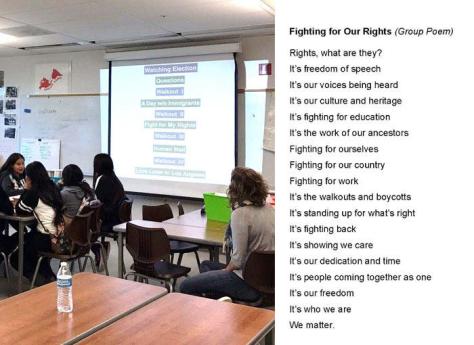
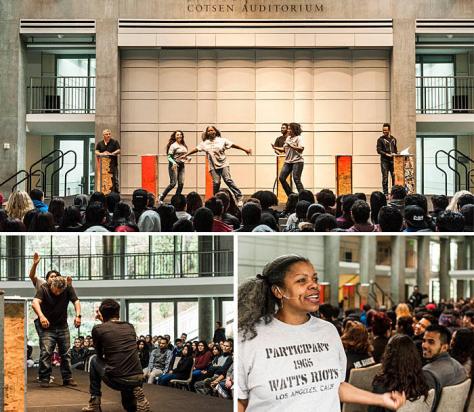
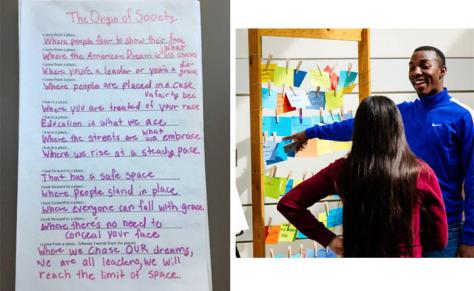
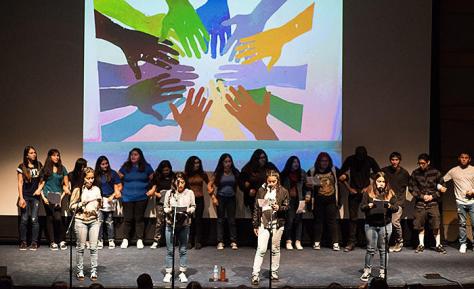


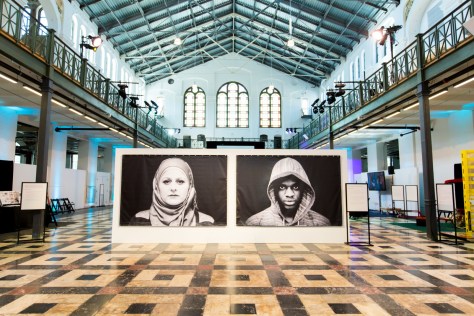
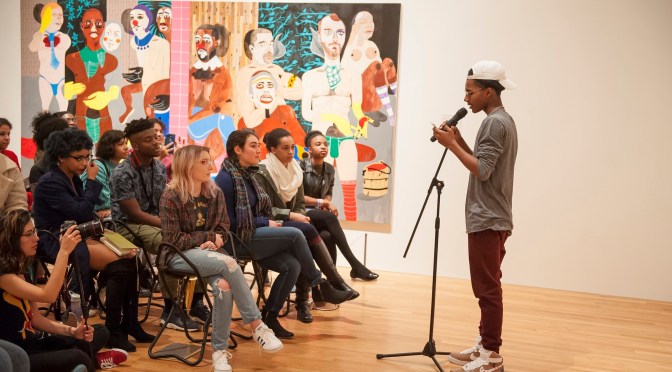
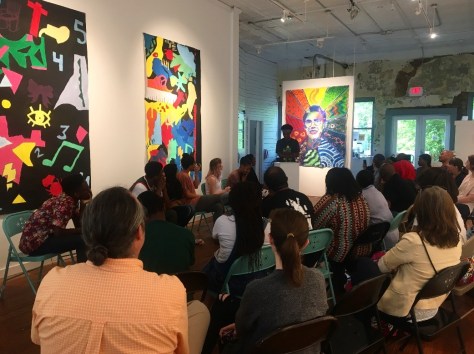
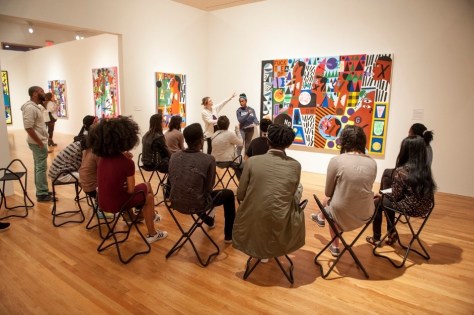
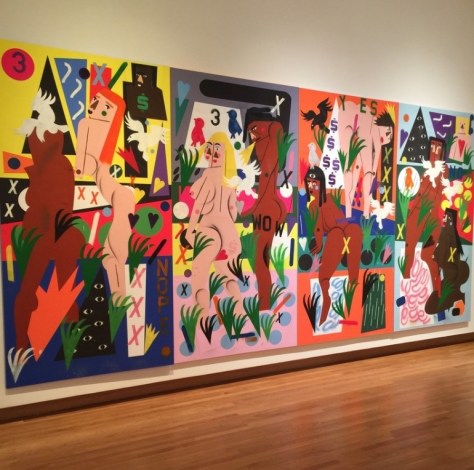
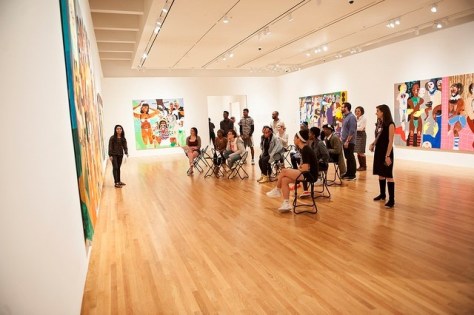
 JESSICA RUHLE is Director of Education & Public Programs at the
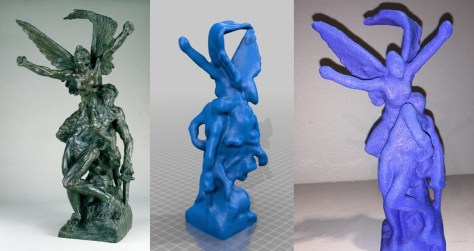
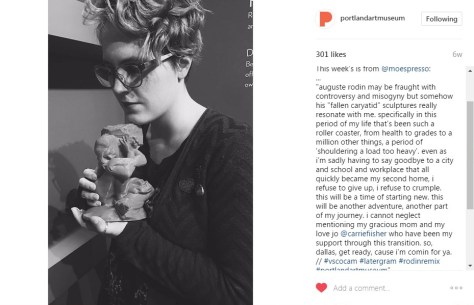
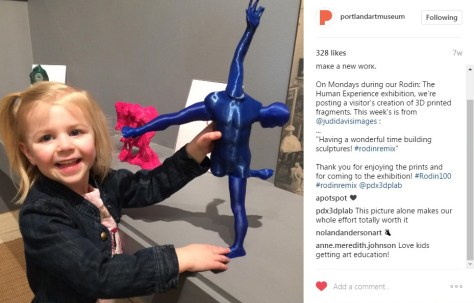
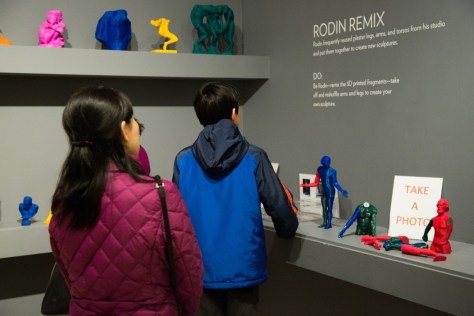
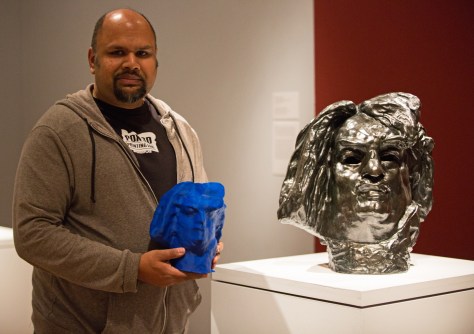
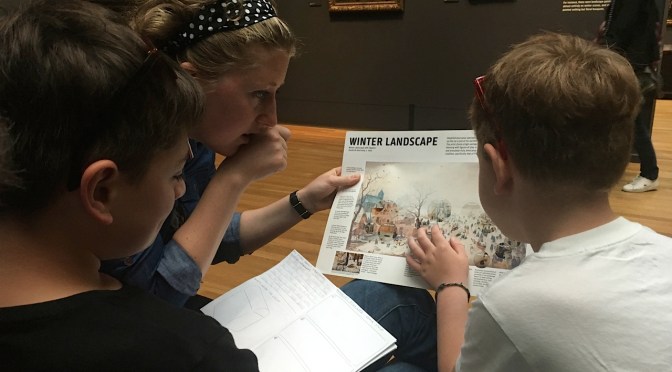
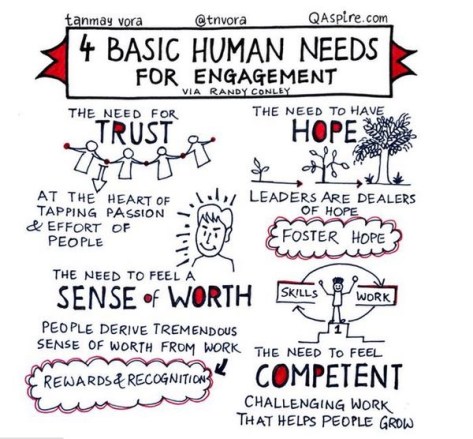
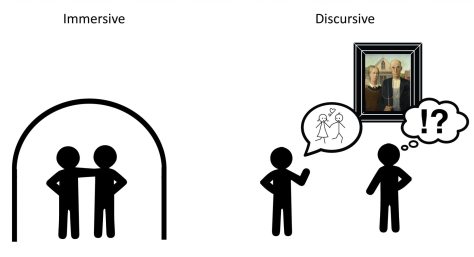
 DANIELLE CARTER is a freelance museum educator and researcher based in Amsterdam, the Netherlands. She studied Art, Art History, and Museum Studies (2013) at Florida State University before moving to the Netherlands to pursue her Master’s degree in Arts and Heritage: Policy, Management, and Education (2015) at Maastricht University. Through her experiences as an arts and museum educator in the United States and abroad, she has become interested in the museum (learning) experience, the narrative of the museum (learning) experience, interactions between visitors and museum objects, the mediatory role of the museum, and play in the museum space. In Amsterdam, she bikes, takes advantage of the sun every time it comes out, and falls in love with every dog that she sees. To find out more about Danielle’s activities, visit her website (
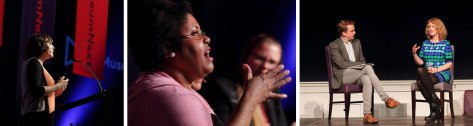
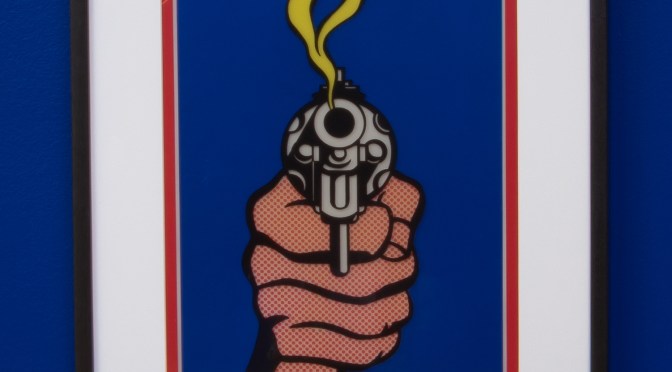
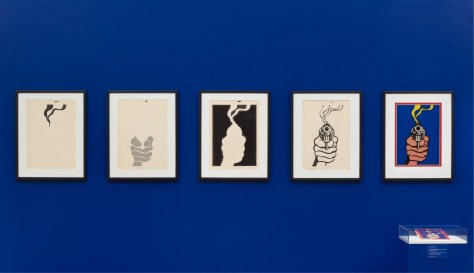

 HOLLY GILLETTE is an art museum educator with an interest in gallery teaching and community building. She is currently an Education Coordinator at the Los Angeles County Museum of Art (LACMA) where she oversees the school and community partnership program Art Programs with the Community: LACMA On-Site. Prior to working at LACMA, she began her career in Museum Education at the Crocker Art Museum in Sacramento, CA, focusing on school, early childhood, and family audiences. Holly holds a MS.Ed. in leadership in museum education from the Bank Street College Graduate School of Education and a B.A. in art history and studio art from University of California, Davis. Holly’s postings are her own and don’t necessarily represent LACMA’s positions, strategies, or opinions.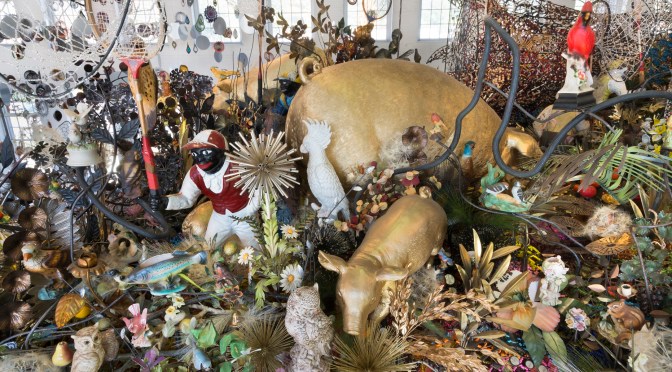
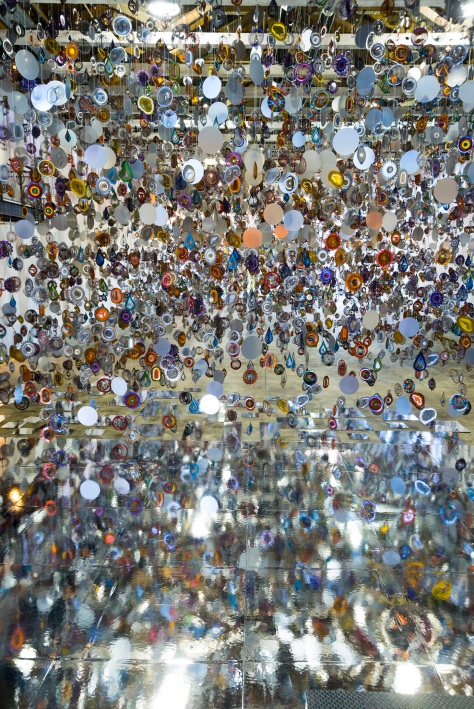
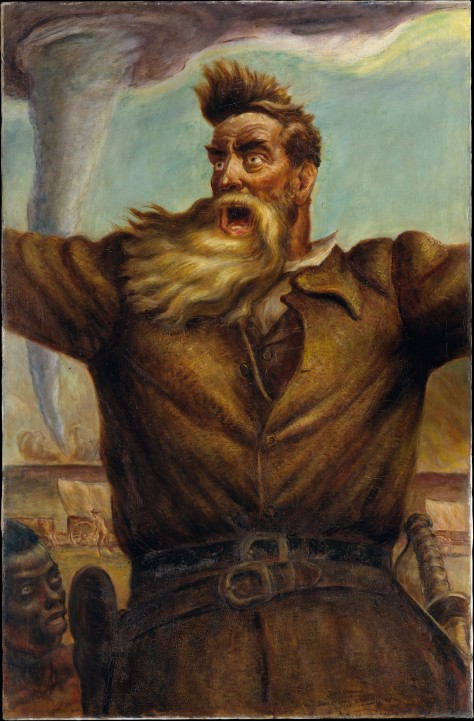
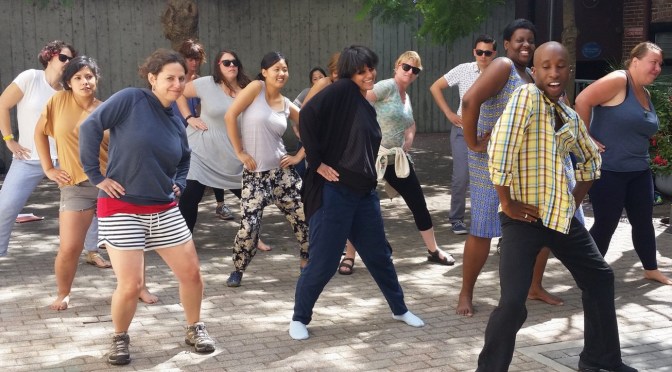
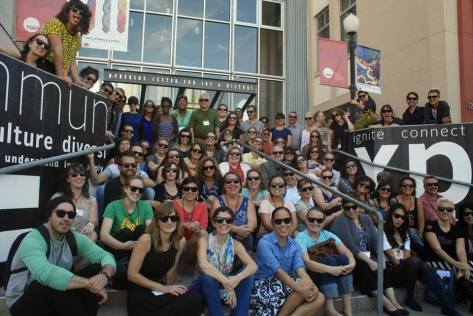
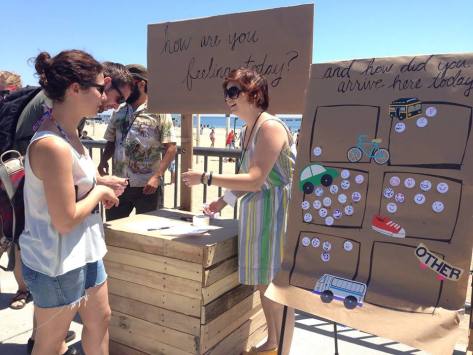
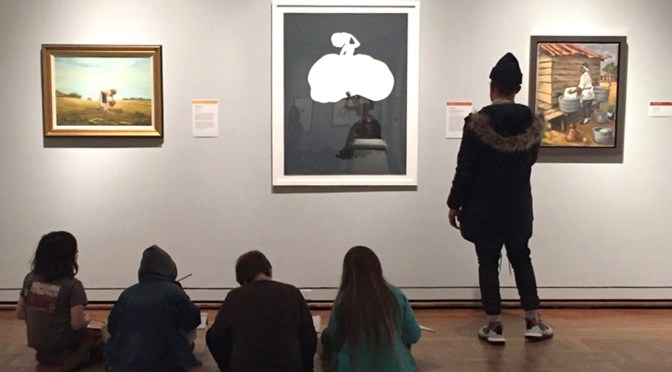
 Because the children expect to find a place for themselves in the things we do in school, I knew I could expect authentic attempts at making meaning of the art in the “Constructing Identity” exhibition, and so I needed to focus on setting them up to be able to share the meanings they were making. My goal was to support the children to see each piece in the collection as a kind of long-distance offer of connection from one artist to another. I didn’t need to tell them how to connect with the art, how to find meaning in it — I just needed to ask them to, and I needed to give them some tools to do so.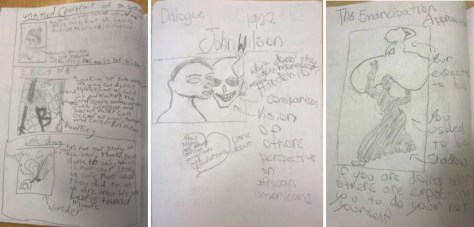
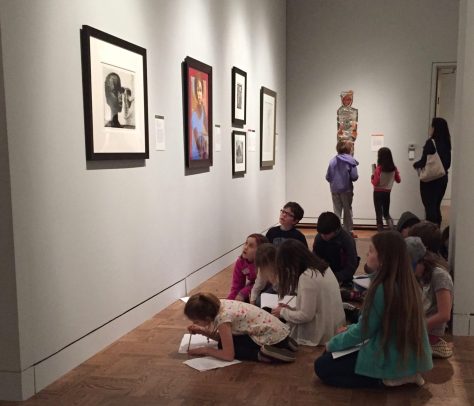
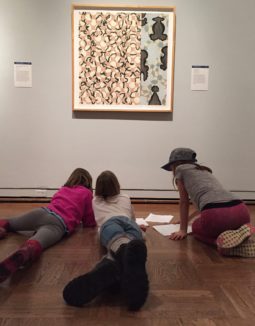
 SUSAN HARRIS MACKAY is Director of Teaching and Learning at Portland Children’s Museum. In that role, she gives leadership to Opal School and the Museum Center for Learning, and works directly with children in the classroom. Opal School serves children ages 3-11 using inquiry-based approaches through the arts and sciences with a mission to strengthen education by provoking fresh ideas concerning environments where creativity, curiosity and the wonder of learning thrive. Along with her colleagues, Susan shares these fresh ideas through a professional development program for educators world-wide. Recent work includes chapters in Fostering Empathy Through Museums, and In the Spirit of the Studio, 2nd Edition, and a TEDx talk called, “School is For Learning to Live”. Connect with Susan and Opal School at opalschool.org.
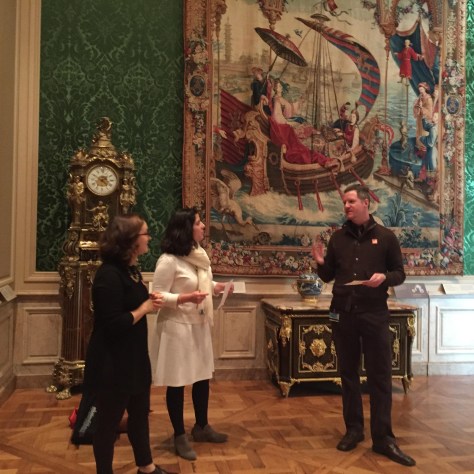
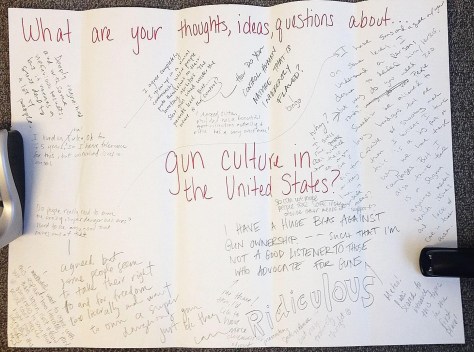

 Art Museum Teaching