Written by Sarah Watkins, Canadian Museum for Human Rights
Reposted with permission from the Canadian Museum for Human Rights blog, the institution’s online presence for stories about the museum and its exhibitions, programs, education programs, and other news. Check it out, and learn more about the exciting work happening at the CMHR. Original post by Sarah Watkins, September 3, 2016.
I have always believed that museums are powerful places. Visiting a well-done exhibit can help us to grow by opening our minds and hearts to ideas that we may never have even considered. For me, the travelling exhibition Sight Unseen: International Photography by Blind Artistsis a perfect example of this.
On display at the Canadian Museum for Human Rights until September 18th, Sight Unseen showcased the photography of acclaimed international artists, all of whom have varying levels of vision loss. I was fortunate enough to work with some of these artists to create a lecture series called Shooting Blind, which explored the idea of taking photos without the use of sight. Now that I can reflect on this experience, I have come to realize that this exhibition and these artists have helped me to discover a new perspective on photography and ability.
A quiet evening on Winnipeg’s Esplanade Riel. Credit: Shadow Walk/Sarah Watkins
What is really interesting about Sight Unseen is that the art seems familiar but foreign at the same time. In today’s world, everyone takes photos – at home with family, out with friends, on our cellphones and tablets and with our digital cameras. The act of taking photographs has become commonplace, and for this reason we can all connect with this exhibition. The artists in this show, however, aren’t just taking photos or documenting a moment in time; they are communicating a message. They think very deeply and consciously about what they are going to photograph.
I used to take thousands of photos with my digital camera in an attempt to capture the exact thing that I was seeing with my eyes. Now, because of this exhibition, I have a different perspective. I take fewer photos, but I think more deeply about each one. I look beyond what is in front of me and consider why I am taking the photo. Am I trying to capture an image of the bridge, or the way that the evening light creates patterns out of shadows that reflect the shape of their source? Is it the fog on the water that is most interesting, or the stillness that it communicates the minute before I jump in the lake for a morning swim?
A foggy lake before a morning swim. Credit: Morning Swim/Sarah Watkins
After visiting Sight Unseen, I see the photographs in a new way. When I look at the photo created by Evgen Bavčar that shows an outstretched hand touching the face of a stone statue, I no longer see just the objects. Rather, I see the careful exploration and discovery of something unknown. I can’t help but think of the artist, exploring the world in ways that I could never imagine, through the sense of touch. Similarly, I used to think of the amazing light paintings created by Pete Eckert as abstract art. His photographs created in a completely dark room with flashlights and other light sources seemed random. Now, the swirling colours and rays of light make me think of energy. Each model is represented differently, the colours and patterns as unique as the person they are highlighting. To me, this sense of energy was something previously imperceptible until Pete showed it to me through his work.
This change in perspective has me questioning what it means to be “able” to do something. If photography isn’t about sight, then maybe dancing isn’t always about what we do with our legs, and speaking isn’t always about sounds coming out of our mouths. This is the lesson that I have learned from Sight Unseen. There is more about us that is the same than different, so no matter what our differences are, we all deserve to have our humanity, dignity and rights respected in the same way.
*Sarah Watkins is a Interpretive Program Developer for the Canadian Museum for Human Rights.
Header Image: Gerardo Nigenda, Entre lo invisible y lo tangible, llegando a la homeostasis emocional (Reaching Emotional Equilibrium Between the Invisible and the Tangible).
Throughout this summer, I have been thinking quite a bit about how museums respond to the events going on in the world around us as well as in our own communities (especially about the urgent role of empathy in museums as tragic events flood the headlines, but also the ways in which museums have responded to Ferguson and interact with the Movement for Black Lives). There are so many challenging questions that urgently need to be asked and addressed:
What is the social and emotional responsibility of museums, especially as many public institutions strive to be a vital part of their local communities?
How can our collections and exhibitions help visitors critically and thoughtfully engage with present-day realities?
How do museums decide which political or social issues to engage with, and which ones to be silent about?
If these issues don’t directly relate to something in our galleries, can museums still be a site for people to gather and grapple with these difficult topics?
And finally—perhaps the biggest and most provocative question—can museums be neutral in all of this? What is the value, if any, of remaining silent?
These questions—and many more—are being asked this summer at the museum I work for, the Portland Art Museum, which recently opened two exhibitions that relate directly to the politically charged realities of our time: an immersive multimedia project by artist Josh Kline entitled Freedom, and a focus exhibition of the work of Portland artist Arvie Smith. As we personally responded to the news cycles of the summer, we wondered how our visitors might bring their feelings of anger, fear, grief, pain, hope, love, and healing to their experience with these exhibitions and our collection. Should we do anything different, or just allow the art to spark that connection on its own with the people who happen to visit?
After a few rapidly planned cross-departmental meetings combined with some unplanned hallway conversations, the general consensus was to do something. One of our attempted strategies, among others, was to develop a guide to support productive conversation and dialogue in the galleries. After all, the idea of ‘conversation’ has been such a core value for gallery teaching at our institution for many years, as well as for my own personal teaching practice (see “Reflecting on the Learning Power of Conversation in Museums”).
I am writing this post to share the prototype of our Have Conversations Here Guide, and talk briefly about the various resources that I pulled together to develop the text of this guide. While I know that this guide is far from perfect, I am such a fan of an ‘open source’ mindset and just simply getting it out there. I welcome productive feedback, other useful resources, and both success and failure stories for when others have experimented with strategies like this.
But before discussing the Guide in more detail, it only makes sense to provide a bit more information about the Kline and Smith exhibitions that essentially sparked this extended thinking about productive dialogue here at our museum.
Art Provokes Conversations
Taking up an entire floor of the museum’s modern and contemporary wing, Josh Kline’s exhibition Freedom explores issues of social justice activism, policing, surveillance technologies, and corporate/government power. The work includes video monitors; a recreation of Zuccotti Park in Lower Manhattan (a space taken over by Occupy Wall Street in 2011); life-size sculptures of police officers in tactical gear with Teletubby heads; videos embedded in the torsos of the police figures that include Black Lives Matter activists and retired police officers; and an installation of replicated donuts bearing police crests, handcuffs, asphalt, and broken auto glass. Inspired by his own participation in the Occupy movement, Kline asks visitors to confront the recent past and its repercussions, while contemplating our roles as citizens in this pivotal moment when the uses of technology, notions of privacy, and the social order are rapidly shifting.
Josh Kline. Freedom, 2015 (installation view, New Museum, New York). Installation, various media. Image courtesy of 47 Canal, New York. Photo: Joerg Lohse.
In a different part of the museum, the brightly-colored paintings of Arvie Smith draw subject matter directly from his own African American roots and lived experience. A key work in the exhibition is Smith’s Strange Fruit (1992), depicting the lynching of a young black man by two robed KKK members, and borrowing its title from the Abel Meeropol song made famous by Billie Holiday. Additional works such as Hands Up Don’t Shoot (2015) include stereotyped caricatures of African Americans like Aunt Jemima and direct references to police violence and the death of Michael Brown in Ferguson, Missouri, in 2014.
Both Smith and Kline clearly see their work as intended to spark conversation and dialogue around these challenging issues, inviting visitors to not only grapple with the imagery and subject matter of their work but also with the connected realities of the world we are experiencing every day. In an interview with Portland Monthly Magazine, Kline talks about the relationship of activism and art, and the role he sees his art playing:
“Art doesn’t directly change the world. It provokes conversations and gives people space to think about their world in ways that aren’t usually possible through mass media, but it doesn’t have the power to topple corrupt governments or feed the hungry. Art operates via the ripple effect and through indirect influence. As an artist, I feel fortunate to have a public platform right now and I want to use it to speak out about issues that I feel are important—while at the same time making work that reflects the human experience in the present.”
Along these same lines, Smith discusses the importance of dialogue in an interview with the museum:
“I think everybody comes to these strong emotional situations from their own frame of reference, and I’m going to see things one way, someone else is going to see it another way—doesn’t mean I’m right; doesn’t mean their right or wrong. We have a difference of opinion. And, somewhere, through dialogue, hopefully, we can come together & make this a better world to live in.”
Developing a Conversation Guide
As part of our multifaceted conversations about how to support our visitors in having meaningful, respectful dialogue here at the museum (and after their visit), I spent time researching and developing a Conversation Guide that we could share. I scoured all of my existing resources on teaching, critical pedagogy, community activism, and museum learning, and printed out dozens of training manuals and facilitation guides that related directly to having conversations about difficult topics. My desk was completely covered.
After drafting up an extensive multi-page guide that included far too much text and too many prompts, I edited it all down until it fit on one single page. I sent this off to a few amazing colleagues at other museums, handed it to fellow staff at my museum, shared it with a few key community members, met with our director, and brought together all their feedback to create the final prototype: Have Conversations Here. We uploaded it to our website on the Visit page and emailed it to all staff and docents. I also began handing it out at programs and events developed through specific community outreach efforts related to these exhibitions, including the PDX Social Justice Community Art Project and a panel discussion “Race in America After Ferguson” with Rev. Traci Blackmon from Christ the King United Church of Christ in Florissant, Missouri.
As you’ll quickly notice, the key sources of inspiration and content for this guide included Hillel International’s Ask Big Questions, the Public Conversations Project, the Southern Poverty Law Center’s Teaching Tolerance Project, the curriculum resources of Teaching for Change, and PBS’ Talking with Kids guides, especially their guide for Talking with Kids about the News. If you are not familiar with any of these project and resources, I highly recommend you check them out and share them with your staff or colleagues. I have been a huge fan of Ask Big Questions for years, and I found the field manuals from the Public Conversations Project to be incredibly detailed and useful (for creating this guide, as well as for my own professional practice).
I am pasting the full text of this Have Conversations Here guide below in this blog post, so anyone can use any portion of this without needing to surgically remove it from a PDF. I hope that some of you find this useful, and perhaps might use some of this content in your own museums (if you do, let me know, and please continue to cite the sources for this guide).
I couldn’t end this post without including the following quote from curator Michael Brenson (which sadly didn’t make it into the guide); a quote that has resonated with me for years and best represents what I value about the powerful kinds of conversations we can facilitate in museums.
“In the best conversations, no one is used; ownership is shared. Everyone leaves with a sense that the ideas exchanged belong to each person present. Everyone also leaves respecting those who were part of the exchange, whether or not there was agreement. For me, conversation does make connections, it helps make connection possible.”
* * *
About the Author
MIKE MURAWSKI: Founding author and editor of ArtMuseumTeaching.com, museum educator, and currently the Director of Education & Public Programs for the Portland Art Museum. Mike earned his MA and PhD in Education from American University in Washington, DC, focusing his research on educational theory and interdisciplinary learning in the arts. Prior to his position at the Portland Art Museum, he served as Director of School Services at the Saint Louis Art Museum as well as coordinator of education and public programs at the Mildred Lane Kemper Art Museum at Washington University. Mike has been invited to lead workshops, lectures, panels, and training sessions at various institutions, including the Aspen Art Museum, Crocker Art Museum, the Museum of Contemporary Art in San Diego, Los Angeles County Museum of Art, National Gallery of Art, Nelson Atkins Museum of Art, Philadelphia Museum of Art, and Phoenix Art Museum, among others. He is passionate about how we can come to see museums as agents of change in their communities as well as creative sites for transformative learning and social action. Mike’s postings on this site are his own and don’t represent the Portland Art Museum’s positions, strategies, or opinions.
You are welcome to talk and have conversations here at the museum. We encourage you to use the galleries throughout the museum as spaces for dialogue, while always remaining respectful of all visitors. Explore together, look closely, and find a place within the museum to sit and talk about what you see and experience.
WHY DIALOGUE?
Dialogue is a powerful mode of conversation that genuinely seeks mutual understanding. It can occur between friends, co-workers, family members, and even among strangers. And it can certainly occur between people who do not share the same experiences, perspectives, or ideas. Learning to listen carefully and disagree respectfully are essential skills in today’s world.
Share your views.
Ask questions.
Listen with care.
“Talking in museums is one of the things that makes them matter, and the way in which we talk in museums is one of the things that define for us what they are.” – Adam Gopnik, writer
EXPLORE THE GALLERIES
Consider visiting artworks on view that more directly explore some of the politically- and socially-charged issues we see in the news today, including policing, racial violence, stereotypes, and social justice activism.
Take some time to experience these artworks, think about your responses, and have a conversation with someone else in which you share your perspective and listen to theirs. Consider these questions:
How have events related to these issues affected you personally?
What life experiences of your own might connect with the work by these artists?
How are these artists challenging you?
REFLECTION
If you’ve used this guide to spark any conversations with others—whether during or after your visit to the museum—think about any insights you’ve gained and how you might extend this experience.
Have you noticed anything new about yourself and how you view the world?
How might these conversations help you better understand someone else’s perspective?
How might you create more opportunities for reflection and dialogue?
TALKING & LISTENING STRATEGIES FOR FAMILIES
Talking about issues of social justice and violence with kids can be challenging. Children are curious and constantly ask questions about the world around them. In one breath, they might ask about a range of topics — from the weather to something they heard on the news. Whether at home, in the car, or here at the museum, it can be difficult to know how respond when difficult questions come up.
To help support these types of conversations here at the museum for all ages, we wanted to offer a few flexible suggestions. These strategies might help your family talk together about some of the socially- or politically-charged artworks you might encounter during your visit to the museum.
Start by finding out what your child knows.
When a difficult issue comes up, ask an open-ended question like “What have you heard about it?” This encourages your child to let you know what they are thinking.
Ask a follow up question.
Depending on your child’s comments, ask another question to get them thinking, such as “Why do you think that happened?” or “What do you think people should do to help?”
Explain simply.
Give children the information they need to know in a way that makes sense to them. At times, a few sentences are enough.
Listen and acknowledge.
If a child sees or hears something that might worry and upset them, recognize their feelings and comfort them. This acknowledges your child’s feelings, helps them feel secure, and encourages them to tell you more.
(Adapted from “Talking with Kids about the News,” a resource for parents available online at pbs.org/parents/talkingwithkids/news)
ADDITIONAL RESOURCES
This guide draws from the following projects and resources to develop these strategies to promote active, productive dialogue and reflection. Learn more by visiting the websites listed here:
Featured Header Image: Artist Demian DinéYazhi’ leading a conversation in the galleries of the Portland Art Museum’s Center for Contemporary Native Art with participants in the Middle East Partnership Initiative (MEPI) program. Photo by Cody Maxwell.
“We are in more urgent need of empathy than ever before.”
This quote has been on my mind often over the past days, weeks, months, and sadly, years—as senseless acts of violence and hatred hit the headlines at a numbing pace of regularity. This past Friday was no different, as we all awoke to the horrific news from Dallas, during a week when the country was already reeling from news of the deaths of Alton Sterling and Philando Castile. We’re also seeing an alarming spike in hate crimes and xenophobia in the UK after ‘Brexit’ that correspond in unsettling ways to divisive rhetoric and acrimonious tone of Republican nominee Donald Trump’s presidential campaign. All of this as we are still processing the Pulse nightclub attack in Orlando, where 49 individuals lost their lives.
I think in moments like these, it’s important for museums—and the people who work for them—to pause and reflect on the roles that we serve within our communities. Yes, museums are institutions that hold collections. But they can also serve a powerful role with our communities as active spaces for connection and coming together, for conversation and dialogue, for listening and sharing. Museums can be spaces for individual stories and community voices. They can be a space for acknowledging and reflecting on differences, and for bridging divides. They can be spaces for growth, struggle, love, and hope.
The words at the beginning of this post come from Roman Krznaric, author of Empathy: Why It Matters, and How to Get Itand founder of the Empathy Library. Krznaric is among a growing chorus of voices who see an urgent need for empathy and human understanding in an era too often marked by violence, hatred, resentment, self-interest, and toxic political and social debates. In his TEDx Talk “How to Start an Empathy Revolution,” he defines empathy:
“Empathy is the art of stepping into the shoes of another person and looking at the world from their perspective. It’s about understanding the thoughts, the feelings, the ideas and experiences that make up their view of the world.”
In September 2015, Krznaric put these ideas into practice in the realm of museums with the development of the Empathy Museum, dedicated to helping visitors develop the skill of putting themselves in others’ shoes. Its first exhibit, “A Mile in My Shoes,” did quite literally that, setting up in a shoe shop where visitors are fitted with the shoes of another person, invited to walk a mile along the riverside while being immersed in an audio narrative of this stranger’s life, and then write a short story about it. With contributions ranging from a sewer worker to a sex worker, the stories covered different aspects of life, from loss and grief to hope and love.
Stories written by visitors participating in the “A Mile in My Shoes” exhibit, Empathy Museum. Photo from http://thecuriouslives.com/
Developing empathy has the potential to create radical social change, “a revolution of human relationships,” Krznaric states. So how can we spark this empathy revolution in museums?
Museums Are Us, Not It
I want to start by making an important foundational point about how we talk about museums. When we talk about them only as brick-and-mortar institutions or as ‘it’, it becomes easier to distance ourselves from the human-centered work we do. So it’s absolutely essential to remember that museums are made of people (yes, just like Soylent Green): from directors, board members, patrons, and curators to educators, guest services staff, registrars, conservators, security guards, volunteers, maintenance and facilities workers, members, visitors, etc. I am reminded of this by the Director of Learning at the Tate, Anna Cutler, whose memorable 2013 Tate Paper discussed institutional critique and cultural learning in museums. In it, she quotes artist Andrea Fraser:
“Every time we speak of the ‘institution’ as other than ‘us’ we disavow our role in the creation and perpetuation of its conditions.”
This is an important basis for any discussion of empathy and museums, since it defines the vision, mission, and work of a museum as the vision, mission, and work of the people who belong to that museum. So if we, myself included, say “museums must be more connected to their communities,” we’re really talking about what the people that make up the museum need to focus on – being more connected to our communities. We are inseparable from the institution, in other words. Any critique of museums is a critique of us; and any change needing to happen in museums is, therefore, a change that needs to start with us.
The Growing Role of Empathy in Museum Practice
Krznaric’s work with the Empathy Museum is but one small example of the types of civically-engaged, human-centered practices that have been instituted in an effort to expand the role that museums serve in building empathy and human connection in our communities. Staff working for museums across the globe are launching new efforts to bring people together, facilitate open dialogue, and elevate the voices and stories of marginalized groups to promote greater understanding.
For example, I continue to be amazed and inspired by the Multaqa project developed last year by Berlin’s state museums, which brings in a group of refugees from Iraq and Syria to serve as Arabic-speaking guides. The project title, Multaqa, means “meeting point” in Arabic. The tours are designed to give refugees and newcomers access to the city’s museums and facilitate the interchange of diverse cultural and historical experiences. The tours have been so popular, according to a recent report, that the organizers are looking to expand the program to include “intercultural workshops, which the Berlin public can also participate in.”
Here at the Portland Art Museum, the Object Stories initiative (which began back in 2010) has continued to embrace storytelling and community voices here in Portland. A recent exhibition that opened earlier this year featured powerful stories and personal objects from the local refugee community. The exhibition was co-created with Portland Meet Portland, a local non-profit focused on welcoming immigrants and refugees arriving in our city by creating mutually beneficial mentoring opportunities that promote cross-cultural learning, enhance work skills, and build trust.
The work of Portland Meet Portland and this Object Stories exhibition helped to highlight the important contributions that immigrants and refugees bring to their new homes here in Oregon, and also offered this area’s longer-term residents an opportunity to learn from these newcomers—their stories, resilience, and unique cultures. Visitors to the gallery (probably around 60,000 people) had the opportunity to listen to participants’ stories, leave a welcome message for these storytellers, and learn more about advocacy efforts and local non-profits working with immigrant and refugees in Portland (which ranks 11th among US cities resettling international refugees).
Photo of Object Stories gallery during exhibition “Person, Place, Thing: Objects and the Making of a New Life.” Photo by Cody Maxwell.
The Canadian Museum for Human Rights, an inspiring institution in so many ways, currently houses six different exhibits that explore the tragic story and legacy of the Indian Residential School system, one of Canada’s most pressing human rights concerns. As a national museum and hub of human rights education, the Museum has an important role to play in efforts towards reconciliation between Indigenous and non-Indigenous people in Canada. As is stated in the 2015 summary report of Canada’s Truth and Reconciliation Commission (TRC): “Through their exhibits, education outreach, and research programs, all museums are well positioned to contribute to education for reconciliation.” The team at the Canadian Museum of Human Rights is also working to keep the conversation alive and involve the voices of its communities, especially through its “Share Your Story” project that allows anyone to record their own story about human rights or listen to the individual experiences of others.
In their book Cities, Museums, and Soft Power, Gail Dexter Lord and Ngaire Blankenship discuss the human social behaviors of bridging and bonding that museums have the distinct potential to promote and amplify, especially through public programs, education, and exhibitions. Their final essay offers a comprehensive set of strategies for how museums can be of greater value to their cities and communities:
“Museums and cities have a strong role to play together in bridging and bonding. They bring people together at similar life stages … or with identity in common … where they can share their experiences. Museums also bridge among identities, offering a public place to bring different groups together around similar interests.” (p. 222)
The International Museum of Folk Art’s Gallery of Conscience, inaugurated in 2010, serves as truly unique and visionary example of how museums are experimenting in this area. The Gallery’s goal is to be an agent of positive social change by engaging history, dialogue, and personal reflection around issues of social justice and human rights. Since the gallery’s inception, exhibitions in this space have explored how traditional artists come together in the face of change or disaster to provide comfort, counsel, prayer, and hope through their art. This focus has earned the space membership in the International Coalition of the Sites of Conscience.
Exhibitions in the Gallery of Conscience are “community-driven, co-created, collaborative, participatory, and cumulative,” according to a press release. “Visitors and community members become part of the conversation from the very beginning—helping to shape the exhibitions and contribute to the dialogue throughout the exhibition’s run.” In 2013-14, the Gallery’s exhibition “Let’s Talk About This” focused on folk artists’ responses to HIV/AIDS through artist and visitor participation, community programs, and a digital storytelling project with LGBTQ youth developed in partnership with N’MPower and Youth Media Project. The oral histories that were collected were incorporated into the exhibition through listening stations, and also became part of the dialogue-based programs related to the exhibition.
The Gallery of Conscience at the Museum of International Folk Art and N’MPower worked with Youth Media Project mentors to record digital oral histories of the radio show Audio Revolution! Photo from http://www.sitesofconscience.org/
Building a Broader Culture of Advocacy
The type of museum practice I’ve highlighted is certainly not new. Many of us read about this work in museum blogs (such as Incluseum, Thinking About Museums, Visitors of Color, Queering the Museum, Brown Girls Museum Blog, etc.) and emails from the Center for the Future of Museums or Museum Hack. Many of us work on programs like these ourselves. But what concerns me is that across much of this practice, I find a lack of a broader institutional culture of support. Too many community-based projects like the ones I mention above end up being relegated to education staff, isolated from the core mission of an institution, or left entirely invisible. And this lack of supports extends beyond the walls of the museum. When journalists, scholars, and critics write about museums and exhibitions, they frequently ignore or denigrate the spaces that invite visitor engagement and community participation. There are even individuals in my own field of museum education who refer to empathy-building practices and affective learning strategies as too “touchy feely.”
We museum people need to work together to build a stronger, collective culture of support and advocacy for museum practice based in empathy, inclusion, and social impact. This is some of the most meaningful, relevant work happening in museums right now. People across our institutions—not just educators but directors, curators, marketing staff, board members, donors, etc.—need to be publicly and visibly proud of the programs, exhibitions, and projects that actively embrace individual stories, dialogue about provocative questions, and the diverse and rich lived experiences of those living in our communities. More comprehensive support for this work can lead to an expanded focus on social impact and community engagement in a museum’s strategic goals and mission, in its exhibition and program planning process, and in its allocation of resources.
So let’s all be more proud of the work we’re doing in museums to bring people together and learn more about ourselves and each other — from tiny one-off gatherings and events to much larger sustained initiatives.
Time for an Empathy Revolution in Museums
How do we start an empathy revolution in museums? How do we more fiercely recognize and support the meaningful work that museum professionals are already leading to support open dialogues around the challenging, relevant issues of our time? And how do we radically expand this work to build a stronger culture of empathy within museums — one that measures future success through our capacity to bring people together, foster conversations, and contribute to strong and resilient communities?
In 2013, the Museums Association of the UK launched its Museums Change Lives campaign, establishing a set of principles based on research, conferences sessions, online forums, open public workshops, and discussions with charities and social enterprises. I think the core principles they developed from their vision for the social impact of museums (a must read!) are worth sharing to move this discussion forward and enact change:
Every museums is different, but all can find ways of maximizing their social impact.
Everyone has the right to meaningful participation in the life and work of museums.
Audiences are creators as well as consumers of knowledge; their insights and expertise enrich and transform the museum experience for others.
Active public participation changes museums for the better.
Museums foster questioning, debate, and critical thinking.
Good museums offer excellent experiences that meet public needs.
Effective museums engage with contemporary issues.
Social justice is at the heart of the impact of museums.
Museums are not neutral spaces.
Museums are rooted in places and contribute to local distinctiveness.
These principles, as with much of their vision, are inspiring — but too often we stop there, feeling inspired but lacking action. The Museums Association report continues, “It’s time for your museum to respond to hard times by making a bigger difference. It’s time for you to play your part in helping museums change people’s lives.” The report concludes with a pretty spot-on set of 10 actions that will help your museum improve its social impact. Here is a slightly abbreviated, edited list:
Make a clear commitment to improve your museum’s social impact (ie. having strategic goals).
Reflect on your current impacts; listen to users and non-users; research local needs.
Research what other museums are doing.
Seek out and connect with suitable partners.
Work with your partners as equals.
Allocate resources.
Innovate and be willing to take risks.
Reflect on and celebrate your work. Learn from and with partners and participants.
Find ways for partners and participants to have a deep impact on your museum. Bring more voices into interpretation and devolve power.
Strive for long-term sustained change based on lasting relationships with partners and long-term engagement with participants.
Print these out, put them on your office wall, bring them to staff meetings, share these with your visitors and audiences, and have some open conversations about the “so what” of museums. Take these principles and action steps seriously. Build a broader team to advocate for the work you’re already doing at your institution; rethink existing programs; and bravely propose new projects and partnerships that better serve your community. See how a human-centered focus on empathy and social impact might change your own practice, your museum, and your community.
“The best museums are now striving to realise their full potential for society and are far more than just buildings and collections. They have two-way relationships with communities…. They are becoming increasingly outward looking, building more relationships with partners. They are welcoming more people as active participants.” (Museums Change Lives)
Let’s be a part of making this happen!
* * *
About the Author
MIKE MURAWSKI: Founding author and editor of ArtMuseumTeaching.com, museum educator, and currently the Director of Education & Public Programs for the Portland Art Museum. Mike earned his MA and PhD in Education from American University in Washington, DC, focusing his research on educational theory and interdisciplinary learning in the arts. Prior to his position at the Portland Art Museum, he served as Director of School Services at the Saint Louis Art Museum as well as coordinator of education and public programs at the Mildred Lane Kemper Art Museum at Washington University. Mike has been invited to lead workshops, lectures, panels, and training sessions at various institutions, including the Aspen Art Museum, Crocker Art Museum, the Museum of Contemporary Art in San Diego, Los Angeles County Museum of Art, National Gallery of Art, Nelson Atkins Museum of Art, Philadelphia Museum of Art, and Phoenix Art Museum, among others. He is passionate about how we can come to see museums as agents of change in their communities as well as creative sites for transformative learning and social action. Mike’s postings on this site are his own and don’t represent the Portland Art Museum’s positions, strategies, or opinions.
Reposted from The Warhol: Blog, the institution’s online presence for stories about the museum and its exhibitions, programs, education programs, and other news. Check it out, and learn more about the exciting work happening at The Warhol!
This is the first post in a series on the development process of The Warhol’s new audio guide.
In 1964, Andy Warhol moved to a new studio in a large New York City loft and covered its walls with silver paint and aluminum foil. Dubbed the Silver Factory, this space became known as a gathering place for artists, friends, and celebrities.
The “open-door policy” of the Factory is something that we’re inspired by at The Warhol as we endeavor to create a communal and inclusive environment within the walls of our museum. One way we’re becoming a more inclusive place is through our commitment to making the museum friendly to visitors of all abilities. Later this summer, we’ll be soft-launching a new audio guide that takes an inclusive design approach. According to the Canadian Museum of Human Rights, this is a philosophy that designs with all users in mind from the outset:
“The inclusive design approach will ensure the museum experience is not only accessible for all ages and abilities, but is enriching and satisfying for all. It is not a design style, but an orientation to design.”
Through a series of posts on The Warhol Blog (cross-posted here at ArtMuseumTeaching.com), we’ll dive into the process behind our new audio app, which soft-launches later this summer in a limited release and will be available to all museum visitors this fall.
The story starts in the summer of 2014, when my predecessors in charge of digital engagement partnered with the education department to develop experiences for visitors who are blind or have low vision. One component of the project was an audio guide in conjunction with the exhibition Halston and Warhol: Silver and Suede. We used low-energy Bluetooth beacons to push content out to visitors based on where they are located in the museum—no need to read numbers on a wall label and type them into a device! Instead, the iOS application notifies you when there is relevant audio nearby.
In conjunction with the app, we also partnered with David White of Tactile Reproductions, LLC, to produce tactile representations of artwork in The Warhol’s collection. Tactile reproductions reimagine the contours and colors of an artwork as different relief layers, allowing visitors to use touch to gain an understanding of what a work looks like. Together, the audio guide app and the tactile reproductions allow visitors with visual impairments to delve into Warhol’s life and practice through senses beyond sight.
Working with our partners at Tactile Reproductions, LLC, to create the Andy Warhol artwork tactile reproductions. This one is a representation of Marilyn Monroe.
We learned a lot from these prototypes, but they were just the start. Since the beginning of this year, we’ve been hard at work to turn these prototypes into a reality. From the beginning of the process, we’ve kept four things in mind:
1. Put users first
We are committed to building an audio guide experience not just for community members with visual impairments, but with them as well. In our design process, we’ve worked closely with consultants with varying degrees of blindness. We talked to our partners even before we drew a single wireframe, exploring what makes a great museum experience and how they use technology. We also bring in our consultants to test prototypes at different stages of the process, allowing the findings from these sessions to guide the next step.
2. Don’t just build for accessibility
We strongly believe that if we design with different abilities in mind, we can craft a better experience for everyone. Even though we’re designing first for visitors with visual impairments, the audio guide will be available to all. Our consultants told us that they like to come to museums with friends and family, so whatever we design should be built for a social experience. Additionally, we currently don’t have an audio guide—and our front desk staff tells us this is one of the most common requests they get.
3. Reimagine the audio guide
Since we started from scratch with this audio guide, this was a great opportunity to depart from the usual way of doing things. We’re not the only ones rethinking the traditional audio guide: The newly-opened Broad Museum in Los Angeles is taking a cue from the irreverent and conversational tone of podcasts in their audio app; the British Museum has experimented with tours with longer audio files organized around themes rather than objects; and SFMOMA has designed a fully-immersive audio experience. In future blog posts, we’ll describe how we’re taking a different approach, splitting up audio content into smaller, modular stops and allow visitors to dive deeper if they’d like to learn more.
Testing the audio guide with our community partners.
4. Start small, dream big
Everything I’ve described above is a tall order! From the outset of the project, we decided getting it right was more than ticking off all the checkboxes. For version one of the app, we have focused on only one floor of the building—floor 7, which displays works and artifacts from Warhol’s birth through to the early 1960s—but we’ve made it as complete an experience as possible. After launching and refining version one of the app, we want to expand to other floors of the museum.
Reviewing an exhibition floor plan with our community partners.
Over the course of this blog series, we’ll be delving into everything from the user research we’ve done in conjunction with our blind and low-vision partners, to the process of imagining a new kind of audio experience, to the technical trials and tribulations of wrangling beacons and building our app from scratch. We’re glad you’ve joined us!
Accessibility initiatives at The Warhol are generously supported by Allegheny Regional Asset District, The Edith L. Trees Charitable Trust, and the FISA Foundation in honor of Dr. Mary Margaret Kimmel.
Most of us agree that inclusion is important. However, we might be unsure how to activate this positive ideal in our daily professional practices. Where to begin when so much change and transformation seems needed? This week, we are excited to feature the Welcoming Guidelines that the LGBTQ Alliance, a professional network of the American Alliance of Museum (AAM), has been developing over the last couple years. These guidelines can certainly inform and help facilitate action. Thank you to Renae Youngs for introducing Incluseum readers to these guidelines that have been gathered in this document.
* * * *
Over the past two years, an AAM professional network has been developing a broad set of Welcoming Guidelines to help museums be more inclusive of lesbian, gay, bisexual, transgender and queer staff and visitors. The Guidelines touch on all areas of museum work, are available for free online, and launched at
While educators can all agree that programs for students on the spectrum are extremely worthwhile, many institutions, educators, and schools have trepidation in approaching these programs – but knowledge provides comfort. While the idea of setting up programming for students on the spectrum is multi-faceted, an under-discussed part of programming is the Pre Visit. Going into the Pre Visit, we prepared a visual agenda, social story, and had a touch collection. Below, find our individual reflections on the importance and outcomes of our short but powerful Pre Visits:
Feels Like the First Time – by Alex Brown
I am accustomed to meeting school groups ‘cold’ when they come in the door. I know where they’re coming from, the size of the group, the age range, and I speak with teachers prior to visits to discuss the scope and expectations, but it is difficult to know the feel of a school group if I haven’t met the students. Starting ‘cold’ and getting to know the students during a program works great most of the time, but it is simply not enough for every group. Students on the autism spectrum often require extra attention and care that can be difficult to provide with a ‘cold’ start. That’s when the value of the Pre Visit became clear.
Typical school programs at SECCA last between an hour and an hour and a half. Since most school programs start without Pre Visits, I spend the first five to fifteen minutes with introductions, discussions around the definitions of contemporary art, and a primer on the exhibition. This not only helps students get comfortable in an unfamiliar space and with potentially unfamiliar ideas, it also creates an opportunity for me to ‘read the room’ so I can find out what the students are interested in and the kind of experiences they are open to. ‘Reading the room’ can be anything from a discussion with the students to paying attention to body language. It becomes easier to read students as a program progresses and as discussions unfold. By the middle of a visit, most students feel comfortable in the space and are open to expressing themselves. This process can be decidedly different with students on the autism spectrum.
The ability to read an audience by paying attention to both verbal and non-verbal cues is based on an understanding of typical behaviors. I am not an expert on autism, but I do know that people with autism often behave in ways that do not conform to traditional behavioral norms. Their behavior is simply different, and it can’t be read using typical behavior as a baseline. This is what makes it difficult to start ‘cold’ with people with autism. I have led programs for special needs classes, special needs organizations, and group homes, and until recently I had never done Pre Visits. I have always met the group like I would have any other. Where most students that are typically developing are comfortable by the middle of a visit, some individuals with special needs did not feel comfortable until the end, if they got comfortable at all.
Through the pilot program and partnership, we included Pre Visits with every class. We met with each class for about fifteen minutes, and in that time we got to know the students, the students got to know us, and we introduced the students to SECCA, the exhibition, and museum expectations using a social story. The value of a Pre Visit became immediately apparent. In one of the pre-kindergarten classes, some students began to cry and showed signs of anxiety when we waked in the room. By the end of our visit, a student who was in tears when I walked in the room had taken me by the hand to show me around her classroom. Responses varied from student to student, but through the Pre Visits we established a shared foundation of comfort with the students. A foundation that carried over to their SECCA visits, eliminating the need to start ‘cold’ and opening more time to explore, experience, and make art.
It’s Not Just You, It’s Me – by Jen Brown (Oleniczak)
I haven’t always been a fan of the Pre Visit. So much of what I believe in with improv-based education is the idea of focusing on the current moment – maintaining a presence in the here and now to honestly react and respond to that here and now. Initially, it seemed a bit contradictory to have a Pre Visit with that mentality. The ‘secret’ I’ve discovered after doing a lot of Pre Visits through multiple organizations, including The Engaging Educator, is: the Pre Visit is as much for me as it is for the students.
As one of the people that initiated this partnership, I was insistent on the aspect of a Pre Visit. Modeling the program after the Guggenheim for All program, I saw a lot of success in getting the students ‘ready’ for their visit to the museum, as well as preparing the teachers with expectations. As an educator that has worked with students on the autism spectrum, as well as an improv advocate, my mentality behind the Pre Visit need was simple: while when you’ve worked with one person with autism, you’ve worked with one person with autism, and people are different every moment, it’s imperative to understand individuals where they feel comfortable and where they don’t. Yes, every child would be different. Yes, we were going to roll with it and be flexible and connect to the moment – but spontaneity? NOPE.
Now is a good moment to dispel a misconception about me as an educator. I plan. A LOT. I over plan. A LOT. The reason I over plan? So I can be flexible within a great big structure I’ve planned for myself, scrap things when necessary, pivot on a dime, and connect to the people in front of me. That’s improv.
Back to the Pre Visit – by going into the students’ classrooms, a space where they understand expectations, rules, and interactions, we could see how they connected with those consistent expectations, rules, and space. We could see that the high school class was VERY responsive to the prompts given to them, that the elementary class moved around a lot and like to hold our hands, and that the kindergarten class loved counting. We noticed the wanderers and the ways the teachers interacted with the students by saying, “follow the leader” to line up and the student’s attention span.
Yes, the students got to know us. Absolutely, they heard the social story, learned the expectations, practiced a ‘museum walk,’ and touched samples that would also be at the museum. We got to tailor and inform where we met the kids because of the Pre Visit. We were able to connect with them at a completely different level and prepare with more than just the teacher information (which is so valuable! Never stop doing this, teachers!)
There is an improv and storytelling principle of “starting in the middle” – essentially you get more accomplished by starting in the center of a conversation versus using time with exposition. The same happens with a Pre Visit – instead of using time to assess the group, you have a baseline. You can begin in the middle, and fine-tune the plan based on the individual moment of that student – the student you already have a relationship with. And how much better is that museum visit when you’ve increased your structure – when you’ve over planned for things, thought of possibilities, different directions, and prepared properly for anything? That’s where my flexibility as an educator comes in. Not from an “anything goes” attitude, but a larger structure to move around in. And a Pre Vist built into a special needs program, specifically one for students on the autism spectrum, makes my structure even larger, and my flexibility even smoother.
Have you had success with a Pre Visit program, or working with students on the autism spectrum? Share your comments, challenges, or best practices.
About the Authors
JEN BROWN (OLENICZAK): Founder and Artistic Director of The Engaging Educator, a NYC, LA and Winston Salem based organization that specializes in improv based education and development for the advancement of professional, social and communication skills. Through The Engaging Educator, her pedagogical approach has trained educators, students, professionals and individuals from organizations such as W Magazine, SFMOMA, Viacom, Columbia University, The Field Museum, MOMA, UNICEF, and Saks 5th Avenue. Recently the company opened a non-profit Foundation, offering free and low cost improv workshops to educators, at-risk teens and adults, and individuals on the autism spectrum. She holds degrees and accreditation from Marquette University, City College of New York, St. Joseph’s University and Second City.
ALEX BROWN: Programs Coordinator and museum educator at the Southeastern Center for Contemporary Art (SECCA), in Winston-Salem, North Carolina. As a member of both the curatorial and education departments at SECCA, Alex designs, develops and leads educational programs, family programs, exhibition and non-exhibition-related programs and film programs. In collaboration with the Curator of Contemporary Art and the Curator of education, he is also responsible for creating SECCA’s interpretive materials. By developing and offering programs that appeal to more than just one audience, Alex strives to make contemporary art approachable and accessible to everyone. He holds a B.A in History, Ancient Civilizations and Classics from the University of Iowa and a M.A in Museum Studies from Western Illinois University.
Written by Alyssa Greenberg, doctoral candidate in the Department of Art History at the University of Illinois at Chicago; founding member of Museum Workers Speak
Reposted from The Incluseum blog, an online forum advocating that inclusion become an integral priority for all museums and flourish through supportive community relationships.
On September 25-26, I participated in MuseumNext’s first stateside convening at the Indianapolis Museum of Art (IMA). Since 2009, MuseumNext has organized annual conferences in cities across Europe to highlight current best practices and future directions for the museum field. Starting with Indianapolis this year, MuseumNext will hold conferences annually in the fall in the States and in the spring in Europe. This fall’s topic was “Building Inclusive Museums” (not to be confused with the International Conference on the Inclusive Museum — though it’s great to see the topic gaining increasingly widespread attention).Through two days of jam-packed conference sessions, the themes explored ranged from sharing power and authority with museum audiences to fostering more inclusive hiring and labor practices within institutions. In this blog post, I’ll share two of my greatest takeaways from the conference.
1. Redefining and interrogating inclusion
There were at least as many definitions of inclusion as there were speakers at the podium. Something that came up again and again was the idea of sharing power and responsibility with communities beyond museum walls. For example, Independent Curator and and Public Engagement Consultant Sarah Schultz used the Open Field project, which she founded at the Walker Art Center in Minneapolis, as a case study to explain how inviting “community members” (a phrase that merits further unpacking) into the process of creating public programming is essential to creating an inclusive space.
Similarly, in the realm of exhibition development, Smithsonian Curator Masum Momaya advocated engaging community members “from concept to closing.” Manager of Digital Content/Social Media Lori Byrd-McDevitt shared a case study of a “community blogging” initiative at the Children’s Museum of Indianapolis.The museum demonstrated “radical trust” by allowing selected bloggers free rein to create content for their website. Byrd-McDevitt anticipated that questions of compensation might arise in the audience, and she was clear that community bloggers received the benefit of blogging experience as well as perks such as meals, goodie bags, access to museum events, and museum membership — but not financial compensation.
Momaya followed up on this topic in the Q&A following Simon’s talk, asking how an activist museum director can address wage disparity and privilege. Though Simon’s talk was called “Fighting for Inclusion,” she responded that the issues of working conditions described by Momaya were “not our fight” — a viewpoint with which I disagree. When museum staff members partner with community members to do museum work, and there’s an imbalance in voice or compensation or decision-making power, that partnership can reinforce rather than challenge social inequalities. If we are to continue promoting inclusion as a value within our field, we will need to put more thought into how to address this tension. How can we persuade museum workers at all levels — including museum leaders — that equitable working conditions are central to inclusion?
2. Who’s (not) in the room
Museum Evangelist Adrianne Russell pointed out that the high registration cost (tickets were in the $400 range) (not to mention travel costs!) kept MuseumNext attendance out of reach of many museum workers. I was fortunate to be able to attend the conference with the help of a senior colleague, who let me ride with her from Chicago and even subsidized my lodging! This amazing, above-and-beyond support for an emerging professional from a leader in the field was instrumental — but not everyone can be so lucky.
I concur with Russell that while the free livestreaming went quite far in making the conference accessible to a wider audience, the impact of having a more diverse community of museum workers in the room would have had a significant impact on the conference discourse, especially if the conference had had a more audience-engaged format. Many people followed the stream and engaged the conference topics over Twitter, but having their voices physically present to ask questions and address the presenters in person would be a huge improvement.
Presenters and participants alike called attention to who was in the room — and who was missing. With a few exceptions, the “sea of white women” (to borrow an apt phrase someone used to describe the museum field at a Museum Workers Speak event in Chicago) was visible both behind the podium and in the audience. This topic deserves further interrogation. In her presentation, Co-Founder of Brown Girls Museum Blog Ravon Ruffin mentioned the Andrew W. Mellon Foundation Art Museum Staff Demographic Survey and argued, “We can’t talk about museums unless we confront our own privilege to collectively be in this room.”
By far, the most radical and provocative presentations were delivered by women of color — specifically, Co-Founder of Museum Hue Monica O. Montgomery, Momaya, and Ruffin. Those are the presentations I encourage you, readers, to watch or rewatch. Throughout the conference, most of the presentations delivered by white women were operating in the “success story” mode pervasive in the museum field, flattering participants’ current understandings of inclusion without pushing further. Why was the critical role of pushing the field to work harder for inclusion seemingly left to women of color alone? And since they did speak up, will we listen?
Written by Emily Lytle-Painter, Los Angeles County Museum of Art
The MuseWomen Initiative started in 2013 as an impassioned breakout conference session to talk about women and leadership in the museum technology sector. More meet-ups have followed, and the community has responded positively- this is something people want to talk about! Discussion topics include money, skill acquisition, career advancement, as well as how the museum field could be an example for other technology sectors struggling with implementing diversity across their organizations.
The more we spoke about how to better support women in the field, the more we realized that we needed to move from talking to action, and thanks to the ongoing leadership of Brinker Ferguson (@brinkerf) throughout 2015, we have made some important strides in establishing two new projects.
MuseWomen Mentors
Our pilot mentorship program, chaired by Liz Filardi (@lizfilardi) of the Met, is designed to supplement the MCN2015 conference experience (with no formal affiliation to MCN). Mentoring is one of the most important ways to establish a foothold in a community, and we created this program to bring intention and a lightweight structure to something you may already be doing unofficially.
Here’s how it will work: Prior to the conference, we will carefully assign mentor/mentee pairs based on the responses. On the first day, we will host a casual meet-up, and on the last day, we close with happy hour. That’s basically it. We’ll provide some tips to make the most of the experience, but you decide the rest: when to meet during the conference and if you want to keep in touch afterword.
Anyone attending MCN can participate as a mentor or a mentee. If you aren’t going to the conference, please share your email with us anyway, for (what we hope will be) future online iterations.
Additionally, we are collecting information to better understand some of the opportunities and roadblocks for women in the field. Designed by recent graduate Cait Reizman (@MuseumAdvoCait), this survey will help us to better understand the employment landscape for aspiring, current, and past museum workers, interns, and volunteers.
We seek responses from people of all gender identities who live in the United States. Data collected will be anonymized and used to report on women working in museums. We hope to present on the information gathered at future conferences as well as publish a report online in 2016.
Reposted from project CODE WORDS, an experiment in online publishing and discourse around issues of technology and theory in museums. Read more great essays by leading thinkers in the field by visiting the project on Medium. [republished with permission of the authors]
In the early nineteenth century, a small population of free people of color speckled the United States. Some of them did not disrupt the status quo, but revolutionaries like Denmark Vesey of Charleston, South Carolina called for the nation to burn.
A founding member of Emmanuel AME Church, Vesey primarily recruited church members for the insurrection. His plan leaked to slave owners before he could make Charleston a site of liberation. The Mayor organized a militia to catch all co-conspirators. Vigilante justice reigned over the city too, but it did not stop for good. On June 17, 2015 self-proclaimed white supremacist Dylan Roof reignited that spirit of vigilante justice and murdered nine Emmanuel AME Church parishioners with the intent to start a race war nearly a century after Vesey planned his uprising.
Black people have long struggled for their freedom and civil rights in America. Denmark Vesey is an example of this. Therefore, uprisings across the nation after repeated incidents of white police officers shooting unarmed black citizens is not just an inciting 2015 headline. It falls along the continuum of black people protesting against state sanctioned violence and over policing in their communities. So why do museums continually hesitate in responding to Ferguson and Baltimore and Staten Island and Cleveland and Charleston and…?
Are Museums Really Ready to Respond to Ferguson?
In Bridget McKenzie’s Code:Words piece, “Toward the Sociocratic Museum”, McKenzie proposes a new model of museum to counter the existing plutocratic and bureaucratic archetypes that have arisen from plunder and oppression or are discomfitingly in bed with problematic corporate entities, respectively. In theory, the sociocratic museum would forego being participatory and engaging on its surface for “governance that is non-hierarchical, consent-based and rooted in its communities.” Recently, museums have championed inclusion and engagement. But the digital landscape and communities of color have pushed back, creating spaces that discuss their lived experience and critiquing how other people view it.
McKenzie’s piece cited #museumsrespondtoFerguson, a Twitter chat we co-host the third Wednesday of each month 1PMCST/2PMEST, as an example of how people-driven movements in the digital realm can inspire change in museums. In 2014, tens of thousands of Americans took to the streets protesting the killings of unarmed black citizens by police in Staten Island, Beavercreek, Ferguson, Cleveland, Baltimore (and unfortunately many more in subsequent months). These actions were inspired, organized, shared (and ultimately spied on) via a host of digital platforms, most notably Twitter, which has the highest percentage of black adult users according to recent research. It’s the digital equivalent of an old-school office water cooler. It’s where news breaks, information is shared, and racist tomfoolery is dragged to the carpet.
Claiming Their Space Digitally
#BlackLivesMatter, and other movements, rallied marginalized people and amplified their unified voices. They claimed virtual space instead of waiting for it to be doled out to them. Traditional gatekeepers were rendered moot. Schools, arts organizations, libraries, and other entities responded with public statements denouncing police brutality, presented related programs, or offered their venues as community gathering spaces.
The Joint Statement from Museum Bloggers & Colleagues on Ferguson and Related Events, from which #museumsrespondtoFerguson generated, was an industry call-to-arms, primarily asking museums in the United States to similarly reflect upon their internal oppressive practices and actively demonstrate their roles as change agents fully embedded in our nation’s social, educational, and cultural infrastructure. The forward to “Museums, Equality, and Social Justice” (Sandell and Nightingale, ed.) makes this responsibility explicit:
“No matter what a museum’s legal structure, whether publicly funded, or authorised by society to function as a charity, it is expected to contribute to the common good. If its basic values do not include solidarity with the excluded, then the museum is reinforcing that exclusion”
Museums pride themselves on embodying the common good, on honoring its social compacts, and being physically and virtually relevant. Precious resources are devoted to “engagement”, a term so buzzy and overused that it often elicits groans and eye-rolls from museum employees tasked with bringing the nebulous concept to life.
These colleagues regularly communicate via tags such as #musesocial, #musetech, and #museEd to crowdsource solutions and exchange practices, so convening in digital spaces isn’t new. However, using those spaces to openly examine anti-blackness in museums certainly is.
Twitter: The Tool for Activists Online
Social activism is inherently risky but protest in the physical world can take place with a certain degree of professional protection. You can demonstrate outside of work hours or anonymously donate to causes of your choice. But participating in a Twitter chat explicitly dedicated to confronting your current or potential employers’ systemic oppression under your personal account, which might even include your image (and almost overwhelmingly some variation of a “these ideas are mine alone” disclaimer), is practically an act of rebellion in an industry with a long history of conformity, exclusion, and aversion to transparency.
The aforementioned Joint Statement was born digitally and continues to live online, making it more accessible than a paper document. Conversations responding to overarching themes like race, police brutality and community relations dominate the online landscape now. The monthly Twitter chat is a limb of the statement, keeping the conversation alive. Twitter has been the most appropriate online social media platform seeing that it is the most immediate and democratic.
Facebook, the most popular social media platform, originally started exclusively for Harvard students. Eventually, it expanded to a service for all Ivy League schools along with Stanford University. It was not until 2006 that anyone of appropriate age could join the site. Contrarily, Twitter has always allowed anyone with a valid email address to join the site. Anyone can build a sizeable audience without educational, economic or social weight.
While one of the high points of Twitter is that it very democratic, that aspect also hurts our ability to account for everyone engaged in the conversation. Twitter allows participants to see the full conversation. It also gives them the choice to be an onlooker without forcing them to participate. Because of this, we know there is a group of people who read the Tweets but do not contribute to the conversation. This is frustrating because it does not allow us to capture a complete sample of the comments surrounding certain themes.
To capture the Tweets that are present in the chat, we use Storify. While Storify provides a great summary of the chat, it does not retain tweets if a user deletes them. We are still researching the best tools for tracking tweets on a limited (i.e. no) budget. So far, NodeXL (visual) and TAGS (archiving) are possible contenders due to free, open source templates, although the TAGS archive reflects some bias in its often incomplete results.
Twitter is also useful in the sense that it’s immediate. It’s a space for discourse and thinking aloud in public. And it has a record for social change. Among many other times, Egyptians most notably used Twitter in 2011 to organize actions in hopes of overthrowing President Hosni Mubarak. Its record for serving as a platform for social change made it the top choice for housing #museumsrespondtoFerguson.
This particular Storify, which focused on museums and oppression illustrates how Twitter introduced new perspectives and sources outside the mainstream to some of our chat participants. Margaret Middleton noted, #BlackLivesMatter has completely transformed the way I see the world.” Through these chats, Twitter continues to demonstrate to us that we can spread information that disrupts traditional narratives quickly and effectively.
The Stutter-Step Between Hashtag to Action
For all the good Twitter is, it still presents some challenges. How do we move out of an online safe space, to a space of action? We did not even provide a Storify for our fifth chat which asked participants to share anti-blackness work they have engaged since being a part of #museumsrespondtoFerguson. There were barely any tweets to archive. Instead of seeing action, that particular chat pulled back a veneer and exposed fear and tepid hopes. After several chats, it seemed like participants were still unsure about how to respond to Ferguson. We have pushed for museums and museum professionals to first examine the ways they perpetuate or dismantle oppression. Before museums can truly engage communities, they have to do the internal work. To be sure, this work is not easy, and it is far more complex than providing a tidy and succinct list of ten steps to engage with the black community.
Some comments, like one that relegated #museumsrespondtoFerguson to being “about museum staff talking amongst themselves — not a bad thing, but seems tangential in some way to community engagement,” are discouraging. Museums can’t engage communities of color before acknowledging and working through their role in marginalizing black and brown people. Furthermore, museum professionals cannot continue to cite early museologists like John Cotton Dana without providing the context that Newark struggled with desegregating its public spaces.
While John Cotton Dana wrote about engaging all people and making collections accessible and relevant, black people were not necessarily included in this plan. Dana demonstrated progressive ideas about gender, but never explicitly advocated for race equity. This is the type of deconstruction that needs to take place before museums attempt to engage a community that they have historically turned away. Learning about the likes of Mabel Wilson, in addition to Dana, makes for a more thoughtful and relevant approach to engaging black communities. #museumsrespondtoFerguson seeks to expose participants to different voices and thought processes that museums continue to ignore.
The chat generates thoughtful commentary, and has also inspired #MuseumWorkersSpeak, a conversation about labor and equity in the field. However, participants express some hesitancy, and even fearfulness, in putting these conversations to action. This was especially evident in our fifth chat where participants could barely answer the questions because they had not actually put in work to evaluate or comment on. We have not found the best solution for moving the conversation to action. Jumping back to the Egyptian Revolution of 2011, participants in their online advocacy never hesitated to take action. Action was intuitive. They believed in change and were willing to work for it.
Maybe, in this country racial change is not intuitive. And while Twitter can foster productive conversations, it has not fostered enough tangible actions in the museum community. The Charleston Massacre unfortunately connects us to the nineteenth century motto of vigilante justice against black people. Museums can no longer view contemporary iterations of racialized violence as traumatic headlines too difficult to work through in their spaces. As organizations with renewed commitment to community engagement, #museumsrespondtoFerguson needs to manifest in gallery spaces, programming and outreach.
Exceptional post that I wanted to reblog from Incluseum about the Northwest African American Museum’s response to Ferguson and the lessons learned. Thanks to Chieko Phillips, Leilani Lewis, and everyone at the Incluseum for sharing these insights.
In the weeks that have followed the grand jury’s decision not to indict Ferguson police Officer Darren Wilson in the shooting death of unarmed teen Michael Brown, museums and museum professionals across the country have been wondering how to respond. A twitter hashtag, #MuseumsRespondToFerguson, was launched the day after the verdict announcement to promote and document discussion on the topic. The Association of African American Museums (AAAM) released a statement and a group of museum bloggers collaborated on a response to the recent events (more on that soon). Examples of how museums have responded are few while questions about how to best respond abound. Given this situation, we are happy to share an article our friends Chieko Phillips and Lailani Lewis from the Northwest African American Museum (NAAM) wrote for the AAAM’s latest newsletter on how their museum responded to Mike Brown’s shooting back in August. The article below, which was also…
The recent series of events, from Ferguson to Cleveland and New York, have created a watershed moment. Things must change. New laws and policies may help, but any movement toward greater cultural and racial understanding and communication must be supported by our country’s cultural and educational infrastructure. Museums are a part of this educational and cultural network. What should be our role(s)?
Schools and other arts organizations are rising to the challenge. University law schools are hosting seminars on Ferguson. Colleges are addressing greater cultural and racial understanding in various courses. National education organizations and individual teachers are developing relevant curriculum resources, including the #FergusonSyllabus project initiated by Dr. Marcia Chatelain. Artists and arts organizations are contributing their spaces and their creative energies. And pop culture icons, from basketball players to rock stars, are making highly visible commentary with their clothes and voices.
Where do museums fit in? Some might say that only museums with specific African American collections have a role, or perhaps only museums situated in the communities where these events have occurred. As mediators of culture, all museums should commit to identifying how to connect to relevant contemporary issues irrespective of collection, focus, or mission.
We are a community of museum bloggers who write from a variety of perspectives and museum disciplines. Yet our posts contain similar phrases such as “21st century museums,” “changing museum paradigms,” “inclusiveness,” “co-curation,” “participatory” and “the museum as forum.” We believe that strong connections should exist between museums and their communities. Forging those connections means listening and responding to those we serve and those we wish to serve.
There is hardly a community in the U.S. that is untouched by the reverberations emanating from Ferguson and its aftermath. Therefore we believe that museums everywhere should get involved. What should be our role — as institutions that claim to conduct their activities for the public benefit — in the face of ongoing struggles for greater social justice both at the local and national level?
We urge museums to consider these questions by first looking within. Are staff members talking about Ferguson and the deeper issues it raises? How do they relate to the mission and audience of your museum? Do you have volunteers? What are they thinking and saying? How can the museum help volunteers and partners address their own questions about race, violence, and community?
We urge museums to look to their communities. Are there civic organizations in your area that are hosting conversations? Could you offer your auditorium as a meeting place? Could your director or other senior staff join local initiatives on this topic? If your museum has not until now been involved in community discussions, you may be met at first with suspicion as to your intentions. But now is a great time to start being involved.
Join with your community in addressing these issues. Museums may offer a unique range of resources and support to civic groups that are hoping to organize workshops or public conversations. Museums may want to use this moment not only to “respond” but also to “invest”in conversations and partnerships that call out inequity and racism and commit to positive change.
We invite you to join us in amplifying this statement. As of now, only the Association of African American Museums has issued a formal statement (show link) about the larger issues related to Ferguson, Cleveland, and Staten Island. We believe that the silence of other museum organizations sends a message that these issues are the concern only of African Americans and African American museums. We know that this is not the case. This is a concern of all Americans. We are seeing in a variety of media – blogs, public statements, and conversations on Twitter and Facebook — that colleagues of all racial and ethnic backgrounds are concerned and are seeking guidance and dialogue in understanding the role of museums regarding these troubling events. We hope that organizations such as the American Alliance of Museums; the Association of Science-Technology Centers; the Association of Children’s Museums; the American Association for State and Local History and others, will join us in acknowledging the connections between our institutions and the social justice issues highlighted by Ferguson and related events.
You can join us by…
Posting and sharing this statement on your organization’s website or social media
Contributing to and following the Twitter tag #museumsrespondtoFerguson which is growing daily
In light of recent events concerning the situation in Ferguson, Missouri, and the ongoing protests, conversations, debates, arguments, emotional outpourings, and moments for learning that are occurring for all of us, I simply wanted to post some links to resources that might help support teaching and learning during this time of crisis and healing. Or perhaps to just start — or continue to build — a process of learning and peaceful conversation. Most of these have been circulating since August, and I have found them extremely useful for my own personal learning as well as broader implications for museum teaching practice. If any museums, libraries, teachers, or schools are utilizing other resources in terms of addressing these pressing issues with your communities, students, and audiences, please add them in the Comments section below or send them to me directly at murawski27@gmail.com so I can add them here. This is considered as an organic, growing list of resources sourced by the ArtMuseumTeaching.com community and our readership.
My heart goes out to everyone in my hometown of St. Louis. Please stay safe.
“Whether you find yourself teaching in a schoolhouse, in your living room with your children, at a community meeting filled with movement members, in a church basement with others who seek racial reconciliation, or in a detention center common room, [these] resources … provide a snapshot of what is being taught, what is being felt, and what is being created each day.” – Marcia Chatelain
“Teaching the #FergusonSyllabus,” by Dr. Marcia Chatelain for Dissent Magazine online, reflecting on the #FergusonSyllabus project after the Grand Jury decision pertaining to Ferguson, Missouri.
#FergusonSyllabus hashtag on Twitter, developed by Marcia Chatelain as a way for educators to share ideas on how to talk about Ferguson in their classrooms.
“Time and Space to Learn and Reflect,”by David Cohen, written for the blog of the Accomplished California Teachers (ACT), a teacher leadership network for the state of California.
The Illipsis: on Ferguson, riots and human limits— in this second installment of The Illipsis, Jay Smooth looks back at the events in #Ferguson and asks how we can truly apply Rev. Dr. Martin Luther King Jr.’s advice that “riots are the language of the unheard.”
Katherine Brooks wrote a short piece for HuffingtonPost on December 5th that surveyed how artists have been quick to echo the nation’s near constant calls for justice and clarity in the wake of Michael Brown’s killing in Ferguson, Missouri. As she writes, “The landscape of St. Louis might be marred by isolated acts of vandalism and law enforcement crackdowns, but art is still flourishing.”
Margaret Middleton of the Boston Children’s Museum started the Twitter hashtag #museumsrespondtoFerguson, and also launched a Pinterest board “Museum Response to Ferguson” for people to pin useful resources. Both are worth checking out.
“#BlackLivesMatter – Teachers and Students,” (VIDEO EMBEDDED BELOW) a live conversation on December 10, 2014, from Teachers Teaching Teachers and EdTechTalk, a collaborative open educational technology community. Thanks to the amazing Paul Allison and everyone who participated in these conversations.
“Ferguson – Share what you are learning and teaching,”(VIDEO EMBEDDED BELOW) a live conversation on December 7, 2014, from Teachers Teaching Teachers and EdTechTalk, a collaborative open educational technology community. Thanks to the amazing Paul Allison who hosted the conversation with Renee Watson, Christopher Rodgers, Chris Sloan, and Janae Williams to talk about police brutality, the murder of black men, racism, and what we are teaching after Ferguson, Michael Brown, Eric Garner… and more.
“In moments like the reaction to Brown’s death, we need more engagement, not less, and each of us has something to offer.” –David M. Perry, Dominican University
“#FergusonSyllabus: 10 Clips to Stimulate Classroom Discussion,”from Alisa Gross at the Acclaim Blog, that offers several suggestions for news footage and clips from documentaries to stimulate discussion about social justice, protest, and the roles of news media and perspective.
“Teaching #BlackLivesMatter: Countering the Pedagogies of Anti-Black Racism,” Friday, December 19, The Graduate Center, CUNY. An event where we can think through how to address racialization and state power as scholar-teachers, working at the level of both immediately executable plans for teaching/research, and longer term strategies for making the academy accountable to racial violence. The event will begin by breaking into smaller groups and contributing to a collaborative syllabus. Please feel free to add to it beforehand, or if you can’t be at the event, join the Google Doc around 10:00 am next Friday (12/19).
#MuseumsRespondToFerguson – Margaret Middleton of the Boston Children’s Museum began this hashtag now being used to track the way that museums are responding to issues related to Ferguson. Middleton also created a Pinterest Board “Museum Response to Ferguson” with relevant links and resources.
TWITTER CHAT: Dec. 17, 2014, 2-3 PM (EST). Join this live Twitter chat on social justice, advocacy, and the museum field’s responses to the issues of racism, injustice, and police brutality. Follow and join the conversation using the tag#museumsrespondtoferguson.

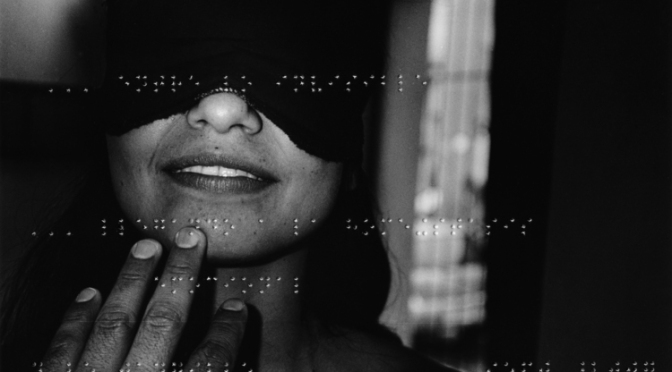



 After drafting up an extensive multi-page guide that included far too much text and too many prompts, I edited it all down until it fit on one single page. I sent this off to a few amazing colleagues at other museums, handed it to fellow staff at my museum, shared it with a few key community members, met with our director, and brought together all their feedback to create the final prototype:
  MIKE MURAWSKI: Founding author and editor of ArtMuseumTeaching.com, museum educator, and currently the Director of Education & Public Programs for the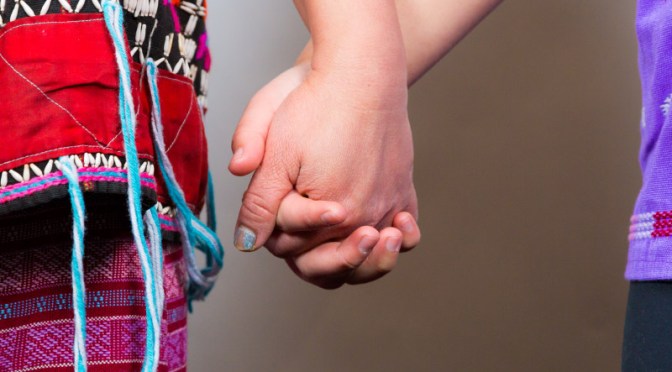
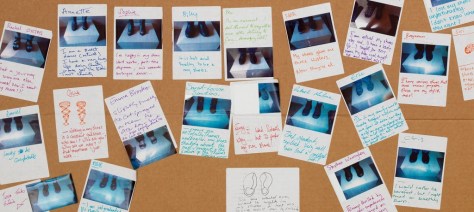
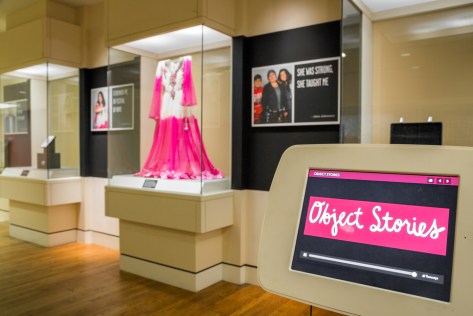
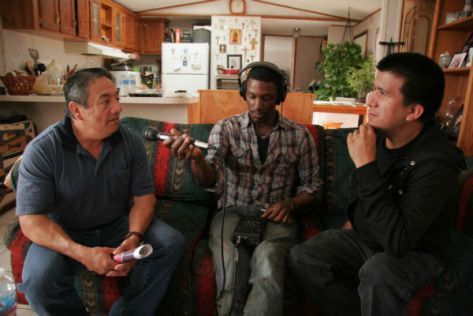

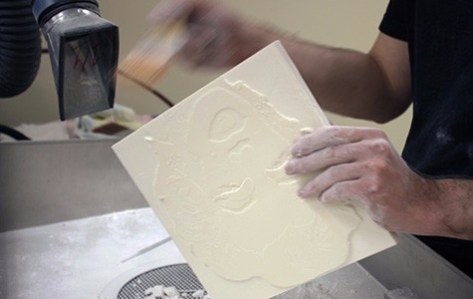
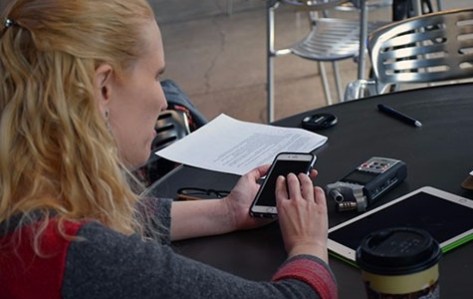


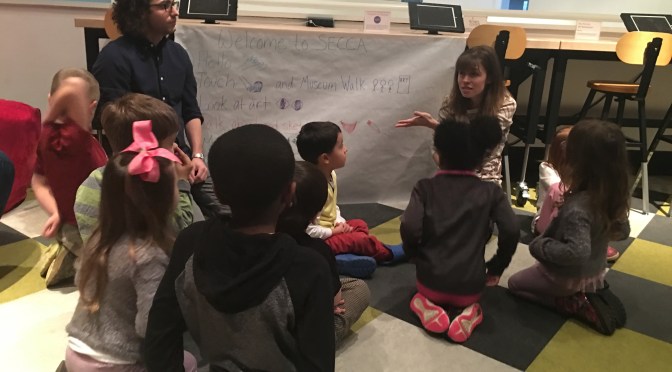


 Art Museum Teaching