The recent series of events, from Ferguson to Cleveland and New York, have created a watershed moment. Things must change. New laws and policies may help, but any movement toward greater cultural and racial understanding and communication must be supported by our country’s cultural and educational infrastructure. Museums are a part of this educational and cultural network. What should be our role(s)?
Schools and other arts organizations are rising to the challenge. University law schools are hosting seminars on Ferguson. Colleges are addressing greater cultural and racial understanding in various courses. National education organizations and individual teachers are developing relevant curriculum resources, including the #FergusonSyllabus project initiated by Dr. Marcia Chatelain. Artists and arts organizations are contributing their spaces and their creative energies. And pop culture icons, from basketball players to rock stars, are making highly visible commentary with their clothes and voices.
Where do museums fit in? Some might say that only museums with specific African American collections have a role, or perhaps only museums situated in the communities where these events have occurred. As mediators of culture, all museums should commit to identifying how to connect to relevant contemporary issues irrespective of collection, focus, or mission.
We are a community of museum bloggers who write from a variety of perspectives and museum disciplines. Yet our posts contain similar phrases such as “21st century museums,” “changing museum paradigms,” “inclusiveness,” “co-curation,” “participatory” and “the museum as forum.” We believe that strong connections should exist between museums and their communities. Forging those connections means listening and responding to those we serve and those we wish to serve.
There is hardly a community in the U.S. that is untouched by the reverberations emanating from Ferguson and its aftermath. Therefore we believe that museums everywhere should get involved. What should be our role — as institutions that claim to conduct their activities for the public benefit — in the face of ongoing struggles for greater social justice both at the local and national level?
We urge museums to consider these questions by first looking within. Are staff members talking about Ferguson and the deeper issues it raises? How do they relate to the mission and audience of your museum? Do you have volunteers? What are they thinking and saying? How can the museum help volunteers and partners address their own questions about race, violence, and community?
We urge museums to look to their communities. Are there civic organizations in your area that are hosting conversations? Could you offer your auditorium as a meeting place? Could your director or other senior staff join local initiatives on this topic? If your museum has not until now been involved in community discussions, you may be met at first with suspicion as to your intentions. But now is a great time to start being involved.
Join with your community in addressing these issues. Museums may offer a unique range of resources and support to civic groups that are hoping to organize workshops or public conversations. Museums may want to use this moment not only to “respond” but also to “invest”in conversations and partnerships that call out inequity and racism and commit to positive change.
We invite you to join us in amplifying this statement. As of now, only the Association of African American Museums has issued a formal statement (show link) about the larger issues related to Ferguson, Cleveland, and Staten Island. We believe that the silence of other museum organizations sends a message that these issues are the concern only of African Americans and African American museums. We know that this is not the case. This is a concern of all Americans. We are seeing in a variety of media – blogs, public statements, and conversations on Twitter and Facebook — that colleagues of all racial and ethnic backgrounds are concerned and are seeking guidance and dialogue in understanding the role of museums regarding these troubling events. We hope that organizations such as the American Alliance of Museums; the Association of Science-Technology Centers; the Association of Children’s Museums; the American Association for State and Local History and others, will join us in acknowledging the connections between our institutions and the social justice issues highlighted by Ferguson and related events.
You can join us by…
Posting and sharing this statement on your organization’s website or social media
Contributing to and following the Twitter tag #museumsrespondtoFerguson which is growing daily
In light of recent events concerning the situation in Ferguson, Missouri, and the ongoing protests, conversations, debates, arguments, emotional outpourings, and moments for learning that are occurring for all of us, I simply wanted to post some links to resources that might help support teaching and learning during this time of crisis and healing. Or perhaps to just start — or continue to build — a process of learning and peaceful conversation. Most of these have been circulating since August, and I have found them extremely useful for my own personal learning as well as broader implications for museum teaching practice. If any museums, libraries, teachers, or schools are utilizing other resources in terms of addressing these pressing issues with your communities, students, and audiences, please add them in the Comments section below or send them to me directly at murawski27@gmail.com so I can add them here. This is considered as an organic, growing list of resources sourced by the ArtMuseumTeaching.com community and our readership.
My heart goes out to everyone in my hometown of St. Louis. Please stay safe.
“Whether you find yourself teaching in a schoolhouse, in your living room with your children, at a community meeting filled with movement members, in a church basement with others who seek racial reconciliation, or in a detention center common room, [these] resources … provide a snapshot of what is being taught, what is being felt, and what is being created each day.” – Marcia Chatelain
“Teaching the #FergusonSyllabus,” by Dr. Marcia Chatelain for Dissent Magazine online, reflecting on the #FergusonSyllabus project after the Grand Jury decision pertaining to Ferguson, Missouri.
#FergusonSyllabus hashtag on Twitter, developed by Marcia Chatelain as a way for educators to share ideas on how to talk about Ferguson in their classrooms.
“Time and Space to Learn and Reflect,”by David Cohen, written for the blog of the Accomplished California Teachers (ACT), a teacher leadership network for the state of California.
The Illipsis: on Ferguson, riots and human limits— in this second installment of The Illipsis, Jay Smooth looks back at the events in #Ferguson and asks how we can truly apply Rev. Dr. Martin Luther King Jr.’s advice that “riots are the language of the unheard.”
Katherine Brooks wrote a short piece for HuffingtonPost on December 5th that surveyed how artists have been quick to echo the nation’s near constant calls for justice and clarity in the wake of Michael Brown’s killing in Ferguson, Missouri. As she writes, “The landscape of St. Louis might be marred by isolated acts of vandalism and law enforcement crackdowns, but art is still flourishing.”
Margaret Middleton of the Boston Children’s Museum started the Twitter hashtag #museumsrespondtoFerguson, and also launched a Pinterest board “Museum Response to Ferguson” for people to pin useful resources. Both are worth checking out.
“#BlackLivesMatter – Teachers and Students,” (VIDEO EMBEDDED BELOW) a live conversation on December 10, 2014, from Teachers Teaching Teachers and EdTechTalk, a collaborative open educational technology community. Thanks to the amazing Paul Allison and everyone who participated in these conversations.
“Ferguson – Share what you are learning and teaching,”(VIDEO EMBEDDED BELOW) a live conversation on December 7, 2014, from Teachers Teaching Teachers and EdTechTalk, a collaborative open educational technology community. Thanks to the amazing Paul Allison who hosted the conversation with Renee Watson, Christopher Rodgers, Chris Sloan, and Janae Williams to talk about police brutality, the murder of black men, racism, and what we are teaching after Ferguson, Michael Brown, Eric Garner… and more.
“In moments like the reaction to Brown’s death, we need more engagement, not less, and each of us has something to offer.” –David M. Perry, Dominican University
“#FergusonSyllabus: 10 Clips to Stimulate Classroom Discussion,”from Alisa Gross at the Acclaim Blog, that offers several suggestions for news footage and clips from documentaries to stimulate discussion about social justice, protest, and the roles of news media and perspective.
“Teaching #BlackLivesMatter: Countering the Pedagogies of Anti-Black Racism,” Friday, December 19, The Graduate Center, CUNY. An event where we can think through how to address racialization and state power as scholar-teachers, working at the level of both immediately executable plans for teaching/research, and longer term strategies for making the academy accountable to racial violence. The event will begin by breaking into smaller groups and contributing to a collaborative syllabus. Please feel free to add to it beforehand, or if you can’t be at the event, join the Google Doc around 10:00 am next Friday (12/19).
#MuseumsRespondToFerguson – Margaret Middleton of the Boston Children’s Museum began this hashtag now being used to track the way that museums are responding to issues related to Ferguson. Middleton also created a Pinterest Board “Museum Response to Ferguson” with relevant links and resources.
TWITTER CHAT: Dec. 17, 2014, 2-3 PM (EST). Join this live Twitter chat on social justice, advocacy, and the museum field’s responses to the issues of racism, injustice, and police brutality. Follow and join the conversation using the tag#museumsrespondtoferguson.
Reposted from Museum Questions, a blog authored by Rebecca Herz that is dedicated to questions about museums and thoughts on creating a reflective practice.
TheMuseum Questionsexploration of school visits to museums has been sorely lacking the context of a literature review, as noted by Christine Castle of Museum Education Monitor. Happily, Dr. Lynda Kelly told me about a report she wrote in 2011, which is excerpted below. The report was commissioned by The Sovereign Hill Museums Association in Australia. Lynda is Head of Learning the Australian National Maritime Museum, and prior to this worked in digital and audience research at the Australian Museum, Sydney. She has written and consulted widely in this field in Australia and for museums internationally. The full report, with a full bibliography included, can be found here. Thanks to Lynda for allowing me to share this much-shortened version. -Rebecca Herz
Student Learning in Museums
It has long been recognised that museums are educational institutions and that their school audiences are critical in both sustaining visitation and, through offering a positive and inspiring experience, can influence lifelong museum visiting habits (Falk and Dierking, 1997). This report outlines the evidence for student learning in museums under the frame of the contextual model of museum learning (Falk and Dierking, 1992, 2000), coupled with review of published studies primarily drawn from the work of DeWitt and Storksdieck (2008) and Groundwater-Smith and Kelly (2003-2011). Given the parameters of this review, the focus is on the physical museum space, coupled with the role of the teacher and museum staff. For more information about the impacts of the online and mobile spaces on educational activities see the list of resources at the end of this report.
The Personal Context and Student Learning
Field trips offer deep cognitive learning beyond facts and concepts to include process skills and draw on other places of learning such as museums. Learning on a field trip is a valuable supplement and addition to classroom instruction and a way to prepare students for future learning (DeWitt and Storksdieck, 2008).
Students are more likely to remember social and personally relevant aspects of field trips, yet also dislike and keep less favorable memories of these trips that seem overly structured and leave little room for their personal visit agenda (DeWitt and Storksdieck, 2008).
Based on the elaborateness of children’s descriptions it was concluded that high personal involvement, links with the curriculum and multiple visits to the same institution embraced long-term learning impact (DeWitt and Storksdieck, 2008; Wolins et al, 1992).
Affective outcomes, such as increased motivation or interest, sparking curiosity or improved attitudes towards a topic, may be more reasonable given the short-term nature of field trips (DeWitt and Storksdieck, 2008).
Visits to science centres can positively impact attitudes towards science for students who are already interested in and engaged with science (Jarvis and Pell, 2005).
Students felt that in order to be substantively engaged in cognitive learning they needed to: know how things worked; be able to think through ideas; have opportunities to ask questions; be able to handle, manipulate and closely examine artefacts and exhibits; be able to seek out information from several sources in language that is appropriate to their age and stage of development; and be stimulated through all their senses (Kelly and Groundwater-Smith, 2009).
When looking at emotional learning, students expressed a desire to be emotionally connected, while at the same time not emotionally confronted. The students in this study indicated that they welcomed opportunities to be fully engaged with provocative questions, fascinating and puzzling exhibits and clear, well-structured and accessible information (Kelly and Groundwater-Smith, 2009).
In the majority of cases the aspect of the field trip that was recalled subsequently was the content and/or subject matter presented during the field trip (Falk and Dierking, 1997).
Even after years had elapsed, nearly 100% of the individuals interviewed could relate at least one thing they learned during an early-elementary-school field trip, and most could relate three or more things (Falk and Dierking, 1997). Students retained information about sharks from an exhibition in a marine park in Italy up to three months after a visit (Miglietta et al, 2008). Sixteen months after visiting a science centre in Israel students recalled facts and details of their visit such as exhibitions, activities and guides’ input (Bamberger and Tal, 2008).
The Social Context and Student Learning
Students are more likely to remember social aspects of their visit. The social interaction occurring on a field trip is an important part of the experience and supporting students’ in sharing their experiences enhances learning (DeWitt and Storksdieck, 2008; Kelly and Groundwater-Smith, 2009).
Students like learning with their friends. While they recognised that a visit to the Museum was primarily designed by their teachers to assist in their learning, they also wanted it to be a satisfying social occasion when they could learn with and from their peers (Kelly and Groundwater-Smith, 2009).
Visits are highly social experiences for students. A study of sixth graders stated that they had more control over their own learning when interacting with their peers rather than adults who tended towards control (Birney, 1988).
A study of student talk found that school visits to museums assisted in building relationships between students through cooperative interactions and discourse (DeWitt and Hohenstein, 2010).
The Physical Context and Student Learning
Students wanted to feel safe and comfortable and to move around readily unimpeded by a number of prohibitive signs. They also wanted areas to be well-lit and inviting and find physical spaces scaled to their ages and needs (Kelly and Groundwater-Smith, 2009).
The novelty of the setting may distract from students’ conceptual learning if novelty is strong (DeWitt and Storksdieck, 2008).
The degree of structure of a field trip is the subject of much disagreement in the literature – how much should the experience be mediated and teacher/educator-led, and how much should be student-led, based on free-choice learning? DeWitt and Storksdieck (2008) identified several issues around structured visits:
To maximise cognitive and affective outcomes field trips need to provide moderate amount of structure while still allowing for free exploration.
Well-designed worksheets can be effective in promoting discovery-based enquiry if exposing students to a wide range of relevant information.
Well-designed worksheets may tap into already available interpretive material thus extending the richness of information.
The use of pre and post visit activities can enhance the cognitive and affective learning outcomes.
In a museum setting structure experiences, such as guided tours, specific detailed tasks can increase cognitive learning but may dampen enthusiasm.
Structure, including worksheets, may limit the ability for students to explore and engage with the unique aspects of the museum setting.
Based on a rage of studies, McManus (1985) recommended that worksheets should be designed to encourage observation, allow time for observation, focus on objects not labels, be unambiguous about where to find information and encourage talk.
Photo by Universal Pops at Flickr.com. Photograph of a school group on tour at the North Carolina Museum of Art viewing “Sir William Pepperrell and His Family (1778, oil on canvas) by John Singleton Copley.
THE ROLE OF THE TEACHER
Teachers value museums as sources of rich learning and social experiences (DeWitt and Storksdieck, 2008; Falk and Dierking, 1997; Groundwater-Smith et al, 2009). Teachers’ agendas for the trip will influence their subsequent classroom practice (DeWitt and Storksdieck, 2008).
Research reveals that teachers have complex and comprehensive reasons for field trips, valuing these as learning and educational opportunities and as chances for social and affective learning (DeWitt and Storksdieck, 2008).
Teacher motivations for school trips include connecting with classroom curricula, providing a general learning experience, enhancing student motivation, exposure to new experiences, change in setting or routine and student enjoyment (Kisiel, 2005).
Students with teachers who were both enthusiastic about science and engaged in extensive follow-up activities expressed more positive attitudes towards science after their museum visit than students in other classes (Jarvis and Pell, 2005).
DeWitt and Storksdieck (2008) report that field trips are enhanced when the teacher:
Becomes familiar with the setting before the trip.
Orients students to the setting and agenda and clarifies learning goals.
Plans pre-visit activities aligned with curriculum goals.
Plans and conducts post-visit activities to reinforce the trip and enables students to reflect on their experiences.
THE ROLE OF THE MUSEUM AND MUSEUM EDUCATORS
Limited research has been undertaken into the role of museum educators in school visits and researchers are only beginning to examine the role of the museum in the student visit (Griffin, 2004). However, of the literature consulted it is clear that collaboration between teachers and museum educators and other staff in program development brings positive results in terms of enhanced outcomes of student visits and in strengthening relationships.
DeWitt and Storksdieck (2008) report that teachers’ goals may not be the same as those of museum educators which, in turn, can cause confusion and impediments to learning. Teachers also may have multiple goals for the visit, whereas museums may be too focussed on the logistical aspects of the visit, such as wayfinding, parental consent, safety forms, transportation, financial transactions and orientation (DeWitt and Storksdieck, 2008).
When programs are developed in alignment with school curricular and teacher goals rather than the museum’s objectives, integration of the visit into classroom practice is more likely (Xanthoudaki, 1998).
Successful museum-school collaborations are often characterised by the museum reaching out to teachers and developing material in conjunction with them (DeWitt and Storksdieck, 2008; Groundwater-Smith et al, 2009).
Australian Museum staff who had participated in the 2009 Teachers’ College found this had a positive impact upon all participants, and that teachers had a great deal to offer in the way of advice. Staff felt that they had benefitted in terms of getting close to their audience; learning about how the Museum could better engage teachers and students; networking and connections made to enable further discussion and consultation to take place; and stimulating new ideas for programs (Kelly and Fitzgerald, 2011).
Featured image by Universal Pops at Flickr.com. Photograph of a school group on tour at the North Carolina Museum of Art viewing “Sir William Pepperrell and His Family (1778, oil on canvas) by John Singleton Copley.
This past June, I participated in a two-week workshop at Harvard University’s metaLAB called Beautiful Data: Telling Stories with Open Collections. Thanks to a grant from the Getty Foundation, the metaLAB brought together over twenty curators, technologists, educators, and scholars to grapple with how we might use publicly available data from museum collections in our work. In the first week, speakers as varied as digital museum specialists to experience designers to scientists who study vision all pressed us to think of our work in unexpected contexts. In the second week, we took what we’d discussed and applied them to projects of our own.
Over the past four months, I’ve let the ideas and theories of Beautiful Data percolate in my visitor-centered soul, and I’ve come to realize this: although open collections is a movement born in the digital realm, I believe its principles are essential to how a 21st-century cultural institution can reach visitors today—whether virtual, physical, or personal.
What are Open Collections?
“Open collections” is a museum technology term that refers to a museum (or more appropriately, a GLAM—gallery, library, archive, or museum) “opening” all of collections data for anyone to freely use, reuse, or distribute it. In this context, data refers not only to an image of an artwork in a collection, for example, but all of an object’s “metadata” or supporting information, such as artist, time of creation, subject matter, size, medium, and so on. If the collection of your museum is digitally open, you release an API (application programming interface) that allows programmers to easily pull that data into lots of different contexts, such as websites or apps. The idea, according to the OpenGLAM movement, is that it allows “users not only to enjoy the riches of the world’s memory institutions, but also to contribute, participate and share.” (For a more in-depth explanation of museum APIs, check out this blog post from the SFMOMA Lab.)
Metadata sounds like tombstone information—in other words, that basic information that lives on a museum label, and on its own, might not necessarily be that compelling. The magic of open collections data, though, is that through technology, all those individual bits of information can be packaged together and unpacked, visualized and disseminated in different ways. In short, like many of our most successful museum education programs, the cool stuff happens when you release it into the wild and let people play.
Perhaps the most famous example of a museum opening up its collection is the Rijksmuseum, which in 2011 published an API and allowed free access to high-quality images of its artworks. But most stunningly, it not only allowed, but loudly encouraged anyone who wanted to create new interpretations of those artworks, from coffee cups to clothing. They even hosted a contest on the huge handmade marketplace website Etsy.
Another great example is by Florian Kräutli, one of my fellow Beautiful Data participants, who took Tate’s open collections data and visualized it—noticing that over half its collection is by J. M. W. Turner, prompting him into a rabbit hole of discovery into exactly why that is (you can read his blog post on the project to find out more). Museums are supporting this type of play in-house, too: the Cooper-Hewitt team has a treasure trove of ways they’ve used their collections data on their blog, including a search-by-color tool and “Robot Rothko” (which is just as awesome as it sounds). As his final project, Beautiful Data participant Richard Barrett-Small, formerly of Tate, built on the Cooper-Hewitt’s color tool to create Colour Lens, a color visualization explorer for multiple museum collections.
In short, the big idea here is that open collections allow cultural institutions to complete their educational missions: not only showing our objects to as many people as possible (no matter where they are in the world—thanks, internet!), but giving people ownership of our collections and spaces by welcoming them to engage in any way they can dream up.
Investigating Transformative Experiences with Art
Let’s turn back to my personal experience at Beautiful Data. It’s rare that museum staff are ever able to think about the what ifs and why nots, to set aside time to imagine, play, and prototype. Happily, at Beautiful Data, we had two full weeks to do exactly that.
As a visitor-centered museum educator, I think a lot about the humans experiencing our institutions. As a visitor-centered museum technologist, I think about people too, albeit those in the ether of the web—no less real than my students, though often more anonymous. At Beautiful Data, though, we went extremely big-picture—this meant discussions of data visualizations (graphical ways to show stories about data), institutional collecting patterns and preferences, and thinking about how not just staff but organizations could collaborate together through comparing and sharing their collections data.
To be honest, this sometimes frustrated me. As one of two educators in the group, I was always asking, “but what about the people who will actually use this information?” That question was certainly on the minds of other participants, but I came to realize that “users” could just as often mean internal staff members as external visitors.
With all this in mind, for my Beautiful Data final project, I decided to tackle an idea that has been a seed in my work for some time: amassing stories or personal connections with works of art from museum visitors, and seeing what patterns I could find about how people interact with collections. I posted a survey asking people to share their “transformative experiences with works of art,” and waited to see what I’d get.
I was struck by the stories I received. Regardless of length or whether the respondent was a museum professional or a scientist, even if they had only seen the work one time, each story was full of heart—beautiful, nostalgic, sometimes wrenching connections between a work of art and the person’s own life.
Despite a week blissfully surrounded by all things nerdy-tech (read: 3D printers, APIs, and Lytro cameras), instead of building a minimal website or massaging the words into data, I instead was compelled to handwrite key phrases on paper, print out full responses and images of their chosen piece, and pin them to a wall. My project quickly turned into a completely physical installation: a purposefully unscientific data visualization of the responses people had submitted.
Documentary photos of my installation can be seen through the photo gallery below, or you can visit my album on Flickr.
Some stories were long, others just a handful of cryptic sentences. Some had art historical, factual descriptions backing up their thoughts; others never looked up a single extra bit of information about the artwork after they saw it. Some ruminated on the object for many years; others were hit in the gut all of a sudden upon turning a corner.
For all that, every single story had two things in common. In each, there was a deeply personal reason behind the individual’s connection to the artwork, and each was written in a tone of reverence—towards the power of these images to arrest a person, to stir up unexpected thoughts or feelings, to stick in their mind for years and years afterward.
Open Collections—Beyond the Digital
When my teen program started up again this fall, I brought my students into the Milwaukee Art Museum galleries to look at a single work of art for an hour (you can read more about this process here.) As usual, I noticed the high schoolers opening up to each other, to new ideas, and to finding ways that art relates to their everyday life—whether a photograph of Milwaukee or a landscape by a Baroque Italian painter. These discussions are guided by the students—I might throw in some useful facts to open up the conversation, but they take the lead. As a result, on any given day, we might relate artworks to religion, politics, narratives, families and friends, or even moods and feelings.
During these sessions, the teens are given permission to engage with these objects in a manner entirely new to them: instead of the 7-second “drive by” glance, they’re encouraged to bring their own opinions, thoughts, and questions to these artworks.
This fall, as I watched the students unfold these pieces and their own thoughts every week, and as I thought about my own project at Beautiful Data, I started to realize how intimately connected my discussion-based teaching style and experience-based project are to the big ideas behind the open collections movement.
In the realm of digital, opening collections data and encouraging people to play with it allows for deeper engagement in and participation with our collections. For my teen programs, which take place physically in the museum, the same goal holds—for my students to feel comfortable engaging with and connecting with the collection. For my Beautiful Data project about transformative experiences with works of art, each respondent was open to having an experience with a work of art that turned out to be intimate and meaningful.
Too often in the museum field, we become siloed. The cross-pollinated conversations and projects at Beautiful Data with folks from many different museum departments helped me see that most of the time, we’re all saying the same thing.
We all want our collections to be open to the public. We all want to give visitors opportunities to engage with objects. All that said, the devil’s in the details, as they say, and, as I learned from fellow participants at Beautiful Data, “openness” might mean different things in different contexts, or to different people within our institutions. For a museum technologist who’s part of the OpenGLAM movement, it might mean creating an API for her institution’s collection. For a curator, it might mean presenting art with minimal labels to allow visitors to bring their own thoughts to the work. For an educator, it might mean hosting a monthly “slow art” day, facilitating a one hour conversation about a single work of art. For a visitor, it might mean taking a selfie with a work of art to share with friends on Instagram—or perhaps having a life-changing, transformative moment with an object—or maybe exploring the collection online even though they live halfway around the world from the institution itself.
If we’re all saying the same thing, then why does it sometimes seem like we’re not on the same page? It might be because we’re speaking slightly different languages (after all, our departments borrow from our content areas—whether technology terms, art history/academic jargon, or educator-ese). It might be because when we are speaking together, we’re only hearing what we want to hear instead of what the other person is actually saying. It might be because we’re not taking time to speak to each other at all.
I can tell you firsthand with Beautiful Data under my belt that it’s worth it to step outside the comfort zone of our own department. Internally, let’s challenge ourselves to learn new vocabulary and have discussions with others outside of our own departments. That way, our principles and beliefs can start to be shared among staff in different areas. When we speak the same language internally, we’ll have the power to push our institutions into a new paradigm, as Jay Rounds discusses in a recent article on Museum Questions, or as Mike Murawski suggests in his article about museums embracing a “digital mindset.”
And externally? Open collections, at its core, is about access to our institutions—whether digitally through collection APIs, physically through innovative programming in our galleries, or personally through highlighting the stories of people who have had powerful experiences with objects. Opening access in this way can be scary, because it can sometimes mean giving up some control, such as rights, an authoritative institutional voice, or even the context and purpose of looking at artwork. But those risky moments are also when great change has the potential to occur. If we want our collections to be relevant and meaningful in the 21st century, we must be brave enough to open up our doors—physically and virtually—to support, encourage, and celebrate the profound and magical experiences with art that happen next, whatever they might be.
Reposted from CODE | WORDS, an experimental publishing project on Medium exploring emerging issues concerning the nature of museums in light of the impact of digital technologies on society. This collection of essays has since been published in book form by Museums Etc.
As the AMC series Mad Men aired its midseason finale back in May 2014, more than two million viewers were graced with an unexpected song and dance performance from senior advertising executive Bert Cooper, played by actor and past Broadway star Robert Morse. In this musical equivalent to hitting the pause button on a much anticipated final season that does not resume until next spring, Morse crooned the lyrical lines first written in 1930: “The moon belongs to everyone; the best things in life are free.”
For me, it was certainly one of the most intriguingly beautiful and surprising moments on television in recent years. The song comes during the last two minutes of an episode in which the daily dramas of the show’s characters are laid on top of, and intertwined with, the 1969 Apollo 11 moon landing. At one point in the episode, everyone gathers around a television, wherever they are, to watch Neil Armstrong take that small step onto the surface of the moon — engaging in one of the most memorable shared human experiences of the 20th century (an estimated 600 million people worldwide were watching the moon landing live on television at that very moment).
Harry, Pete, Peggy, and Don watch the moon landing on television in their hotel room. Episode 7, Season 7, Mad Men (AMC). Photo from http://www.vulture.com
Technology, engineering, and new media undeniably acted to create a profound connection. In her Los Angeles Times column about the Mad Men episode, Meredith Blake wrote:
“It was an unexpectedly hopeful hour of television, one that reaffirms the possibility of positive collective experience while contradicting the notion that technological progress must come at the expense of human connection.”
This perspective has particularly resonated with me at a time when I have been grappling with the effects of digital technologies and media on the educational role of museums. Are my own core values of human connection, shared experience, and community co-creation a part of the digital transformation happening in museums? When we’re overly suspect of digital technologies, are we missing out on a greater opportunity to embrace a ‘digital is everywhere’ mentality—a mindset that brings together thinking about digital technologies and the new ways in which humans connect, share, and learn in a digital age?
Yes, and yes.
Well …. how did I get there?
In May 2013, I gave a talk at the Museum of Contemporary Art in San Diego (followed by a short thinking piece online) entitled “Museums Un/Plugged: Are We Becoming Too Reliant on Technology?” that explored my uncertainties about the growing emphasis on technology in museums. Far from being anti-technology, I was, however, exploring some burning questions I, myself, had about the role of digital technology in museum learning and visitor engagement through the polemical dichotomy of ‘plugged in’ versus ‘unplugged.’ Among many questions, I asked:
“As we focus more and more on digital and online experiences, are we sacrificing any of the human-centered elements that have been at the core of museum education for more than a century? If your museum lost power, how would that affect the learning experiences in the galleries and across programming?”
After seeing some museums investing more in a single digital project than other museums have in their entire annual operating budget, I was genuinely concerned that we might be losing sight of the basic ‘unplugged’ human interactions at the core of learning that allow these institutions and their collections to have public value and mean something to the communities they serve. I even wrote, “when I head into the galleries to facilitate a learning experience, technology often falls away and I find myself focusing entirely on the analog elements of museum teaching.”
Yet, I have come to realize that we can no longer unplug the effect of digital technologies and Internet culture on the ways we think about and re-imagine museums today. If the lights go out in the museum and all the WiFi hotspots and screens go dark, we might lose the physical technology infrastructure, but we do not lose the powerful participatory, networked, open source culture that has taken root in our audiences and communities in the 21st century. In this regard, digital technology cannot simply fall away.
In the 2014 Let’s Get Real 2 report developed from the second Culture24 Action Research Project involving 22 arts and cultural organizations, experts from across the field noted that institutions are struggling to embrace the new realities of audience behavior (via the web, mobile devices, social media, etc.). Jane Finnis, Project Lead, remarks in her foreword to the report:
“this challenge is absolutely not about technology, which we are often guilty of fetishising as a solution to problems. It is first and foremost about audience and the ways in which digital technologies are changing their behaviours: at work, at home, on the move, learning, playing, questioning, socialising, sharing, communicating. Forever.”
For museums in the 21st century, becoming more aware and responsive to these changes requires a shift in thinking at all levels — a shift that embraces a wider ‘digital mindset.’ This approach envisions a deeper fluency and understanding of web behaviors, mobile behaviors, and social media behaviors across all areas of museum practice, rather than relegated to the IT, online collections, or website functions of a museum. In her core essay from the 2014 Sharing is Caring anthology (a must read, by the way) entitled “This Belongs to You: On Openness and Sharing at Statens Museum for Kunst,” Curator of Digital Museum Practice Merete Sanderhoff sets out to define “a new foundation for our work, one that comprises digital infrastructure and a digital mindset in equal measure” (23). She continues:
“Technology should not govern the museums’ work. But in order to learn and understand how we can use new technologies and benefit from the opportunities they open up for us, we must explore and incorporate not just technologies themselves, but also the changes in behaviour and expectations they prompt in users. We must think like users.”
So how might we begin to think more like users, and see our audience as users, as well?
Be More Open
With the rise of the Internet, the phrase ‘open source’ began as a way to describe open access to software source code and the collaborative model for how it is developed. Key elements of this development model have been: universal free access and redistribution of the source code, an openness for users to modify and adapt that blueprint in any way desired, and an emphasis on transparency and collaboration.
In museums today, one of the direct effects of this open source movement can be found in the ways through which institutions have released their collection data. As the OpenGLAM (Galleries, Libraries, Archives, and Museum) initiative coordinated by the Open Knowledge Foundation asserts:
“The internet presents cultural heritage institutions with an unprecedented opportunity to engage global audiences and make their collections more discoverable and connected than ever, allowing users not only to enjoy the riches of the world’s memory institutions, but also to contribute, participate and share.”
In 2013, the Rijksmuseum released 150,000 copyright-free, high resolution images of public domain works — one of several art museums that have made collection data and images openly available online. But they have gone beyond simply releasing images and data, and actively encouraged people to share their collection, remix the artworks to create personalized collections, print reproductions (including everything from posters and canvas prints to coffee mugs and bed covers), and allow artists free reign to use these images to create something new. As of October 2014, visitors had created more than 169,000 new virtual exhibitions through the RijksStudio web platform. Ed Rodley’s recent CODE | WORDS essay “The Virtues of Promiscuity” lays out an interesting case for museums like the Rijksmuseum being promiscuous with its collection.
Pushing open use of a collection even farther, in January 2014 the Walters Art Museum hosted its second Art Bytes hackathon to bring together technology and creative communities to use the museum’s rather new API to create games, Twitter bots, scavenger hunts, 3D prints, web apps, e-books, digital docents, etc. This competition not only utilized the collection data to inspire community-wide creative rethinking about the Walters, but it led to a whole series of incredible adaptations, recreations, and visitor experiences with the collection at the core.
One of Denmark’s leading IT lawyers, Martin von Haller Grønbæk, writes in his essay “GLAMourous Remix: Openness and Sharing for Cultural Institutions” from the 2014 Sharing is Caring anthology:
“All cultural institutions should endeavor to be as open as possible in the sense that as many people as possible should have the easiest access possible to the institution’s content. At the same time the institution should seek to ensure that the freely available content is shared, enriched, and processed by users, whether they are citizens, students, scholars, researchers, or commercial ventures.” (142)
If we think of the concept of ‘open’ in the broadest way possible (beyond releasing collection data), it has the potential to challenge museums to let go of some of their control and the limitations that come with this control. Embracing a mindset of openness changes the way we think about museum practice, inspiring a more participatory mentality focused around creating, transforming, and adapting — without the traditional restrictions that have limited forms of public cultural learning.
Redefine Authority
“With the web has come a new collaborative approach to knowledge generation and sharing, a recognition of multiple perspectives, and an expectation by users that they will be able to contribute and adapt/manipulate content to meet their own needs.” (Graham Black, Transforming Museums in the 21st Century, 6)
A hundred years ago, people relied on museums as a repository for the knowledge and information related to its cultural collections. If you wanted to learn more about the artists, artworks, cultures, and places of its collection, you walked inside a museum’s grand halls of knowledge. Today, that has completely shifted. Visitors can access far more information through their smartphone or mobile device than any museum could ever hold (as of October 2014, 87% of people in the US use the Internet, 67% own smartphones, and they have access to more than 672 billion gigabytes of data from more than 1 billion websites).
During a visit to the Nelson Atkins Museum of Art in Kansas City, I found myself sitting in front of an amazing Franz Kline painting entitled “Turin” in their Abstract Expressionism collection. While the pithy 98-word unattributed ‘voice of god’ label offered a few tidbits (“Kline used commercial house paints,” and that the painting was “named after a city in northern Italy”), I quickly went to my iPhone to search for more—I was hungry for more. From the 350,000 Google search responses, I instantly found videos, photos, Wikipedia entries, curatorial essays, poetry, music, visitor comments, slow looking reflections, and links to dozens of other museums that had works by Kline in their own collections. While I may have been standing in the Nelson Atkins building, I found myself reaching outside of its walls and connecting digitally with a wide distributed network of authorities and communities of knowledge—even sharing my own content to this mix with tweets and Instagram photos. When I sat down with docents in front of this painting for deeper conversations, we opened up further layers of thoughts, insights, and questions that were not part of the authoritative knowledge repository of the museum.
We have rapidly moved out of the era of passive consumption of content selected by a few experts, and museums now have an opportunity to actively reshape their own authority in this new equation. The digital age does not negate the authority of museums and curatorial expertise, but, rather, it puts this authority in public conversation and dialogue with a wider network of knowledges, voices, and experiences. Cultural authority is not something solely established by a didactic label, curatorial essay, or published catalog; it is negotiated through discussion and collective participation, and shared with our community and the users (yes, I said ‘users’ instead of ‘audience’). with which we connect. In his 2009 essay “A Manual for the 21st Century Gatekeeper,” New York-based curator Michael Connor explores the ways in which the internet, social media, and new collaborative ways of working are fundamentally changing the relationship between arts organizations and their audiences. He writes:
“A curator’s authority pales in comparison to the audience’s vast collective stores of knowledge and passion. How can gatekeepers redefine their role in ways that harness the power of the audience without losing the sense of subjectivity and personal risk that lie behind aesthetic decisions?”
As museums work toward sharing authority, they can begin to allow for the voices of specific communities and the public to be heard inside the walls of these institutions—to speak for themselves. In her guest editor preface to the July 2013 issue of the Journal of Museum Education focused on this theme of “shared authority,” Elizabeth Duclos-Orsello includes a powerful quote from historian Karen Halttunen that relates to the role museum staff play as workers in these public institutions:
“We [must] divest ourselves of the special authority sometimes granted to us … [and we must] enter democratic partnerships with other members of our communities.”
For me, the Memory Jar Project a couple years ago at the Santa Cruz Museum of Art and History really stands out in terms of a museum working to renegotiate traditional, monolithic structures of authority (using a ‘digital mindset’ in an analog way). Part of a larger community-sourced exhibition project called Santa Cruz Collects, visitors were invited to ‘bottle up’ a memory in a jar, label it, and leave it as part of this exhibit to share with others. The Portland Art Museum’s Object Stories initiative also continues to strive toward shared authority and multiple voices (see “Sharing Authority/Sharing Perspectices: Native Voices”). By redefining authority through these processes of co-creating knowledge and meaning with the community, a museum has the potential to be far more than just a place that holds and disseminates knowledge.
Get Connected
At the core of the digital age are new ways of relating to one another, new ways of interacting, new kinds of groups, and new ways of sharing, learning, collaborating, and connecting. In their 2012 book Networked: The New Social Operating System, Lee Rainie and Barry Wellman argue that the large online social circles of familiar platforms such as Facebook, Twitter, Pinterest, etc. actually expand opportunities for learning, problem solving, and personal interaction. Their work at the Pew Internet Project and the NetLab (especially research for the Connected Lives Project) suggests that digital technologies are not isolated — or isolating — systems, but rather networked systems built upon these social networking platforms as well as mobile device technologies.
“People’s relationships remain strong — but they are networked. Neighbors, and neighborhoods still exist, to be sure, but they occupy a smaller portion of people’s lives. It is hard to borrow a cup of sugar from a Facebook friend 1,000 miles away, but it has become easier to socialize, get advice, and exchange emotional support at whatever distance. Where commentators had been afraid that the internet would wither in-person ties, it is clear that they enhance and extend them.”
Through countless digital projects and social media activities, museums are tapping into global networks and becoming more connected to this growing virtual community (that, in many cases, actually has a strong relationship with a museum’s physical community). As Paola Antonelli, senior curator of architecture and design at the Museum of Modern Art, stated in a 2014 New York Times piece, “We live not in the digital, not in the physical, but in the kind of minestrone that our mind makes of the two.”
Through the Portland Art Museum’s #captureParklandia project, we were able to effectively explore the interconnected network of interest-based social media communities (via Instagram) and the physical communities in Portland itself. The overall reach of this project through Instagram was far larger than the museum’s annual in-person attendance, motivating us to rethink how we define our audiences and the new ways in which we might bring them together through moments of exchange. Rob Stein explores related ideas in his CODE | WORDS essay “Museums… So What?”, writing:
“… the face-to-face dialog that happens in real life at the museum is critically important, but I keep thinking about all the ways we could enhance and improve this dialog digitally and online. What if we considered how we might detect when meaningful discourse happens in our social media and online activities?”
The Question Bridge project is a particularly powerful example of using digital technologies in a participatory way to bring people together in dialogue and exchange. Organized by artists Chris Johnson and Hank Willis Thomas in collaboration with Bayeté Ross Smith and Kamal Sinclair, this innovative transmedia art project aims to facilitate a question-and-answer dialog between black men from diverse and contending backgrounds and create a platform for representing and redefining black male identity. In addition to its online interactive site, the project has been installed at over 25 museums and galleries, including the Brooklyn Museum, Fabric Workshop and Museum, Milwaukee Art Museum, Oakland Museum, Cleveland Museum of Art, the Exploratorium, and the Missouri History Museum, and includes a multiple-screen video installation as well as a youth development curriculum and specialized community engagement events. The project (about which I encourage you to learn more) is all about dialogue and listening, and it taps into both technology and a digital mindset in order to enhance the connective and collective experience of participants in a digital age.
* * * * *
In her book Museums in the Digital Age, Susana Smith Bautista discusses how notions of place, community, and culture are changing for museums in the digital age. In her conclusion, she writes:
“If museums are to remain relevant, vital, and meaningful, then they must adapt to a changing society, which means not only recognizing and incorporating new digital tools for communication, but more importantly, recognizing the changing needs and aspirations of society as reflected in their communities of physical and virtual visitors.” (225).
As the behaviors of our audiences and communities change, so do the ways in which they learn. A core part of this digital transformation in museums (see “Museums Morph Digitally”) involves expanding our concepts of learning and engagement to be responsive to an Internet culture defined by participation — and not just ‘participation for the sake of participation,’ but as serious involvement in the deep, connected forms of cultural and creative learning that can occur with museums.
Embracing a digital mindset of openness, participation, and connectivity allows museums the chance to extend the boundaries of what is possible, and serve as sites for profound human connection in the 21st century—in much the same way that new technologies brought people together for that powerful shared moment 45 years ago to witness Neil Armstrong’s ‘giant leap.’
After all … the moon belongs to everyone.
Ten thousand spectators gathered to watch giant television screens in New York’s Central Park and cheer as astronaut Neil Armstrong took humanity’s first step on the moon on July 20, 1969.
* * * * *
UPDATE
On November 12, 2014, the NAEA Museum Education Division hosted a Peer2Peer Hangout that focused on these ideas of ‘digital mindset’ and ‘digital museum practice’ with Ed Rodley, Chelsea Kelly, Michelle Grohe, and Juline Chevalier. It was a lively conversation with lots of good questions from people watching live. View the video archive of this Hangout below:
When the Clark Art Institute reopened its doors this summer, visitors were greeted by an astounding new building by architect Tadao Ando, expansive views of the rolling hills of Williamstown, Massachusetts, and beautifully redesigned galleries for the museum’s extensive permanent collection. With this renovation and expansion, we faced the challenge of how to encourage visitors to engage with the art in new and inspiring ways. Previously, the museum had been renting audio wands; however, these were limited to a single layer of audio and had no screen option. Thus, a new interactive interpretive system was needed to accommodate deeper layers of exploration and engagement with the collection.
Through a grant from the Institute of Museum and Library Services, the nostalgic audio wands have been replaced by mini iPads, which we call multimedia guides – although they are so much more than that. The multimedia guide currently has 150 objects from our permanent collection, each with a zoomable image, basic information, label, and audio (along with audio transcript). Many of the objects also give the visitor the option to explore the artwork further with varied layers of content. The multimedia guide is free with museum admission or visitors can also download a streamlined version onto their personal device. The guides also include information about the Institute’s founders, Sterling and Francine Clark, special exhibitions, and a grounds map.
This interpretative project was several years in the making. Over the past two years I have worked closely with Media Manager Laurie Glover and Project Manager Viktorya Vilk to develop a system that embraced the mission of the Clark and its dedication “to advancing and extending the public understanding of art.” Central to our approach was the importance of looking at art — we did not want to detract from the importance of this practice, nor replace it with gazing at a screen. Instead, we found ways that would enhance the looking experience and point out things that visitor could not have learned otherwise. In many ways, we were inspired to the Van Gogh museum’s recent app, Touch Van Gogh, which allows audiences to examine the painterly process up close in ways never before possible.
So, how to accomplish these things?
To tackle this bold mission of active looking and learning, our process included months of brainstorming with the Clark curators and educators to decide which works of art would benefit most from additional content. We asked them what stories they liked to tell about the art, what questions they were most often asked, what special thing no one knew. From these stories, we slowly whittled down our extensive list to 150 objects and designated about half of them for additional content. Each of these objects would have no more than three or four sections of content. The content is layered, so there was an option to go deeper if there is interest but we did not want anyone to feel bogged down by the amount of content. We wanted to maintain choice in the pace the information is provided, the depth of knowledge one might be seeking, as well as a direct search for a particular artwork versus a more casual browsing of the collection.
We endeavored to create content that most enhances the visitors’ understanding of the artwork – when it can make the invisible visible and inspire curiosity for deeper learning. We found conservation stories from X-rays that unearthed hidden secrets. We found collection stories from the diary pages of our founder. We also worked with Tristan Interactive to build a semi-customized content management system and develop three kinds of interactive within the application. These include:
1) Drag and Drop: This interactive works sort of like a puzzle, in which small details from the artwork can be matched to the larger whole to reveal interesting details. This works particularly well for very detailed paintings because it encourages the viewer to look back up at the actual painting to find the detail in front of them.
2) Slider: By sliding your finger along a scrub bar the image changes to tell a story or transform an image. For example, this feature works well with our Domenico Ghirlandaio painting, Portrait of a Lady. The transformation shows the painting pre-conservation, when the painting was altered with the addition of a halo and wheel identify the sitter (mistakenly) as Saint Catherine. One of the things that was most important was developing functionalities that could be adapted in various ways: for example, the slider could move something in space, reveal a hidden layer, or move through a narrative.
3) Hotspots: Pulsing circles appear on different part of the image – when tapped, screen pops up to reveal more information about this part of the work.
After our initial beta-build of the device we invited 80 volunteers and docents to act as a sort of focus group. We handed out the multimedia guides with a survey/set of instructions to help guide each individual through the 20-ish objects we had built into the device. The survey asked each person to the rate the difficulty of these tasks (i.e. “play the audio,” “find the Unpack Me interactive,” etc.). Because our focus group was limited to volunteers and docents, the demographic was mostly 50 years of age or older.
As we expected, there was a lot of initial confusion and outright contempt for the devices; mostly because they were perceived as new and scary. This was not a sample group that felt comfortable with technology or even used an iPhone or iPad on a regular basis. However, the more time we spent explaining their functions, the more they found joy and value in them. The less confusing the process became, the more impressed they were! Given our visitor demographic, it reinforced our commitment that the app be intuitive with lots of onscreen help. We worked with the engineers to create built in “hints” that appear on the tablet screen and encourage/guide the user.
Of course, there will always be visitors who do not want to engage with the tablets when visiting the museum. We worked hard to create something that was user friendly and, hopefully, a seamless transition from the traditional audio wand. We hope that audiences will want to engage with the collection in new and deeper ways through the expanded layers of content. Content that is presented in a variety of ways, with the belief that it will appeal to a variety of users.
As many others in the field have already noted, there is a constant grappling with the pros and cons of bringing technology into the galleries. Although I personally believe in the power of individual, intimate experiences with art, I also strongly value the communal experience that can be cultivated through conversation in front of a work of art. I can see the appeal and value of both experiences and I hope that each visitor is able to travel the path that best accommodates their needs. We chose iPad screens because they are shareable, a single headphone to make the experience less solitary, layers of content to pick and choose from. Interpretation should be available to those that seek it; it should spark curiosity and reveal what makes us love a work of art.
We have recently finished conducting an expansive survey in the Clark galleries, both with visitors who used the multimedia guide, and those who did not, to gauge it’s effectiveness, value, and possible issues that might have arisen with usability. Although we are still waiting for the concrete data, preliminary results indicate that our visitors love the app and love using the iPad minis. They enjoyed using the interactives, sharing tidbits with their family and friends, and listening to the audio components. However, those that did not take the device, often voiced negative comments about it. It seems the negativity is rooted in the unknown – something that is new, possibly complicated, and technological.
As is often the case on ArtMuseumTeaching (and a very valuable case), I’d like to open the floor to all of you. What are your thoughts on the future of technology in museum galleries? What are its positive effects and what are the possible criticisms it faces? Can an iPad screen really enhance a solitary and personal experience with a work of art? Or is that kind of thinking becoming increasingly elitist and limiting to everyday audiences?
About the Author
REBECCA FRIDAY: Rebecca earned her Bachelor’s Degree from Sarah Lawrence College and Master’s Degree from Williams College, both in Art History. She spent the last two years working as a Curatorial Assistant at the Clark Art Institute. In addition to her contributions on the multimedia guide project and interpretation of the reinstallation of the permanent collection, she also served as curatorial coordinator for Winslow Homer: Making Art, Making History, Cast for Eternity: Ancient Ritual Bronzes from the Shanghai, and Radical Words: From Magna Carta to the Constitution. Prior to her position at the Clark, Rebecca worked at the Williams College Museum of Art as well as several New York City art galleries, including Galerie St. Étienne and Robert Miller Gallery. She is currently looking for her next adventure in museum interpretation. Rebecca tweets at @Fridayfridaygrl. Rebecca’s postings on this site are her own and do not necessarily represent the Clark Art Institute’s positions, strategies, or opinions.
Over the summer, I helped a group of teens make a mobile game at the Brooklyn Museum.
That’s a pretty innocuous-looking sentence, but it felt like a big, exciting Project of Note. There were plenty of interesting factors at play: it was my own first foray beyond digital game design into actual game creation; it was a chance to see my home institution’s collections from a new point of view; it was a different kind of programming from my usual roster. But it’s now almost two months later, and I’m still thinking about it.
Why? What made it so special?
First, let me give you the basics:
This was a program called NYC Haunts, in which teens work together to design and create a location-based game people can play on their mobile devices.
It’s run by Global Kids, a great organization that has all kinds of initiatives to help teens become informed citizens of the world. They’ve run this program in schools and libraries before, and this was the first version done in a museum.
NYC Haunts teaches teens the basics of game design and uses TaleBlazer (a free game-design app from MIT’s Scheller Teacher Education Program) to build the game. TaleBlazer is a visual programming platform, which means you don’t write the code textually. Instead, you put it together using click-and-drag building blocks that combine to form commands.
The game itself is designed to help a player solve a mystery about local ghosts of the past who may still be lingering around in the present.
Screenshot of the TaleBlazer interface.
In the Brooklyn Museum game, our team of thirteen intrepid teen Ghost Hunters collaborated on a game that invites visitors to explore our Luce Visible Storage Center. The game is called Helen’s Treasures, and the player must find all the precious items collected by Helen (the ghost protagonist of our game, based on a Chester Beach marble bust), in order to help her remember how she died so her spirit can be at peace.
In-game illustration of Helen by one NYC Haunts Ghost Hunter.
This program was an exciting step towards a goal near and dear to my heart: using digital technology to explore museum collections without the technology overwhelming or distracting from the artwork. And it was a chance to explore the world of game design in museums, which has been on my museum education radar for a while. (I still love Murder at the Met: An American Art Mystery. More recently, I’ve been watching as Sophia George, the V&A’s first Games Designer in Residence, develops and releases her art museum-inspired game, Strawberry Thief, into the world.)
A big part of what made it feel so special, though, was the open-hearted, open-ended nature of the whole project and that fact that the teens were building something together from the ground up. Before we talked at all about the museum-specific side of things, we spent a good chunk of time talking (and iterating) about what makes a game successful and how the game design process works. We started with the basics, which fed into conversations that started to sound a whole lot like the kind of conversations museum educators have when coming up with programming ideas.
There was debate over how the game should feel to a player and how to create that feeling. What were the goals of the game going to be and how should they be met? What did we want our players to get out of their game experience?
Once the game creation itself got underway, I co-facilitated the meetings with Global Kids staff, but we tried to stay out of the way of the process as much as possible. The teens decided what area of the museum they wanted as the location of their game. They collaborated on the game’s story. They worked smoothly as a whole group and then as small groups that focused variously on coding, choosing specific collection objects, creating the in-game visuals, and writing the detailed story players discover as they go.
And what they came up with, after only eight afternoon sessions, was a playable game that made my museum educator heart thump proudly.
It was the teens, not me, who identified that it was important for a player to look closely at art objects to answer the game’s questions. It was the teens who chose the Visible Storage Center for both the artwork and the atmosphere (it’s cold and dim in there, as well as being full of shelves bursting with miscellaneous, sometimes-mysterious things). It was the teens who created a cohesive story that brought new meaning to objects in the Museum’s collection.
They told engaging and creative stories, they created an immersive experience, and they made a fun, new way for people to discover an often-unexplored space.
Those sound remarkably like some of my Big Goals as a museum educator.
I’m trying to keep these lessons fresh in my mind as I head into a new school year of programming for teachers. How can I hang onto that spirit of open exploration? How can I help teachers see the museum in new ways? What experiences can I create that are playful and fun and build skills in the museum, all at the same time?
I know there’s plenty of debate about digital games in the museum (should museums collect video games as art?why is gamification such a dirty word?what advantages do games have to offer museums, anyway?), and I’d love to hear from others who’ve experimented with games in museums (to resounding success or constructive failure). I don’t know how much game design I’ll be doing in the future, but I do know I appreciate having tried it out and that it offered plenty of valuable things to keep in mind for my museum programming overall. So, thanks to the clever Brooklyn Museum Ghost Hunters and to the energetic staff of Global Kids, not to mention the Hive Digital Media Learning Fund who believed in the project enough to give us the money for it.
One final note: If you’d like to playtest the prototype of the Brooklyn Museum NYC Haunts game, you can download TaleBlazer for free (Android or iOS). Open it on your device and enter gvxkfju in the “Game Code” tab at the top. Helen’s Treasures will download to your device, and then you’re free to play, even without wifi.
Editor’s Note: I have been following EmcArts ever since they announced their first round of Innovation Labs for Museums back in 2011, and have had the pleasure of meeting with their staff as well as those working with the ArtsFwd initiative. I was also fortunate enough to be invited to attend the Association of Art Museum Directors meeting this summer in Dallas, where Richard Evans gave a great presentation on innovation as part of that organization’s thinking around education. The team at EmcArts and ArtsFwd is working to help make a break with our patterns of “business as usual” and develop new capacities and mindsets to tackle the major adaptive challenges facing museums in the 21st century. The post below by Karina Mangu-Ward does such a fantastic job of highlighting this shift in practice and ‘mindset’, to use her word. I thought it was worth sharing with ArtMuseumTeaching community as a way for museum professionals at all levels of their organizations to reflect on the models and mindsets underlying our practice as well as the real challenges we face. I invite readers to comment below about how you see these models operating at your institution, and how you might help support change towards a new mindset in museums.
Written by Karina Mangu-Ward,Director of Activating Innovation at EmcArts
Reposted from the blog at ArtsFwd, an online community of arts and culture leaders committed to doing things differently in their organizations in order to stay relevant and vital in a changing world.
I’m thrilled to announce that I’ve been selected as a guest at the Dinner-vention 2, organized by Barry Hessenius of Barry’s Blog and WESTAF. On October 9, I’ll join seven other dynamic, forward-thinking leaders in the arts to discuss some of the most pressing challenges across the field. I’m looking forward to meeting everyone and engaging in what should be a spicy conversation.
I’ve shared my briefing paper below. I encourage you to read the papers of the other seven guests, which you can find here.
What’s a model, exactly?
I’m a very literal person, so the first thing I did when tasked with this briefing paper was look up the definition of “model.”
Model (n): 1) A standard, an example for imitation or comparison
OK, got it. A model is like a blueprint. Or a recipe. So, this Dinner-vention is a debate about standard or best practices in our field. We’re taking a long hard look at the routines we’ve replicated again and again because they work, or at least they’re supposed to, or they once did.
What models are we questioning?
My next step was to plainly state what I see as the old model in each of the areas Barry mentions (plus I added strategic planning, evaluation, and artistic development).
However, I assume every model evolved to meet a particular challenge. So I also tried to name the challenge I think we’re facing right now in that area. For me, there’s nothing worse that poor problem definition. We can reform our models until we’re blue in the face, but that’s useless unless we get clear about the future we want and the challenges we’ll face in getting there. Only then can we answer the question: why aren’t our models working?
I think this was a useful exercise, so I’ve shared the results below. It’s wide open for debate. My hope is that it serves as a starting place for a shared understanding of the standard practices we’re questioning and the real challenges we’re faced with as a field, so that we can begin to understand whether our approaches are the right ones.
In each case, I see a stark disconnect. The old models we’re using aren’t matching up with the deeply complex challenges we’re faced with right now.
Income/Revenue
Old model: Ticket sales + government + foundation + corporate + wealthy patrons + small donors + endowment income = Balanced budget
New challenge: To generate new sources of sustained revenue and capital
Audience development
Old model: Sell subscriptions and market shows
New challenge: To engage new and more diverse groups of people in meaningful arts experiences
Governance
Old model: Give/get boards focused on fiduciary oversight and maintaining stability
New challenge: To cultivate boards that are partners in change
Evaluation
Old model: More ticket sales, more revenue, bigger budget, nice building = Success!
New challenge: To evaluate the success of our organizations based on the value they create in people’s lives
Leadership development
Old model: Attend leadership conferences and seminars, build your network, wait for your boss to finally leave/retire/die. (Alternatively, change jobs every year.)
New challenge: To develop a generation of new leaders equipped with the tools they’ll need to tackle the wickedly complex challenges the future has in store
Artistic development
Old model: MFA programs, residencies, commissions, occasionally a grant, get a day job
New challenge: To support artists in making a living and a life
Strategic planning
Old model: Decide where you want to be in 5 years. Outline the steps to get there in a long document no one will read.
New challenge: To plan for the future in a way that allows us to stay close to our core values and make incremental improvement while also making room for experimentation, failure, and rapidly changing conditions.
Funding allocation
Old model: The money goes to whoever the funder says it to goes to. Usually bigger organizations run by white people in major cities.
Our challenge today: To distribute funds in a way that is equitable, geographically diverse, and creates the most value
Note: I decided I was too ignorant in the areas of creative placemaking, advocacy and arts education to weigh in. I’ll leave that to my colleagues.
Here’s my main argument
Over 60 years in the field, we’ve developed standard practices, or models, in all these different areas. They worked for a while. Now they don’t. This has given us a false notion that we need new models in each area. This is wrong.
Models, best practices, recipes, and blueprints work only when your challenge has a knowable, replicable solution. Sure, there are some challenges that fit this mold. I’d argue that having a great website, designing an effective ad, doing a successful crowd funding campaign, and producing a complicated show are all challenges where best practices, models, and experts are really valuable. You might not know the solution, but someone does, and you can find it out.
But what happens when there actually isn’t a knowable solution to your challenge? When there is no expert, no model to call upon? When the only way forward is through experimentation and failure?
I’d argue that every one of the big challenges I name above falls into the realm of complexity, where the search for replicable models is fruitless. There isn’t going to be a new model for generating revenue that the field can galvanize around that will work for every or even most arts organizations. Nor is there going to be a long lasting model for community engagement that can be replicated by organizations across the country. For the deeply complex challenges we face today, there simply isn’t a knowable solution or model that can reliably help us tackle them. These kinds of challenges require a new way of working.
We don’t need new models, we need a new theory of practice
Instead of new models, I’d argue that we need a new theory of practice, one that champions a different set of priorities in how we do our work.
Our old models imply a vision of success that’s rooted in growth, stability, and excellence. They drive us towards efficiency and competition by perpetuating an atmosphere of scarcity. They are not as creative as we are.
What if a new vision of success in our field could prioritize resilience, flexibility, and intimacy? What if we could be enablers, not producers? What if we could harness the abundance of creative potential around us?
This new vision of success doesn’t demand consensus around a new set of standards, best practices, or “examples for imitation,” it demands a new way of thinking and acting that empowers us to shift and change our routines all the time, as needed.
A proposed theory of practice for the future
Here is my call to the field: a proposed set of practices that align with the world as it is today, not as it was before:
Let’s get clear about the challenges we’re facing and if they’re complex, treat them as such
Let’s ask hard questions, listen, do research, and stay vulnerable to what we learn.
Let’s question our assumptions and let go of what’s no longer working.
Let’s embrace ambiguity and conflict as a crucial part of change
Let’s bring together people with different experiences and lean into difference
Let’s experiment our way forward and fail often
Let’s recognize the system in which we’re operating.
Let’s rigorously reflect and continuously learn
In conclusion
When I set out to write this post, I wanted to question the premise that a conversation about “broken models” could even be useful in a time when expertise, excellence and replicability are the values of the past. I wanted to propose that we move past the very notion of models – let’s jettison the word itself from our vocabulary.
In the end, I guess you could call what I’ve proposed a kind of “new model.” But I’d rather think of it as a new mindset.
Read more about Innovation Stories, the National Innovation Summit, and tools & activities you can use in your own organization by connecting to the ArtsFwd blog.
* * *
About the Author
KARINA MANGU-WARD: Director of Activating Innovation for EmcArts, Inc. Karina leads the development of ArtsFwd, an interactive online platform that extends learning about innovation among arts leaders and organizations nationally and internationally. She took on the role of Director of Activating Innovation in August 2011. In addition to her work at EmcArts, Karina is a New York based producer and filmmaker, whose projects include an original web series, an interactive online documentary series, promos, how-to videos, and event videography. She received her MFA in Theater Management & Producing from Columbia University, where she wrote her thesis on the strategic use of online tools and technologies for arts organizations. She holds a BA from Harvard College.
Written by Amanda Blake, Head of Family, Access, & School Experiences, and Danielle Schulz, Teaching Specialist, Dallas Museum of Art
Reposted from the Dallas Museum of Art’s education blog DMA Canvas, where the museum’s fantastic education team writes about creativity, community outreach, technology, and insights into the field of museum education.
Many people may not think that of an art museum as the ideal field trip location for a group of children with visual impairment, but when the Dallas Independent School District (DISD) contacted the Dallas Museum of Art (DMA) earlier this summer with such a tour request, we were eager to provide the best experience possible. When discussing the visit with vision teachers at DISD, they felt it was important to expose their students to art and wanted an experience that would illustrate to the students that they too have the ability to create and appreciate art just as well as any other student.
The Planning Process
The Dallas Museum of Art has never before offered guided touch tours to visitors with visual impairment, but after speaking with our Director of Exhibition Design, we learned that she fully supports inclusive gallery teaching, and thus was open to supporting the Museum’s first ever touch tour. We talked with our colleagues in the exhibitions and conservation departments and found that they too were fully supportive of trying out a touch tour with the DISD students. The DMA Sculpture Garden was identified as the best place for our inaugural touch tour, since the objects in the garden are designed for an outdoor space and are thus subject to (and able to withstand) a variety of natural elements. We also felt that it was essential for the students to have the galleries to themselves during the tour, so as not to confuse other visitors about the acceptability of touching works of art, as well as for the overall comfort of the students with vision impairment. We therefore decided to schedule the touch tour for a Monday, when the Museum is closed to the public.
Our next step in the planning process was to walk through the space as a group, making note of areas that may be problematic for someone with vision impairment to navigate. The team was comprised of education, conservation, and exhibitions staff, and everyone on the team raised thoughtful questions and contributed wonderful ideas! We discussed which works of art may be the best for a tactile experience, and our conservators suggested that the kids have the chance to touch the works of art without gloves (which is usually unheard of in other touch tours!). Our exhibitions team offered to wash and hand-clean the works we selected so that they would be nice and clean for the experience. And one conservator suggested we select works of art that were large enough to be touched by more than one student at a time, so that the students could talk to one another about what they felt as they each touched the artwork.
After squaring things away with the exhibitions and conservation teams, the education team began planning the educational experiences of the tour. We prepared for twenty-five students, ranging in age from six to thirteen years, all with a range of visual impairment. The majority of students in the group had some residual vision, while two students were very photophobic, and two were blind from birth. Due to the range of abilities of our tour group, our education team knew it was important to include a variety of artworks in the tour (in addition to those on the touch tour), integrate many descriptive explanations of works of art and hands-on activities, and to have numerous tactile objects available.
In the Galleries
When designing the overall tour, we selected a variety of objects that spanned time periods, artistic techniques, and geographic locations. We visited two contemporary art sculptures in the Sculpture Garden for the touch portion, two Abstract Expressionist works in the contemporary gallery, and a mask in the African gallery. Our aim was to engage all of the senses throughout our tour, as we believe that presenting multiple representations of content would effectively cater to the different learning styles of the group. We created a multi-modal experience by collecting auditory clips for sound stimulation, tactile materials and replica objects for touch, Jelly Belly jelly beans for taste sensations, and essential oils and scented colored pencils for olfactory information.
Touch tour with Ellsworth Kelly sculpture. Photo courtesy of Dallas Museum of Art.
Each stop on the tour had a visual description of the gallery space and of the works of art we focused on, because it was important for us to situate ourselves, the children, and the art in space, as the sense of bodily awareness in space is something that many people without vision impairment may take for granted. Much of our time in the galleries was spent guiding students in tactile looking activities connected to specific works of art and facilitating conversations about texture and form. For instance, we created a reproduction of Jasper John’s Device so that the students could not only touch canvas and feel layers of paint, but they could also replicate moving the wooden stretchers back and forth across the canvas, while imagining the technique in which Johns spread the paint back and forth.
Recreating the movement in Jasper Johns “Device.” Photo courtesy of Dallas Museum of Art.
In the African galleries, we focused on a helmet mask made by the Kuba people of the Democratic Republic of the Congo, and passed around raffia, cowrie shells, feathers and other materials found in the mask. Additionally, we played sound clips of the various animals that related to the mask.
Democratic Republic of the Congo, Kuba peoples, Helmet mask (mukenga), mid-20th century, Dallas Museum of Art, gift in honor of Peter Hanszen Lynch and Cristina Martha Frances Lynch.
Relating to Richard Diebenkorn’s Ocean Park No. 29, we discussed how an artist could depict a place using sounds, smells, and taste. The students each ate a jelly bean and imagined the color they believed the flavor might represent. Next, they used a scented colored pencil to illustrate a place based on that smell. We also played sound clips of ocean waves and boat horns to recreate the Santa Monica locale that inspired Diebenkorn’s Ocean Park series.
Our tour concluded with a sensory drawing activity that took place at the large fountain outside the Museum’s Flora Street entrance. The students listened to the sounds created by the water in the fountain, and considered how the water (and space around it) might appear, what color the water would be, even how the smell would be rendered. We gave each student a piece of thin Styrofoam and a pencil to create their drawing of the fountain; the students were able to feel the indented lines they drew onto the Styrofoam and took turns sharing their creations with one another.
Until Next Time
This was an exceptional experience for DISD students, teachers, and DMA staff alike. One teacher who helped to organize this visit said that this experience “might be the only time this whole summer [the students] get this opportunity to learn tactually, through their auditory channels and their residual vision, which sighted people take so much for granted.” It was a transformative experience as well for our Museum. We are honored to have been a part of this experience, and cannot celebrate enough the fantastic support and collaboration exhibited by DMA staff from many different departments. A huge thank you to DISD for bringing their students, and a thousand thank you’s to the DMA’s conservation, exhibitions, visitor services, and security teams. This was a team effort and we appreciate the unified support and assistance—let’s hope this is the first of many touch tours to come!
Read more about the Dallas Museum of Art’s education programs, community outreach, and explorations in creativity through their educator blog: DMA Canvas.
Over the past four years, I have worked with hundreds of Milwaukee-area teens who love art, and who, over their time in teen programs at the Milwaukee Art Museum, grow to love museums as well.
I have always had a sense that my students grow over their time at the Museum. This year, though, to really study that growth, we designed our longstanding Satellite High School Program as a year-long experience to explore exactly how weekly sessions at an art museum might change the thinking of our teen participants. To that end, our program outcome for students was that they would show an increased ability to reflect upon their own experiences and performance.
Evaluation is a grey area—much like teaching and interpretation—and we as educators need to use multiple methods in order to get a fuller picture of what’s going on with our students.
This means I’ve been thinking a lot about evaluation: How do we show change was made? Years ago, I thought evaluation was more or less a prickly, black-and-white, necessary evil that forced me to use altogether too much math. But over the past two years, I’ve come around to believe evaluation is completely the opposite (though math is still important!). Evaluation is a grey area—much like teaching and interpretation—and we as educators need to use multiple methods in order to get a fuller picture of what’s going on with our students. And further, these methods can be tools to help our teaching, improving programs and our impact on students.
In the end, I found I needed to use reflective practice myself to understand how my students were changing, and to explore and experiment with a number of different methods for articulating their growth. In this post, I’ll share a few of the methods we used in the Satellite High School Program this year to explore how our teen interns changed through reflective practice.
First… What is Satellite?
The Satellite High School Program is a year-long internship for sixteen teens ages 16 to 18 from diverse high schools all over the Milwaukee area. Once a week after school, they come together at the Museum and explore how art can be made relevant to our lives today. They participate in “object studies” (hour-long discussions on a single work of art), behind-the-scenes career talks with staff, and resume-writing workshops, and also mentor elementary school students in tours of the permanent collection.
Teens create a final project that has a real-world impact on the Museum. They choose a work of art in the Museum Collection, research it, and form their own interpretation of the piece. In past years, students have created responses in visual art, writing, or performance. This year, the students used iPads to create videos on their work of art, explaining what the work means to them and how it changed their thinking or art practice. You’ll see a few of those videos later in this post.
Friends, family, and teachers of the Satellite interns watch their final project videos at the program celebration. Photo by Front Room Photography
We settled on one-on-one interviews, doing a “pre” interview on the first days of the program in October and a “post” interview on the final days of the program in May. Each student was privately asked the same set of questions in the pre- and post-interviews, meant to get at their ability to reflect on their experiences in the program. I scored each interview on a rubric that measured level of detail in their responses, and then we compared their pre-program score to their post-program score to see if they had improved.
At the end, every student did improve in their ability to reflect—their answers got significantly more detailed. As someone whose default is to be a more qualitative thinker, it was rewarding to use the rubric to see their interviews as data, in a quantitative, more tangible way.
But as helpful as this was, it’s still just one method of evaluation. Being able to explain in detail is certainly one aspect of successfully being able to reflect. But as I listened to their responses, and thought about what I had seen in the students over the course of the whole year, I realized there is much more to reflecting than just detail. Their responses used stronger vocabulary, they expressed sophisticated ideas, and they asked more and deeper questions. How could I articulate that kind of change?
Unexpected Data
Happily, along the way, we also found that we had collected some unexpected data which helped me more concretely see the change in my students.
Exit Slips
At the end of each session, teens used a web app on their iPads called Infuse Learning to fill out a quick exit slip survey. Exit slips are an easy way to take the pulse of your students at the end of a session. For Satellite, they answered the questions “What is something you learned today?” and “What are you still wondering about?” Though different from our interview questions, these certainly also support reflective practice by thinking back on the day’s session.
As the year went on, I noticed that the teens ‘ responses were growing more sophisticated: they were longer, they used more art vocabulary, and they realized that they might not be able to answer questions definitively, if at all. At the suggestion of Marianna Adams, who specializes in museum research and evaluation, I tried running these responses through two readability tests to see if that would quantify the sophistication of these responses. One test produces the sample’s Fog Scale Level, which measures syllable count and sentence length (a score of 5 being readable, 20 being very difficult). The other was for the Flesch-Kincaid Grade Level, which approximates the average grade level necessary to read and understand the text.
For the first question (“What is something you learned today?”), students’ scores jumped considerably in Fog Scale and Reading Level. Since these tests measure syllable count, sentence length, and grade level, this corroborates with what I found in the core evaluation.
But I was surprised to see that when I tested responses to the second question (“What are you still wondering about?”), students’ scores actually dropped! Yet if you read their responses, there is a drastic change—for the better.
Take Student D’s responses. In his early answer, he asks a relatively basic art historical question about distinguishing one type of art from another. In his later response, he is thinking deeply about the purpose of art and how we even decide what art is. And while Student F uses high-level art history vocabulary in her first response, it’s without context; later on, she’s thinking about how two seemingly opposite concepts may have something in common after all.
The scores of these comments may have decreased, but I’d argue that their reflective quality increased—the teens ask big questions that might not have an answer; they ditch high-level vocabulary to more informally muse on philosophical questions of art, destruction, and race. Running these responses through the tests helped me see, again, that while tools can be helpful, they’re ultimately just one tool—we need more than one to paint a bigger picture.
Videos
To round out that image, I’ll share one final unexpected evaluation tool: the teens’ final project videos as well as a talkback session they conducted at their video premiere.
For their final project, each student chose one work of art in the Museum Collection and looked at it, researched it, and talked about it with others for seven months. (Given that most visitors spend under 10 seconds looking at art in museum galleries, this is a feat in and of itself!) They distilled a school year’s worth of thinking into brief, 2-4 minute videos that answered what the work meant to them, what it had meant to others, and how their own thinking had changed as a result of looking at the piece—all questions with, of course, that familiar reflective bent.
The teens also participated in a talk-back/Q&A at the celebration where we premiered these final projects. Guests—museum staff, teachers, family, and friends—asked the group questions about their experience. If you like, you can watch the teens’ videos, along with the Q&A, in the YouTube playlist below.
Impact — Can Museums Change Teens?
So: does all the above—interviews, exit slips, readability tests, and final projects—add up to a full image of the impact that a year’s worth of reflective practice can have on students?
Brandon answers a question during the Satellite premiere Q&A session. Photo by Front Room Photography
I’m not sure we can ever paint a full picture of student growth in intensive programs such as this one. I do think combining all of these tools can help, though—especially if the evaluative tools actively support the goal of the program. The interviews, exit slips, and activities were all intentionally structured to be reflective, related to the outcome itself. This relevancy was key, not only in genuinely evaluating the program’s success, but also in supporting the students’ abilities through the methods themselves. It’s also important that we educators make the program goal transparent to the students. The Satellite interns knew from the beginning that they were working on reflective ability—this helped prime them to think reflectively from the get-go.
As far as impact beyond reflective capacity, I also want to share a few quotes from the teens themselves about their time in this program:
“The videos help us think deeper about what we do—so even in school I think deeper about what I’m doing or why this was made or why this happened.”“I learned that I shouldn’t judge a book by its cover. When I first saw my piece I just thought it was a bunch of different colors and didn’t really think about it actually having a meaning. But now I’ve learned that it actually has a super cool meaning behind [it], and I never would have learned about that meaning if I hadn’t taken the chance to explore. So I shouldn’t be so quick to judge.”“We had to give tours and I found out that I really like to work with children and art at the same time. I would like to pursue a career in art education for elementary school students.”“I was able to change and evolve my way of thinking, now being able to look past the obvious… I learned that art holds all the answers to any questions anyone may have, you just have to search for it.”
From the other evaluation tools, we saw that the students developed their ability to reflect on themselves and their own performance. But as seen in the comments above, they were also able to develop skills reflecting on the world beyond them—the world of art history, their future careers, how they interact with other people. All of these are ways of thinking that are valuable for their futures, as they go to college, discover their passions, and pursue meaningful career opportunities.
Can Teens Change Museums?
I’ve shown how this program helped these students grow in many ways. What about the Museum itself? Have these students had an impact on our institutional practice?
Institutions move at a slower pace than most programs, and if change and impact are complex to measure in sixteen individual students, then it’s multiplied tenfold for an organization that serves hundreds of thousands visitors a year. Even so, over the past few years, the work of teens in our programs has slowly but surely worked its way into the daily fabric of the Museum. Teens have interviewed artists on behalf of the institution. They have advised docents on ideas for giving tours to high schoolers. Their video projects will be part of on-site and online Collection Resources at the Museum, as well as our Archives, for all visitors to access while learning about works of art.
Ultimately, evaluation and impact are ongoing, a grey area that has a lot in common with the act of teaching itself. When done well and intentionally, evaluation doesn’t just show if we’ve met a goal. The tools we use to evaluate ideally become part of our teaching practice, because they reinforce the very abilities we are trying to help our students develop.
As for what I’m still wondering about? This year, our evaluation methods for the most part required the teens to have specific existing skills, such as writing for the exit slips or proficiency in using an iPad (though we did have video-making workshops as part of the program). I’m thinking about other ways to holistically gather data. For example, given that much of our evaluation methods emerged from teaching tools, should I document or film our discussions with works of art and find ways to analyze them? I’d love to hear any ideas or tools you’ve used to evaluate your programs, just as I hope this post has inspired you to take a fresh look at your teaching practice and find unexpected ways to see the growth in your participants.
* * * * *
ABOUT THE AUTHOR
CHELSEA EMELIE KELLY:Manager of Digital Learning at the Milwaukee Art Museum, where she develops educational technology initiatives and oversees and teaches teen programs. She is passionate about using gallery teaching and technology to foster relevancy for art museums in the 21st century. She has previously worked at the Frances Lehman Loeb Art Center, the Metropolitan Museum of Art, the Frick Art & Historical Center, and the Carnegie Museum of Art. Chelsea is a graduate of Vassar College and holds an M.S.Ed. in Leadership in Museum Education from the Bank Street College Graduate School of Education, where she was a Kress Foundation Fellow. She is also the founder and co-editor of The Art History Blog. Chelsea’s postings on this site are her own and don’t necessarily represent the Milwaukee Art Museum’s positions, strategies, or opinions.
Written by Joni Boyd Acuff, Ohio State University, and Laura Evans, University of North Texas
As dear friends and colleagues, we met in the middle for the book Multiculturalism in Art Museums Today (Rowman & Litlefield, 2014). We — Joni, an expert in critical multiculturalism, and Laura, whose specialty is art museum education — had known each other for years and talked about just about everything, but never truly understood what the other researched in more than a cursory manner. The idea to collaborate came from this uncomfortable space of not really knowing what the other person did with their work. We decided to find out instead of to continue in our ignorance of what was really important to the other person. And, hence, this book was born. We realized as the Venn diagram of our research interests intersected, that there was a big gap in the literature on multiculturalism in art museum education. “Why?” we wondered. And, secondly, “What can we do about it?”
The book, Multiculturalism in Art Museums Today, is the result of this curiosity and our inquiries, as well as the diligent, creative, and groundbreaking work of our contributors (some of whom will also be posting here on ArtMuseumTeaching.com in the next few weeks). In this post, we will attempt to explain why we think multicultural practices in art museum education are important, and give a context for the book. We welcome your thoughts, comments, and questions, and hope that we can provide a welcoming space for stories and sharing.
Why is a Book on Multiculturalism in Art Museum Education Important?
First of all, what is critical multiculturalism, in brief?
Critical multicultural education works to investigate the maintenance of authentic cultural history, the subjugation of non-dominant cultural knowledge and the continuous movement, fluidity and evolution of culture (May, 1999). Multiculturalism in Art Museums Today aims to consider ways in which museums can work more effectively to become “social systems that enable the spaces of equitable educative possibility” (Dixon-Roman, 2012, p.3). We conceptualize equitable education as inclusive, comprehensive and “ubiquitous to the social process of thinking, feeling, being, and doing everyday human experiences” (Dixon-Roman, 2012, p.3), as per the tenants of critical multiculturalism. Unfortunately, as historic and existing debate suggests, museums struggle to meet the educational needs of its diverse patrons. If a museum is a suggested way of seeing the world (Macdonald & Fyfe, 1996); it is fair to assert that it must support various cultural frames of reference, as well as numerous versions and translations of the world. A practical and theoretical resource on multicultural museum education is important for two main reasons:
the increasingly diversified population of the United States, and
the heightened attention (due to economic, political, cultural, and ethical stimulus in the museum profession) and added importance placed on museum educators as representatives of their institutions, their field, and their communities.
These two realities provide the basis for this book and for the readers, who we hope will benefit from a deeper understanding of critical multiculturalism and its applications to museum education.
The U.S. is diversifying at a rapid rate and it is important that museum educators acknowledge, accept, and learn how to utilize the educational benefits of having such diverse populations to consider. According to the 2010 U.S. census:
20% of the population over the age of five speaks a language other than English at home.
19% of Americans have disabilities.
About 1.2 million Americans live with a same-sex partner and 11% of all unmarried partners are same-sex couples (Alternatives to Marriage Project, n.d.).
72% of citizens are white, non- Hispanic; 16% Hispanic or Latino; 13% black or African American; .9% American Indian or Alaska Native; 5% Asian; 1% Native Hawaiian or other Pacific Islander; 5.5% another race; and 2.4% two or more races.
The projected racial composition of the United States in the year 2050 is 50.1% white, non-Hispanic, 24.4% Hispanic, 14.6% black, 8% Asian, and 5.3% all other races.
These statistics show that America is a vastly diverse nation and will continue to become even more so. Therefore, issues surrounding multiculturalism and equity will remain relevant and important as social and political issues. The above statistics are a stark reminder that art museums should be institutions of inclusivity, rather than exclusivity, and they show us why it is important for museum educators to understand the complexities and practicalities of critical multiculturalism. As stated by Winter (1992):
“At issue is the social and educational responsibility of public institutions in the face of cultural diversity, as opposed to the moral assumption of the museum as repository, both of ‘Art’ and of cultural values.”
Multiculturalism in Art Museums Today seeks to situate the educational role of the museum as one of multicultural expansion rather than abbreviation.
Context for Multiculturalism in Art Museums Today
Some people believe that “isms” (ex: racism, sexism, classism, ableism, etc.) are no longer relevant to the discourse around museums. In reality, the goal for museums and museum educators to engage in critical multicultural education work is relevant more now than ever. While some scholars and educators argue that issues of race, class, gender and sexuality are problems of the past, current data reveals that oppression based on these social indicators persist and have actually magnified well into the twenty first century (Weber, 2010).
According to the U.S. Census Bureau and the National Center for Public Policy and Higher Education, since the year 2000, the international economic crisis has intensified inequities of race, ethnicity, gender, and class; specifically, accessibility to higher education decreased dramatically, as tuition and fees more than doubled, disproportionately affecting groups with low socioeconomic status most (Weber, 2010). In addition, sexual politics relating to same sex marriage and same sex adoption laws continue to be heavily contested in most states. Social inequalities are still heavily implicating the present and future of members of non-dominant groups (Weber, 2010). Therefore, it is imperative that we continue to call for critical pedagogies and praxis that “confront the racial, class, gender, and homophobic biases woven into the fabric of society” (Stuhr, Ballengee-Morris, and Daniel, 2008, p. 83).
Why are we attempting this call to action?
Because, if repetition is the precursor to establishing a habit, then we feel that it is necessary and important to continue checking in on issues of diversity in our museums so that, someday, things might change to a greater degree than the infinitesimal shift that has occurred so far in our museums. Eileen Hooper-Greenhill (2006) wrote a decade ago about the shift in museums, the “turn” towards the visitor. We would parenthetically like to add emphasis to Hooper-Greenhill’s call to action, to suggest that we need to (re)turn to the visitor. This shift in language alludes to the realization that, in turning to the visitor, we, as museum educators, need to revisit what turning to the visitor means in a rapidly diversifying society where museums are frequently being turned away from by public(s) that we do not serve. The authors who contributed to this book are a group of groundbreaking, talented, empathetic, creative, change agents. They are museum educators, researchers, writers, and human beings who care about the audiences they serve in deep and meaningful ways.
Through case-study examples, the authors of Multiculturalism in Art Museums Today address issues such as cultural misrepresentation in the museum, inequality as it relates to resources, and the exclusion of certain voices in the museum. They offer practical, contemporary educative practices that foster democratic, equitable museum practices. We believe that museums have the potential to be agents of social change and, in this way, our book is hopeful and inspiring, as it identifies and commends the effective practices that some museum educators and staff have enacted in an effort to be inclusive. We hope to show, through the chosen chapters, how the merger of museums and diversity initiatives can create positive change and can help guide, address, and suggest ways that museums can be more inclusive, supportive, and equitable spaces for all visitors.
Online Book Club Hangout (VIDEO)
On August 20th, ArtMuseumTeaching.com brought together a group of authors and editors of the book Multiculturalism in Art Museums Today for a live discussion via Google+ Hangout. Those joining the Hangout included Joni Boyd Acuff, Marianna Adams, Briley Rasmussen, Alicia Viera, and Veronica Betancourt. Please find the video archive of this conversation below, and enjoy!
Don’t Have Your Copy of the Book Yet? No problem. As part of this collaboration with Rowman & Littlefield Publishers through this series of posts about Multiculturalism in Art Museums Today, we are able to offer ArtMuseumTeaching.com readers a special discount. To receive a 25% discount, go to www.rowman.com to order this book and enter the discount code: 4S14ACUEVA
* * * * *
ABOUT THE AUTHORS
JONI BOYD ACUFF: Assistant Professor of Art Education in the Department of Arts Administration, Education & Policy at Ohio State University. Before joining OSU, Acuff was an Assistant Professor of Art Education at the University of North Texas. She holds an MA in Community Based Art Education from the University of Texas at Austin and her PhD in Art Education from Ohio State University. Acuff has published about her research in varying scholarly, peer-reviewed journals such as Art Education, Studies in Art Education,and Visual Culture & Gender.Her research agenda and scholarship attends to critical multicultural art education, critical race theory in art education, community-based art education and culturally responsive teaching and curriculum development. Joni’s postings on this site are her own and do not necessarily represent Ohio State University’s positions, strategies, or opinions.
LAURA EVANS: Assistant Professor of Art History and Art Education and the Director of the Art Museum Education Certificate at the University of North Texas. Evans received her PhD in Art Education, with a Museum Studies specialization, at The Ohio State University, a Master’s in Museum Studies at the University of Toronto, and a Bachelor’s in Art History at Denison University. Previous to her PhD, Evans was a year-long fellow at the National Gallery of Art, Washington, DC, in the Department of Education. She has also interned or worked at the Museum of Contemporary Art in Chicago, the Lodell Gallery in New Zealand, the Columbus Museum of Art, the Wexner Center for Contemporary Art, the Ringling Museum of Art in Sarasota, Florida, the Denison Museum of Denison University, and the University Art Centre at the University of Toronto. Laura’s postings on this site are her own and do not necessarily represent the University of North Texas’s positions, strategies, or opinions.
Winter, I. J. (1992). Change in the American Art Museum: The (an) Art Historian’s Voice. In Different Voices (pp. 30-57). New York: Association of Art Museum Directors.


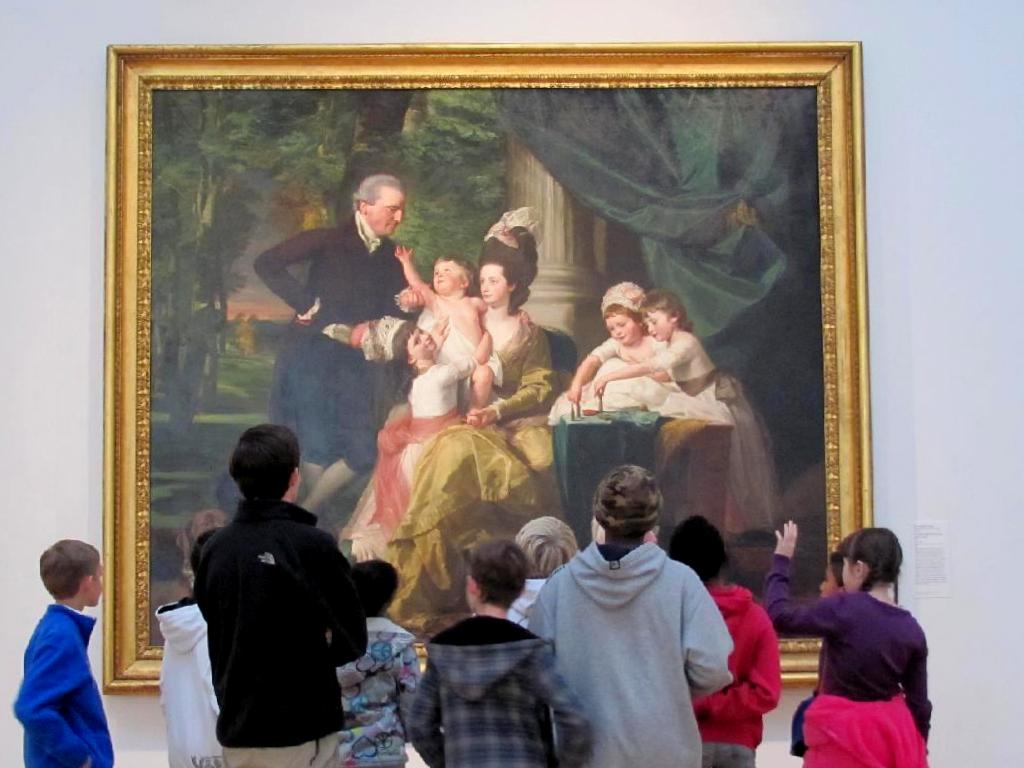
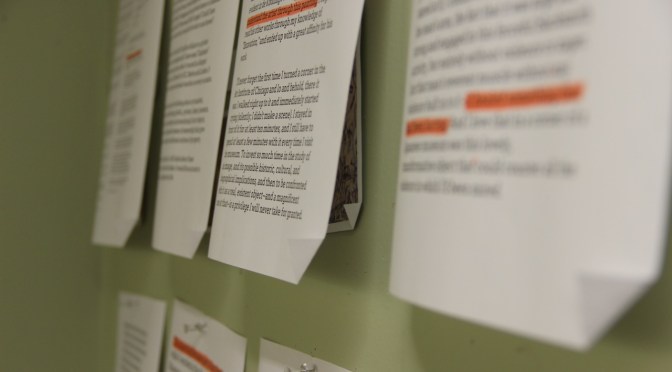


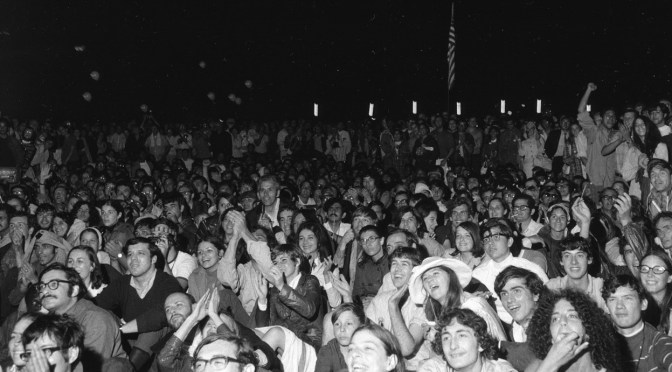
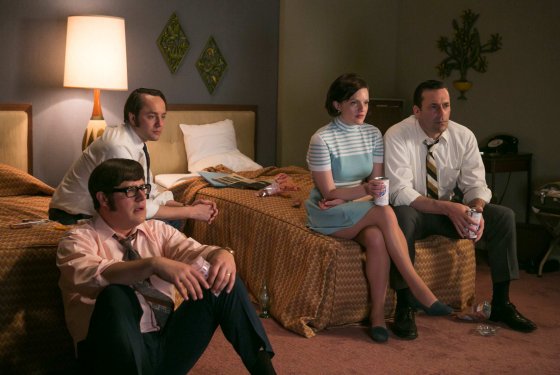
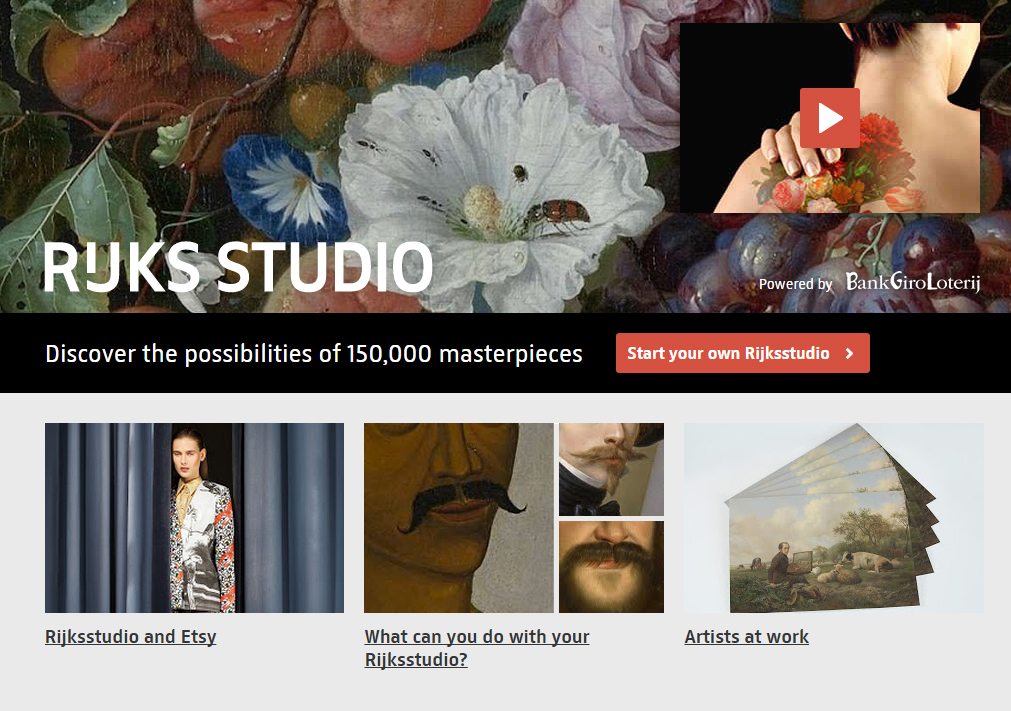
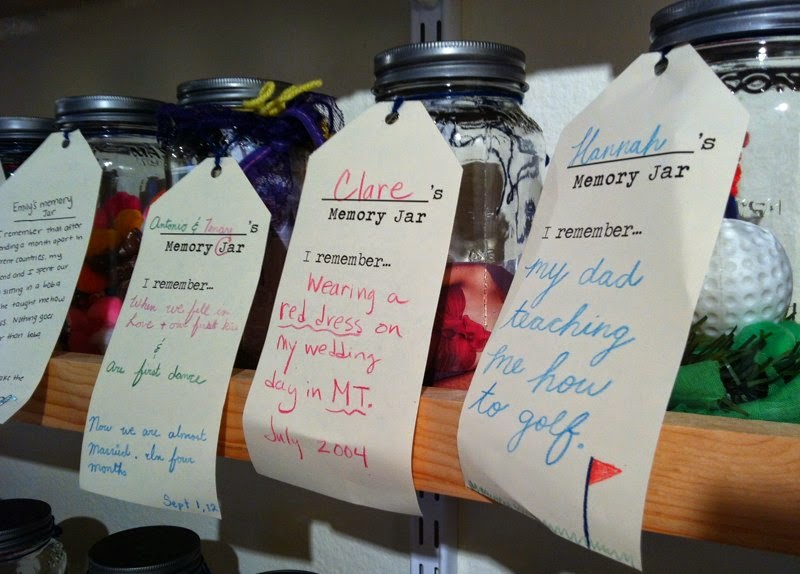
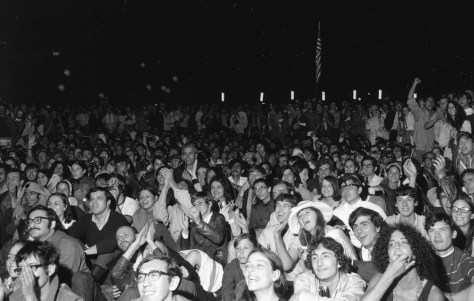
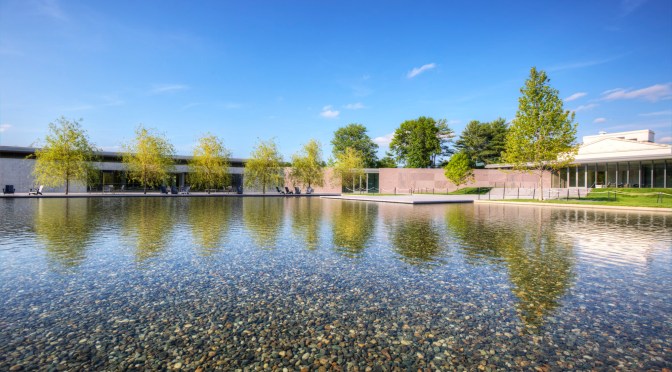
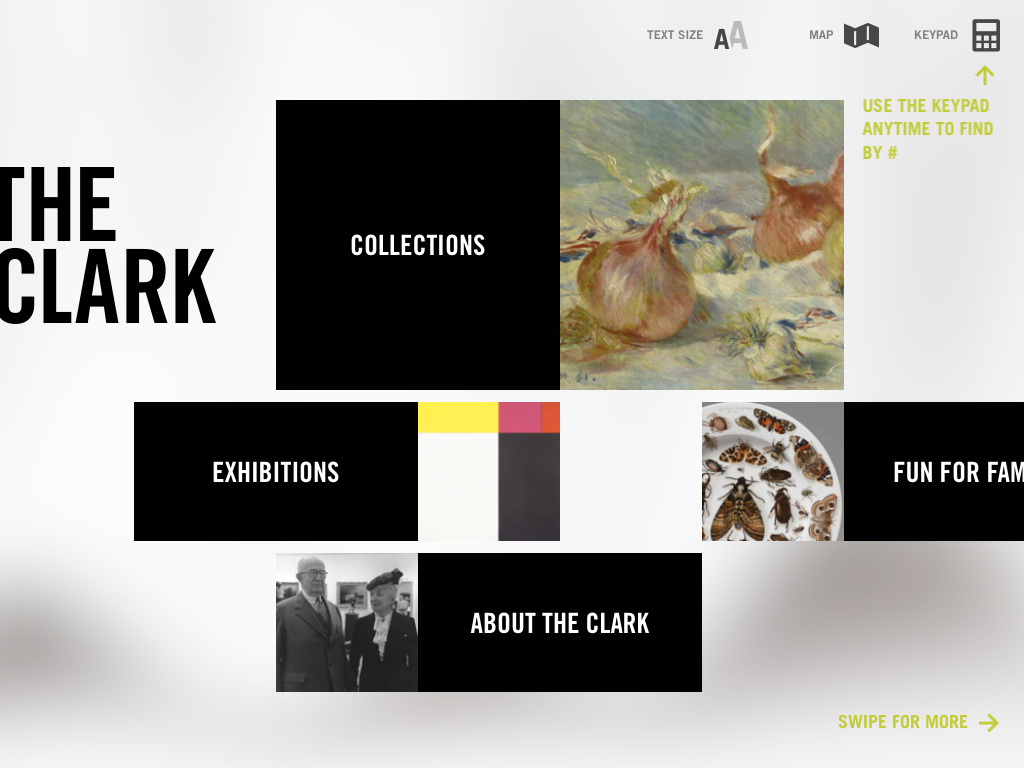
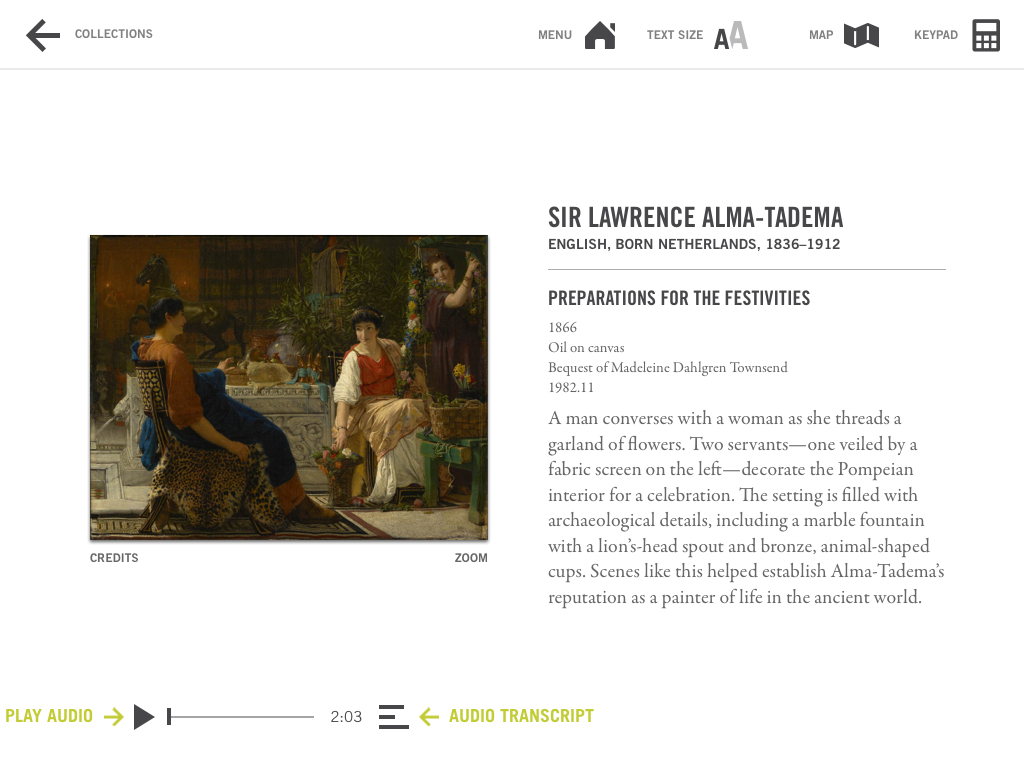
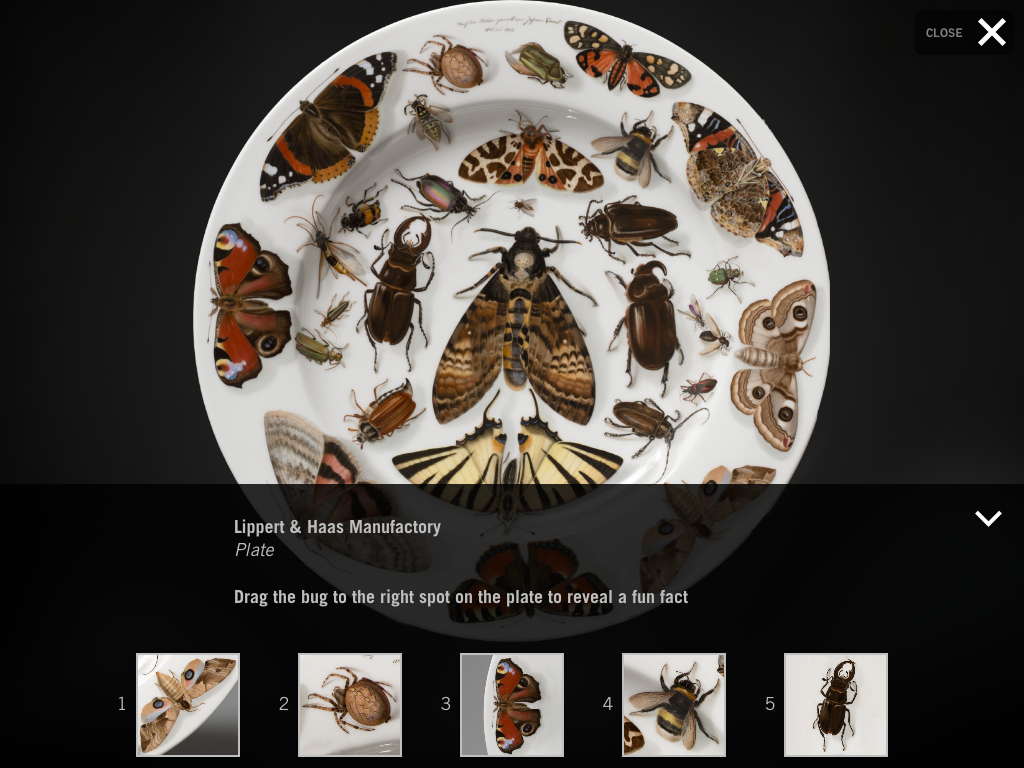
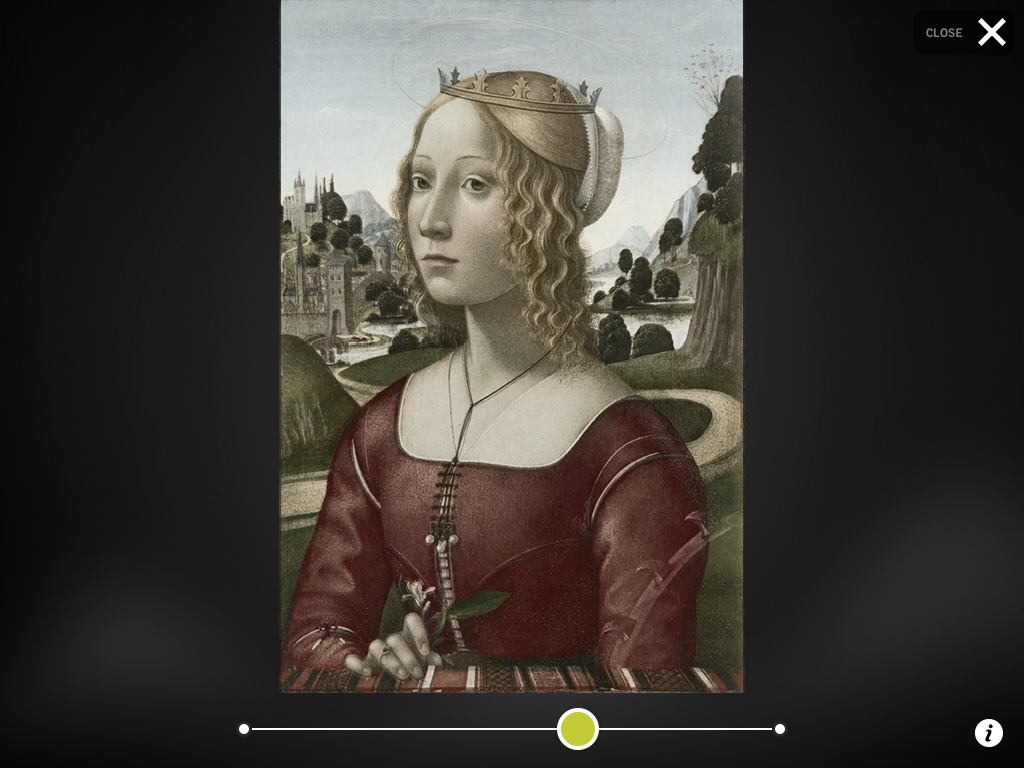
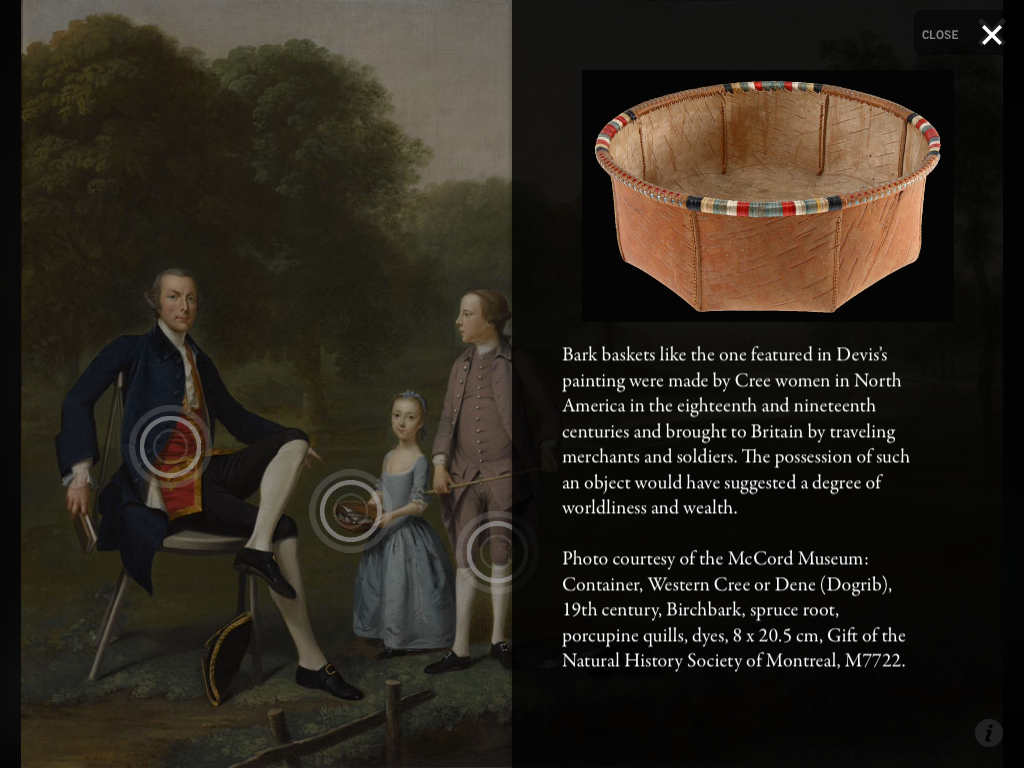
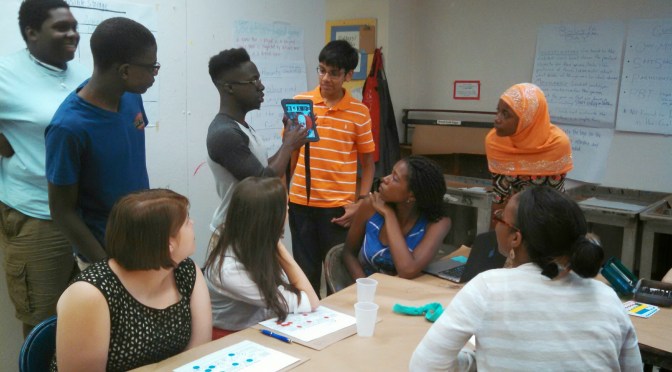
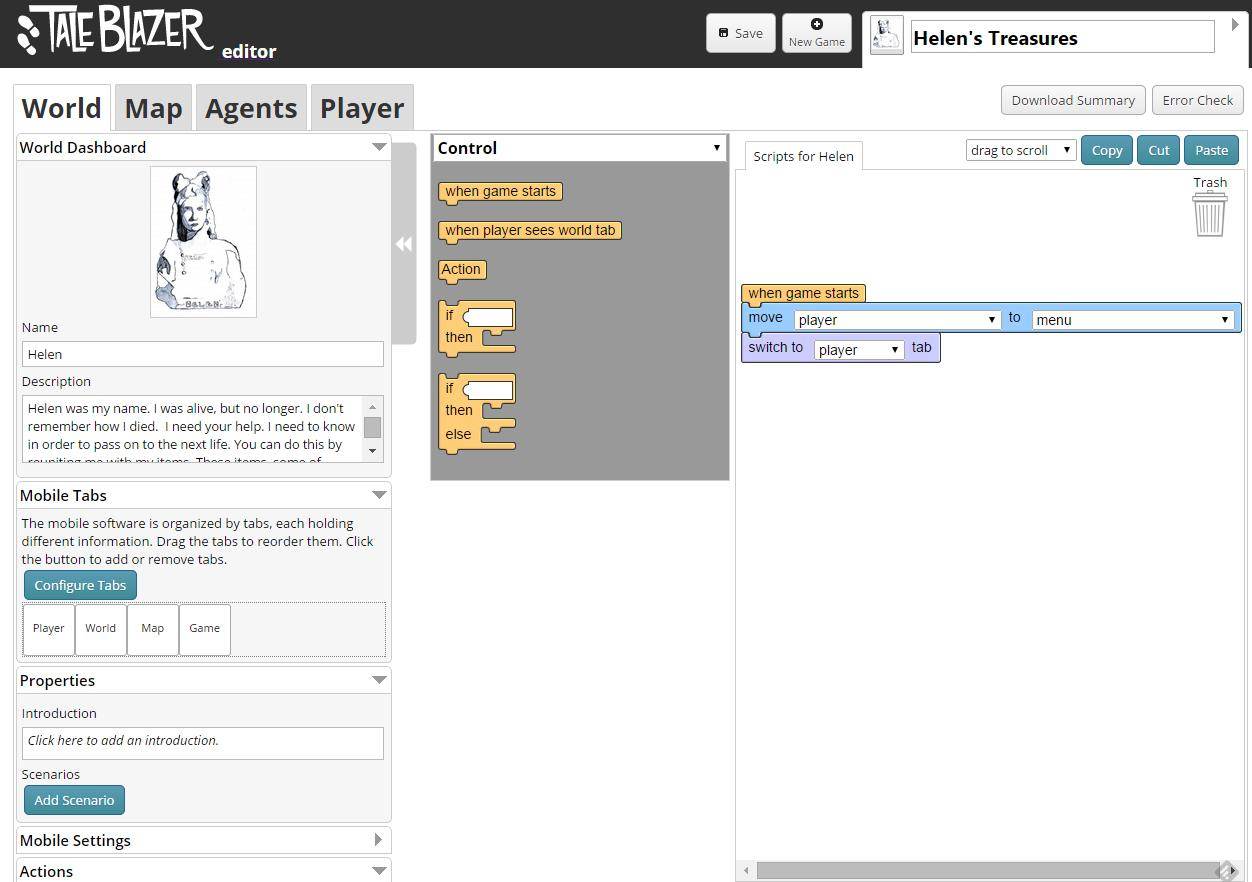
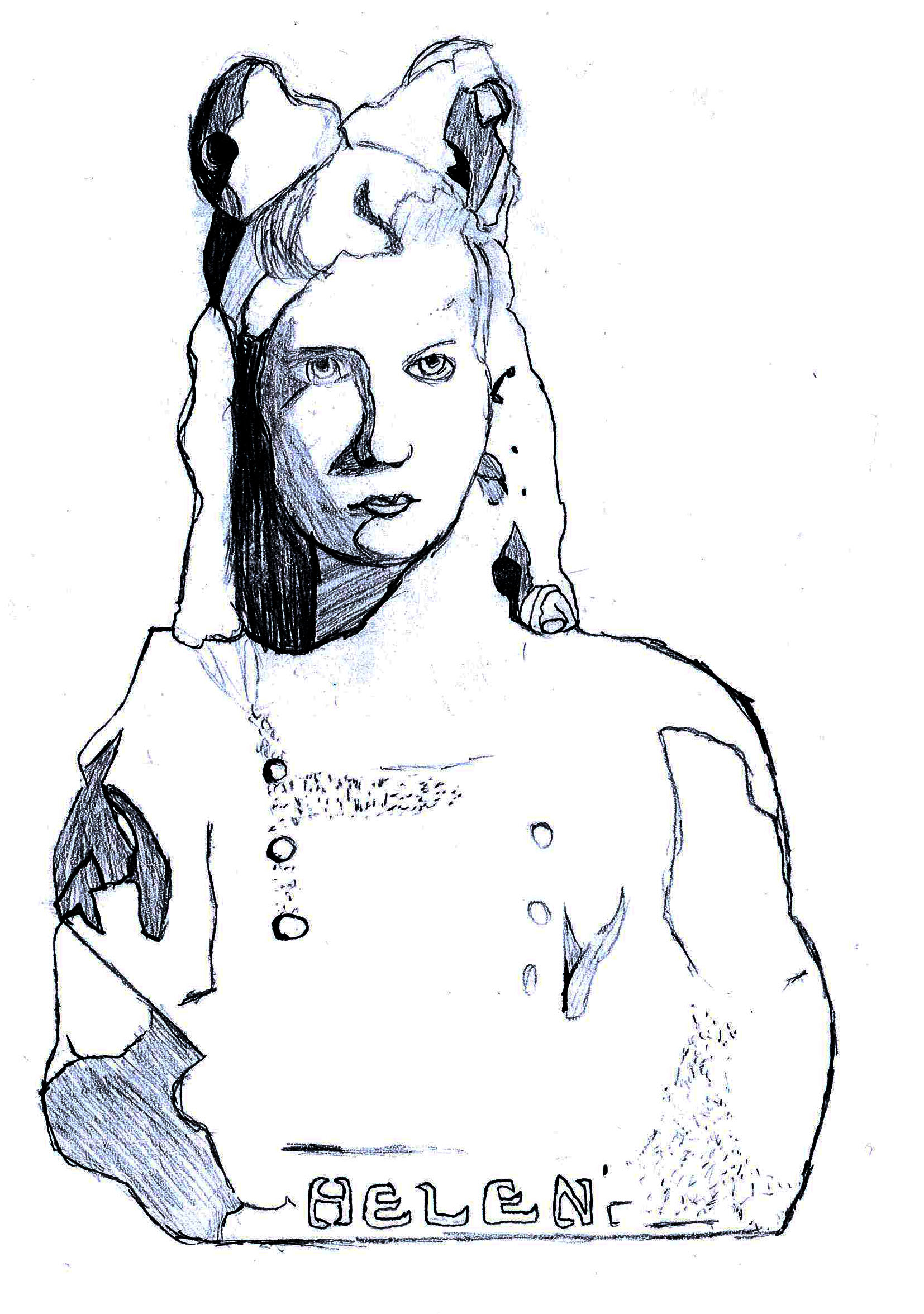

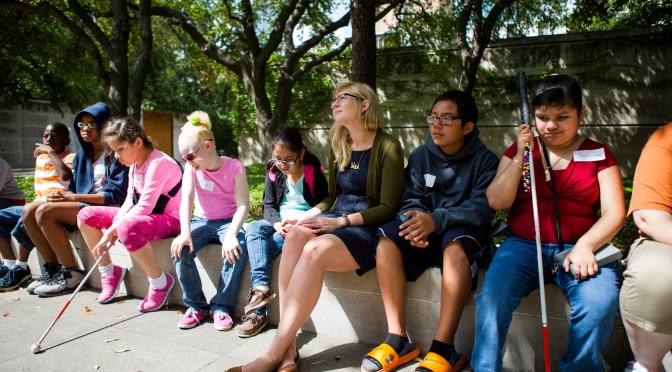

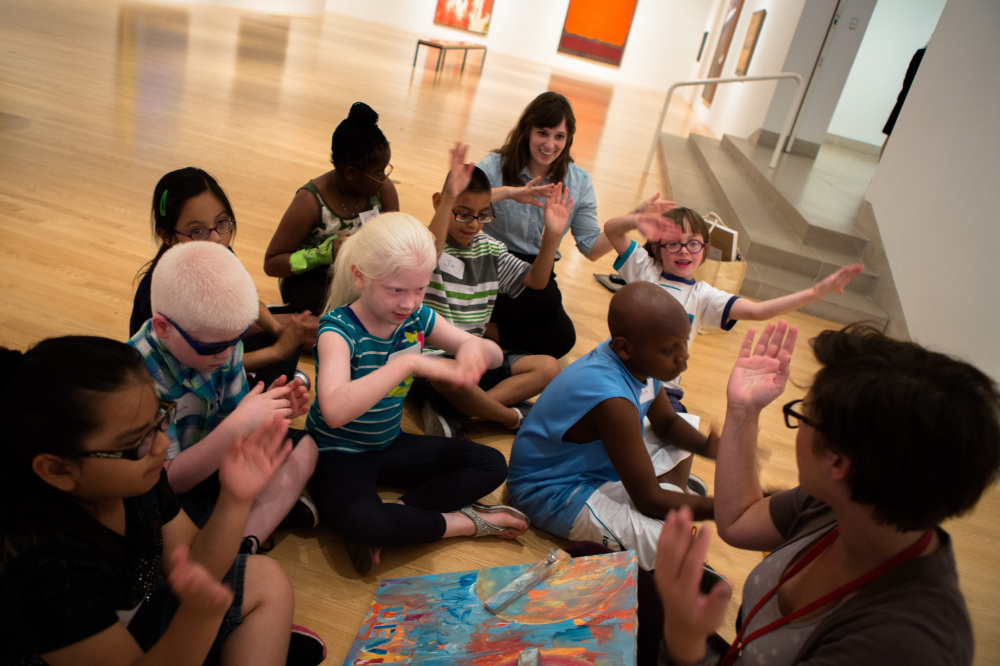
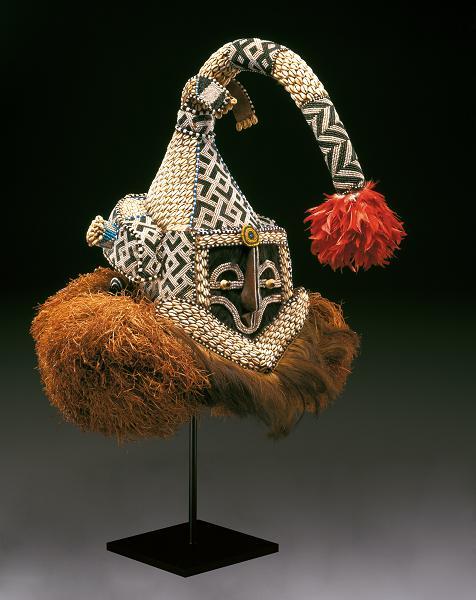
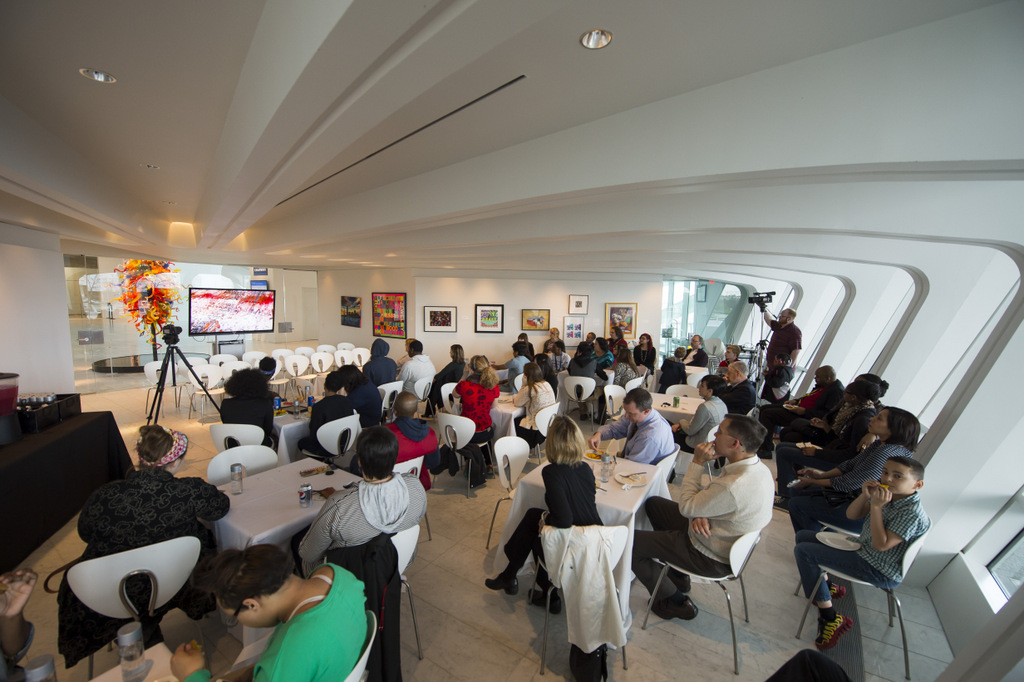
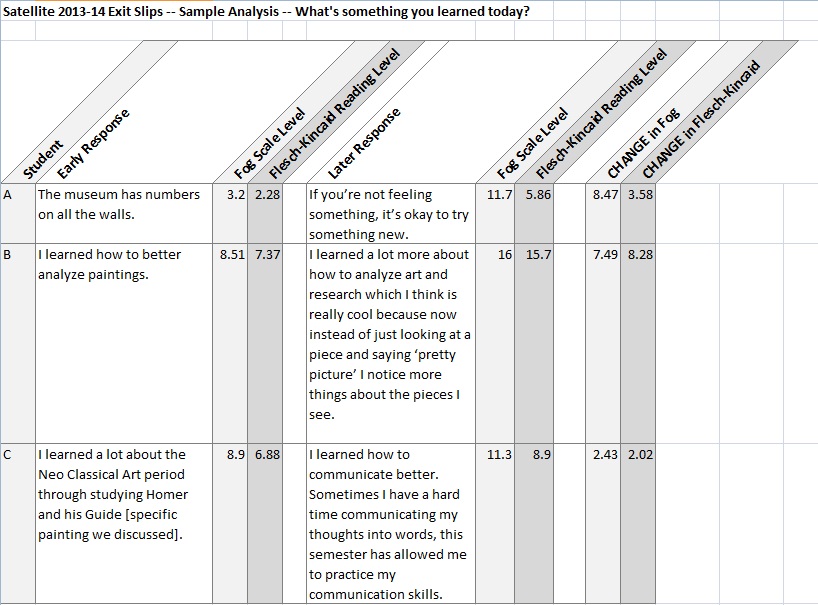
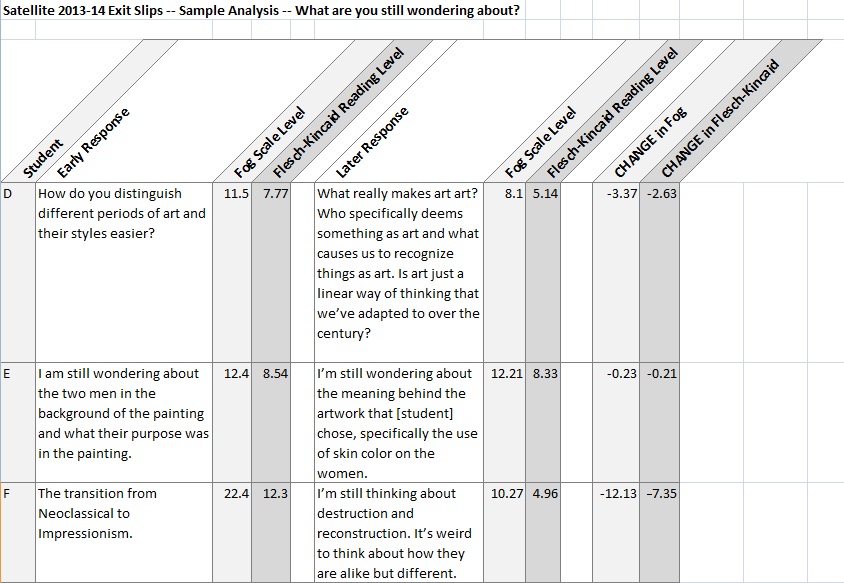
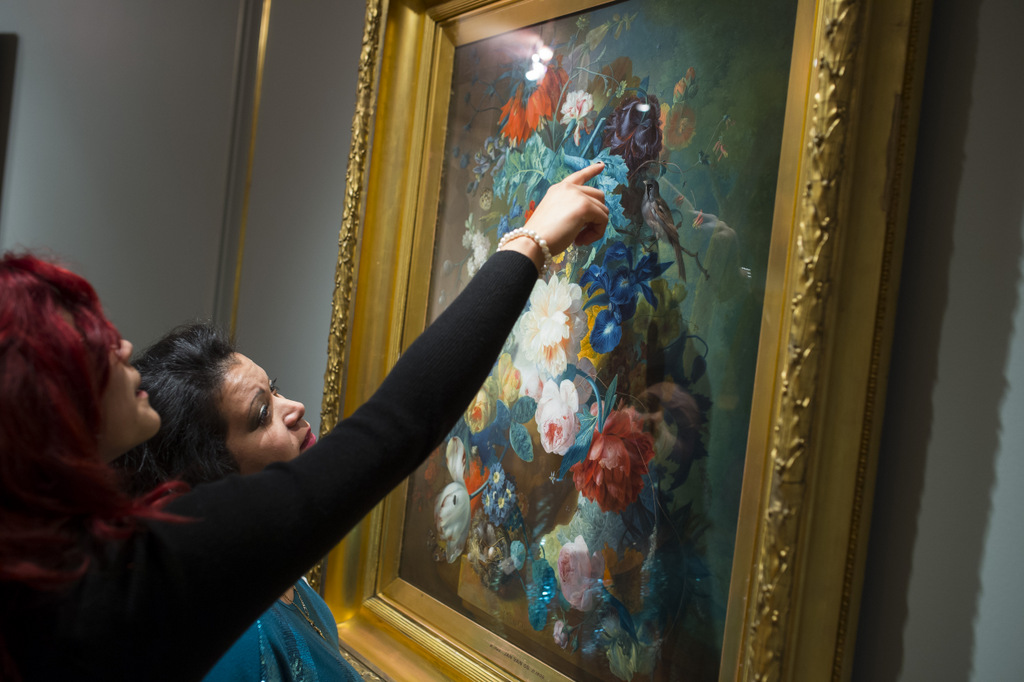
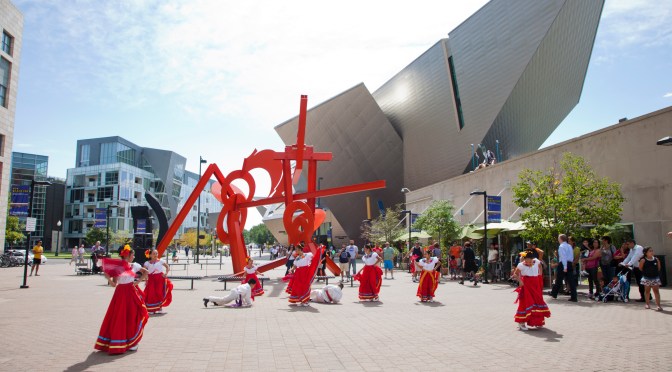
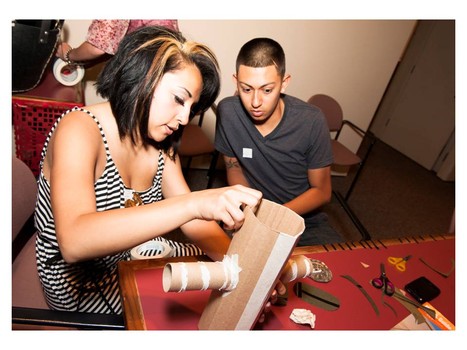
 Art Museum Teaching